
Signs of a Dislocated Toe and What to Do About It
What Is a Dislocated Toe
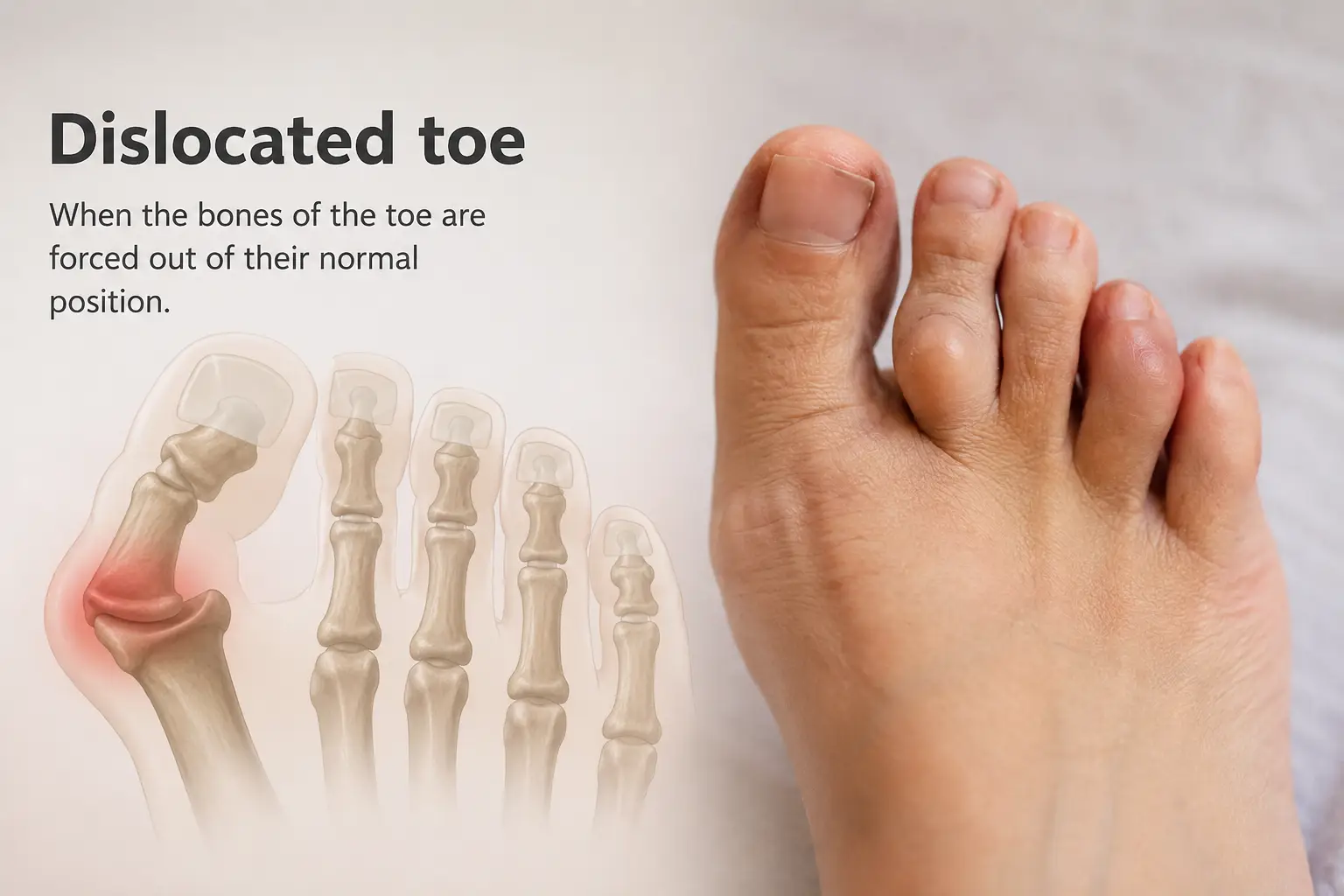
A toe dislocation happens when the force of an impact pushes one of the small bones in your toe out of its joint. The bones are no longer lined up the way they should be, and the joint cannot work correctly until they are put back in position.
Your toes have multiple joints where this can happen. According to NIH MedlinePlus, the joint at the base of the toe where it meets the foot is called the metatarsophalangeal joint, or MTP joint. The middle joint is the proximal interphalangeal joint, or PIP joint. The joint at the tip is the distal interphalangeal joint, or DIP joint. The MTP joint at the base of the toe is dislocated most often.
A dislocation and a fracture are not the same thing. A dislocation is a joint problem where the bones are out of position but not broken. A fracture means a bone has cracked or snapped. The two can and often do happen at the same time, which is why imaging is required before any treatment. Mayo Clinic recommends always ruling out a concurrent fracture with an X-ray before any reduction is attempted.
Common Causes of a Dislocated Toe
Toe dislocations almost always involve a sudden, forceful impact or an extreme bending of the joint.
The most common causes include:
- Sports injuries where another player lands on your foot, or you jam your toe hard during a tackle, kick, or landing
- Stubbing your toe against a wall, furniture, or step, especially when barefoot and moving quickly
- Falls where your foot lands at an awkward angle and the toe absorbs the full impact
- Tight or poorly fitting shoes that crowd the toes and force them into unnatural positions, a common issue for runners and people who regularly wear narrow-toed heels
- Existing joint conditions like rheumatoid arthritis or gout that weaken joint structures over time, making dislocation easier to trigger from even minor trauma
- Repetitive stress from activities like dancing, martial arts, or gymnastics that repeatedly strain the same toe joints
Signs of a Dislocated Toe
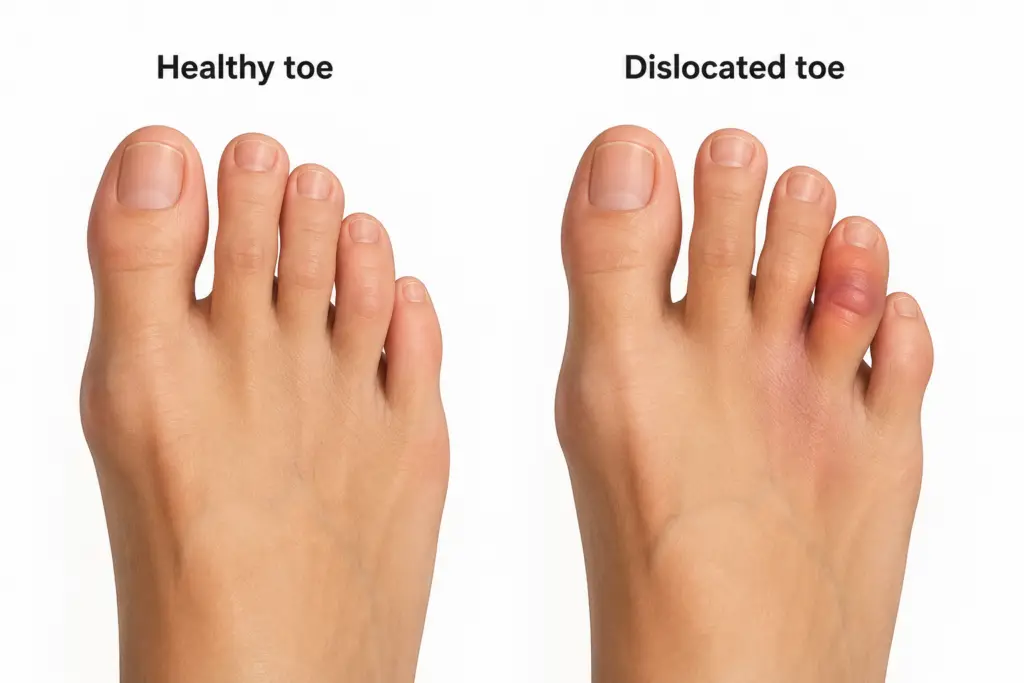
The signs of a dislocated toe tend to be hard to ignore. Most people know immediately that something is seriously wrong.
The most common signs include:
- Intense, immediate pain at the affected joint that does not fade the way a simple stub normally does
- Visible deformity where the toe points at an unusual angle or looks clearly out of alignment with the others
- Swelling and bruising that develop rapidly around the affected joint within the first hour
- Numbness or tingling in or around the toe, which can signal that nerves near the joint are being compressed
- Complete inability to move the toe normally, or pain so severe that any movement is impossible
- A feeling of instability as though the toe is floating or not solidly attached to the foot
Dislocated Toe vs. Broken Toe vs. Sprained Toe
These three injuries look similar from the outside because the pain and swelling overlap. Here is how they actually differ.
| Feature | Dislocated Toe | Broken Toe | Sprained Toe |
| Visible deformity | Yes, often obvious | Sometimes | Rare |
| Bone damage | No | Yes | No |
| X-ray required | Yes, always | Yes, always | Sometimes |
| Main treatment | Doctor reduces the joint | Splinting or buddy taping | Rest, ice, elevation |
| Recovery time | 4 to 6 weeks | 4 to 8 weeks | 1 to 3 weeks |
| Weight bearing | Very painful | Very painful | Painful but often possible |
The only reliable way to tell a dislocation from a fracture is an X-ray. Never assume it is one or the other based on pain level alone.
Dislocated Big Toe vs. Dislocated Pinky Toe
Where the dislocation happens matters, because different toes carry different loads and require different levels of care.
Dislocated Big Toe
A dislocated big toe is one of the more functionally serious toe injuries. Your big toe carries a significant share of your body weight and plays a central role in pushing off the ground when you walk, climb stairs, or run. MTP joint dislocations of the big toe are more common in athletes, particularly those in cleated sports or activities that require explosive pushing off movements. According to the American Academy of Orthopaedic Surgeons, big toe joint injuries are among the most frequently undertreated foot injuries in active adults, and returning to sport too early significantly raises reinjury risk.
Dislocated Pinky Toe and Little Toe Dislocation
A dislocated pinky toe is more common in everyday life because the little toe sticks out and catches on furniture, door frames, and corners easily. Little toe dislocations are often less severe in terms of overall foot function because the small toes carry less weight. That said, they still require proper treatment. Leaving a pinky toe dislocated without reduction can cause permanent deformity and make wearing shoes painful for years.
Dislocated Toe Treatment
A dislocated toe almost always needs medical attention. The treatment path follows a clear sequence.
What the Doctor Does First
Your doctor starts with a physical exam, checking the angle of the toe, looking at circulation and sensation, and comparing it with the other foot. An X-ray is then ordered to confirm the dislocation and check for any accompanying fracture. In complex cases, a CT scan may be used for a clearer picture of the joint.
Manual Reduction
Putting the bones back into alignment is called manual reduction. The doctor applies steady traction to guide the bone back into the joint. A local anesthetic is injected into the toe first to numb the area so the procedure is tolerable. Once the toe is repositioned, a follow-up X-ray confirms the alignment is correct. As the Cleveland Clinic notes, manual reduction should only ever be performed by a trained provider. Attempting it yourself risks damaging the blood vessels, nerves, and tendons surrounding the joint.
Immobilization
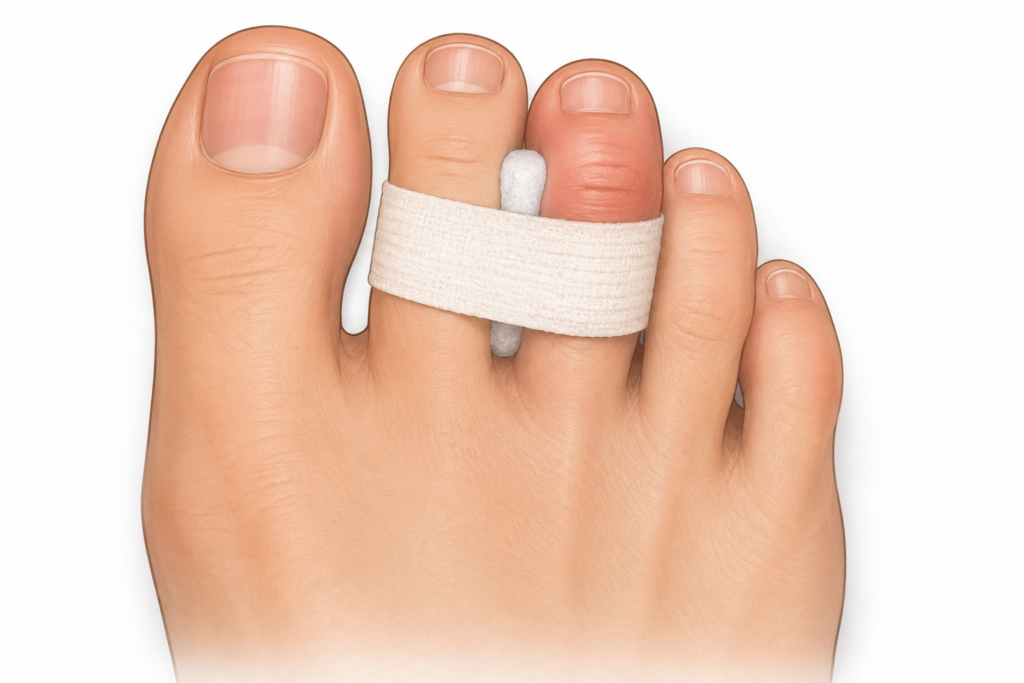
After reduction, the toe needs to stay stable while it heals. Buddy taping, where the injured toe is taped gently against its neighbor for support, is the most common approach for smaller toes. A stiff-soled shoe limits bending during walking. A walking boot is used for more severe dislocations or big toe injuries. Your doctor sets the immobilization timeline based on which joint was affected and how much surrounding tissue was damaged.
Physical Therapy
Once the initial swelling has settled, physical therapy restores range of motion, strength, and balance in the foot. Most people benefit from starting gentle movement exercises two to four weeks after injury. A physical therapist can also address any gait changes your body adopted to avoid pain, which, if left uncorrected, can create secondary problems in the knee, hip, or lower back.
Can You Fix a Dislocated Toe at Home
This is one of the most searched questions about this injury and the direct answer is no, you should not attempt to pop a dislocated toe back into place yourself. Without imaging you cannot know whether a fracture is present alongside the dislocation. Attempting to pull or manipulate the toe at home risks worsening a hidden fracture, damaging nerves or blood vessels, or causing the joint to set in the wrong position permanently.
What you can safely do before getting medical care includes resting the foot, applying ice wrapped in a cloth for 20 minutes at a time, elevating the foot above heart level to limit swelling, and taking over the counter pain relief like ibuprofen or acetaminophen if you have no contraindications. These steps manage discomfort and inflammation while you arrange to see a provider. They are not treatment.
What Happens If a Dislocated Toe Goes Untreated
Skipping treatment because the injury seems manageable is one of the most common mistakes with this type of injury. An unreduced dislocation means the bones stay out of alignment, and the body tries to adapt around them. Over time this leads to:
- Post-traumatic arthritis in the affected joint, causing chronic pain and stiffness that worsens with activity
- Permanent toe deformity that makes shoe-wearing painful or impossible without custom footwear
- Nerve damage from sustained pressure on the nerves running alongside the misaligned joint
- Gait changes that shift stress to the knee, hip, and lower back over months and years
- Increased infection risk if any skin was broken at the time of the injury
Even if your pain eases after a few days, that does not mean the dislocation has corrected itself. The bones may have partially shifted back but still sit out of true alignment, quietly causing tissue and joint damage the whole time.
How Long Does a Dislocated Toe Take to Heal
Recovery depends on which toe was dislocated, how far out of alignment it was, whether a fracture was involved, and how quickly you received treatment.
General healing timelines for most toe dislocations:
- Return to light walking in a stiff-soled shoe: 1 to 2 weeks after reduction
- Swelling and bruising mostly resolved: 3 to 4 weeks
- Cleared to walk without protective footwear: 4 to 6 weeks for most toes, up to 8 weeks for the big toe
- Return to sports and high impact activity: 6 to 12 weeks depending on severity and physical therapy progress
- Full resolution of stiffness and residual soreness: up to 3 to 6 months in some cases
These are general ranges. Your treating provider will give you a timeline specific to your injury.
Preventing Toe Dislocations
You cannot prevent every accident, but you can reduce your risk considerably. The American Podiatric Medical Association recommends proper footwear as the single most impactful prevention step for most toe injuries.
- Wear shoes that fit well and support your foot without forcing the toes together
- Replace athletic shoes before the sole and cushioning break down
- Buddy tape toes that have been previously injured before contact sports
- Strengthen the small muscles in the foot with exercises like toe curls and towel scrunches
- Clear walking paths at home, especially in hallways and near furniture that is easy to catch your toes on in low light
- If you have arthritis or another condition that weakens your joints, ask your doctor about supportive footwear and exercises that reduce joint stress

When to See a Doctor
Go to an urgent care center or emergency room the same day if:
- Your toe looks visibly crooked or angled after an impact
- The pain is severe and does not ease after 30 minutes of rest and ice
- You notice numbness, tingling, or the toe feels cold or looks pale or bluish
- You cannot put any weight on the foot at all
- There is an open wound near the injured toe
- The injury involves a child, as pediatric toe injuries affect developing growth plates that need specialist evaluation
Do not wait several days hoping it improves on its own. Toe injuries that “don’t look that bad” are among the most commonly undertreated injuries in the foot, and the complications from delayed treatment take far longer to fix than the original injury.
Your diet, your lifestyle, and especially your footwear choices all play a role in how vulnerable your toes are to this kind of injury. A dislocated toe is painful and disruptive, but it is also one of the more straightforward injuries to treat when caught early. Get the X-ray, follow the immobilization plan, do the physical therapy, and give the joint the full time it needs to heal before going back to full activity.
Frequently Asked Questions
How do I know if my toe is dislocated or just jammed?
A jammed toe involves soft tissue bruising without the joint being displaced, and the pain typically fades within an hour or two. A dislocated toe means the bones are out of alignment, causing visible deformity, severe lasting pain, and an inability to straighten or bend the toe normally. If your toe looks off or you cannot move it after 30 minutes, treat it as a potential dislocation and get an X-ray.
Can a dislocated toe heal on its own without treatment?
In rare cases where the dislocation is very mild, the bones may shift back toward alignment on their own. However, without imaging you have no way to confirm this has happened correctly. Leaving it untreated risks permanent joint deformity, post-traumatic arthritis, and long term pain. Always have a doctor confirm full reduction with an X-ray before assuming the joint has healed.
Is it safe to pop a dislocated toe back into place yourself?
No. Self-reduction is not safe. Without imaging you cannot know whether a fracture is present alongside the dislocation. Attempting to pull or snap the toe back yourself can worsen a hidden fracture, damage blood vessels or nerves, or cause the joint to set permanently in the wrong position. First aid at home should stay limited to rest, ice, elevation, and over the counter pain relief while you seek medical care.
How long does a dislocated toe take to heal fully?
Most dislocated toes allow light walking within one to two weeks after reduction, with swelling largely resolved by four weeks. Returning to sports and high impact activity typically takes six to twelve weeks depending on severity and physical therapy progress. Full resolution of stiffness and residual soreness can take up to six months in some people, particularly with big toe dislocations.
What is the difference between recovering from a dislocated big toe vs. a dislocated pinky toe?
A dislocated big toe generally takes longer to heal because the big toe carries a large share of body weight during walking and pushing off. Athletes typically need eight to twelve weeks before returning to full sport after a big toe dislocation. A dislocated pinky toe or little toe dislocation tends to resolve faster since the smaller toes bear less load, with most people returning to normal activity in four to six weeks with proper care and buddy taping.
Will a dislocated toe need surgery?
Most dislocated toes do not require surgery. Manual reduction under local anesthetic followed by immobilization is the standard treatment. Surgery is considered when the dislocation cannot be reduced manually, when a significant fracture accompanies the dislocation, or when tendons or the joint capsule have been severely torn. Your podiatrist or orthopedic specialist will advise based on your imaging results and the specific joint involved.
Written by Theo James
The information on this page is for general educational purposes only and is not a substitute for professional medical advice, diagnosis, or treatment. Always talk with your doctor or another qualified healthcare provider about any questions you have regarding a medical condition. Never ignore professional medical advice or delay seeking it because of something you read on the internet.