What Is Cupping Therapy and Should You Try It
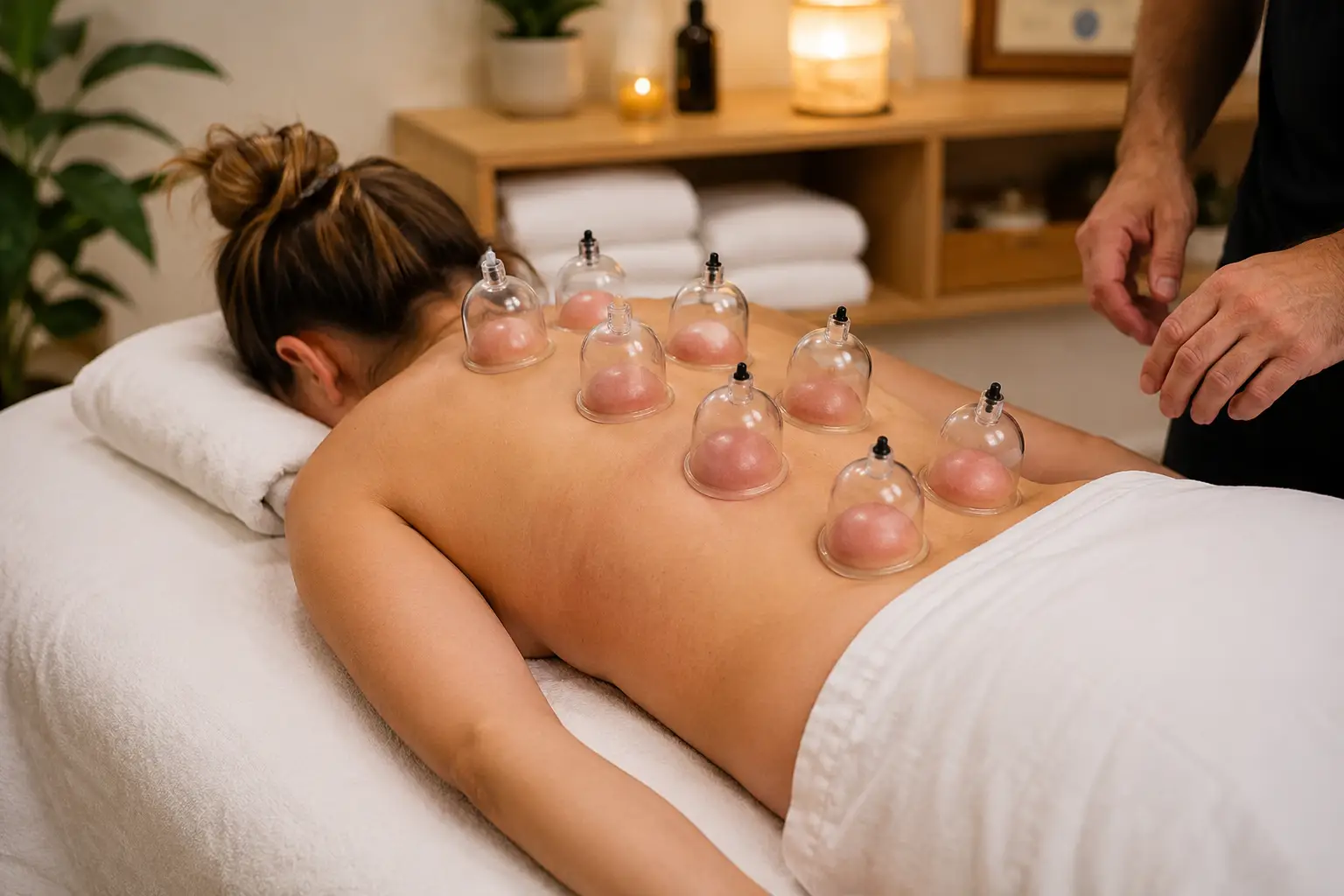
If you’ve seen those distinctive circular marks on an athlete’s back and wondered what they were about, you’re in the right place.
Ancient Origins and How Cupping Became a Modern Treatment
Cupping has a longer history than almost any other hands-on healing practice. References to it appear in the Ebers Papyrus, an ancient Egyptian medical text from around 1550 B.C. Traditional Chinese medicine practitioners used cupping for centuries to treat pain, fever, and internal conditions. In the Middle East, a form of cupping called hijama has been a part of Islamic medicine for over a thousand years.
In the United States, cupping got a very public moment during the 2016 Rio Olympics when swimmer Michael Phelps appeared on camera covered in circular marks across his back and shoulders. What had been a niche practice in integrative health circles suddenly had everyone asking questions. Today, licensed acupuncturists, physical therapists, and integrative medicine providers use cupping as part of broader treatment plans for muscle pain, recovery support, and stress relief.
Fire Cupping and Other Methods Explained
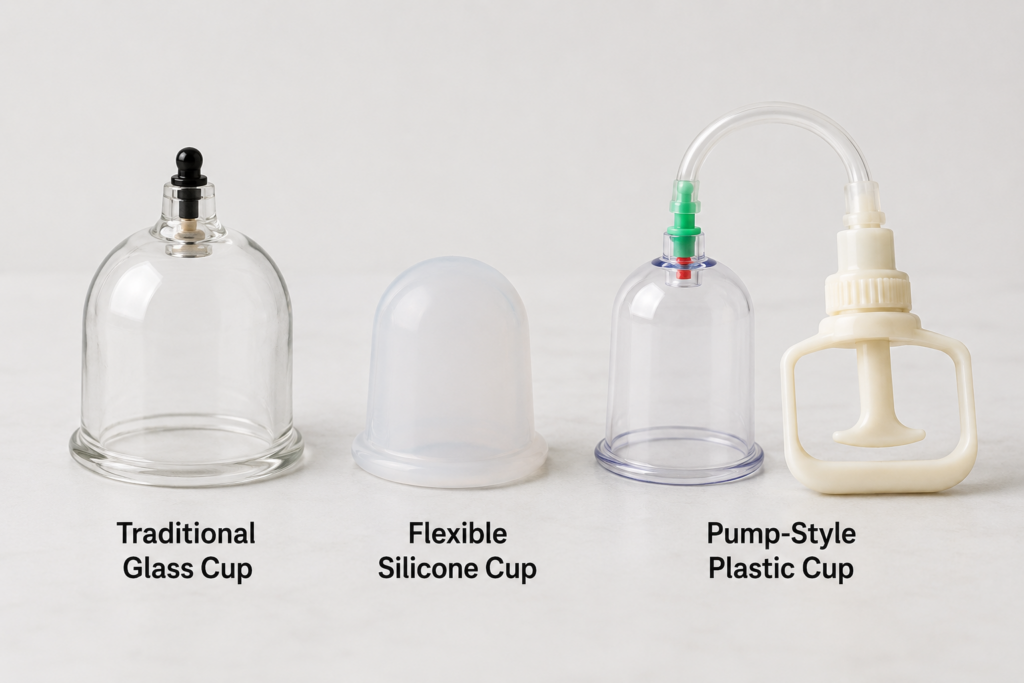
Fire cupping is one of the most recognized techniques, and it’s also the one that surprises first-timers the most. A practitioner briefly holds a lit cotton ball inside a glass cup to heat the air. When the flame is removed and the cup is placed on the skin, the air inside cools and contracts, creating a vacuum that draws the skin and upper tissue upward. The open flame never touches the skin directly.
Modern cupping has largely moved beyond fire in many US clinics. Silicone cups are squeezed before placement to create suction without heat. Pump-style cups use a hand pump to draw air out after the cup is positioned. Both methods produce the same fundamental effect, negative pressure that decompresses the tissue underneath.
Dynamic or sliding cupping takes this a step further. Oil is applied to the skin first, and the cups are moved slowly across the surface. Practitioners describe it as a reverse massage. Traditional massage pushes tissue downward. Sliding cups pull it upward. For people with broad areas of muscle tightness across the back or shoulders, sliding cupping often covers more ground in a single session.
Dry Cupping vs Wet Cupping vs Fire Cupping
Most people in the US will only ever experience dry cupping, and that’s not a compromise; it’s the approach most supported by current research and least likely to cause side effects.
This table compares the three main cupping types so you know what each one actually involves before booking a session.
| Feature | Dry Cupping | Wet Cupping | Fire Cupping |
| Heat involved | No | No | Yes |
| Blood involved | No | Yes | No |
| Common in the US | Yes | Rarely | Yes |
| Primary sensation | Pulling pressure | Moderate discomfort | Pulling pressure |
Dry cupping uses suction only. No cuts, no blood, no needles. Wet cupping, known as hijama in Islamic medicine, adds small, shallow skin punctures before applying suction to draw out a limited amount of blood. It has deep roots in Middle Eastern and South Asian healing traditions but is rarely practiced in mainstream US clinics. Fire cupping creates suction through heat rather than a pump or squeeze, and is widely offered by licensed acupuncturists across the country.
Benefits of Cupping Therapy for Pain and Recovery
Cupping for muscle pain is the reason most Americans try it, and it’s where the research is most encouraging. Several peer-reviewed studies have found that cupping can meaningfully reduce pain and improve function in people with neck pain, shoulder tension, and lower back discomfort.
As of 2024, the National Center for Complementary and Integrative Health acknowledges that cupping has been studied for pain relief and relaxation, with some studies reporting favorable short-term outcomes, while noting that larger and more rigorous trials are still needed to draw firm conclusions.
Here is what ventosa therapy benefits; another name for cupping used across Filipino and Latin American healing traditions are most commonly reported to include:
- Reduced muscle tension and stiffness, particularly across the back, neck, and shoulders
- Improved local blood circulation to tight or injured areas
- Faster perceived recovery after intense physical activity or exercise
- Short-term relief from chronic lower back pain
- Relaxation of the nervous system, comparable to the effect of deep tissue massage
- Myofascial decompression, which means loosening the connective tissue layer that wraps around your muscles
People managing slipping rib syndrome or similar musculoskeletal conditions have reported that cupping around the affected area helps reduce the chronic tightness that builds up in surrounding tissue, though it is not a standalone solution for structural issues. For bone spurs and joint-adjacent discomfort, cupping may ease the muscle tension around the problem area while your provider addresses the underlying cause separately.
Does Cupping Hurt and What a Session Feels Like
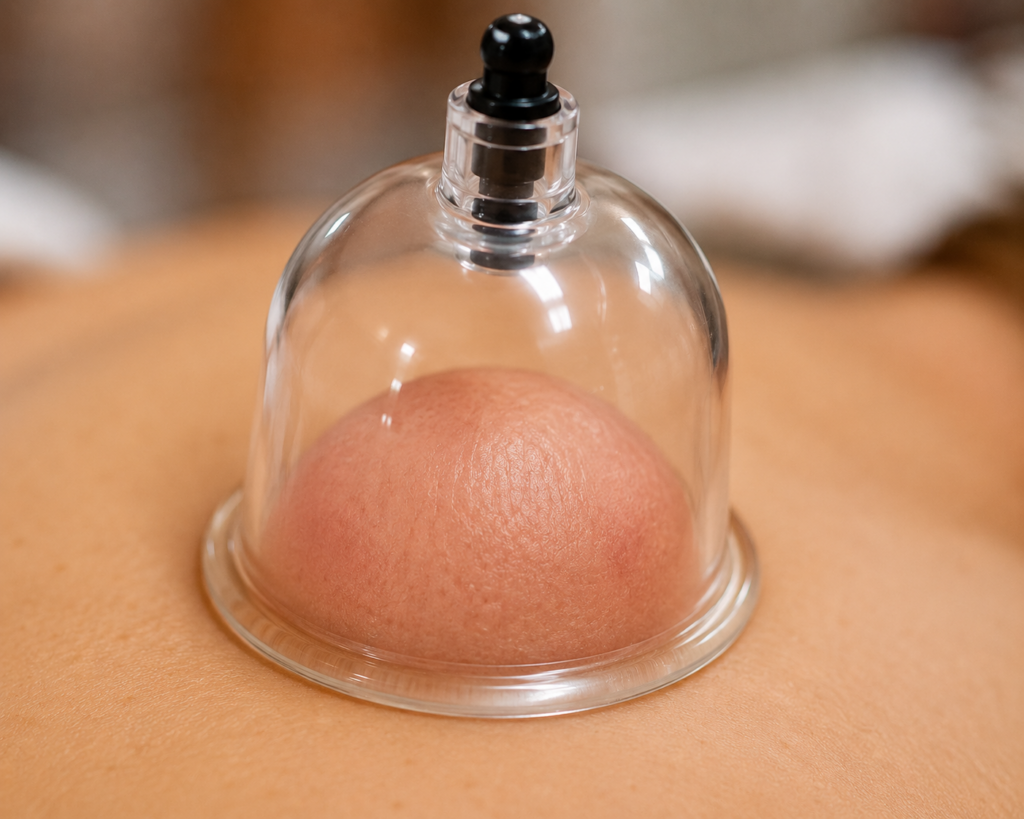
Most people describe cupping as strange rather than painful. The initial feeling is a tight pulling or stretching pressure on the skin at each cup site. For many people, especially those with chronic muscle tightness, that sensation is actually a relief.
Cupping therapy is a technique where cups are placed on the skin and suction lifts the tissue upward. The negative pressure increases blood flow, relaxes muscle fibers, and decompresses connective tissue. Sessions typically run 30 to 45 minutes, with cups in place for 5 to 20 minutes per area. It is not typically painful, and most people feel relaxed during and after the session.
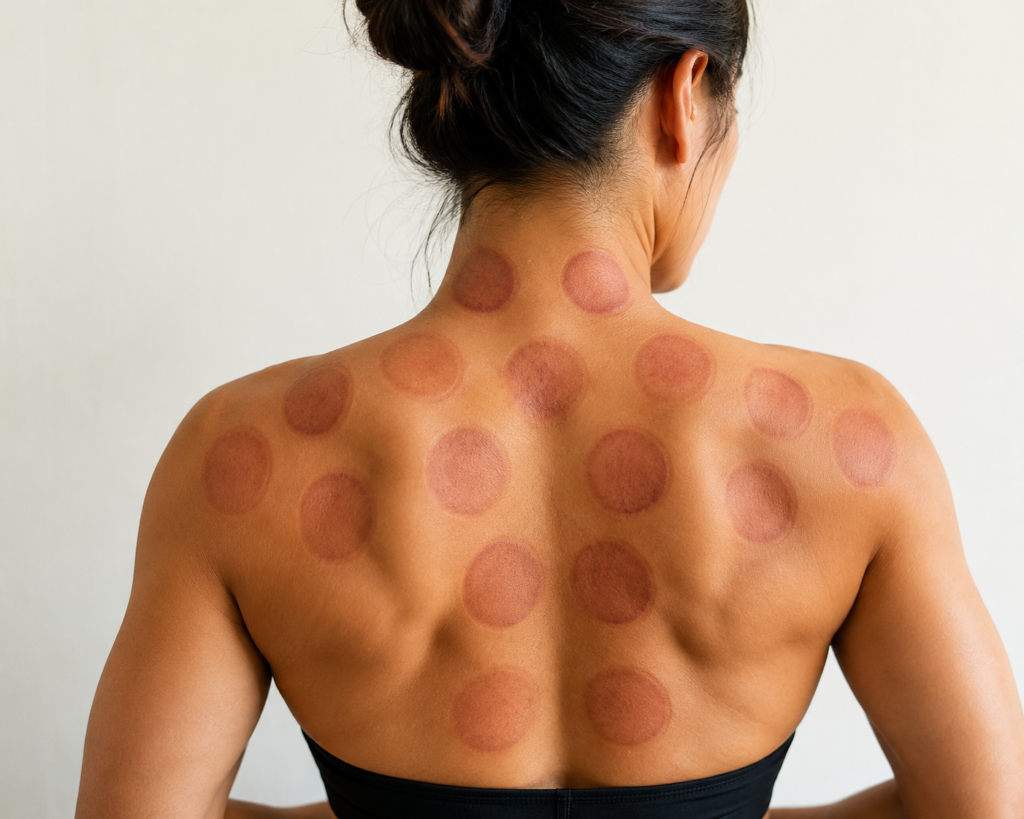
The circular marks cupping leaves behind are not traditional bruises. They’re the result of blood being drawn toward the skin’s surface by the suction. In traditional Chinese medicine these marks are called sha. Technically, they’re a form of ecchymosis. They typically fade within 3 to 10 days. They can look alarming in photos, but most people who’ve had cupping find the marks bother onlookers far more than themselves. If bare skin is going to be visible at an event, plan your session accordingly.
According to the Mayo Clinic, mild soreness in the treated area the day after cupping is normal and usually resolves quickly.
How Long to Do Cupping and How Many Sessions You Need
You don’t need a full afternoon or a months-long commitment to know whether cupping works for you. A standard session runs 30 to 45 minutes from start to finish, with the cups themselves in place for anywhere between 5 and 20 minutes depending on the area and the goal.
How many sessions you need depends on what you’re using cupping for.
- For general muscle recovery after exercise, one session often delivers noticeable relief that lasts several days
- For acute neck pain or shoulder tightness, 2 to 4 sessions spaced roughly a week apart is a common starting point
- For chronic pain conditions, most practitioners recommend a short course of 6 to 8 weekly sessions before reassessing your response
- For ongoing maintenance and relaxation, monthly or bimonthly sessions work well once acute symptoms are under control
Cupping is almost always used alongside other treatments – massage, physical therapy, acupuncture, or targeted exercise. Your practitioner will suggest a frequency that fits your situation and adjusts as your body responds.
Who Should Avoid Cupping Therapy
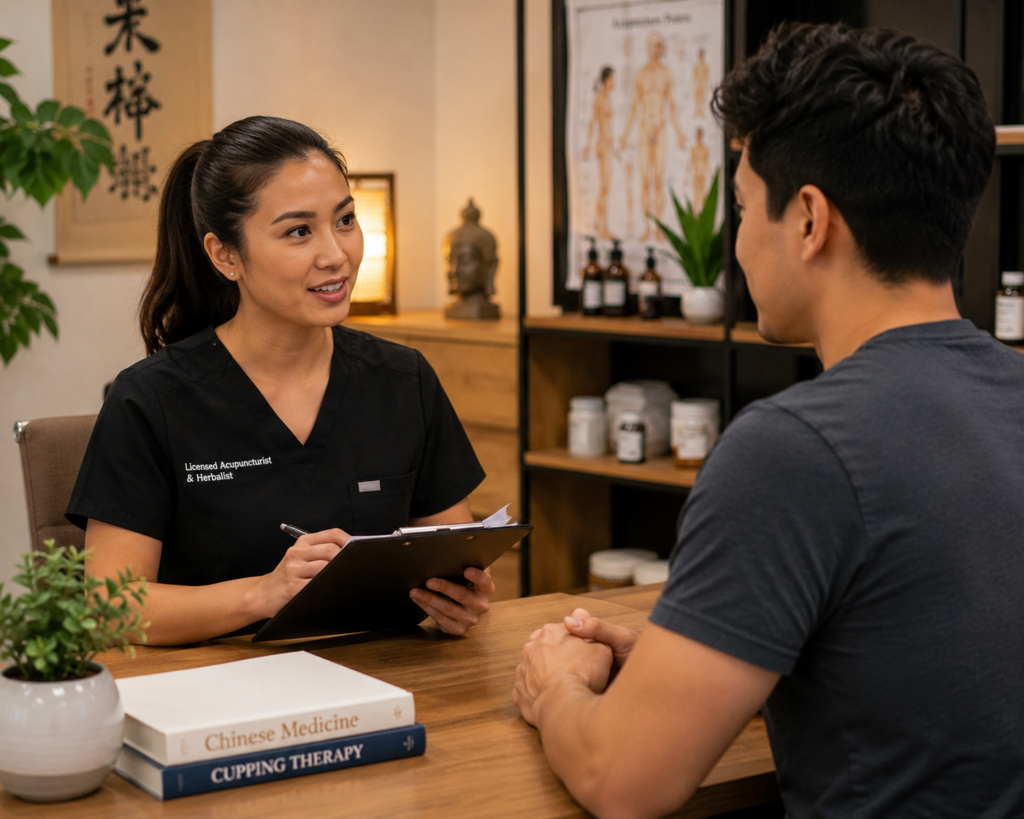
Cupping is safe for most healthy adults when performed by a trained and licensed practitioner. But it isn’t the right fit for everyone.
Avoid cupping or speak with your doctor first if any of these apply to you:
- You are pregnant, particularly for cupping on the abdomen or lower back
- You take blood thinners or have a bleeding disorder like hemophilia
- You have active skin infections, open wounds, sunburn, or eczema in the area to be treated
- You have liver disease, kidney failure, or heart failure
- You have a pacemaker or other implanted cardiac device
- You have a current fever or active illness
If you’re recovering from a joint injury or dislocation, always check with your orthopedic doctor or physical therapist before adding cupping to your recovery plan. Cleveland Clinic physicians also recommend disclosing any skin conditions or recent surgeries to your practitioner before beginning.
The Bottom Line
Cupping therapy is not magic, and it’s not a replacement for evidence-based medicine. But for muscle pain, tension, and recovery support, the evidence is growing and the practice has real roots in thousands of years of clinical tradition. For the right person in the right situation, a few sessions with a licensed practitioner can offer meaningful relief that complements whatever else you’re already doing for your health. If you’re still asking what is cupping for in your specific case, that conversation is best had with a licensed acupuncturist, physical therapist, or integrative medicine provider. Our team at bannerhealth.io believes the best health decisions come from understanding your options clearly. Start that conversation, ask your questions, and give your body the support it’s asking for.
Frequently Asked Questions
What is cupping therapy good for?
Cupping therapy is most commonly used for muscle pain, stiffness, and physical recovery. Practitioners also use it for neck and shoulder tension, lower back pain, and general stress relief. Some athletes use it as part of post-training recovery routines. Short-term studies show it can reduce musculoskeletal pain meaningfully, though the research is still developing. Cupping works best as a complement to other treatments rather than a standalone solution for serious medical conditions. Talk to a licensed provider to find out if it fits your situation.
Does cupping hurt?
Most people find cupping more unusual than painful. The sensation is typically a tight pulling or stretching pressure on the skin. Whether it hurts depends on your skin sensitivity, how strong the suction is, and how long the cups stay in place. Many people with chronic muscle tightness find the pressure genuinely relieving. The circular marks left behind look dramatic but are not painful and fade within 3 to 10 days. First-time recipients are often surprised by how relaxing the experience feels overall.
How does fire cupping work?
Fire cupping uses a brief flame inside a glass cup to heat and thin the air before the cup is placed on the skin. As the warm air cools, it contracts and creates a vacuum that pulls the skin and underlying tissue upward. The fire is only used to generate that vacuum and never makes contact with the skin. The therapeutic effect is the same as other cupping methods; increased blood flow and tissue decompression, but glass cups and heat give practitioners precise control over suction strength.
How long does a cupping session take and how many do you need?
A standard cupping session takes 30 to 45 minutes, with cups in place for 5 to 20 minutes per treated area. For acute muscle soreness, 2 to 4 sessions may bring lasting relief. For chronic pain, a course of 6 to 8 weekly sessions is a common starting recommendation. Many people notice a difference after just one session. Your provider will recommend a frequency and duration based on your specific condition and how your body responds to the initial treatment.
What is ventosa therapy and is it the same as cupping?
Ventosa therapy is the name for cupping used in Filipino, Latin American, and Spanish-influenced healing traditions. Ventosa means suction in Spanish. The technique is the same as cupping. Cups create a vacuum on the skin to increase circulation and relieve muscle tension. The name differs by cultural origin but the mechanism, the session experience, and the benefits are identical. If you’ve heard of ventosa therapy and wondered whether it’s different from what a US acupuncturist offers, the answer is no.
Written by Theo James
The information on this page is for general educational purposes only and is not a substitute for professional medical advice, diagnosis, or treatment. Always talk with your doctor or another qualified healthcare provider about any questions you have regarding a medical condition. Never ignore professional medical advice or delay seeking it because of something you read on the internet.