
What You Should Know About STIs in Pregnancy
Why STIs in Pregnancy Are a Growing Public Health Concern
Sexually transmitted diseases during pregnancy are not rare, and public health data show the situation is worsening in key areas. According to CDC’s 2024 STI surveillance data, congenital syphilis, meaning syphilis passed from a pregnant person to their baby, rose nearly 700% over the last decade. In 2024, close to 4,000 cases were reported across the United States alone.
Experts estimate that 88% of those cases could have been prevented with timely prenatal testing and proper treatment. Additionally, chlamydia remains the most reported infectious disease in the country, and pregnant women make up a significant portion of cases each year.
The biggest challenge is that most STIs show no obvious signs. You can carry an infection and feel completely healthy. That is why regular STI screening is built into prenatal care for all pregnant women, regardless of perceived risk.
Common Symptoms of STIs During Pregnancy
Most women with sexually transmitted diseases during pregnancy experience no symptoms at all. Still, some infections do produce warning signs. Knowing them helps you seek care sooner.
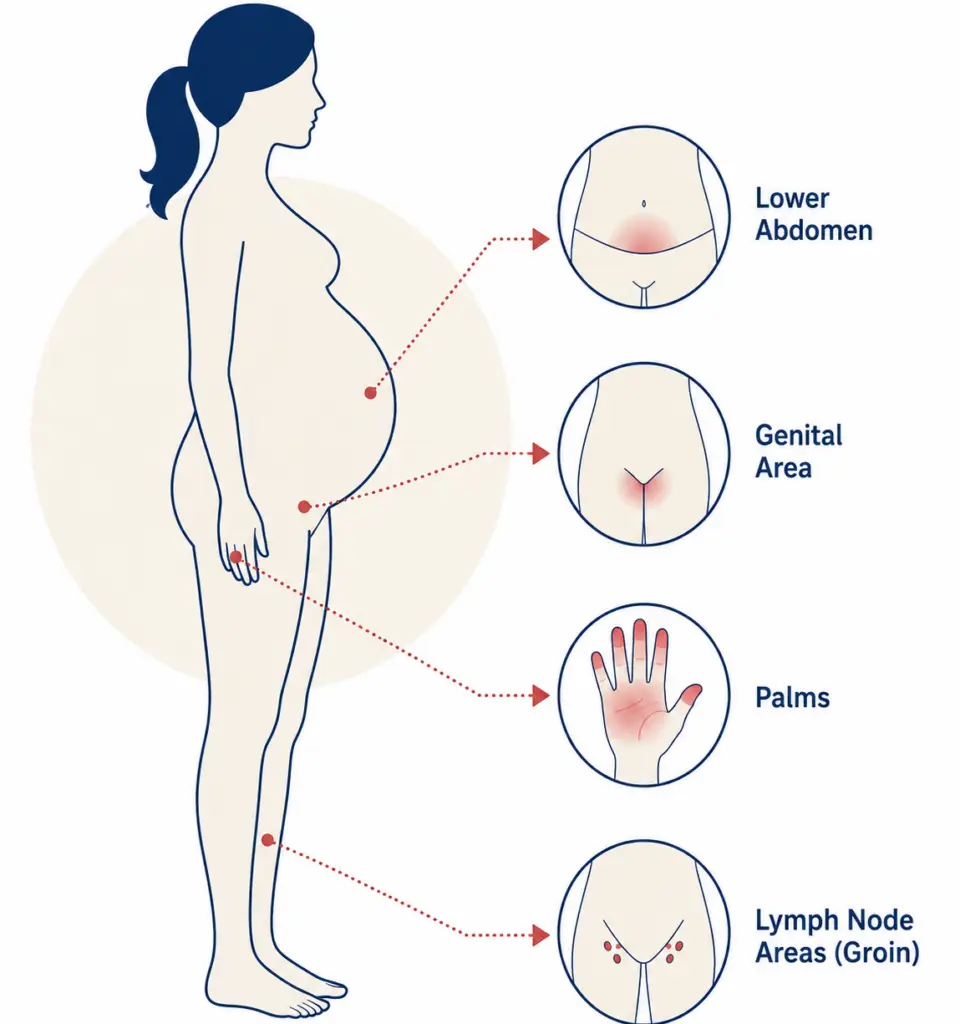
Possible symptoms of STIs during pregnancy include:
- Unusual vaginal discharge with a strong odor or color change
- A burning feeling when you urinate
- Sores, blisters, or raised bumps near the genitals
- Lower belly pain or pelvic pressure
- A skin rash, especially on your palms or the soles of your feet
- Swollen or tender lymph nodes in the groin
Even without any of these signs, all pregnant women should be screened at their very first prenatal appointment. The Office on Women’s Health recommends routine STI testing as a standard part of prenatal care throughout the United States.
STIs in Pregnancy and What Each Infection Means for Your Baby
Different sexually transmitted infections carry different risks during pregnancy. Here is what current medical guidelines say about the most common ones.
Chlamydia in Pregnancy
Chlamydia is the most commonly reported STI in the United States. Most pregnant women who have it notice no symptoms at all. Still, untreated chlamydia during pregnancy raises the risk of preterm labor and low birth weight.
During delivery, chlamydia can pass from mother to baby through the birth canal. A baby exposed during birth may develop:
- Eye infections causing redness, swelling, and discharge
- Pneumonia
- Serious eye damage if left untreated
What Happens If You Have Chlamydia While Pregnant
The risk of passing chlamydia to your baby during birth is between 20% and 50% for eye infections. Lung infections occur in 10% to 20% of exposed newborns. Fortunately, antibiotic treatment before your due date nearly eliminates this risk entirely.
According to CDC chlamydia treatment guidelines, azithromycin and amoxicillin are both safe and effective during pregnancy. Doxycycline must not be used after the first trimester.
Gonorrhea in Pregnancy
Gonorrhea often causes no symptoms in pregnant women. Without treatment, however, it can lead to premature rupture of membranes, preterm delivery, and low birth weight.
A baby born through an infected birth canal may develop a serious eye infection. Without quick antibiotic treatment, that infection can cause permanent vision loss. Most hospitals give all newborns antibiotic eye drops at birth to prevent this.
The treatment of gonorrhea in pregnancy uses a single injection of ceftriaxone. This is safe for both mother and baby. Your sexual partner also needs treatment at the same time, or reinfection is likely.
Syphilis in Pregnancy
Syphilis is one of the most dangerous STIs for an unborn baby. It can cross the placenta and infect the baby at any stage of pregnancy. Untreated syphilis during pregnancy can result in:
- Miscarriage or stillbirth
- Premature birth
- Congenital syphilis affecting the skin, bones, and organs
- Lifelong complications including deafness, blindness, and neurological damage
The March of Dimes notes that syphilis is a leading cause of preventable stillbirth in the United States. Penicillin G injections are the only proven treatment for syphilis during pregnancy. Early detection gives your baby the best possible outcome.
Herpes (HSV) in Pregnancy
Herpes during pregnancy is manageable with the right care. A herpes infection is relatively low-risk during most of the pregnancy. However, an active outbreak near your delivery date raises the chance of passing the virus to your baby during a vaginal birth.
If you have active sores when labor begins, your doctor will likely recommend a cesarean delivery. Antiviral medication such as acyclovir is safe in the third trimester and reduces the risk of an outbreak at delivery. Many women with herpes go on to have completely healthy pregnancies.
HIV in Pregnancy
HIV treatment during pregnancy is highly effective. With antiretroviral therapy started early and continued through delivery, the risk of passing HIV to your baby can drop below 2%. Without treatment, that risk ranges from 15% to 45%.
According to the World Health Organization, proper monitoring and treatment mean most people with HIV can expect a safe pregnancy and a baby born free of the virus. Early testing and consistent care make all the difference.
Treatment of Sexually Transmitted Diseases During Pregnancy
Most STIs can be treated safely during pregnancy. Treating them early leads to the best outcomes for your baby. Here is a summary of current recommended treatment options.
| STI | Recommended Treatment During Pregnancy |
|---|---|
| Chlamydia | Azithromycin or Amoxicillin |
| Gonorrhea | Ceftriaxone injection |
| Syphilis | Penicillin G injection |
| HIV | Antiretroviral therapy (ART) |
| Herpes (HSV) | Acyclovir (third trimester) |
A few points worth knowing:
- Doxycycline is not safe to use after the first trimester
- Always finish the full antibiotic course, even when you feel better early
- Your sexual partner needs treatment at the same time to prevent reinfection
- Viral STIs like HIV and herpes cannot be cured, but they can be well managed with medication throughout pregnancy
When STI Testing Happens During Pregnancy
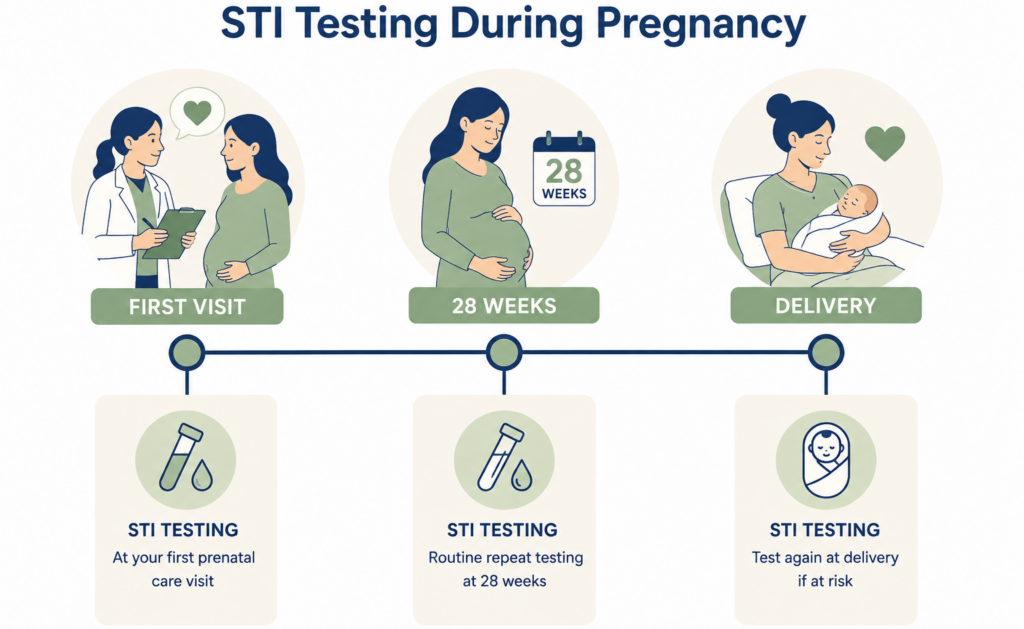
STI screening is built into your prenatal care at key points throughout the pregnancy. Your OB-GYN or midwife will run tests at these times.
Standard STI screening during pregnancy typically includes:
- First prenatal visit tests for chlamydia, gonorrhea, syphilis, HIV, and hepatitis B
- Around 28 to 36 weeks brings repeat syphilis and HIV testing for those at higher risk
- At delivery, the American College of Obstetricians and Gynecologists now recommends syphilis screening for all women, regardless of prior results
If you think you were exposed to an STI between scheduled visits, do not wait. Same-day testing is available at most OB offices and women’s health clinics. Our guide to early pregnancy symptoms can also help you understand what to expect at your first prenatal appointments and what screening your provider will recommend.
How to Protect Yourself and Your Baby from STIs in Pregnancy

Prevention during pregnancy starts with consistent prenatal care. A few practical steps go a long way in reducing risk.
- Attend every prenatal visit and complete all recommended STI screenings
- Use condoms consistently if you or your partner may have been exposed to an infection
- Ask your partner to get tested early in your pregnancy
- Tell your provider about any change in sexual partners during pregnancy
- Take antiviral medication in your third trimester if you have herpes, exactly as your doctor directs
- Finish every prescribed antibiotic course, even when symptoms clear early
Open communication with your care team is one of the most effective tools you have. You will not be judged for asking about sexual health. We also have helpful advice on staying well during pregnancy that covers practical ways to support your health from the first trimester through delivery.
When to See a Doctor
Contact your OB-GYN or midwife right away if you notice any of the following signs.
- New sores, bumps, or blisters around your genitals
- Unusual vaginal discharge with a change in color or a strong smell
- Pain or burning when you urinate
- A skin rash anywhere on your body, especially your palms or feet
- A notification that a recent sexual partner has tested positive for an STI
Do not wait until your next scheduled appointment if you are concerned. Prompt testing and treatment make a real difference for both you and your baby.
Staying current on STI screening throughout your pregnancy is one of the most impactful steps you can take for your baby’s health. Most infections respond well to safe, proven treatments. Many can be fully cleared before your delivery date. Work closely with your prenatal care team, be open about your health history, and take every recommended test. You deserve a safe and healthy pregnancy.
Frequently Asked Questions
What are the most common symptoms of STIs during pregnancy?
Most STIs during pregnancy cause no symptoms at all. When signs do appear, they can include unusual vaginal discharge, pain when urinating, sores near the genitals, or a skin rash. Because so many infections are silent, routine prenatal screening is the most reliable way to know your status.
What happens if you have chlamydia while pregnant?
If left untreated, chlamydia can lead to preterm labor and low birth weight. During delivery, it can pass to your baby and cause eye infections or pneumonia. Antibiotic treatment with azithromycin or amoxicillin is safe during pregnancy and clears the infection before birth in most cases.
Is the treatment of gonorrhea in pregnancy safe for the baby?
Yes. A single injection of ceftriaxone is the recommended treatment for gonorrhea during pregnancy and is safe for both mother and baby. Your sexual partner also needs treatment at the same time to prevent reinfection before delivery.
Can an STI cause a miscarriage or stillbirth?
Untreated syphilis is a known cause of miscarriage and stillbirth. Other untreated infections, including gonorrhea and chlamydia, can lead to preterm birth and low birth weight. Early detection and treatment reduce these risks significantly.
How often should I be tested for STIs during pregnancy?
Most providers test at the first prenatal visit, again around 28 to 36 weeks for higher-risk pregnancies, and at delivery for syphilis. If you think you may have been exposed to an STI between visits, ask your provider for same-day testing.
Can my baby get an STI during vaginal delivery?
Yes, several STIs can pass from mother to baby during a vaginal birth. Chlamydia and gonorrhea can cause eye infections in newborns. Herpes can cause a serious infection in the newborn if there is an active outbreak at delivery. Your care team will take steps throughout your pregnancy to reduce this risk.
Written by Theo James
The information on this page is for general educational purposes only and is not a substitute for professional medical advice, diagnosis, or treatment. Always talk with your doctor or another qualified healthcare provider about any questions you have regarding a medical condition. Never ignore professional medical advice or delay seeking it because of something you read on the internet.