
What Is a Bone Spur? Symptoms by Location, Causes and Treatment

What Is a Bone Spur
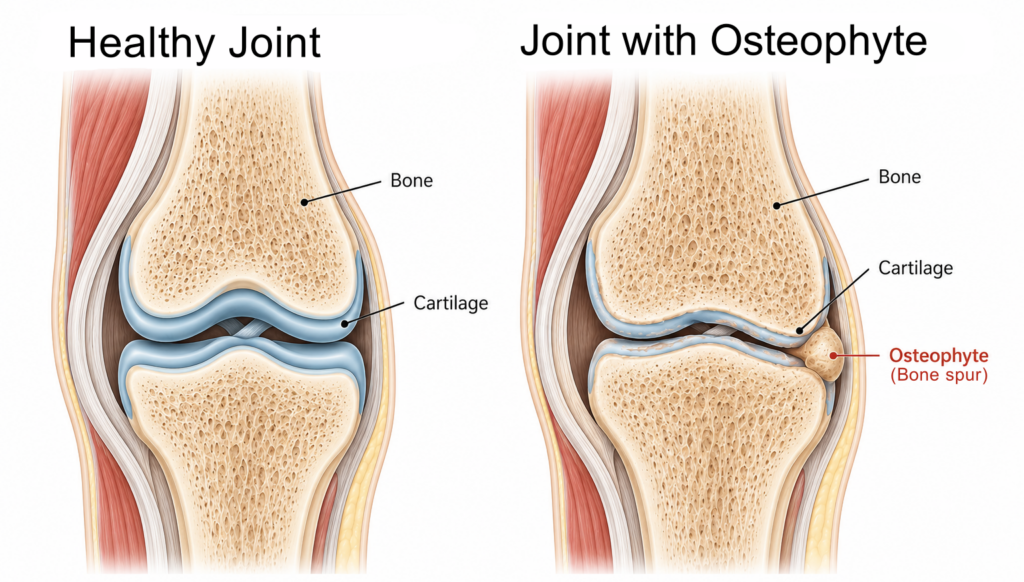
A bone spur, known medically as an osteophyte, is a smooth extra growth of bone that forms along the edge of an existing bone. Despite the name, most bone spurs are actually rounded and smooth rather than pointed. They are not random growths. They form as a direct response to pressure, friction, or ongoing damage at a joint or tendon attachment site. When the body detects prolonged stress or injury at a bone surface, it responds by laying down new bone tissue in an attempt to stabilize the area and spread the load. NIH MedlinePlus on bone diseases notes that osteophytes are the body’s repair mechanism at work, an attempt to protect a stressed structure rather than a malfunction.
Bone spurs develop most often at joints, along the spine, and at the points where tendons and ligaments attach to bone. Many grow silently over years and are only discovered during imaging taken for another purpose entirely.
What Causes Bone Spurs
The most common underlying cause is osteoarthritis. When joint cartilage wears down over time, the bones in the joint begin rubbing against each other. The body responds by growing extra bone along the joint edges in an attempt to spread the load and slow the damage. NIH MedlinePlus on osteoarthritis explains that this cartilage breakdown is the primary driver of osteophyte formation in the knees, hips, spine, and feet.
Other established causes include:
- Repetitive stress and overuse from activities that place sustained pressure on a joint or tendon attachment point, which is why runners, athletes, and people who stand for long hours daily are at higher risk
- Poorly fitting footwear that creates abnormal pressure on specific parts of the foot and toe joints over months and years
- Previous joint or tendon injuries that trigger a localized bone-building response at the repair site
- Normal aging since cartilage naturally thins with age and joints lose cushioning, making osteophyte formation increasingly likely
- Genetics since some people inherit faster cartilage breakdown or a more aggressive bone-remodeling response to stress
Bone Spur Symptoms
Whether a bone spur causes symptoms depends almost entirely on its location and whether it is pressing against anything nearby.
The majority of bone spurs produce no symptoms and require no treatment. They sit quietly without touching nerves or soft tissue. When a spur grows into contact with a nerve, tendon, or adjacent tissue, however, the resulting symptoms can range from mildly irritating to genuinely debilitating.
Common bone spur symptoms when present include:
- A dull, steady ache in or around a joint that worsens with activity and eases with rest
- A sharp, stabbing pain with the first steps of the day or after long periods of rest
- Numbness or tingling when the spur presses on a nearby nerve
- Reduced range of motion in the affected joint as the spur physically blocks full movement
- Swelling and tenderness around the joint after use
- A hard bump felt or visible under the skin at locations like the heel or the top of the big toe
Bone Spur Symptoms by Location
Where the bone spur forms determines what you feel and how it affects daily life. Different locations produce distinctly different symptom patterns.
Heel Bone Spur Symptoms
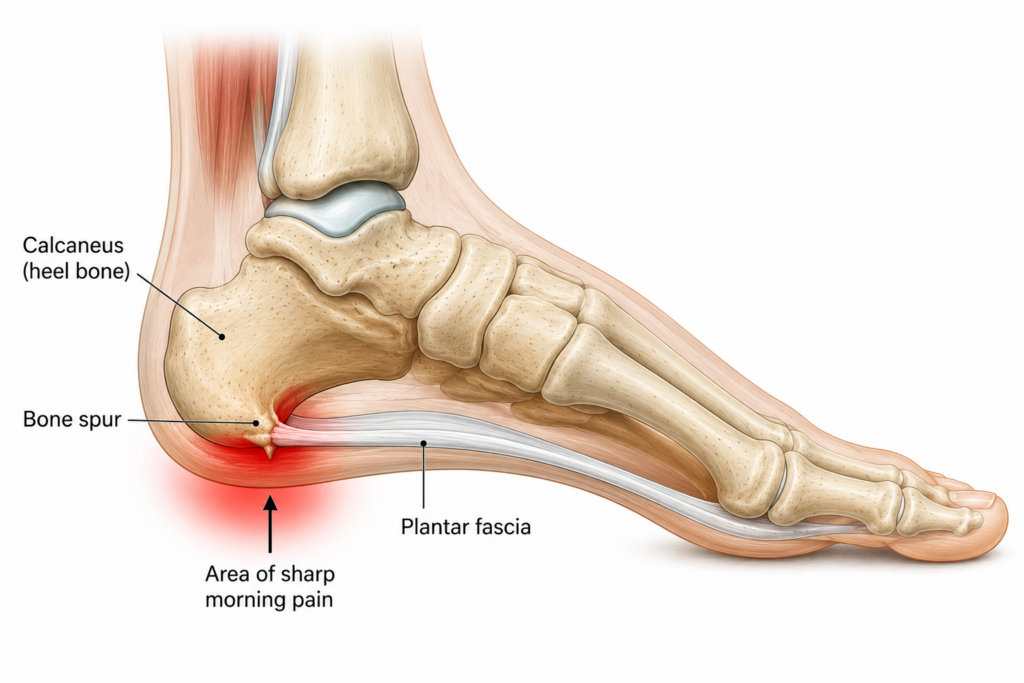
Heel bone spurs are among the most commonly diagnosed locations. They form on the underside of the heel bone, frequently at the point where the plantar fascia attaches. NIH MedlinePlus on heel injuries and disorders identifies heel pain as one of the most reported foot complaints in US adults, with bone spurs and plantar fasciitis frequently found together in the same foot.
The signature symptom of a heel bone spur is sharp, stabbing pain with the very first steps in the morning or after a period of sitting or rest. The pain typically eases as you walk and the tissue warms up, only to return after prolonged standing or extended activity. Many people with heel spurs have no pain at all, and the discomfort commonly attributed to the spur is often driven primarily by the plantar fasciitis affecting the same region.
Bone Spur on the Big Toe
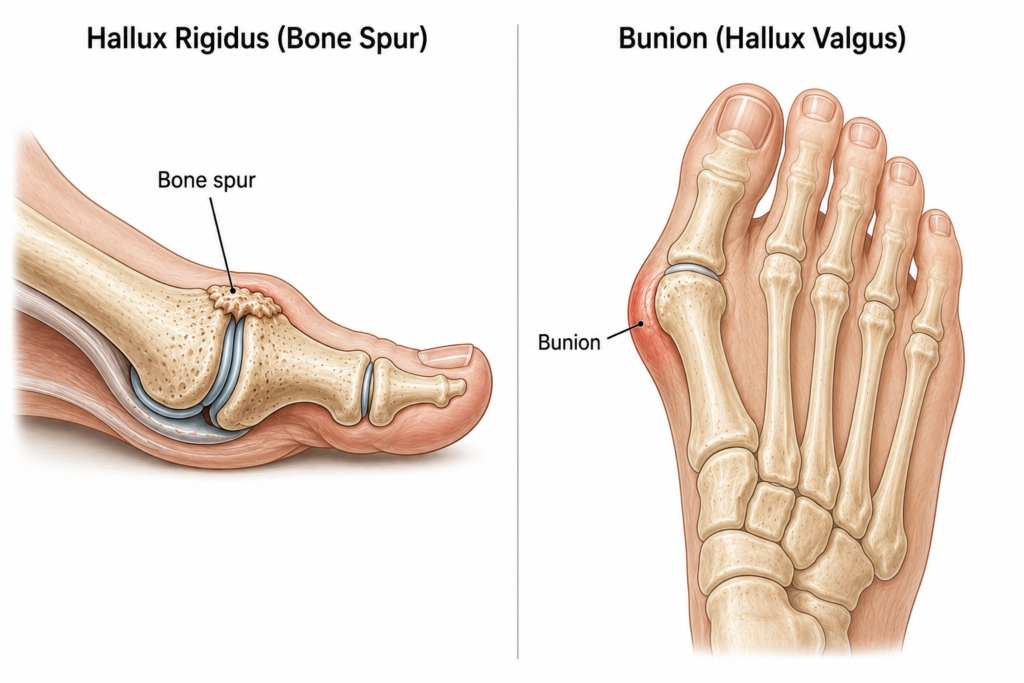
A bone spur on the big toe forms most often on top of the first metatarsophalangeal joint, the large joint where the big toe meets the foot. This condition is called hallux rigidus and is one of the most common arthritic conditions of the foot in adults. NIH MedlinePlus on foot injuries and disorders covers the full range of structural problems at the big toe joint, and osteophytes are a frequent finding in people with pain and stiffness in this area.
Symptoms include stiffness and pain when bending the big toe upward, difficulty pushing off the ground during walking, and a deep aching or throbbing in the joint after any extended activity. In more advanced cases, the joint loses so much mobility that walking and wearing standard shoes becomes consistently painful.
A bone spur on the big toe is often confused with a bunion, but the two conditions are different. A bunion involves a sideways shift of the big toe, creating a bony bump at the inner edge of the foot. A bone spur on the big toe forms on the top of the joint and restricts upward motion rather than sideways alignment. Both can exist in the same foot, but they require different treatment approaches.
Bone Spurs in the Spine
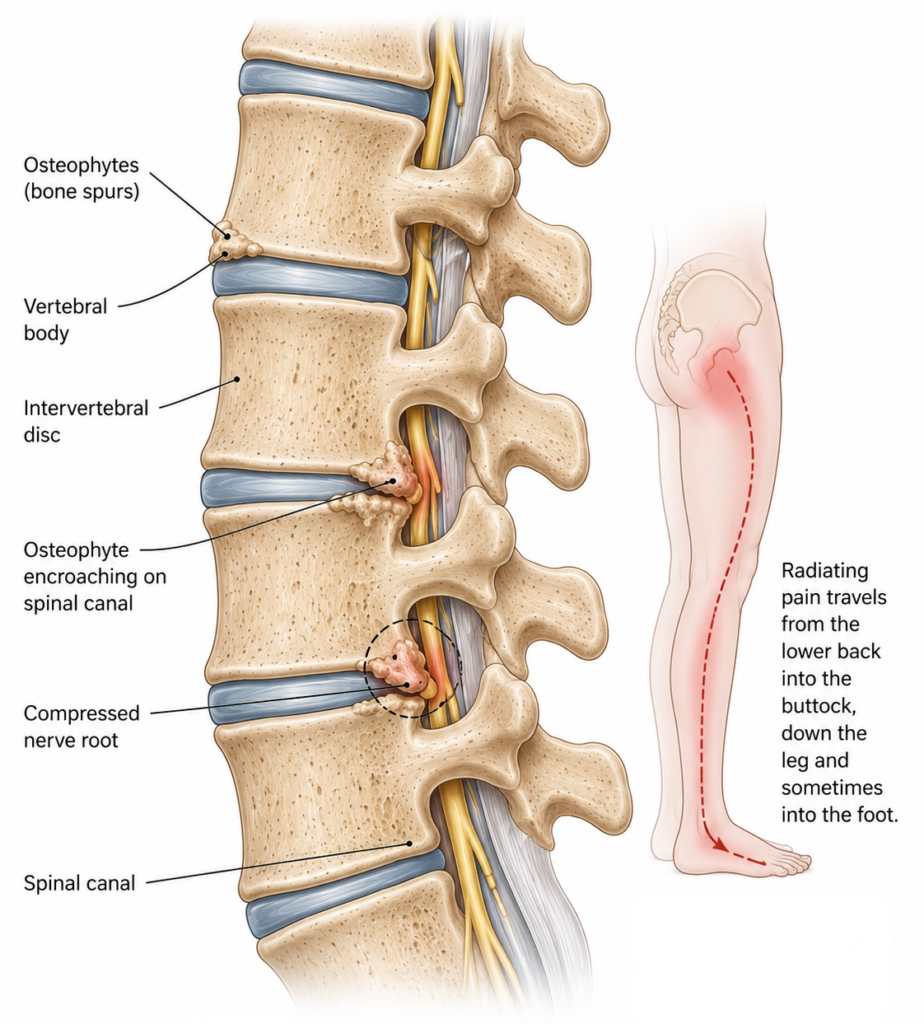
Spinal bone spurs form along the edges of the vertebrae, most commonly in the neck and lower back. When a spur grows into the spinal canal or contacts a nerve root, it can cause neck pain, back pain, numbness, or weakness that radiates down into the arms or legs. This is one of the main mechanisms behind spinal stenosis. NIH MedlinePlus on spinal stenosis explains how the narrowing of the spinal canal, often driven by osteophyte growth over years of arthritis, puts increasing pressure on the nerves passing through and can produce pain and functional limitations throughout the lower body.
Shoulder, Hip and Knee Bone Spurs
Shoulder bone spurs typically form on the underside of the acromion, the bony arch above the rotator cuff. They can compress the rotator cuff tendons and contribute to impingement syndrome, causing pain when lifting the arm above shoulder height. Hip and knee spurs develop as a result of osteoarthritis and produce joint stiffness, reduced range of motion, and a grinding or catching sensation during movement.
Do Foot Spurs Go Away? Can Bone Spurs Heal on Their Own?
These are two of the most commonly searched questions about bone spurs, and the honest answer has two distinct parts.
A bone spur itself does not dissolve or disappear without intervention. Once the body has deposited extra bone at a site, that bone remains. It does not get reabsorbed spontaneously. So in the literal sense, no, a bone spur does not go away on its own.
The pain from a bone spur, however, very often does improve substantially without surgery. The discomfort comes mostly from inflammation and soft tissue irritation around the spur, not from the spur pressing with unchanging constant force. When that inflammation is treated through rest, better footwear, physical therapy, and anti-inflammatory medication, the pain can reduce significantly or resolve entirely even though the spur itself stays in place.
Most heel bone spurs, the most common type, respond well to conservative care. The majority of people experience meaningful relief within 6 to 12 months without any surgical procedure. Physical therapy, custom orthotics, and supportive footwear account for the improvement. Surgery to remove a bone spur is considered only when conservative care has been consistently followed for at least 6 to 12 months without adequate relief.
How Are Bone Spurs Diagnosed
Bone spurs are identified through imaging in almost all cases. The main tools are:
X-ray is the standard first step. Bone shows clearly on X-ray, and most established bone spurs are visible. A straightforward foot, heel, or spine X-ray can confirm the presence of a spur and indicate its size and position in relation to surrounding structures.
MRI provides a detailed picture of the soft tissues surrounding the spur, helping the doctor assess whether the spur is pressing on a nerve, tendon, or ligament. MRI is particularly valuable for spinal and shoulder spurs where the relationship with nerves is the most important factor.
CT scan gives precise three-dimensional imaging of the bone and is used when surgery is being planned or when the exact dimensions and position of the spur need to be mapped before a procedure.
Many bone spurs are incidental findings, discovered during imaging performed for an unrelated injury or complaint, particularly in the spine and feet.
Bone Spur Treatment
Asymptomatic bone spurs found by chance on imaging require no treatment at all. For spurs that are causing symptoms, treatment follows a clear progression.
Conservative Care
- Rest and activity modification to reduce the repetitive stress aggravating the spur and surrounding tissue
- Over the counter anti-inflammatory medication such as ibuprofen or naproxen to reduce swelling and pain
- Supportive footwear and custom orthotics for foot and heel spurs, redistributing pressure away from the painful area
- Ice therapy applied after activity to reduce inflammation and soreness around the joint
Physical Therapy

Physical therapy is one of the most effective tools for bone spur pain, particularly in the heel, foot, and spine. A physical therapist improves flexibility and strength in the muscles and tendons around the spur, which directly reduces the mechanical stress causing the irritation. Consistent calf muscle and plantar fascia stretching dramatically reduces heel spur pain for the majority of patients when performed daily over several weeks.
Corticosteroid Injections
When conservative care alone does not provide enough relief, a corticosteroid injection into the tissues around the spur can reduce inflammation significantly. Relief typically lasts weeks to months and can be repeated in some situations. The injection addresses the inflammatory response that is producing the pain rather than the spur itself.
Surgery
Surgery is reserved for cases where all conservative options have been consistently followed for at least 6 to 12 months and pain remains severe enough to limit daily function. The procedure removes the bony growth and, for foot spurs, often addresses associated tissue at the same time. Recovery takes several weeks to months depending on the location and complexity.
Treatment Comparison
| Treatment Option | Best For | Typical Timeline | Expected Outcome |
| Rest and activity changes | Mild to moderate symptoms | 4 to 8 weeks | Moderate relief |
| Physical therapy | Foot, heel and spine spurs | 8 to 16 weeks | Good |
| Orthotics and supportive footwear | Foot and heel spurs | Ongoing use | Good |
| Corticosteroid injection | Moderate to severe pain | 1 to 3 sessions | Good, variable duration |
| Surgery | Severe cases after failed conservative care | 3 to 6 months recovery | Very good |
When to See a Doctor
A little heel soreness after a long walk does not warrant an immediate appointment. These signs mean it is time to get evaluated.
- Pain that does not improve after several weeks of rest and anti-inflammatory medication
- Discomfort severe enough to change how you walk or limit daily activities
- Numbness, tingling, or weakness in a foot, leg, or arm alongside joint pain
- A growing or increasingly tender hard bump at a joint
- Back or neck pain that shoots down into the arms or legs
Seek urgent evaluation if:
- You experience weakness in the legs or lose control of bladder or bowel function alongside spine pain, since these can signal serious nerve compression that requires prompt treatment
Bone spurs are extremely common and the vast majority never cause a problem worth treating. When they do produce pain, the location is the single most important factor in both what you feel and what to do about it. A heel spur and a big toe spur are both real conditions but they need different types of attention. Most people with painful bone spurs get lasting relief from conservative care alone, and surgery is rarely the first or necessary answer.
Frequently Asked Questions
What does a bone spur feel like?
How a bone spur feels depends on its location and whether it contacts a nerve or soft tissue. In the heel it typically produces sharp, stabbing pain with the first steps of the morning. A bone spur on the big toe causes stiffness and pain when bending the toe upward or pushing off during walking. Spinal bone spurs often produce a dull ache or pain that radiates down into the arms or legs. Many bone spurs cause no sensation at all and are found only on routine imaging.
What causes bone spurs to form?
The most common cause is osteoarthritis, where worn cartilage allows bones to contact each other and the body responds by growing extra bone at the joint edges. Repetitive stress from running, prolonged standing, or poorly fitting shoes also triggers bone spur formation at specific pressure points. Aging, previous joint injuries, and a genetic tendency toward faster cartilage wear all increase the likelihood.
Can bone spurs heal or go away without surgery?
A bone spur once formed does not dissolve on its own. The bone stays. However, the pain from a bone spur frequently does resolve without surgery because the discomfort comes from inflammation around the spur rather than the spur itself. Most heel bone spurs, for example, respond well to conservative care and most people experience significant relief within 6 to 12 months without any procedure.
Do foot spurs always need surgery?
No. The vast majority of foot spurs, including heel spurs and big toe spurs, respond adequately to conservative care without surgery. Physical therapy, custom orthotics, supportive footwear, and anti-inflammatory measures resolve symptoms for most people over several months. Surgery is considered only after at least 6 to 12 months of consistent conservative treatment has not produced enough improvement.
How is a bone spur on the big toe different from a bunion?
A bunion involves a sideways drifting of the big toe that creates a visible bony bump on the inner edge of the foot. A bone spur on the big toe forms on top of the joint and restricts upward motion rather than sideways alignment. A bunion pushes the toe toward the others, while a big toe bone spur makes it stiff and painful to bend upward. Both can be present in the same foot at the same time but require different treatment approaches.
How long does it take to recover from bone spur treatment?
For conservative treatment, most people notice meaningful improvement within 6 to 12 weeks and full symptom relief over 3 to 6 months of consistent effort. Recovery from bone spur surgery takes 6 to 12 weeks for most foot procedures, with a full return to activity and sport taking 3 to 6 months depending on which bone was involved and what was done during the procedure.
Written by Theo James
The information on this page is for general educational purposes only and is not a substitute for professional medical advice, diagnosis, or treatment. Always talk with your doctor or another qualified healthcare provider about any questions you have regarding a medical condition. Never ignore professional medical advice or delay seeking it because of something you read on the internet.