
Hand Pain From Holding Your Phone Is More Common Than You Think
How Holding Your Phone Causes Hand Pain and Wrist Strain
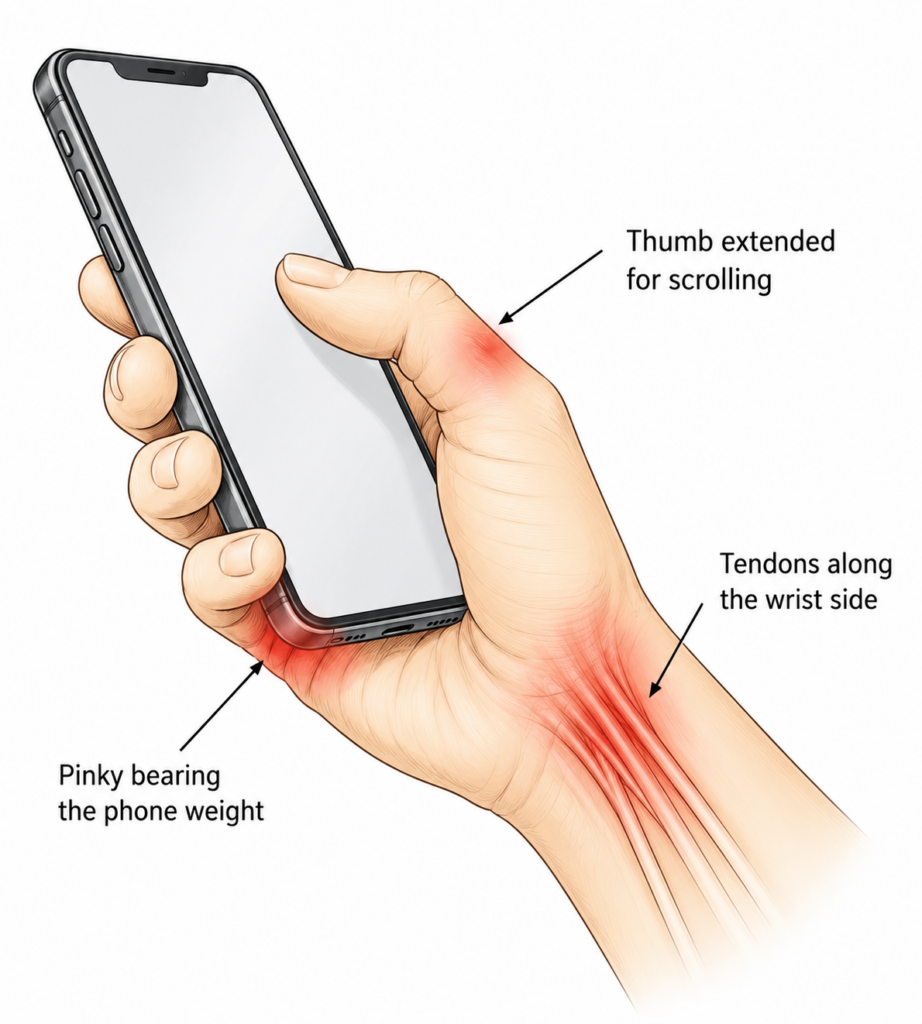
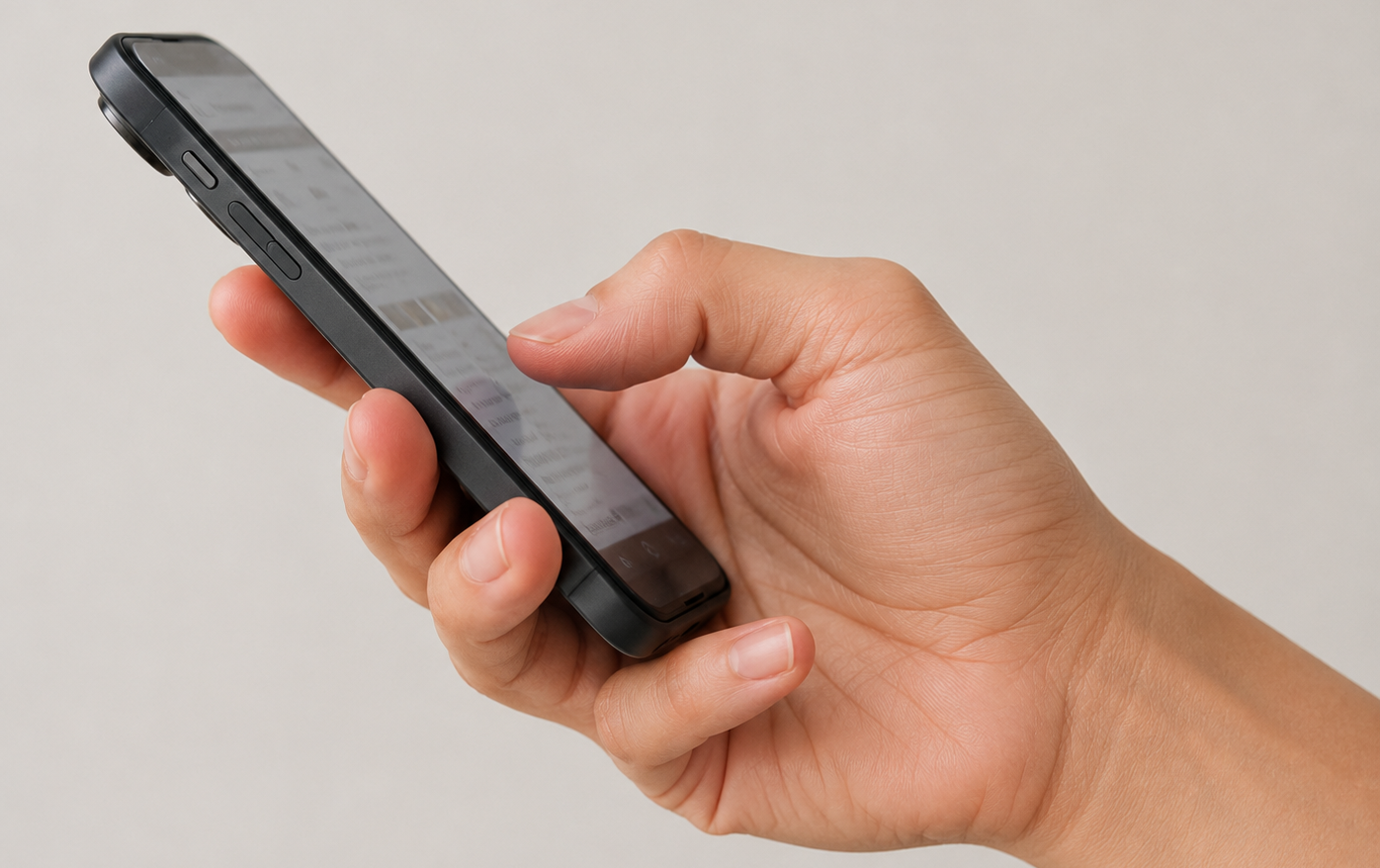
Your smartphone feels light, but holding it for hours is far more demanding than it looks. When you grip your phone, especially with one hand while your thumb taps and scrolls, you’re asking the muscles and tendons in your hand to stay contracted without rest. Over time, that repeated tension causes inflammation in the tendons, compression of the nerves running through your wrist and elbow, and gradual stress on the small joints in your fingers.
Most people prop their phone on the pinky finger as a makeshift shelf. That small finger carries far more load than it was built for. Add hours of thumb scrolling and typing, and you’ve created exactly the right conditions for pain to build without any obvious warning sign.
Why Your Fingers Go Numb When Holding Your Phone
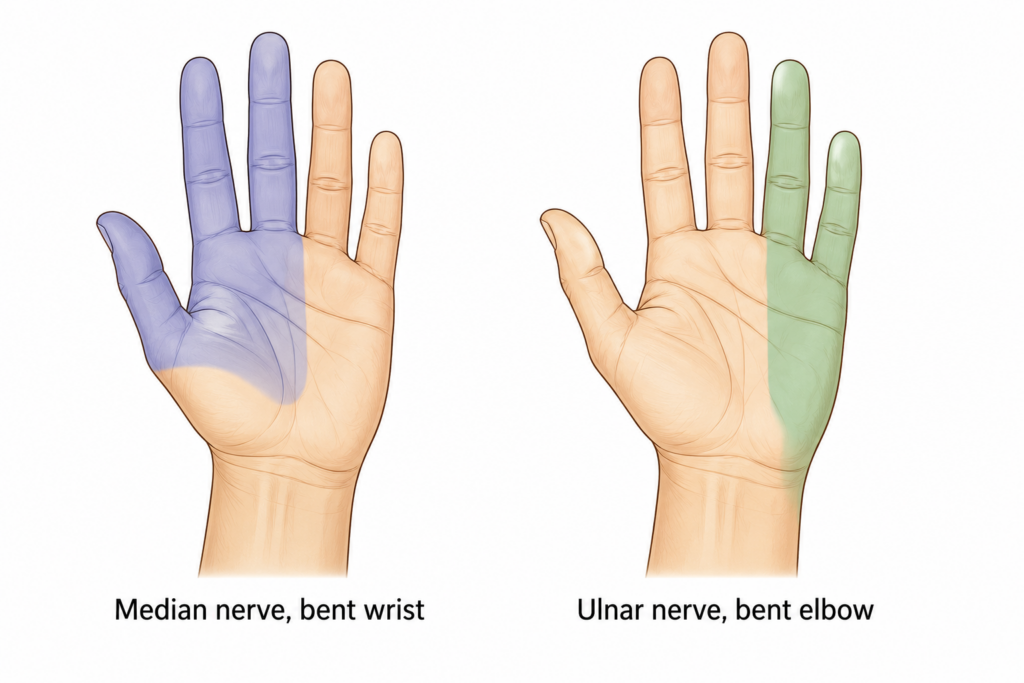
Finger numbness when holding your phone is caused by nerve compression, not poor circulation. If your thumb, index, and middle fingers go numb, the median nerve in your wrist is likely being compressed from a bent wrist position. If your ring and pinky fingers go numb, the ulnar nerve at your elbow is the cause. Straightening your arm usually brings relief within minutes.
The median nerve runs through your wrist and controls sensation in your thumb, index, middle, and part of your ring finger. When your wrist stays bent while you scroll, that position squeezes the nerve and produces tingling or a dull ache in those fingers.
The ulnar nerve travels along the inside of your elbow down to your pinky and ring finger. A lot of people hold their phone with their elbow bent tightly against their side, especially when lying down at night. Holding that position for 20 minutes or more is enough to compress the ulnar nerve and make those outer fingers go numb or tingle.
If your fingers go numb when holding your phone, try straightening your arm and resting your elbow on a flat surface. Switch the phone to your other hand. The sensation typically clears within a few minutes once the pressure lifts.
Common Conditions That Develop From Phone Use
Your phone is asking your tendons and nerves to do repetitive work for hours at a time, and when they push back, they do so in predictable ways. Here is how the four most common phone-related hand conditions compare.
| Condition | Main Symptom | Where You Feel It | What Triggers It |
| Carpal Tunnel Syndrome | Numbness and tingling | Thumb and first three fingers | Bent wrist for long periods |
| Cubital Tunnel Syndrome | Numbness and aching | Ring finger and pinky | Elbow bent for long periods |
| De Quervain’s Tenosynovitis | Sharp pain near thumb base | Thumb and wrist | Gripping and scrolling |
| Trigger Thumb | Clicking or locking | Thumb joint | Repeated thumb bending |
Carpal Tunnel Syndrome
Carpal tunnel syndrome develops when the median nerve inside your wrist gets squeezed by surrounding tissue. According to updated orthopedic guidance from 2024, holding a smartphone for two or more hours a day can meaningfully increase carpal tunnel risk, particularly when the wrist stays in a bent position during use. The NIH overview of carpal tunnel syndrome outlines the full range of symptoms, which include nighttime tingling, burning, and a weakening grip that gets worse over time.
Cubital Tunnel Syndrome
This one is less talked about but increasingly common. It develops when the ulnar nerve gets compressed at the elbow, which happens directly from holding your phone with your arm bent and pressed against your side. The American Academy of Orthopaedic Surgeons reports on cubital tunnel syndrome that it’s a growing problem among younger adults whose phone habits keep the elbow bent for extended periods. Aching in the forearm and numbness in the ring and pinky fingers are the telltale signs.
De Quervain’s Tenosynovitis
Say it as “deh kwer VANES.” This condition affects the tendons that run along the thumb side of the wrist. Inflammation from repetitive gripping and swiping causes pain that feels sharp when you try to pinch something or turn a doorknob. The Mayo Clinic guide to De Quervain’s tenosynovitis is a solid resource if you want to go deeper on diagnosis and treatment options. It’s one of the most common overuse injuries in heavy smartphone users, and the pain can sneak up slowly before it becomes hard to ignore.
Trigger Thumb
Trigger thumb happens when the tendon that bends your thumb becomes irritated and swollen. It can catch mid-bend and lock, then release with a pop. Repeated tapping on a phone screen is a direct contributor. If your thumb has been clicking or getting stuck, this is the likely explanation.
Does Cell Phone Radiation Really Cause Hand Pain
This question comes up constantly, so it deserves a direct answer. No, cell phone radiation does not cause hand pain. According to FDA guidance on cell phones and radiofrequency radiation, the energy that smartphones emit is non-ionizing radiation. That means it doesn’t carry enough energy to damage tissue, break chemical bonds, or cause pain in the hands. The WHO fact sheet on mobile phones and electromagnetic fields confirms the same finding, noting that RF levels from phones fall well below established safety thresholds.
This is fundamentally different from X-rays or UV radiation, which are ionizing. No credible research has linked smartphone RF energy to physical pain in the hands or fingers.
That said, your phone absolutely can cause hand pain. Just not through radiation. The real culprit is the mechanical load of gripping, holding, and operating the device for hours at a time. At bannerhealth.io, we hear this question regularly, and the answer is the same every time. The radiation isn’t hurting your hands. The grip is.
Stretches and Exercises That Ease the Pain
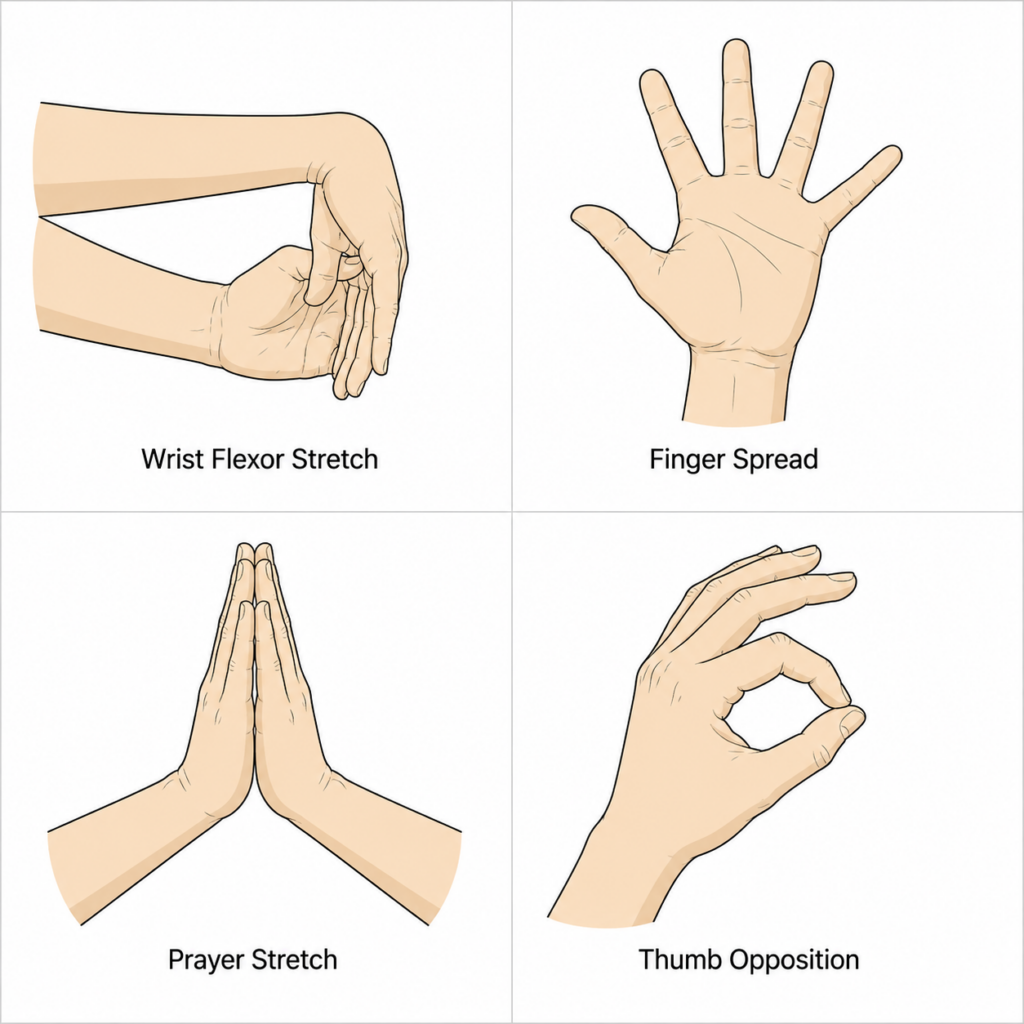
Small, consistent movement is one of the most effective ways to recover from phone-related hand pain. These four exercises take under five minutes combined and can be done anywhere.
Wrist Flexor Stretch
Extend one arm out in front of you with your palm facing up. Use your other hand to gently pull your fingers back toward your body. Hold for 20 to 30 seconds. Switch sides. This targets the muscles along the underside of your forearm that tighten from long bouts of phone use.
Finger Spread
Hold your hand flat and spread your fingers as wide apart as possible. Hold for 5 seconds, then relax. Repeat 10 times on each hand. This reduces stiffness from hours of gripping.
Prayer Stretch
Place your palms together in front of your chest with fingers pointing up. Slowly lower your joined hands toward your waist until you feel a gentle pull along the inside of your wrists. Hold for 20 seconds. This directly targets the carpal tunnel area.
Thumb Opposition
Touch your thumb tip to each fingertip one at a time, moving from index to pinky and back. Repeat five times on each hand. This keeps the small muscles of your hand active and flexible.
If you do these daily and still notice pain building, that’s a clear sign your hands need more than self care.
When to See a Doctor
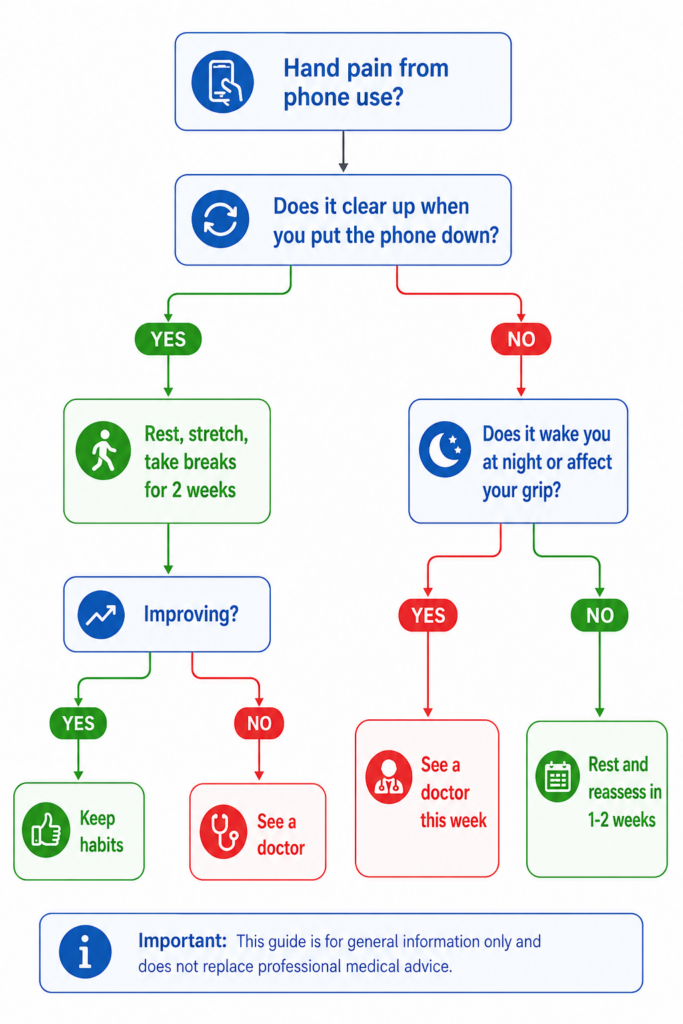
Most phone-related hand pain gets better with rest, stretching, and better habits. But some symptoms tell you it’s time to stop waiting and make an appointment.
See your doctor if you notice any of the following.
- Numbness or tingling that doesn’t clear up after you put your phone down
- Pain that wakes you up at night or is still present first thing in the morning
- Weakness in your grip or difficulty holding everyday objects
- A thumb or finger that locks, pops, or catches when you try to bend it
- Pain that hasn’t improved after two to three weeks of rest and stretching
- Visible swelling or inflammation around the wrist, thumb, or finger joints
Sharp or sudden pain paired with grip weakness is worth a same week appointment, not a wait-and-see approach. Nerve conditions caught early are far easier to treat than ones that have been building quietly for months.
The Bottom Line
Hand pain from holding your phone is caused by real physical stress on your nerves, tendons, and joints, and it builds quietly before most people connect it to their phone habits. You’re not stuck with it. Start with rest, daily stretching, and small habit changes like switching hands more often and keeping your elbow straight when you scroll. If things aren’t better within a couple of weeks, or if your grip is getting weaker, talk to your doctor. Getting checked out early puts you on a much faster path to recovery than waiting until the pain becomes impossible to ignore.
Frequently Asked Questions
Why does my hand hurt when I hold my phone?
Hand pain from holding your phone is almost always caused by sustained grip tension and repetitive thumb movements. These habits put steady pressure on tendons and compress the nerves in your wrist and elbow over time. The most common conditions behind this pain include carpal tunnel syndrome, De Quervain’s tenosynovitis, and cubital tunnel syndrome. Rest and stretching help most people, but see a doctor if the pain doesn’t improve within two to three weeks.
Why do my fingers go numb when I hold my phone?
When your fingers go numb while holding your phone, it’s almost always a nerve issue. If your thumb, index, and middle fingers go numb, the median nerve in your wrist is likely being compressed from a bent wrist position. If your ring and pinky fingers go numb, the ulnar nerve at your elbow is the cause, usually from holding your phone with your elbow bent. Straightening your arm and switching hands often brings relief within minutes.
Can cell phone radiation cause hand pain?
No. According to the FDA and the WHO, the radiofrequency radiation from smartphones is non-ionizing and not strong enough to cause tissue damage or physical pain. Your hand pain from phone use comes from the physical act of gripping and operating the device, not from the signals it emits. If your hand hurts from holding your phone, the cause is mechanical, not radiation-based.
How do I stop my hand from hurting when I use my phone?
Switch which hand holds your phone throughout the day to spread the load. Use a phone stand for reading or watching to take the grip out of the equation. Keep your elbow relatively straight to protect the ulnar nerve. Take a short break every 20 to 30 minutes of screen time. Daily stretches, particularly the wrist flexor stretch and finger spread, make a noticeable difference when done consistently. If pain continues, talk to a physical therapist.
What is the fastest way to relieve hand pain from phone use?
Rest is the fastest first step. Put the phone down, apply a warm compress to the sore area for 15 minutes, and run through gentle wrist and finger stretches. Over the counter anti-inflammatory medication like ibuprofen can reduce acute pain and swelling in the short term. Most people feel real improvement within a few days of consistent rest. If pain doesn’t improve after a week of rest and stretching, get a professional evaluation rather than pushing through.
Written by Theo James
The information on this page is for general educational purposes only and is not a substitute for professional medical advice, diagnosis, or treatment. Always talk with your doctor or another qualified healthcare provider about any questions you have regarding a medical condition. Never ignore professional medical advice or delay seeking it because of something you read on the internet.