
Why You Have Pain in Your 2nd Toe and What to Do About It

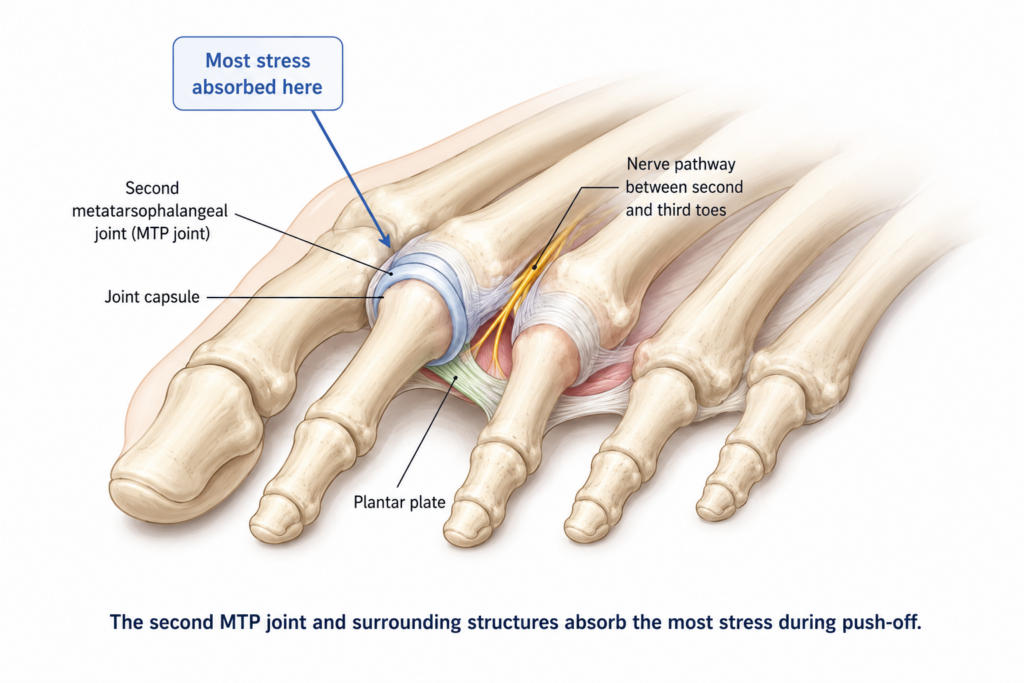
The second toe connects to the ball of the foot through a small band of tissue and several tiny ligaments. When any part of that structure gets inflamed, stretched, or damaged, the pain shows up fast and in ways that can feel confusing. If you want a broader overview of common foot problems and how they develop, MedlinePlus covers foot injuries and disorders in plain, easy-to-follow language.
Common Causes of Pain in the 2nd Toe
Second toe pain almost always traces back to one of a handful of specific conditions. Here’s what each one feels like and how it typically starts.
Capsulitis
Capsulitis means inflammation of the joint capsule at the base of your second toe. It’s one of the most common causes of pain at the ball of the foot, right where the toe meets the foot. You’ll usually feel a dull ache at first, almost like you’re walking on a pebble. As it worsens, the toe may start to drift toward the big toe and the ball of the foot becomes genuinely sore to press.
Catching it early matters a lot. Untreated capsulitis can lead to a dislocated toe, which is a much harder problem to manage than the inflammation that started it. Tight calf muscles, flat feet, and shoes with no arch support all raise your risk.
Morton’s Neuroma
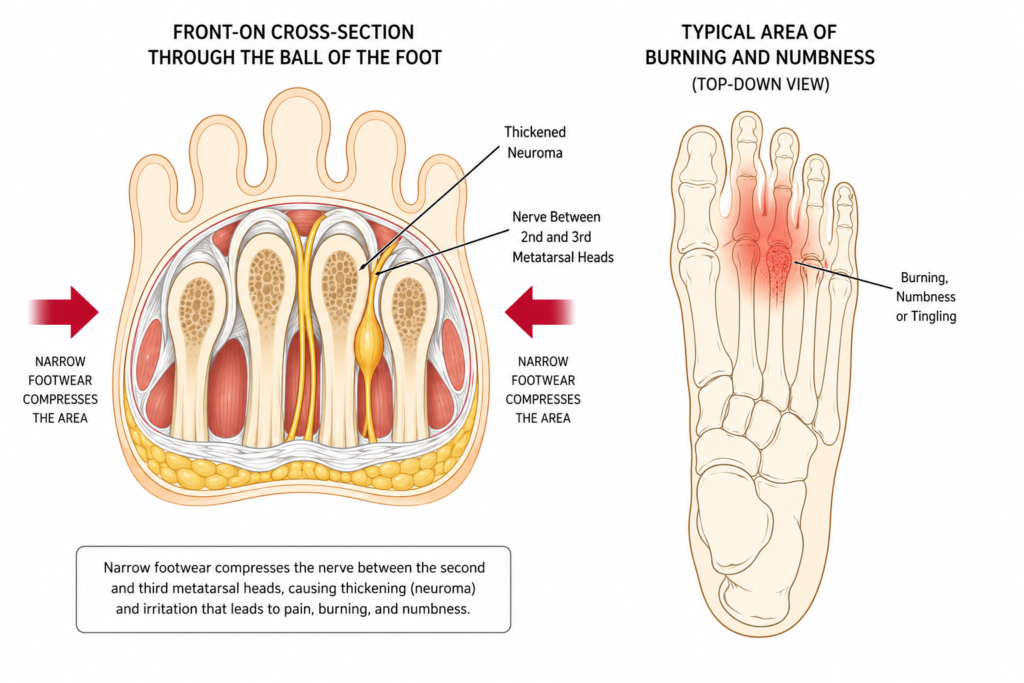
Morton’s neuroma isn’t actually a tumor. It’s a thickening of the nerve tissue that runs between the toes, most often between the second and third toe. That thickening creates pressure, and pressure creates pain. Many people describe it as a burning sensation, or like there’s a small stone stuck inside the shoe right under the ball of the foot.
Numbness and tingling between the toes are common too, which is where that feeling of no sensation in the second toe tends to come from. The Mayo Clinic describes Morton’s neuroma as something that significantly worsens in narrow or high-heeled shoes, and that’s exactly what most people report.
Hammertoe
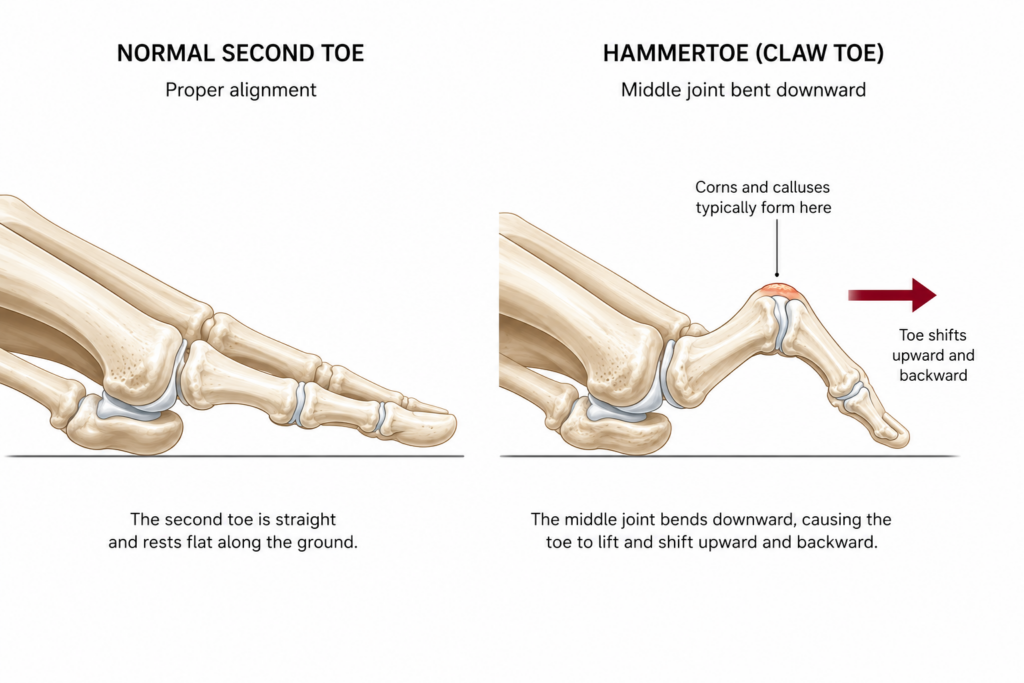
A hammertoe is when the middle joint of the second toe bends downward into a claw shape. It often starts flexible and gets rigid over time if left alone. High heels are the most common culprit because they push the toes into a bent position for hours at a stretch. You might notice a corn or callus forming on top of the bent joint where the shoe constantly rubs.
Mayo Clinic’s overview of hammertoe is worth a read if you’ve noticed your toe curling or looking different from how it used to. Early intervention, while the joint is still flexible, makes treatment far simpler.
Plantar Plate Injury
The plantar plate is a small but important band of tissue that holds your toe in proper alignment. When it tears, even partially, the second toe loses its anchor. You’ll feel pain on the underside of the foot near the toe joint, and the toe itself may start to cross over or drift sideways. These tears happen gradually through years of repetitive impact, or sometimes suddenly from a single misstep.
This is one of the more serious causes of second toe pain and typically needs professional evaluation to diagnose accurately.
Bunion Pressure
A bunion on the big toe doesn’t just create pain at the big toe. It pushes the big toe toward the second toe, crowding it out of alignment. Pain between the big toe and second toe is one of the clearest signs that a bunion is doing more than cosmetic damage. The second toe can start to overlap, become inflamed, or develop its own deformity if nothing is done.
Bone spurs near the toe joint can make this crowding worse over time. If you’ve been told you have a bone spur, our guide to bone spur symptoms and treatment explains how they form and what your options are.
What It Means When Your Second Toe Goes Numb
Losing feeling in your second toe deserves attention, not acceptance. Numbness usually points to nerve involvement, either from Morton’s neuroma putting pressure on the nerve between the toes, or from a systemic condition like diabetes affecting nerve function throughout the feet.
As of 2023, the American Diabetes Association reports that diabetic peripheral neuropathy affects up to 50 percent of people with diabetes, and the feet are almost always where numbness shows up first. If you have diabetes and you’re noticing any new numbness or tingling in a toe, that’s a conversation to have with your doctor right away rather than waiting for a routine checkup.
Numbness in the second toe is usually caused by nerve compression from Morton’s neuroma or tight footwear, or by diabetic peripheral neuropathy. If you have no feeling in your second toe, especially combined with a history of diabetes, see a doctor soon. Untreated nerve problems in the foot can worsen and affect your ability to walk safely over time.
At bannerhealth.io, our health team hears from a lot of readers who’ve had this symptom for months before mentioning it to their doctor. Don’t wait.
Pain Between the Big Toe and Second Toe
That narrow strip between your big toe and second toe has more going on than you might expect. Pain in that specific spot often points to Morton’s neuroma, since the affected nerve runs right through that gap. But bunion pressure, a tight shoe strap, or simple skin irritation can also cause targeted pain there.
If the pain gets worse when you squeeze the front of the foot from side to side, that’s a classic Morton’s neuroma sign. A podiatrist may even reproduce a small click in that area during an exam. It’s called Mulder’s sign, and it’s one of the fastest ways to confirm the diagnosis without imaging.
Toes That Hurt Out of Nowhere
If your toes started hurting suddenly and you can’t point to a specific injury, a few things could be going on. A stress fracture in the second toe is more common than most people realize, especially in runners or anyone who recently ramped up their activity level. The NIH notes that stress fractures in the foot often feel like a dull ache that worsens with activity and eases with rest, which people frequently dismiss as ordinary soreness.
Gout can also cause sudden, intense pain in the toes. It happens when uric acid crystals build up in a joint and trigger a rapid inflammatory response. The National Institute of Arthritis and Musculoskeletal and Skin Diseases explains that gout attacks tend to come on fast, often overnight, and the affected joint becomes red, hot, and swollen within hours. Gout in the second toe is less common than in the big toe, but it absolutely happens.
Understanding a Swollen 2nd Toe
Swelling in the second toe usually means the body is fighting inflammation somewhere in the joint or surrounding tissue. It can come from capsulitis, a sprain, a stress fracture, or even an infection if there’s been a break in the skin near the nail.
Here is a quick comparison of symptom combinations and what they tend to signal.
| Symptom Combination | Likely Cause |
| Swelling plus burning, numbness | Morton’s neuroma |
| Swelling plus ball of foot ache | Capsulitis |
| Swelling plus sudden intense pain | Gout or stress fracture |
| Swelling plus toe curling | Hammertoe with inflammation |
If the toe is red, warm to the touch, and the swelling came on fast with no injury, see a doctor that day. That combination can signal an infection or gout attack that needs prompt treatment rather than a wait-and-see approach.
Signs It’s Time to See a Podiatrist

Most minor toe pain from new shoes or a tough workout settles down in a few days. But there are clear signals that a professional should take a look.
See a podiatrist if you notice any of the following.
- Pain that lasts more than two weeks and doesn’t improve with rest
- Swelling that isn’t going down after several days
- A toe that is starting to drift, cross over, or look visibly different
- Numbness or tingling in the toe or the ball of the foot
- Pain sharp enough to change how you walk
- Any open wound, redness, or warmth near the toe joint
Go to urgent care or an emergency room if the toe becomes severely swollen, hot, and red very quickly, especially if you also have a fever. That combination can indicate a serious infection that needs immediate care, not a scheduled appointment.
How Second Toe Pain Gets Treated
You’d be surprised how often second toe pain resolves without a single trip to the operating room. Treatment depends on what’s causing the pain, but most conditions respond well to conservative care first.
Here’s how the two main treatment tracks compare.
| Treatment Type | Examples | Best For |
| Conservative care | Rest, orthotics, taping, injections | Early or mild cases |
| Surgical options | Nerve removal, joint correction | Severe or unresponsive cases |
Conservative care often includes custom orthotics to redistribute pressure, protective padding around the toe, physical therapy to loosen tight calf muscles, and corticosteroid injections to calm significant inflammation. The American College of Foot and Ankle Surgeons recommends a conservative treatment trial before considering surgery for most second toe conditions.
Surgery is an option for hammertoe correction, plantar plate repair, and Morton’s neuroma removal when conservative options haven’t delivered results. Recovery from these procedures typically ranges from 4 to 12 weeks depending on the type of surgery.
Steps You Can Take to Prevent Second Toe Pain

Prevention usually comes down to choices made long before any pain starts. Shoes are the single biggest factor. A shoe with a wide toe box, solid arch support, and a heel under one inch makes a real difference in how much stress the second toe absorbs throughout the day.
A few practical steps worth building into your routine.
- Replace athletic shoes every 300 to 500 miles, or every 6 months with regular training
- Stretch your calves daily, especially if you sit or stand for long hours at work
- Avoid tight or pointy-toed styles that squeeze the toes together
- Take note of morning toe stiffness. That’s an early warning sign, not just normal aging
- Ask a podiatrist about custom orthotics if you have flat feet or a family history of bunions
The Bottom Line
Pain in the 2nd toe is something millions of Americans deal with, and you don’t have to just push through it. Most cases have a clear cause, a clear fix, and a clear path back to walking without thinking about your foot. Whether the problem traces back to a nerve, a misaligned joint, or years of tough footwear choices, real help is available. If your second toe has been bothering you for more than a couple of weeks, make an appointment with a podiatrist. Getting it checked early almost always means a simpler, faster road to feeling like yourself again.
Frequently Asked Questions
Why does my second toe hurt when I walk?
Pain in the second toe when walking usually means there’s inflammation at the joint or surrounding tissue. Common causes include capsulitis, a plantar plate injury, or Morton’s neuroma, all of which get aggravated by the repeated impact of each step. If the pain builds the longer you walk and eases with rest, that pattern strongly suggests an overuse or structural issue worth having looked at by a podiatrist.
Why does my second toe hurt all of a sudden for no reason?
Sudden second toe pain with no obvious injury is often caused by gout, a stress fracture, or a flare-up of an existing condition like capsulitis that’s been quietly building. Gout attacks, in particular, can strike overnight with intense swelling and redness. If the pain is severe and came on fast, see a doctor soon rather than waiting to see if it improves on its own.
Is it normal to have no feeling in my second toe?
Numbness or loss of feeling in the second toe isn’t something to brush off. It usually points to nerve compression from Morton’s neuroma or tight footwear, or it can be an early sign of diabetic peripheral neuropathy. The American Diabetes Association notes that foot numbness is frequently the first place nerve damage appears in people with diabetes. If you’re experiencing numbness, mention it to your doctor at your next visit, or sooner if it’s getting worse.
What does it mean if my second toe is swollen?
A swollen second toe usually signals inflammation in the joint or surrounding tissue. The cause could be capsulitis, a stress fracture, gout, or an infection if there’s been any break in the skin near the nail. Swelling that came on suddenly with redness and warmth needs same-day medical attention. Swelling that developed gradually and isn’t painful at rest can typically wait for a scheduled podiatry appointment.
Can a bunion cause pain in the second toe?
Yes, and this connection surprises a lot of people. A bunion pushes the big toe toward the second toe, crowding it out of alignment and increasing pressure at its joint. Over time the second toe can start to overlap, become inflamed, or develop its own deformity. Pain between the big toe and second toe is one of the most telling signs that a bunion is affecting the neighboring toe. Addressing the bunion is often necessary to fully relieve the second toe pain.
When should I go to the doctor for second toe pain?
See a podiatrist if your second toe pain has lasted more than two weeks, if the toe looks visibly different, or if you’re changing how you walk because of it. Go to urgent care or the ER if the toe becomes rapidly swollen, red, and hot, or if you also have a fever. If you have diabetes and notice any new foot pain or numbness, don’t wait for a routine appointment since nerve and circulation complications can develop quickly.
Written by Theo James
The information on this page is for general educational purposes only and is not a substitute for professional medical advice, diagnosis, or treatment. Always talk with your doctor or another qualified healthcare provider about any questions you have regarding a medical condition. Never ignore professional medical advice or delay seeking it because of something you read on the internet.