
What Your Feet Say About Your Health

Learning what your feet say about your health can help you catch problems early. A change in color, a stiff toe, or a sore that will not heal can be a sign. It might point to something happening elsewhere in your body. This guide covers what healthy feet look like, which changes matter, and when to call a doctor.
What Does a Healthy Foot Look Like?

A healthy foot has even, smooth skin and a normal temperature. The toes bend and stretch without pain or stiffness. Nails look pink, smooth, and free of ridges or dark spots. Swelling should not stick around for more than a day.
Your feet may ache after a long day on your feet, and that is normal. Rest and a little elevation usually bring quick relief. If swelling, color changes, or pain last more than a few days, pay attention. Your feet could be trying to tell you something more serious is going on.
What Your Feet Say About Your Health When the Color Changes
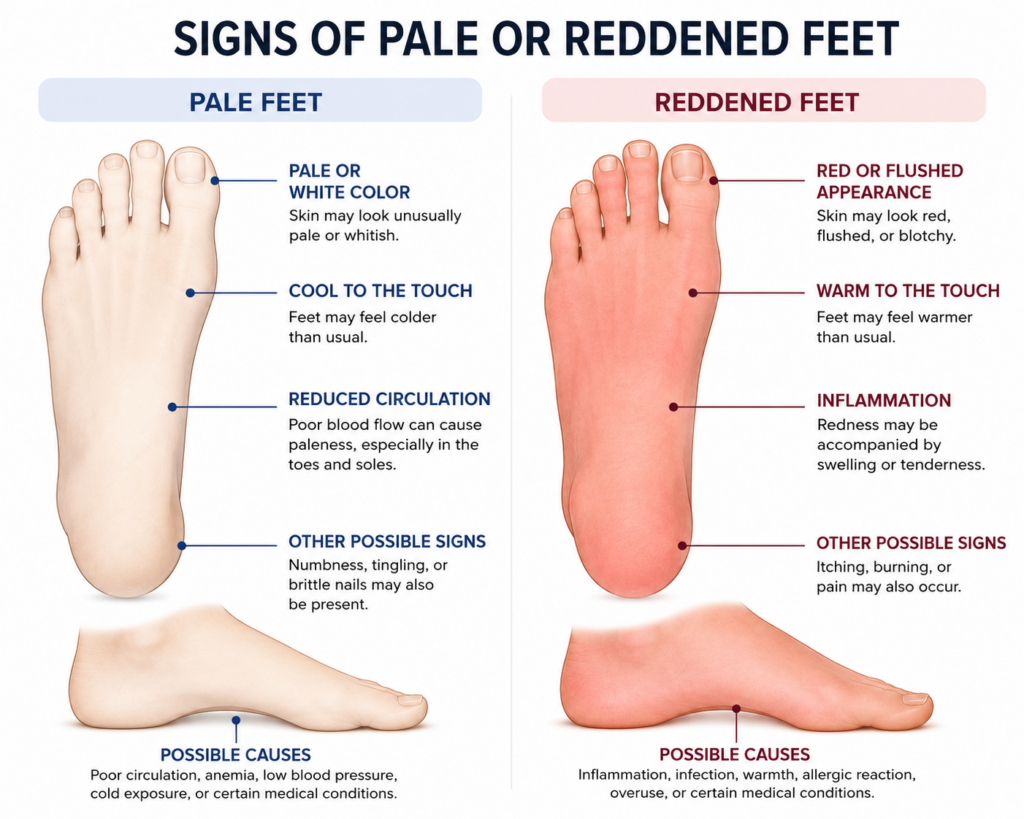
Skin color says a lot about how blood moves through your body. When your feet shift color, it often points to a circulation issue or a nerve problem. These changes are worth a closer look, especially if they stick around.
Why Do My Feet Look Dead or Pale?
Pale, gray, or almost lifeless looking feet can point to poor blood flow. The Cleveland Clinic explains that peripheral artery disease narrows the arteries that carry blood to your legs and feet. This can make skin look pale, cool, or even bluish.
The National Heart, Lung, and Blood Institute lists several early warning signs. These include cold feet, weak pulses in the ankle, and sores that heal slowly. Hair growth on the toes may also slow down or stop completely.
Skin changes are not only about color shifts, either. New spots or patches on your feet deserve the same attention you give your face or arms. BannerHealth.io’s recent article on melanoma, age spots, and other skin changes covers what separates a harmless spot from one a doctor should check.
If pale or bluish feet come with cramping while you walk, do not wait to get checked. Catching circulation problems early gives doctors more ways to help.
Why Are the Bottoms of My Feet So Red?
Red, hot soles can be a sign of erythromelalgia, a rare condition with burning pain and visible redness. The Cleveland Clinic notes that flares often start with heat or activity. Cooling the feet down tends to ease the symptoms.
Less serious causes include athlete’s foot, an allergic reaction, or standing too long in tight shoes. A podiatrist can tell the difference between a passing irritation and something that needs ongoing care. If the redness keeps returning, or if it comes with swelling and pain, it is worth getting checked.
Does the Temperature of Your Feet Affect Your Body?
Yes, in more ways than you might think. Your feet sit at the far end of your circulatory system. That means they are often the first place you notice poor blood flow. When your body senses cold, it pulls blood toward your core to protect vital organs. This can leave your feet feeling chilly even when the rest of you feels fine.
Cold feet that never warm up can point to an underactive thyroid, anemia, or nerve damage from diabetes. On the other hand, feet that always feel hot may signal nerve irritation or infection. Paying attention to how your feet feel, not just how they look, gives you another clue about your health.
Common Toe Problems You Should Know About
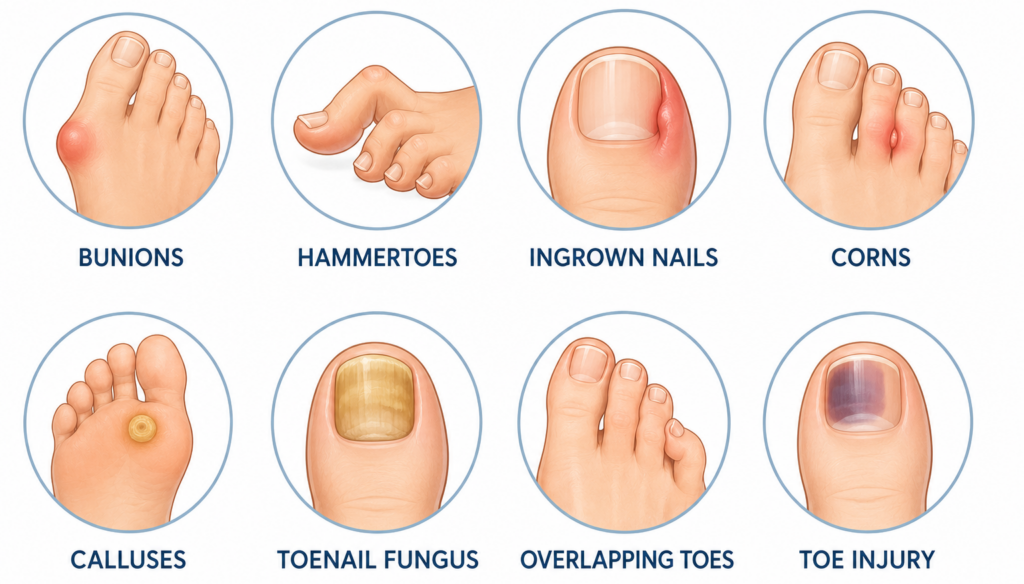
Your toes carry a lot of pressure every single day. It is no surprise that they run into trouble sometimes. Sometimes the trouble comes on suddenly, like a stubbed toe that swells and will not bend. BannerHealth.io’s guide on dislocated toes explains how to tell a dislocation from a break, plus what recovery looks like.
Other toe problems build up slowly over time. Here are some of the most common ones podiatrists see.
- Bunions, bony bumps that form at the base of the big toe, often from tight shoes or joint stress
- Hammertoes, where a toe bends downward at the middle joint and becomes hard to straighten
- Ingrown toenails, which happen when the edge of a nail grows into the skin around it
- Corns and calluses, thickened patches of skin that build up from friction and pressure
- Athlete’s foot, a fungal infection that causes itching, redness, and peeling between the toes
Itching can also show up on its own, separate from athlete’s foot. BannerHealth.io’s recent article looks at why feet get itchy and what it could mean for your skin and circulation.
Why Are My Toes Stiff?
Arthritis often causes stiff toes in the morning. The stiffness tends to ease once you start moving around. The Cleveland Clinic also points to Morton’s neuroma as a common cause. This is a thickened nerve between the third and fourth toes that brings pain and tightness.
Tight shoes, high heels, and repeated stress from running can all add to the problem. If stiffness lasts more than a few weeks, or comes with swelling or numbness, have a podiatrist take a look. BannerHealth.io’s guide to second toe pain breaks down more causes and when treatment makes sense.
Diseases of the Foot That Show Up Early
Some foot conditions are signals from somewhere else in your body. A few are worth knowing about.
- Gout, which causes sudden, intense pain and swelling in the big toe from a buildup of uric acid crystals
- Diabetic foot ulcers, open sores that heal slowly and often start from a small cut you never noticed
- Peripheral neuropathy, nerve damage that brings numbness, tingling, or burning and often comes along with diabetes
- Psoriasis, which can show up as thick, scaly patches or pitted, crumbling toenails
Bone spurs are another condition that builds up quietly over the years. They can lead to stiffness and pain near the joints. BannerHealth.io’s article on bone spur symptoms covers how they form and which treatments tend to help.
The Centers for Disease Control and Prevention reports that nerve damage affects roughly half of people living with diabetes. About 12 percent will develop a foot ulcer at some point. MedlinePlus recommends checking your feet every single day if you live with diabetes. You may not feel a small cut until it has already become a bigger problem.
Five Symptoms Foot Doctors Say You Should Never Ignore
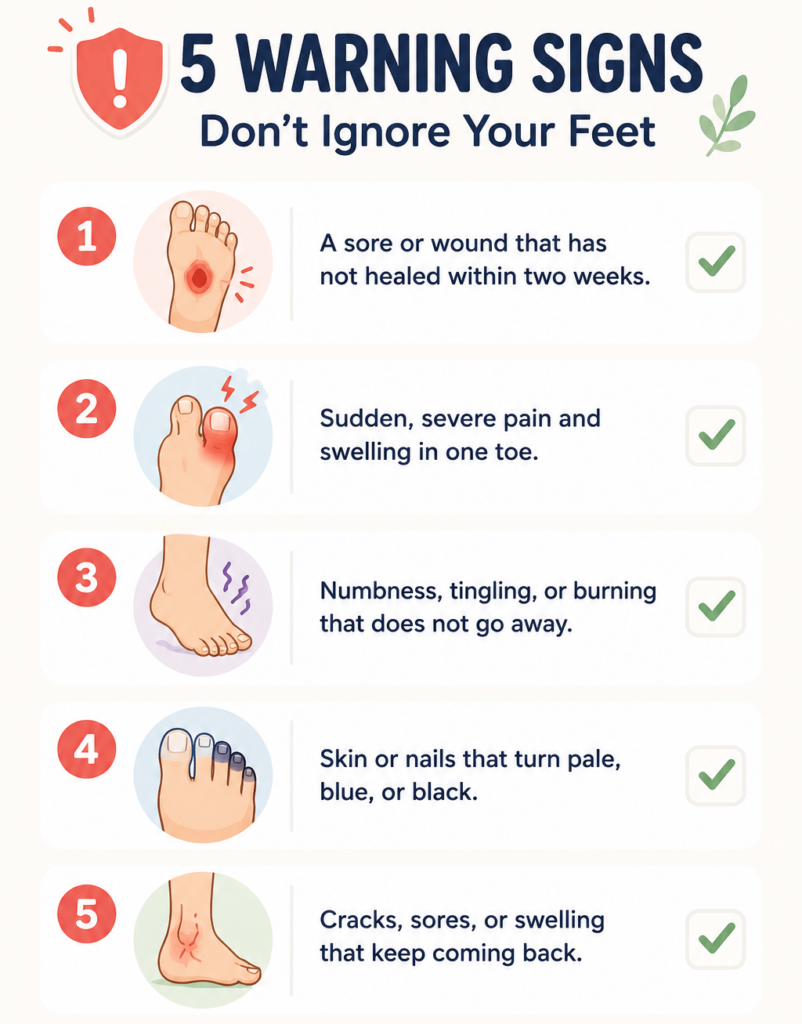
Podiatrists agree that some warning signs deserve quick attention, not a wait and see approach. These are the five they flag most often.
- A sore or wound that has not healed within two weeks, which can signal diabetes or poor circulation
- Sudden, severe pain and swelling in one toe, which may point to gout or an infection
- Numbness, tingling, or burning that does not go away, often a sign of nerve damage
- Skin or nails that turn pale, blue, or black, which can mean blocked blood flow
- Cracks, sores, or swelling that keep coming back, which may point to an ongoing skin or circulation problem
Catching any one of these early usually means simpler treatment. It also means a faster return to your normal routine.
When to See a Doctor About Your Feet
Most foot aches fade with rest, ice, and a little patience. But certain signs call for prompt care.
- Get emergency care if a foot suddenly turns pale, blue, or cold and does not improve within minutes
- Call your doctor within a day or two if a sore will not heal, redness is spreading, or you have a fever with foot pain
- Schedule a routine visit if stiffness, swelling, or nail changes have lasted more than two or three weeks
If you live with diabetes, heart disease, or a circulation problem, do not wait on a new foot symptom. These conditions can turn small problems into serious ones fast. Your care team would rather see you early than treat a complication later.
Your feet rarely stay quiet about what is going on inside your body. Color changes, stiff toes, stubborn sores, and shifts in temperature all carry useful information. The sooner you notice these signals, the easier it usually is to treat the cause. Take a few minutes this week to really look at your feet. Paying attention to what your feet say about your health today can spare you bigger problems tomorrow.
Frequently Asked Questions
What does it mean if my feet always feel cold?
Cold feet that never warm up can point to poor circulation, an underactive thyroid, or nerve damage from diabetes. If the cold comes with color changes or pain while walking, get it checked.
Why are the bottoms of my feet so red?
Red soles can come from erythromelalgia, a rare condition that brings burning pain along with heat and redness. Less serious causes include tight shoes, allergic reactions, or standing for long stretches, but ongoing redness is worth a checkup.
What are the most common toe problems people deal with?
Bunions, hammertoes, ingrown toenails, corns, and athlete’s foot are among the most common toe problems. Most respond well to better fitting shoes, daily foot care, and early treatment from a podiatrist.
Why do my toes feel stiff in the morning?
Morning stiffness in the toes often comes from arthritis or Morton’s neuroma, a thickened nerve between the toes. It usually loosens up once you start moving, but mention it to your doctor if it sticks around.
Can the temperature of my feet really affect the rest of my body?
Yes. Your feet sit far from your heart, so they are often the first place you notice circulation problems, thyroid changes, or nerve damage. Tracking how your feet feel gives you another clue about your health.
What does a healthy foot look like?
A healthy foot has even skin tone, smooth nails, a normal temperature, and toes that bend without pain. It should not stay swollen, discolored, or sore for more than a few days after activity.
Written by Theo James
The information on this page is for general educational purposes only and is not a substitute for professional medical advice, diagnosis, or treatment. Always talk with your doctor or another qualified healthcare provider about any questions you have regarding a medical condition. Never ignore professional medical advice or delay seeking it because of something you read on the internet.