
What Is Alkaline Water and Does It Actually Benefit Your Health
What Is Alkaline Water
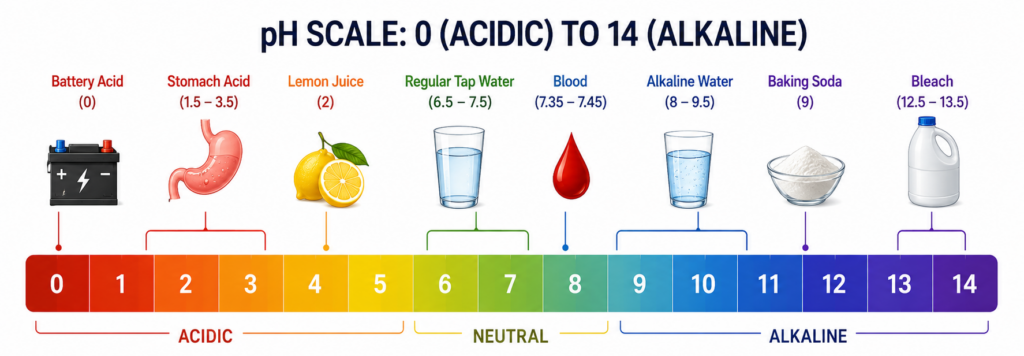
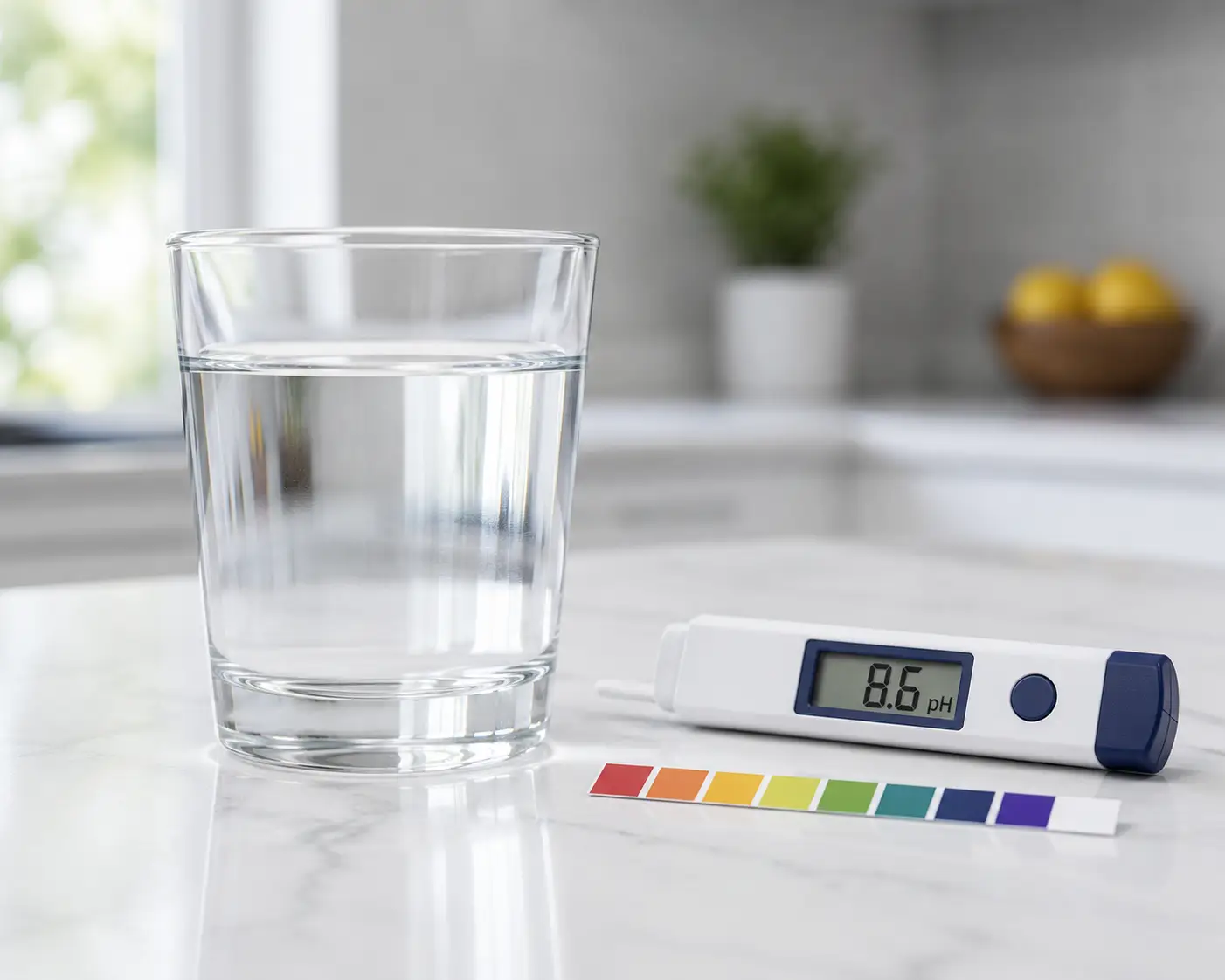
Water’s acidity or alkalinity is measured on the pH scale, which runs from 0 (most acidic) to 14 (most alkaline) with 7 representing neutral. Regular tap water in the US typically falls close to neutral, around pH 6.5 to 7.5. Alkaline water has a pH of 8 or higher, with most commercial products sitting between pH 8 and 9.5.
Water can be alkaline in two ways. Natural alkaline water picks up minerals like calcium, magnesium, potassium, and bicarbonate as it flows over rocks and through mineral-rich soil. Those dissolved minerals raise the pH above neutral. Artificially ionized alkaline water is produced using an electric device called a water ionizer, which runs an electrical current through water to separate it into acidic and alkaline streams through a process called electrolysis.
Most bottled alkaline water sold in grocery stores is created through ionization or through the direct addition of alkalizing minerals to purified water. NIH MedlinePlus on drinking water notes that clean, safe drinking water is the foundation of good hydration and general health, and that its pH is one of many factors regulated by US water quality standards.
Alkaline Drinks and Alkaline Beverages
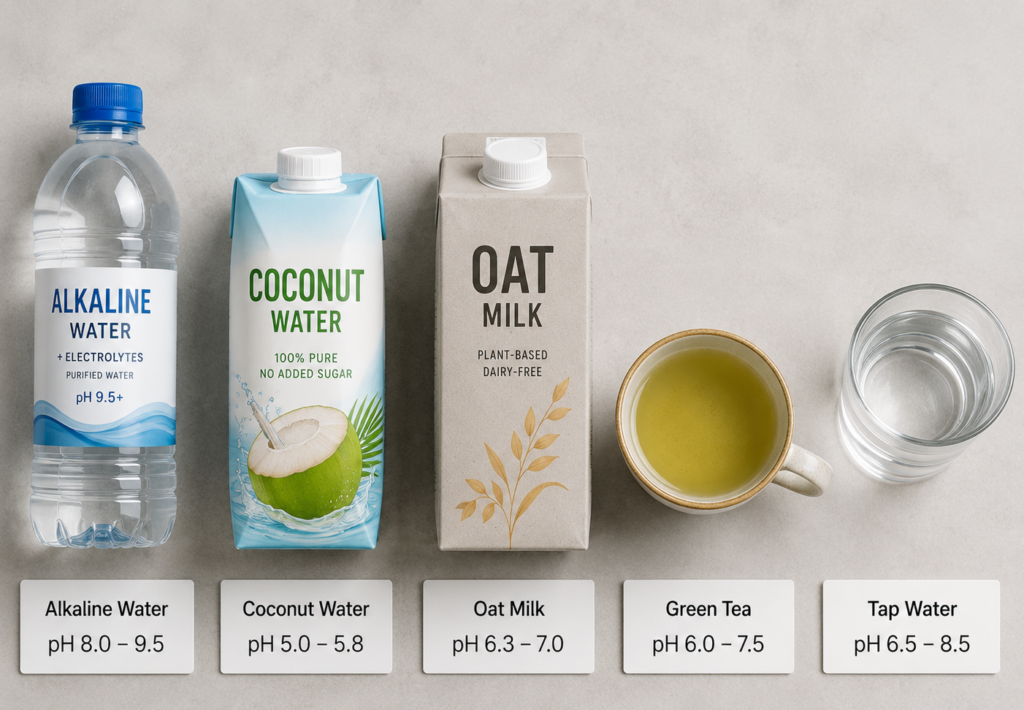
Alkaline water is not the only drink associated with high pH. A broader category of alkaline beverages has grown alongside it, and understanding which drinks are genuinely alkaline versus which are simply marketed that way helps cut through a lot of confusion.
Genuinely alkaline beverages with a confirmed pH above 7.5 include:
- Commercial alkaline water produced through ionization or mineral addition, typically pH 8 to 9.5
- Certain natural mineral waters from springs with high bicarbonate and calcium content, which can reach pH 8 or above depending on the source
- Some herbal teas prepared with alkaline or high mineral content water, with the final pH depending heavily on the herbs and brewing conditions
Beverages commonly marketed as alkaline or health-supporting but that actually fall in the neutral to slightly acidic range:
- Coconut water typically registers between pH 4.7 and 5.5 depending on ripeness and brand, making it slightly acidic despite its frequent appearance in alkaline marketing materials
- Plant based milks like almond and oat milk generally sit around pH 6 to 7, closer to neutral than alkaline
- Green tea ranges from pH 7 to 10 depending on brewing method and water source, though most brewed versions fall well below 8
Understanding this distinction matters because a drink marketed as part of the alkaline lifestyle is not necessarily alkaline in pH. Checking actual pH values on product labels gives you more accurate information than brand positioning alone.
Alkaline Water vs Spring Water vs Purified Water
If you are comparing your options at the grocery store, here is how the three most common bottled water categories differ in practical terms.
| Feature | Alkaline Water | Spring Water | Purified Water |
| Typical pH | 8 to 9.5 | 6.5 to 8 | 6.5 to 7.5 |
| Source | Ionized tap water or mineral-added water | Natural underground spring | Tap water treated to remove impurities |
| Mineral content | Added or naturally occurring minerals | Natural minerals from rock | Minerals largely removed in processing |
| Fluoride | Typically removed | Variable by source | Variable by brand |
| Average cost | Higher, often 2 to 4 times regular water | Moderate | Low to moderate |
| FDA regulated | Yes | Yes | Yes |
| Proven health advantage over tap water | None established | None established | None established |
For most healthy adults no type of bottled water has been shown to provide a meaningful health advantage over standard tap water meeting EPA quality standards. The choice most often comes down to personal taste preference, mineral content, and cost tolerance.
Alkaline Water With Electrolytes
Many brands now sell alkaline water with added electrolytes, marketing it directly at athletes and active adults as a premium recovery and hydration product.
Electrolytes are minerals that carry an electric charge when dissolved in body fluids. NIH MedlinePlus on fluid and electrolyte balance explains that the main electrolytes, including sodium, potassium, calcium, magnesium, and chloride, regulate everything from muscle contractions to nerve signaling and fluid distribution across cells. They are essential, and losing them through sweat during exercise does need to be addressed.
Alkaline water with added electrolytes does contain real electrolytes. The question is whether the quantities are clinically meaningful. Most of these products contain relatively small amounts of electrolytes compared to a standard sports drink or a balanced post-exercise meal. The minerals added are typically in the same form found in regular mineral water and do not confer any additional absorption advantage due to the alkaline pH.
For moderate intensity exercise, plain water and a balanced diet replace electrolytes adequately for most people. For prolonged or high intensity exercise lasting over 60 to 90 minutes with significant sweating, a standard sports drink with established electrolyte concentrations is better studied and more reliable than electrolyte alkaline water for replacing what was lost.
What Does the Research Actually Say About Alkaline Water
Here is where the conversation gets more honest than most marketing materials allow.
The Body Regulates Its Own pH Tightly
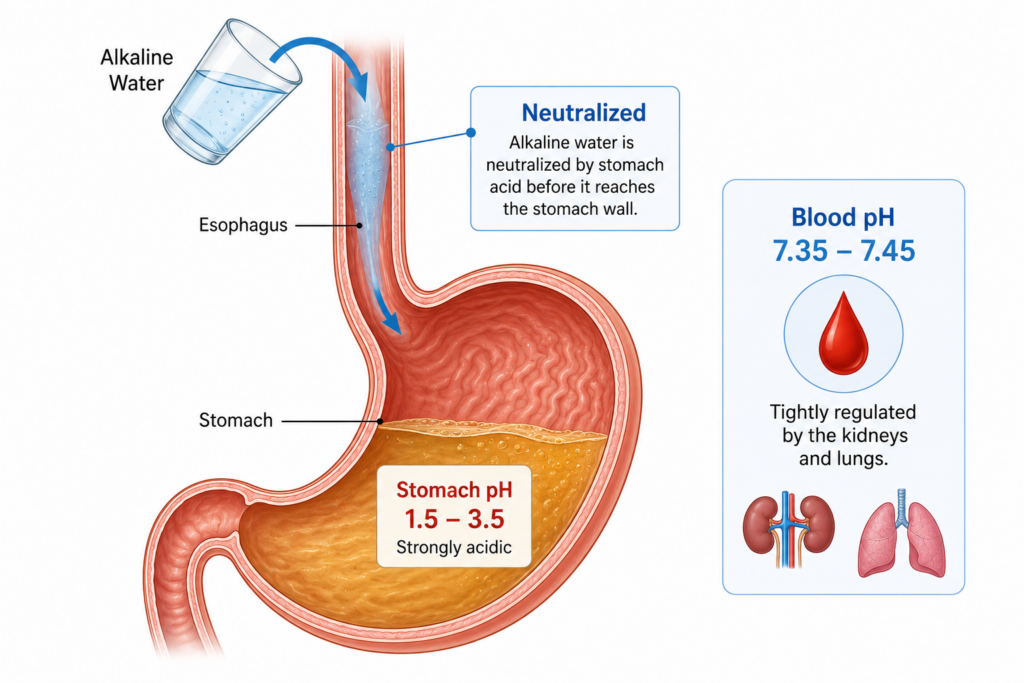
The most important context for any alkaline water claim is that the human body maintains blood pH within a narrow range of 7.35 to 7.45 through the kidneys, lungs, and chemical buffer systems. Drinking alkaline water does not meaningfully change blood pH in a healthy person. The stomach’s own highly acidic environment, which operates between pH 1.5 and 3.5, neutralizes the alkalinity of any water before it reaches the bloodstream. Claims that alkaline water alkalizes your entire body are not consistent with how human physiology actually works.
Acid Reflux and GERD
This is the area with the most discussed research behind it. A 2012 laboratory study found that water at pH 8.8 could inactivate pepsin, the digestive enzyme implicated in the tissue damage caused by acid reflux, at least under controlled conditions. NIH MedlinePlus on heartburn describes how acid reflux involves stomach acid backing up into the esophagus and causing irritation. Some people with reflux symptoms report subjective improvement with alkaline water. However, large clinical trials confirming consistent benefit for a general population with GERD have not yet been completed. People with acid reflux should work with their doctor on evidence-based treatment options and not rely on water pH as a primary solution.
Bone Health
Some proponents argue that alkaline water reduces the acid load the body needs to buffer using minerals drawn from bone, potentially protecting bone density over time. Studies examining this have shown mixed and inconclusive results. Major medical and nutrition organizations do not currently recommend alkaline water specifically for bone health. Adequate calcium, vitamin D, and regular weight bearing exercise remain the well-supported recommendations.
Athletic Performance and Hydration
A small number of studies have explored whether alkaline water reduces blood viscosity after exercise or speeds rehydration. These studies are small, inconsistent in design, and have not been replicated at a scale that supports general recommendations. The research is still early and genuinely mixed on this point.
Can Pregnant Women Drink Alkaline Water

This is a question that comes up regularly online and one the competitor article does not address at all. It deserves a direct and honest answer.
There is no published evidence that moderate consumption of commercially available alkaline water at pH 8 to 9 causes harm during pregnancy. There is equally no published evidence of specific benefits for pregnant women compared to regular clean water.
Pregnancy significantly increases a woman’s hydration and mineral needs. NIH MedlinePlus on pregnancy and nutrition recommends that pregnant women increase their daily fluid intake and focus on adequate calcium, iron, magnesium, and folic acid, guided by their healthcare provider. Clean water is central to meeting those increased fluid needs.
The concern some practitioners raise about highly alkaline water during pregnancy is largely theoretical. The developing fetus depends on a tightly controlled biochemical environment, and while the body’s buffering systems make it highly unlikely that drinking water at pH 8 to 9 would alter that environment in any significant way, the research specifically examining alkaline water in pregnant populations is not available in sufficient depth to make confident recommendations.
The practical guidance from most OB-GYNs is consistent: clean filtered water, quality tap water, or reputable spring water is the safest and best-supported choice during pregnancy. If you prefer alkaline water and are pregnant, discuss it with your obstetrician or midwife. There is no strong evidence-based reason to avoid it in normal quantities, but there is also no proven reason to seek it out specifically over regular clean water.
Who Should Be Cautious With Alkaline Water
For most healthy adults, regular consumption of alkaline water at pH 8 to 9 is not associated with harm at typical intake levels. Certain groups should exercise more caution.
People with kidney disease need to be particularly careful. Healthy kidneys play a central role in acid-base balance and electrolyte regulation throughout the body. NIH MedlinePlus on kidney diseases explains that impaired kidneys cannot manage fluid and electrolyte balance the way healthy kidneys do. People with chronic kidney disease or a history of kidney stones should consult their nephrologist before making alkaline water a regular habit.
People taking certain medications including digoxin, specific diuretics, and some antibiotics may find that consistently alkaline conditions in the gut affect how those medications are absorbed and processed. This is not a common concern but is worth discussing with your prescribing physician if you take any of those medications regularly.
People with very low stomach acid including those using proton pump inhibitors long term or those with conditions affecting gastric acid production may find that further reducing effective stomach acidity affects digestion and the absorption of nutrients like iron, calcium, and vitamin B12.
Anyone who experiences symptoms of alkalosis such as nausea, muscle twitching, hand spasms, or confusion after consuming large amounts of highly alkaline water should stop immediately and seek medical evaluation. This is most relevant with very high pH water consumed in very large quantities, not occasional use at normal pH levels.
Should You Drink Alkaline Water

For the majority of healthy adults, standard filtered tap water or quality spring water fully meets hydration needs. The body handles pH regulation internally without any assistance from the water you drink. Paying significantly more for alkaline water to gain a meaningful health advantage is not supported by strong published evidence at this time.
Where alkaline water may be a reasonable choice is for people experiencing consistent acid reflux symptoms who want a low-risk addition to their broader management approach, based on the early research around pepsin inactivation. It is also a reasonable preference for people who simply prefer the taste and are comfortable with the cost.
If you enjoy alkaline water, there is no compelling medical reason to stop. If you are purchasing it primarily for health benefits beyond what regular clean water provides, the current evidence does not yet justify the premium price. And if you are pregnant, have kidney disease, or take medications regularly, talk to your doctor before making it a daily habit.
Good hydration is one of the simplest and most consistently supported health behaviors there is. The type of water matters far less than drinking enough of it consistently throughout the day.
Frequently Asked Questions
What is alkaline water and how is it different from regular water?
Alkaline water has a pH of 8 or higher, compared to regular tap or bottled water which typically sits close to neutral at pH 6.5 to 7.5. It is either naturally alkaline from flowing through mineral-rich rock, or artificially produced through a process called ionization. The higher pH is the defining feature. Whether that difference in pH produces health benefits beyond what regular water provides is still an open question in the research.
Is alkaline water safe to drink every day?
For most healthy adults, daily consumption of alkaline water at commercially available pH levels of 8 to 9.5 is generally considered safe. It becomes a concern in very large quantities or at very high pH levels, where it may contribute to alkalosis. People with kidney disease, those taking certain medications, and people with very low stomach acid should discuss regular use with their doctor first.
Can pregnant women drink alkaline water?
There is no published evidence that commercially available alkaline water at pH 8 to 9 is harmful during pregnancy in normal quantities. There is also no published evidence of specific benefits over regular clean water. Most healthcare providers recommend that pregnant women focus on clean, safe water as their primary fluid source and consult their OB-GYN or midwife about any specific preferences or questions.
How does alkaline water compare to spring water?
Spring water comes from a natural underground source and contains naturally occurring minerals that give it a pH generally between 6.5 and 8. Alkaline water has a pH of 8 or higher, achieved through ionization or mineral addition. Spring water often contains a broader and more natural mineral profile, while alkaline water is specifically adjusted for pH. Neither has been proven healthier than the other for the general population, and both are more expensive than filtered tap water.
Does alkaline water with electrolytes actually help with hydration?
Alkaline water with added electrolytes does contain real electrolytes, but typically in smaller quantities than a standard sports drink. For moderate daily activity, plain water and food provide sufficient electrolyte replenishment for most people. For extended high intensity exercise with significant sweating, a dedicated sports drink with established electrolyte concentrations is better studied and more reliably effective than electrolyte alkaline water.
What are the risks of drinking alkaline water?
The main risk at very high intake levels is metabolic alkalosis, where the body’s pH balance tips too far toward alkaline and causes nausea, vomiting, muscle twitching, and in severe cases more serious effects. At typical consumption levels of a bottle or two per day, this risk is very low for healthy adults. The more practical concern is for people with kidney disease, those on certain medications, or those with low stomach acid, who should check with their doctor before making it a daily habit.
Written by Theo James
The information on this page is for general educational purposes only and is not a substitute for professional medical advice, diagnosis, or treatment. Always talk with your doctor or another qualified healthcare provider about any questions you have regarding a medical condition. Never ignore professional medical advice or delay seeking it because of something you read on the internet.