
Ovarian Cancer Symptoms That Every Woman Should Know

The signs are often mild, vague, or easy to confuse with everyday problems. According to the American Cancer Society, about 21,010 women in the US will receive a new ovarian cancer diagnosis this year. Knowing what to watch for can genuinely change your outcome.
What Ovarian Cancer Is and Why It Gets Missed
Ovarian cancer starts in the ovaries, the small organs that produce eggs and hormones. It can also begin in the fallopian tubes or the tissue lining the inside of the abdomen. The ovaries sit deep in the pelvis, so early tumors often grow without pressing on anything noticeable.
Because of that, most women feel completely fine in the early stages. Doctors find over 70% of cases only after the cancer has spread, according to the National Cancer Institute. At that point, treatment becomes much harder. However, when ovarian cancer is caught at a localized stage, the five year survival rate reaches nearly 92%.
The Most Common Ovarian Cancer Symptoms
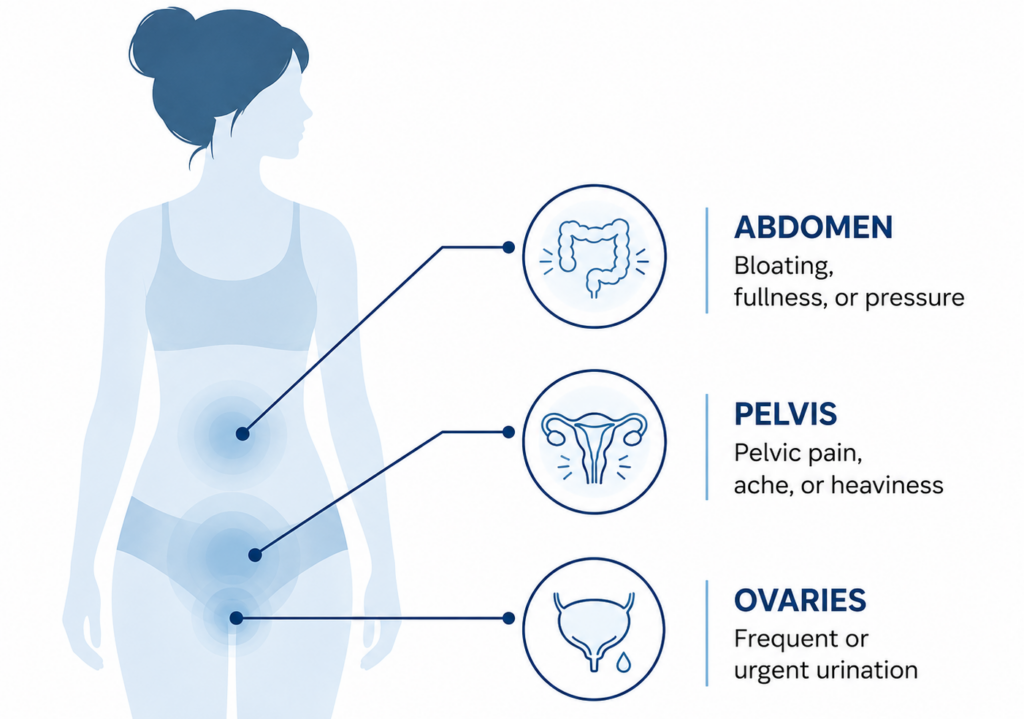
The CDC advises women to see a doctor if any of these signs last two weeks or longer and are new for them.
- Persistent bloating or a swollen belly that does not improve with diet changes
- Pelvic pain or pressure felt in the lower belly, hips, or back
- Feeling full quickly, even after eating just a small amount
- Frequent or urgent urination without an obvious cause like infection
- Lower back pain that is new and does not improve with rest
- Fatigue that is out of proportion to your activity level
- Constipation or changes in bowel habits that are new and unexplained
These symptoms are not unique to ovarian cancer. That is precisely what makes them so easy to dismiss. But a pattern of multiple symptoms appearing together and persisting is something your doctor needs to evaluate.
Does Ovarian Cancer Pain Come and Go?
Yes, ovarian cancer pain can come and go, especially in the early stages. Many women describe it as a dull ache or pressure rather than sharp, constant pain. Because of this, it is very easy to blame it on gas, muscle soreness, or a rough week.
In the early stages, pain often starts intermittently. Over time, it tends to become more frequent and harder to ignore. That gradual shift from occasional to persistent is a key warning sign. If pelvic or abdominal pain keeps returning for no clear reason, tracking it over two to four weeks helps your doctor see a pattern faster.
A useful habit is to note when the pain occurs, how long it lasts, and whether it arrives alongside other symptoms. That kind of record gives your provider far more to work with during an evaluation.
Odd Symptoms of Ovarian Cancer You Might Not Connect
Some odd symptoms of ovarian cancer have nothing to do with the pelvis at all. These are easy to write off as unrelated problems, but together they can signal something worth investigating.
- Persistent nausea or upset stomach with no clear cause, such as a stomach bug or reaction to food (our guide on gastritis symptoms, causes, and treatment can help you tell the difference)
- Heartburn or indigestion that does not respond to normal remedies
- Unexplained weight loss without any change in diet or exercise
- Swollen legs from fluid buildup caused by tumor activity
- A noticeable firmness or lump in the lower abdomen
- Shortness of breath if fluid collects around the lungs
These odd symptoms of ovarian cancer happen because a growing tumor can press on nearby organs or disrupt normal fluid drainage in the body. They do not always point to cancer, but when several appear together alongside pelvic pain or bloating, speak to your doctor right away.
Is Bleeding a Sign of Ovarian Cancer?
Bleeding can be a sign of ovarian cancer, and the context matters greatly. For women who have already gone through menopause, any vaginal bleeding is abnormal. The CDC states that unusual vaginal bleeding after menopause should be treated as a red flag and evaluated by a doctor right away.
For women who still menstruate, the warning signs are more subtle. Watch for spotting between periods, heavier than usual periods, or bleeding after sex. These changes alone do not confirm cancer. Combined with other symptoms like pelvic pain or bloating, though, they add up to a pattern your doctor needs to know about.
Some ovarian tumor types, particularly granulosa cell tumors, are more likely to cause irregular bleeding because they produce estrogen. Even as a less common type, this shows why unusual bleeding should never be dismissed without a proper evaluation.
What Does Ovarian Cancer Discharge Look Like?
Vaginal discharge is a less discussed ovarian cancer symptom, but it does occur in some cases. The discharge linked to ovarian cancer often appears watery, clear, or slightly yellow. In some cases, it may look brownish or be tinged with blood. It can also carry an unusual odor if the tumor becomes infected or if tissue breaks down around it.
This type of discharge is more common with specific tumor subtypes, including stromal and germ cell tumors. However, any discharge that is abnormal for you, whether different in color, smell, texture, or amount, is worth discussing with a healthcare provider.
On its own, abnormal discharge does not confirm cancer. But when it appears alongside pelvic pain, bloating, or unexpected bleeding, it forms part of a bigger picture that needs professional evaluation.
When Ovarian Cancer Spreads to the Liver
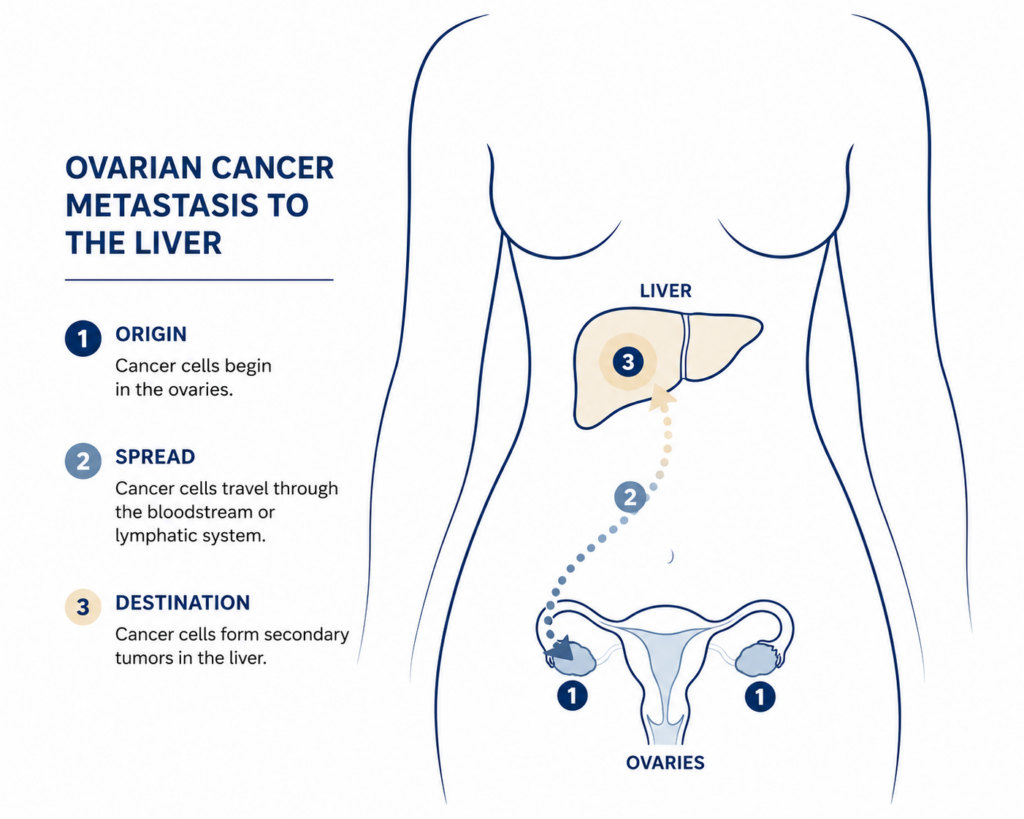
When ovarian cancer spreads to the liver, the disease has typically reached stage 4. At this stage, symptoms become more noticeable and often more severe. The liver is one of the most common distant sites for late stage ovarian cancer to reach, according to the Ovarian Cancer Research Alliance.
Watch for these signs when ovarian cancer has spread beyond the pelvis and abdomen.
- Jaundice, meaning yellowing of the skin or whites of the eyes
- Upper right abdominal pain located beneath the rib cage
- Severe abdominal swelling from fluid buildup, known as ascites
- Extreme fatigue and weakness that worsens more rapidly than before
- Loss of appetite with significant unintentional weight loss
- Worsening nausea that does not improve with rest or medication
At stage 4, the five year survival rate drops to about 20%. That stands in stark contrast to the 92% survival rate for localized disease. That gap makes early detection critically important.
Ovarian Cancer vs. Ovarian Cysts
These two conditions share several symptoms, which is a big part of why ovarian cancer gets missed so often. Here is a quick comparison.
| Feature | Ovarian Cysts | Ovarian Cancer |
|---|---|---|
| Who it affects | Any age | Most common after age 50 |
| Nature of pain | Sudden, sharp | Dull, persistent, recurring |
| Bloating | Mild and temporary | Progressive and persistent |
| Bleeding or spotting | Uncommon | More common |
| Resolves without treatment | Usually yes | No |
| Discharge | Rarely | Possible, often watery or bloody |
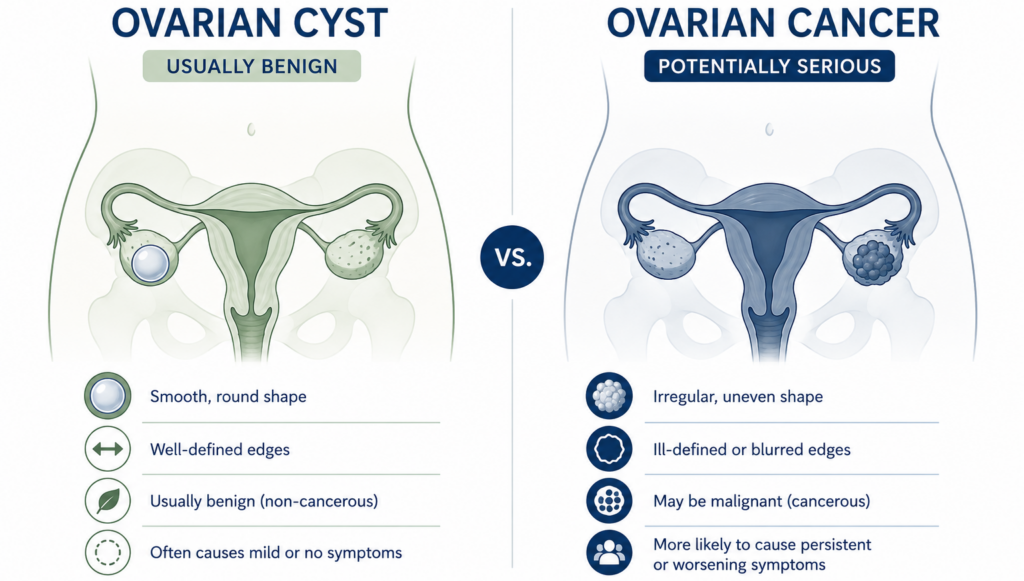
If your symptoms lean toward the ovarian cancer column and last two or more weeks, schedule an appointment promptly.
When to See a Doctor
Do not wait for one dramatic moment before calling your doctor. Ovarian cancer does not usually announce itself that way. Instead, it builds quietly and gradually over weeks.
See a doctor as soon as possible if you notice any of these warning signs.
- Unusual vaginal bleeding, especially after menopause
- Pelvic or abdominal pain that has lasted two or more weeks
- A rapid increase in abdominal size or persistent, worsening bloating
- Yellowing of your skin or eyes alongside abdominal swelling
- Several symptoms from this page appearing together at the same time
Your doctor may start with a pelvic exam, a transvaginal ultrasound, or a CA 125 blood test. According to the Cleveland Clinic, none of these tests individually confirm ovarian cancer. Together, they help narrow things down and guide whether a specialist referral or additional imaging is needed.
If you are in early pregnancy and also noticing pelvic pain or unusual symptoms, our article on early pregnancy symptoms and what they mean can help you sort out what is normal from what warrants a call to your provider.
Getting a diagnosis early makes an enormous difference with ovarian cancer. The five year survival rate is nearly 92% for localized disease, but only about 20% when the cancer has reached distant organs. That gap is not about luck. It is about knowing the signs and seeking care before the disease advances. If something feels off in your body and does not resolve within two weeks, do not brush it aside. At BannerHealth.io, we want you to have the information you need to take that first step toward care.
Frequently Asked Questions
Does ovarian cancer pain come and go?
Yes, ovarian cancer pain often comes and goes, particularly in the early stages. It tends to feel like a dull ache or persistent pressure rather than sharp pain. Over time, the pain becomes more frequent and consistent. If pelvic or abdominal pain keeps returning for two or more weeks without a clear cause, talk to your doctor.
What does ovarian cancer discharge look like?
Ovarian cancer discharge often appears watery, clear, or slightly yellow. It may sometimes look brownish or contain traces of blood. A foul or unusual odor can also occur if tissue around the tumor breaks down. Any discharge that is new or abnormal for you, especially when paired with pelvic pain or bloating, deserves a medical evaluation.
Is bleeding a sign of ovarian cancer?
Yes, bleeding can be a sign of ovarian cancer. For women past menopause, any vaginal bleeding is abnormal and requires prompt medical attention. For women still menstruating, warning signs include spotting between periods, unusually heavy periods, or bleeding after sex. Some ovarian tumor types produce estrogen and are especially associated with irregular bleeding.
What are the odd symptoms of ovarian cancer?
Odd symptoms of ovarian cancer include persistent nausea, heartburn that does not respond to treatment, unexplained weight loss, swollen legs, and shortness of breath. These occur when a growing tumor presses on nearby organs or causes fluid to build up in the body. Because these symptoms seem unrelated to the reproductive system, many women do not connect them to ovarian cancer.
What happens when ovarian cancer spreads to the liver?
When ovarian cancer spreads to the liver, symptoms include jaundice, upper right abdominal pain, severe abdominal swelling from fluid buildup, extreme fatigue, loss of appetite, and worsening nausea. This represents stage 4 ovarian cancer. The five year survival rate at this stage is approximately 20%, compared to 92% when the disease is caught while still localized.
How do doctors diagnose ovarian cancer?
Doctors typically start with a pelvic exam and a transvaginal ultrasound. A CA 125 blood test may also be ordered, though elevated levels can occur with other conditions too. If findings raise concern, further imaging or surgical evaluation confirms the diagnosis. No single screening test reliably catches ovarian cancer early, which is why symptom awareness plays such an important role.
Written by Theo James
The information on this page is for general educational purposes only and is not a substitute for professional medical advice, diagnosis, or treatment. Always talk with your doctor or another qualified healthcare provider about any questions you have regarding a medical condition. Never ignore professional medical advice or delay seeking it because of something you read on the internet.