
Most human studies used 1 to 2.5 grams of black seed oil daily, roughly a quarter to half teaspoon of liquid oil, taken with food for 4 to 12 weeks. The interactions worth taking seriously involve blood thinners, diabetes medication, and blood pressure medication, and use should stop two weeks before any surgery. Here is how to dose it correctly and who should skip it.
Black seed oil shows up everywhere lately, and most guides spend their time on the benefit claims. This one starts where the practical questions actually are: how much to take, what it clashes with, and what is normal versus a reason to stop.
What Is Black Seed Oil
Black seed oil comes from the seeds of Nigella sativa, a flowering plant also called black cumin. People have used the seeds in cooking and traditional medicine for centuries across the Middle East, South Asia, and North Africa. The oil is pressed from these tiny black seeds, so you may also see it labeled black cumin seed oil or black nigella oil.
The active compound researchers focus on most is thymoquinone. It gives the oil its antioxidant and anti-inflammatory properties, and it is also the reason the oil interacts with certain medications, which we cover below.
How Much Black Seed Oil Per Day
Most human studies used between 1 and 2.5 grams daily, taken consistently for four to twelve weeks. In kitchen terms, 2.5 grams of liquid oil is roughly half a teaspoon. For capsules, check the milligrams per softgel on the label and count accordingly, since strength varies by brand.
| Goal | Dose Range Used in Studies | Typical Duration |
| General use, first time | Start at about 1 gram daily | First 1 to 2 weeks |
| Skin support | 1 to 2 grams daily, or topical gel | 8 or more weeks |
| Cholesterol and blood pressure | 2 to 2.5 grams daily | 8 to 12 weeks |
| Weight management support | 1 to 3 grams daily in reviewed studies | 8 to 12 weeks |

Three dosing rules matter more than the exact number.
- Start low. Begin at about half your target dose for the first week. Stomach upset is the most common reason people quit, and it usually comes from starting too high too fast.
- Take it with food. An empty stomach dose is the most common trigger for warmth, burping, or nausea.
- More is not better. High doses in animal studies have caused liver and kidney stress. No benefit has been shown above the studied ranges, so staying inside them is the whole game.
Which Medications Does Black Seed Oil Interact With?
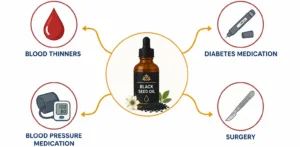
This is the section to read before your first dose. Thymoquinone is biologically active, which is exactly why it can clash with medication doing a similar job.
Blood thinners and antiplatelet drugs. Black seed oil may slow clotting on its own. Stacked on warfarin, apixaban, clopidogrel, or even daily aspirin, that raises bleeding risk. Unusual bruising or bleeding on this combination needs a doctor the same day.
Diabetes medication. The oil can lower blood sugar modestly. Combined with insulin or oral diabetes drugs, that effect adds up and can push sugar too low. If you take diabetes medication and still want to try black seed oil, your doctor needs to know first, and you should watch for shakiness, sweating, or confusion.
Blood pressure medication. Trials found modest blood pressure reductions from the oil. On top of medication that already lowers pressure, the combined drop can cause dizziness or lightheadedness, especially when standing up.
Surgery within two weeks. Because of the clotting and blood sugar effects, standard advice is to stop black seed oil at least two weeks before any scheduled surgery, the same rule that applies to fish oil and vitamin E.
Other supplements. If you already take daily supplements, like magnesium bisglycinate or an adaptogen stack like shilajit and ashwagandha, add black seed oil alone rather than alongside other new products. Spacing new additions two weeks apart makes it possible to trace any reaction to its source.
Who Should Not Take Black Seed Oil
- Anyone taking blood thinners or anticoagulant medication, without direct medical supervision
- People managing diabetes with insulin or blood sugar medication
- Anyone with low blood pressure or on blood pressure medication
- People scheduled for surgery within the next two weeks
- Pregnant or nursing individuals, since safety data is insufficient and high amounts have raised concerns in traditional use
- Anyone with a known allergy to Nigella sativa or related plants
If any of these apply, this is a doctor conversation first, not a try-it-and-see situation.
Side Effects: What Is Normal and What Is Not
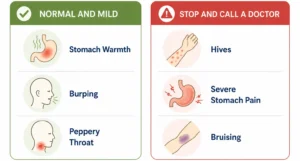
Black seed oil is generally well tolerated at studied doses. Common, usually harmless reactions include mild stomach warmth, burping, brief nausea after a dose, and a peppery throat sensation. These typically fade within the first couple of weeks, especially if you take the oil with food.
Digestion responses vary. Some people notice a mild laxative effect after a few weeks, since the oil can stimulate bile flow and gut motion. A smaller number report the opposite, constipation. Neither is alarming on its own. Persistent stomach pain or burning is different, and deserves a proper diagnosis, since conditions like gastritis share symptoms people mistake for a supplement reaction.
Stop and get medical care promptly for:
- Hives, facial swelling, or difficulty breathing after taking the oil
- Severe stomach pain that does not improve within a day
- Signs of low blood sugar if you take diabetes medication
- Unusual bruising or bleeding if you take blood thinners
Capsules vs Liquid: Which Form Should You Take
Both deliver the same thymoquinone, so the choice is practical, not chemical.
| Feature | Liquid Black Seed Oil | Black Seed Oil Capsules |
| Taste | Strong, peppery, hard to mask | No taste, swallowed whole |
| Dosage precision | Harder to measure exactly | Pre measured per softgel |
| Absorption speed | Slightly faster | Slightly slower |
| Portability | Needs refrigeration after opening | Easy to carry and travel with |
| Best for | People comfortable with strong flavors | People who want convenience |
Taste is the biggest reason people abandon the liquid form. The flavor is peppery and slightly bitter, often described as a mix of onion, oregano, and cumin. Mixing a dose into honey or a smoothie helps, and most long term users report barely noticing it after a few weeks. If taste is a dealbreaker, capsules solve it completely.
What the Benefits Evidence Actually Shows
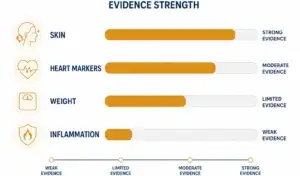
Since dosing only matters if the oil does something, here is the honest evidence summary.
- Skin. A gel containing black seed oil reduced acne severity by 78 percent after 60 days of twice daily use in one clinical study. This is among the stronger findings.
- Heart markers. Human trials reviewed by the National Institutes of Health found modest reductions in LDL cholesterol and blood pressure with consistent use.
- Weight. A review of 11 studies linked supplementation to small reductions in body mass index and waist size. Small means small.
- Inflammation and respiratory support. Thymoquinone shows anti-inflammatory effects in lab and animal studies, with early human data still developing.
None of this makes black seed oil a proven treatment for any condition, and a safety review published through the NIH notes that human evidence remains far more limited than the marketing suggests. It is a supplement with a few modest, studied effects, not a therapy.
How to Choose a Quality Product
- Look for cold pressed extraction, which preserves more natural compounds than heat processing
- Check for organic certification if pesticide exposure concerns you
- Be skeptical of extreme thymoquinone claims, like 5x concentrated, which are often exaggerated
- Choose dark glass bottles, since light degrades the oil
- Prefer brands that share third party lab results
The FDA does not review supplements for safety or accuracy before sale, so these label checks are your only quality control.
The Belly Button Trend, Briefly
A viral trend encourages rubbing black seed oil into the belly button before bed for digestion, skin, or sleep benefits. There is no clinical research supporting navel oiling as a delivery method for anything. The skin there absorbs oil no differently than skin anywhere else, and the area can be more prone to irritation. If you try it anyway, patch test on your forearm first. Beyond a possible aromatherapy style calming effect, no physical benefit has evidence behind it.
Frequently Asked Questions
How much black seed oil should I take daily?
Most human studies used 1 to 2.5 grams daily, which is roughly a quarter to half teaspoon of liquid oil. Start at about half that for your first week, take it with food, and do not exceed the studied range. Higher doses have shown no added benefit and caused organ stress in animal studies.
Does black seed oil interact with any medications?
Yes, three groups matter most. It can add to the effect of blood thinners and raise bleeding risk, add to diabetes medication and push blood sugar too low, and add to blood pressure medication and cause dizziness. Stop it two weeks before any surgery. If you take any daily prescription, clear it with your doctor first.
Can I take black seed oil on an empty stomach?
You can, but most stomach complaints, warmth, burping, and nausea, happen exactly this way. Taking it with a meal prevents most of them. If you notice discomfort even with food, drop back to a smaller dose for a week before building up again.
What is the best way to take black seed oil, capsules or liquid?
Both deliver the same thymoquinone compound. Capsules offer precise dosing and no taste, while liquid oil absorbs slightly faster and suits people who tolerate strong flavors. Pick one form and stay consistent rather than switching between them.
How long does black seed oil take to show results?
Most clinical studies ran four to twelve weeks before measuring results. Skin changes may appear sooner, while cholesterol and blood pressure effects typically need the longer end. Judge it at eight weeks, not eight days.
Is it safe to put black seed oil in your belly button?
There is no clinical research showing any benefit from this practice. The skin there does not absorb oil differently than other skin, and it can be more prone to irritation for some people. Taken orally at studied doses, the oil has actual research behind it. The navel trend does not.
Can black seed oil help you lose weight?
A review of 11 studies linked black seed supplementation to small reductions in BMI and waist size. The effect is modest, not dramatic, and only shows up alongside a reasonable diet and regular activity. Nothing about it replaces either one.