
Why Your Heart Rate Gets Elevated When You’re Sick

But not every racing heart is just a fever at work. Some illnesses, medications, and underlying conditions can push your pulse much higher than expected. Whether you’re also dealing with a sore throat that showed up overnight or a full-blown flu, knowing the difference between a heart rate that’s working for you and one that needs attention is worth understanding before your next sick day.
What a Normal Resting Heart Rate Looks Like

The American Heart Association’s 2024 heart disease and stroke statistics confirm that a normal resting heart rate for adults falls between 60 and 100 beats per minute. That range is wider than most people expect. A trained athlete might sit comfortably in the 50s because their heart pumps more efficiently. Children naturally run higher than adults, and infants higher still. Both are completely normal.
Here’s a simple way to check yours. Press your index and middle fingers gently against the inside of your wrist, just below the base of your thumb. Count the beats for 30 seconds and double that number. That gives you your resting heart rate in beats per minute.
This table compares typical resting heart rate ranges by age group, based on guidelines from the American Heart Association and the American Academy of Pediatrics.
| Age Group | Normal Resting Heart Rate |
| Newborns (0 to 1 month) | 70 to 190 bpm |
| Infants (1 to 11 months) | 80 to 160 bpm |
| Children (1 to 10 years) | 70 to 120 bpm |
| Teens (11 to 17 years) | 60 to 100 bpm |
| Adults (18 and older) | 60 to 100 bpm |
These are baseline numbers for a healthy resting state. When you’re sick, expect them to be higher across every age group.
How Fever Pushes Your Heart Rate Higher
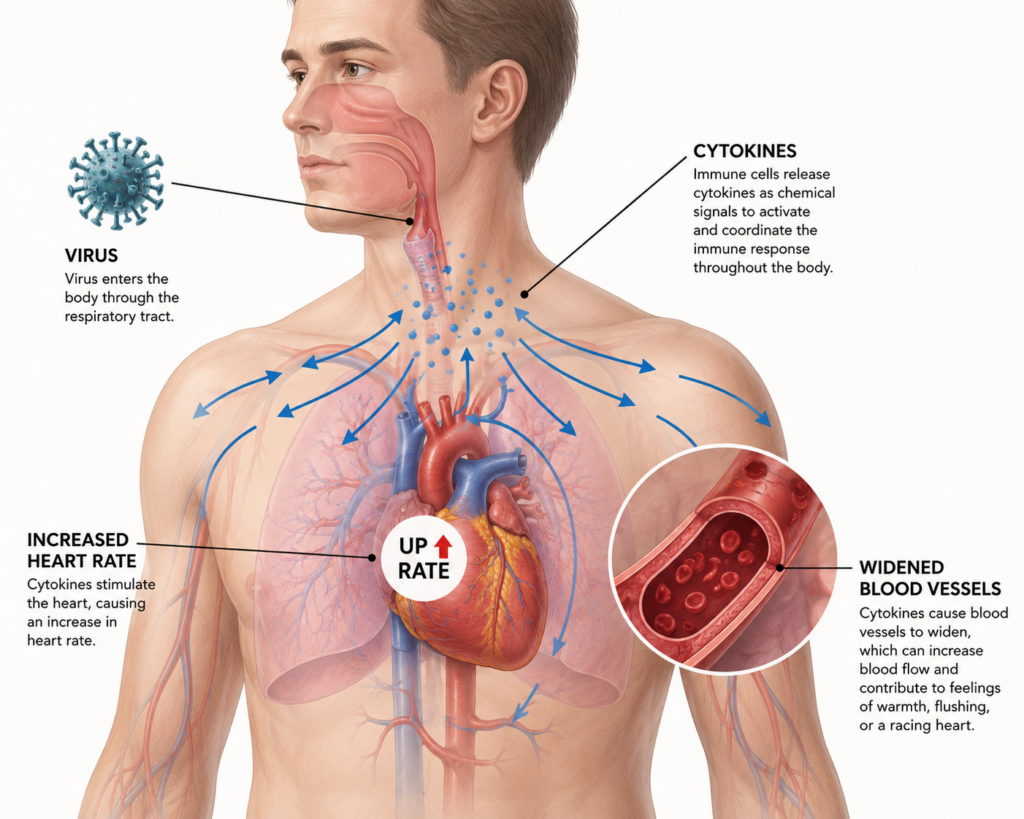
Fever and rapid heart rate are connected by one straightforward chain. Your body needs more oxygen when it’s fighting an infection, and your heart has to pump faster to deliver it.
When your temperature rises, your metabolism speeds up. Your heart responds by increasing its output to keep oxygen flowing to every organ and tissue. On top of that, your immune system releases proteins called cytokines to attack the infection. Those same cytokines cause blood vessels to widen slightly, which drops blood pressure a little and prompts the heart to beat even faster to compensate. According to NIH MedlinePlus, this kind of rapid heartbeat has a clinical name: tachycardia; and fever is one of its most common temporary causes.
This table shows how fever temperature generally correlates with heart rate elevation in a healthy adult. The estimates are based on the widely referenced clinical rule of roughly 8 to 10 additional beats per minute per degree of fever.
| Body Temperature | Approximate Heart Rate Increase | Likely Pulse Range |
| 99°F (low grade fever) | Plus 8 to 10 bpm | 70 to 110 bpm |
| 101°F (moderate fever) | Plus 16 to 20 bpm | 80 to 120 bpm |
| 103°F (high fever) | Plus 24 to 30 bpm | 85 to 130 bpm |
| 104°F or above | Plus 32 to 40 bpm | 90 to 140 bpm |
Individual baselines vary. Conditions like heart disease, thyroid issues, or anemia can make those numbers climb higher than the table suggests.
A fever causes an elevated heart rate because the body needs more oxygen to fight infection. For every 1°F rise above normal body temperature, heart rate increases by roughly 8 to 10 beats per minute. Immune chemicals called cytokines also widen blood vessels during illness, which causes the heart to beat faster to maintain blood pressure.
Dehydration Makes the Problem Worse
Most people don’t drink enough when they’re sick, and that single factor makes a higher pulse rate when sick feel far more dramatic than the fever alone would cause.
Fever drives sweating. Vomiting and diarrhea from stomach illnesses drain fluid even faster. As blood volume drops from dehydration, each heartbeat delivers less oxygen. Your heart compensates by beating more frequently to keep up, and the result is a pulse that climbs well beyond what temperature elevation would cause on its own.
Even mild dehydration can add another 10 to 20 beats per minute on top of a fever-driven rate. Combined, that’s a noticeable jump. If you’ve been sick for several hours without drinking much, rehydrating is often the most effective thing you can do to bring your heart rate down before reaching for anything else.
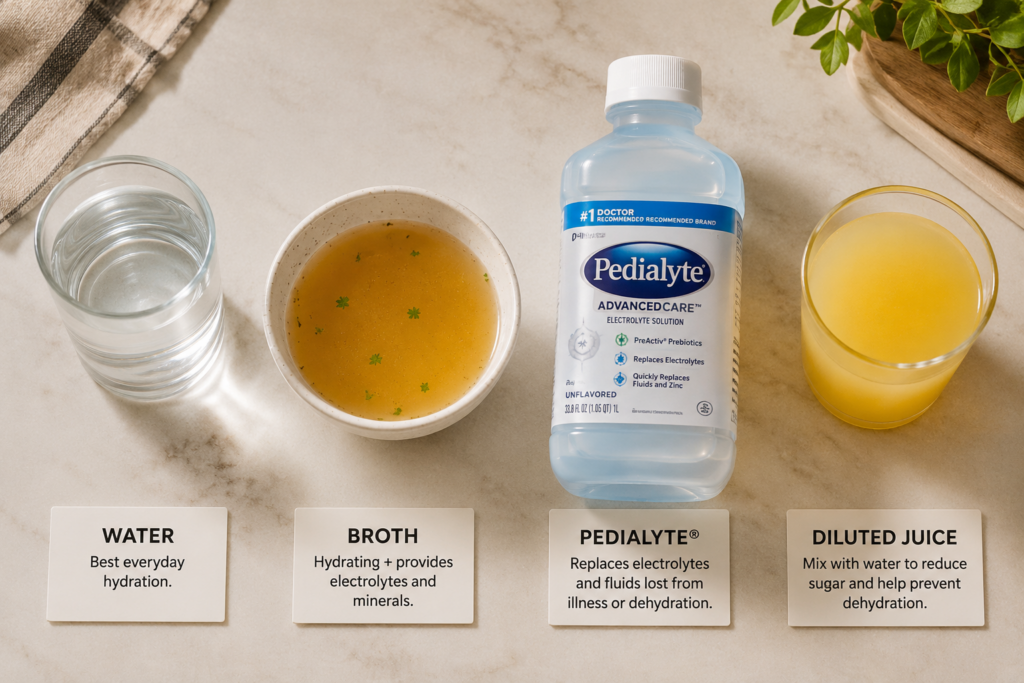
Water works. So does broth, diluted juice, or an oral rehydration drink like Pedialyte. If you’ve been curious about other hydration options, our guide on what alkaline water actually does for your body breaks down the evidence. Frequent small sips matter more than forcing large amounts at once, especially if nausea is part of the picture.
Other Factors That Can Push Your Pulse Even Higher
Those two causes do most of the heavy lifting, but they’re not the whole story. Several other things can stack on top and make the situation feel more alarming when you’re already under the weather.
Over the counter cold and flu medications. Popular decongestants containing pseudoephedrine or phenylephrine work partly by constricting blood vessels, and they raise heart rate as a side effect. If you’re feverish and dehydrated, adding a stimulant type decongestant can push your pulse noticeably higher.
Caffeine. That morning cup of coffee doesn’t stop affecting you just because you’re sick. Caffeine raises heart rate on its own, and combined with fever, it amplifies the climb.
Anxiety and stress. Worry is a real physiological force. If you’ve ever lain in bed at 2 a.m. scanning your body for every symptom, you already know this. Keeping your nervous system activated keeps your heart rate elevated even when you’re trying to rest.
Anemia. People with low iron carry less oxygen per unit of blood, so the heart works harder to compensate at baseline. Add an infection, and the spike in heart rate can be more pronounced than usual.
Thyroid conditions. An overactive thyroid already pushes heart rate above average at rest. A fever on top of that can take numbers into territory that warrants a call to your doctor rather than waiting it out.
When to See a Doctor
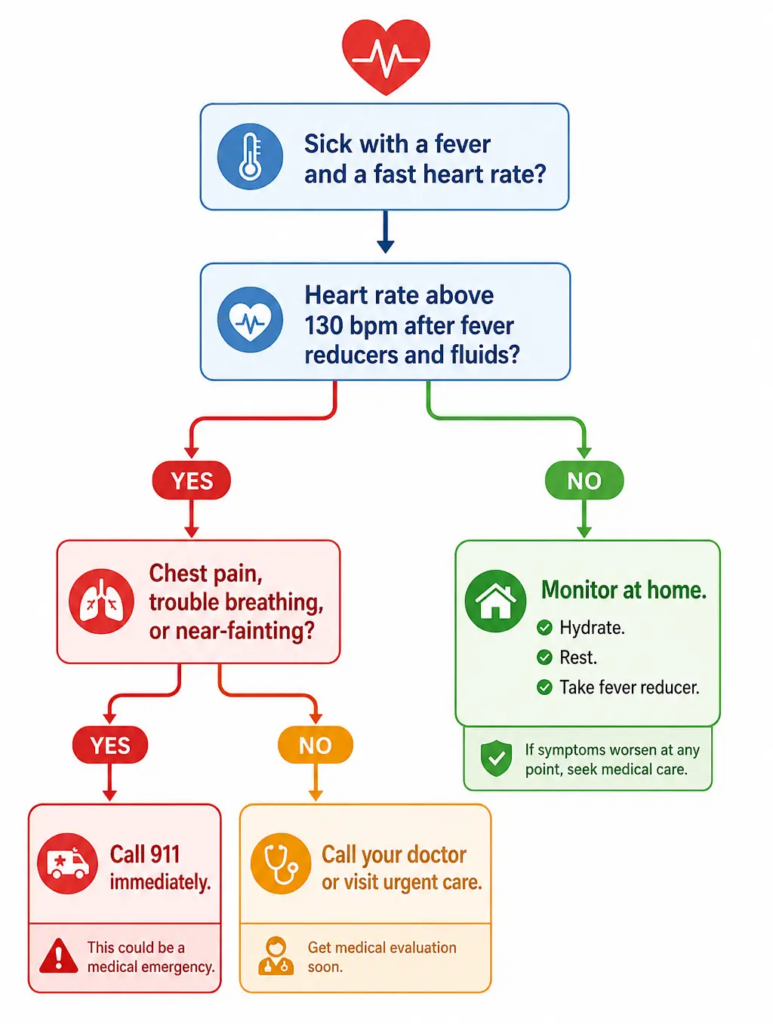
A mildly elevated pulse during illness is expected and not a reason to panic. But certain signs mean it’s time to get evaluated by a medical professional.
Call your doctor or visit an urgent care center if you notice any of these signs:
- Your heart rate stays above 130 beats per minute even after bringing your fever down with medication and rehydrating
- You feel palpitations, which is a sensation of your heart pounding, fluttering, or skipping beats
- You feel dizzy, lightheaded, or like you might faint
- Your fever is above 103°F and won’t come down with over the counter fever reducers
- You have a history of heart disease, arrhythmia, or thyroid disorders and your heart rate feels out of control
Call 911 or go to the emergency room immediately if you have chest pain or tightness alongside a fast heart rate, if you pass out or nearly lose consciousness, or if you develop severe trouble breathing. These symptoms during any illness are always serious. And if chest pain is part of your situation, it’s also worth knowing that not all chest and rib pain points to the heart, but getting checked quickly is always the right call. The CDC recommends seeking prompt care any time severe symptoms accompany a respiratory illness.
The Bottom Line
An elevated heart rate when sick is your body rising to meet the demand that infection and fever place on it. It’s almost always temporary and comes back down as you recover, bring your temperature under control, and get back to drinking fluids normally. Your job is to know your baseline and notice when something feels off. A pulse that’s climbing unusually high, not settling after hydration and fever management, or coming alongside symptoms like chest pain or dizziness is your body asking for more than home care can offer. You’re not alone in finding that scary. Our health team at bannerhealth.io is here to help you read those signals clearly. When in doubt, reach out to your doctor and let them take a look.
Frequently Asked Questions
Does your heart rate increase when sick even without a fever?
Yes. Your heart rate can go up during illness even without a measurable fever. Infections trigger an immune response that releases inflammatory chemicals into your bloodstream, and those chemicals alone can raise your heart rate. Dehydration from not eating or drinking normally also contributes. If your pulse feels faster than usual during an illness but your temperature is near normal, your body is still working harder than it usually does. Stay hydrated and monitor how you feel over the next 24 hours.
How much does fever increase heart rate in adults?
In healthy adults, fever increases heart rate by roughly 8 to 10 beats per minute for every 1 degree Fahrenheit above normal body temperature of 98.6°F. A mild fever of 100°F may add 8 to 12 extra beats per minute. A higher fever of 103°F could add 24 to 30 beats per minute. Your individual baseline matters, as do any medications with stimulant effects and whether you are dehydrated. Monitor your rate and seek care if it climbs unusually high or doesn’t settle within a reasonable time.
Is fever rapid heart rate dangerous in children?
Children naturally have higher resting heart rates than adults, so their pulse during a fever will run higher than an adults in the same situation. That’s expected and not automatically dangerous. Contact your child’s pediatrician if the heart rate seems disproportionately fast compared to the fever level, if the child appears pale, unusually limp, or difficult to rouse, or if they have trouble breathing. The American Academy of Pediatrics recommends prompt evaluation for any infant under 3 months with a fever, regardless of heart rate.
How long does an elevated heart rate last when you’re sick?
Your heart rate should start returning to normal as your fever breaks and your body begins to recover. For most people, pulse returns to baseline within one to two days of the fever resolving, assuming adequate rest and fluid intake. If your heart rate stays elevated for more than a few days after your other symptoms have improved, or if it keeps climbing rather than coming down, that’s a reason to check in with your doctor to rule out any other cause.
What causes fever high pulse rate alongside dizziness?
Dizziness paired with a high pulse rate during illness most often points to dehydration. When blood volume drops from sweating, vomiting, or not drinking enough, your heart beats faster to compensate and blood pressure may fall slightly, causing lightheadedness. Sitting or lying down and sipping fluids slowly is a reasonable first step. If the dizziness is severe, comes on suddenly, or is paired with chest pain or trouble breathing, seek medical care right away rather than waiting it out at home.
Written by Theo James
The information on this page is for general educational purposes only and is not a substitute for professional medical advice, diagnosis, or treatment. Always talk with your doctor or another qualified healthcare provider about any questions you have regarding a medical condition. Never ignore professional medical advice or delay seeking it because of something you read on the internet.