
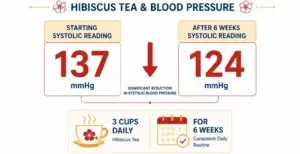
In a controlled trial, adults with elevated blood pressure who drank hibiscus tea three times daily for six weeks saw their systolic reading drop by more than 13 points. That is a real effect, and it is exactly why hibiscus needs the same respect as medication: it interacts with blood pressure drugs, it is off limits in pregnancy, and people with kidney stone history need a doctor’s input first.
Hibiscus shows up everywhere, from tropical gardens to the bright red tea bags on grocery store shelves. Maybe you have wondered whether that tart red drink actually does anything. For blood pressure specifically, the research says yes, and the details matter.
What the Blood Pressure Research Shows
The headline finding comes from research presented to the American Heart Association and reported by the USDA Agricultural Research Service. Adults with higher starting blood pressure drank hibiscus tea 3 times daily for 6 weeks and saw a systolic drop of more than 13 points. A clinical trial summary on PubMed noted the effect looked similar to results from some prehypertension medications.
Three details keep the finding honest.
- The effect showed up in people with elevated readings. People starting with normal blood pressure saw much smaller changes. Hibiscus nudges high pressure down, it does not push normal pressure below normal in healthy adults.
- The dose was three cups a day, consistently, for six weeks. An occasional glass of iced hibiscus is a pleasant drink, not an intervention.
- It is a supporting habit, not a treatment. Nobody should swap prescribed medication for tea, and the interaction below explains why the combination needs care too.
Researchers attribute the effect to hibiscus compounds that relax blood vessels along with a mild natural diuretic action, the same two mechanisms several blood pressure drug classes use.
The Interactions That Actually Matter
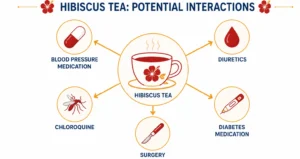
Blood pressure medication. This is the big one, and it works exactly as you would expect: two things lowering pressure add up. Stacking daily hibiscus tea on top of an ACE inhibitor, a diuretic, or any antihypertensive can push pressure too low, which shows up as dizziness, lightheadedness, or fatigue, especially when standing. If you take BP medication and want to add hibiscus, tell your doctor so they can factor it in, and never adjust your own medication dose because the tea seems to be working.
Diuretics specifically. Hibiscus has its own mild diuretic effect, so combining it with prescription diuretics like hydrochlorothiazide doubles up on fluid loss and can affect electrolyte balance.
Chloroquine. Documented research shows hibiscus can reduce the effectiveness of this malaria medication. Anyone taking chloroquine should skip hibiscus entirely.
Diabetes medication. Hibiscus may add a small blood sugar lowering effect on top of medication doing the same job. People on insulin or oral diabetes drugs should mention hibiscus to their doctor.
Surgery. Because of the blood pressure effect, mention regular hibiscus tea to your surgical team before any scheduled procedure.
How Much Hibiscus Tea Should You Drink
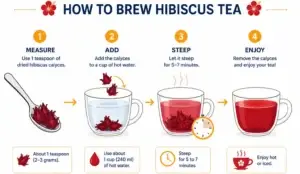
To mirror the studied pattern: one cup, three times daily, brewed from 1 to 2 teaspoons of dried hibiscus calyces steeped in hot water for 5 to 7 minutes. Judge the effect at six weeks, ideally with home blood pressure readings taken at the same time each day so you have real numbers.
For casual drinkers without a blood pressure goal, a cup a day is a reasonable habit for most healthy adults, per Cleveland Clinic. Honey or a squeeze of lime balances the tart, cranberry like flavor, and mint or ginger blend in well. Pairing the habit with other evidence backed kitchen supplements, like the nitrates in beetroot powder, stacks two studied blood pressure supports, though that combination deserves the same doctor conversation if you take medication.
What Is Hibiscus, Exactly
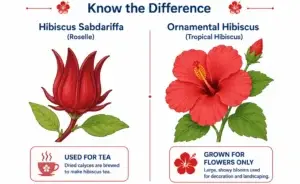
Hibiscus tea comes from the dried calyx of the Hibiscus sabdariffa plant, called the jamaica flower across Mexico and Central America. Once the petals fall away, a fleshy red pod remains, which gets dried and steeped. The deep red color comes from anthocyanins, the same antioxidant pigments found in berries, and the calyx also carries vitamin C and beta carotene.
Not every hibiscus ends up in a teacup. Hibiscus sabdariffa is the edible variety used for tea, jellies, and drinks. The showy ornamental types, including Hibiscus rosa sinensis and the white garden varieties, are grown for blooms rather than flavor. If you want to grow your own for tea, look specifically for sabdariffa seeds.
Beyond blood pressure, research points to antioxidant support, early findings on blood sugar balance, animal studies on liver protection, and modest extract based results for weight management. All of it is thinner than the blood pressure evidence, which remains the reason to take hibiscus seriously.
Hibiscus and Your Kidneys
The kidney story runs in both directions. For most people with normal kidney function, hibiscus looks protective, since lowering blood pressure protects the kidneys over time, a link summarized in a review on PMC.
But hibiscus calyces contain oxalic acid, the compound behind calcium oxalate kidney stones. People with a history of kidney stones, existing kidney disease, or a kidney or liver transplant should talk with their doctor before making hibiscus a daily habit.
Does Hibiscus Have Caffeine?
No. Hibiscus has no relation to Camellia sinensis, the plant behind black and green tea, so pure hibiscus tea is naturally caffeine free and safe to drink in the evening. Check labels on blends though, since some combine hibiscus with green or black tea for flavor, and those do contain caffeine.
Hibiscus is not a sedative, but its caffeine free profile and small amounts of naturally occurring melatonin make it a reasonable wind down drink. If sleep itself is the goal, our guide on whether sleep gummies work covers the options with actual sleep evidence. One timing note: hibiscus has a mild diuretic effect, so finish your last cup 1 to 2 hours before bed.
Pregnancy: Skip It
Pregnant women should avoid hibiscus tea. It may stimulate the uterus and affect estrogen levels, and animal research has raised early labor concerns. Human studies are limited, so doctors generally recommend skipping hibiscus entirely until after delivery. If you are pregnant and fighting a cold, our guide on home remedies for a cold during pregnancy covers options your doctor is more likely to approve.
Hibiscus Around the World
The plant’s cultural footprint explains its availability. Jamaica and the Caribbean brew dried hibiscus into sorrel, a spiced holiday drink rooted in West African foodways. Mexico serves agua de jamaica year round. Hawaii’s state flower is a hibiscus, the Philippines knows it as gumamela, and Hibiscus syriacus is South Korea’s national flower. Centuries of daily use across these cultures came long before the blood pressure trials confirmed what the tradition suspected.
Who Should Be Careful
- People on blood pressure medication, because of the additive effect covered above
- People on diabetes medication, for the same stacking reason
- Anyone taking chloroquine
- Anyone with kidney stone history, kidney disease, or an organ transplant
- Anyone scheduled for surgery
- Pregnant women, who should skip it entirely
In very high doses hibiscus may strain the liver, though this is rare with normal tea consumption. Dizziness, stomach pain, or any allergic reaction after drinking it deserves a call to your doctor.
Frequently Asked Questions
How much does hibiscus tea lower blood pressure?
In the most cited trial, adults with elevated blood pressure who drank three cups daily for six weeks saw systolic readings drop by more than 13 points, an effect comparable to some prehypertension medications. People with normal starting pressure see much smaller changes. Consistency over weeks drives the result, not individual cups.
Can I drink hibiscus tea if I take blood pressure medication?
Only after telling your doctor. Hibiscus and BP medication both lower pressure, and the combination can push it too low, causing dizziness or fatigue. Your doctor may be fine with it and simply account for it. What you should never do is quietly add daily hibiscus, or adjust your medication yourself because your readings improved.
How many cups of hibiscus tea should I drink a day?
To mirror the blood pressure research, one cup three times daily for at least six weeks, with home readings to track the effect. For general enjoyment without a blood pressure goal, a cup a day is a reasonable habit for most healthy adults.
Does hibiscus tea have caffeine?
Pure hibiscus tea has none, since the plant is unrelated to true tea leaves. Blended products that add green or black tea do contain caffeine, so check the label if that matters to you.
Is hibiscus tea safe for kidneys?
For most people with healthy kidneys, yes, and its blood pressure effect is indirectly protective. But hibiscus contains oxalic acid, the compound behind the most common type of kidney stone, so anyone with stone history, kidney disease, or a transplant should ask their doctor first.
Can I drink hibiscus tea while pregnant?
No. Hibiscus may stimulate the uterus and affect hormone levels, and animal research has raised early labor concerns. Doctors generally recommend avoiding it entirely during pregnancy and choosing alternatives your OB approves.