
Non Surgical Rhinoplasty Results, Risks and What to Expect
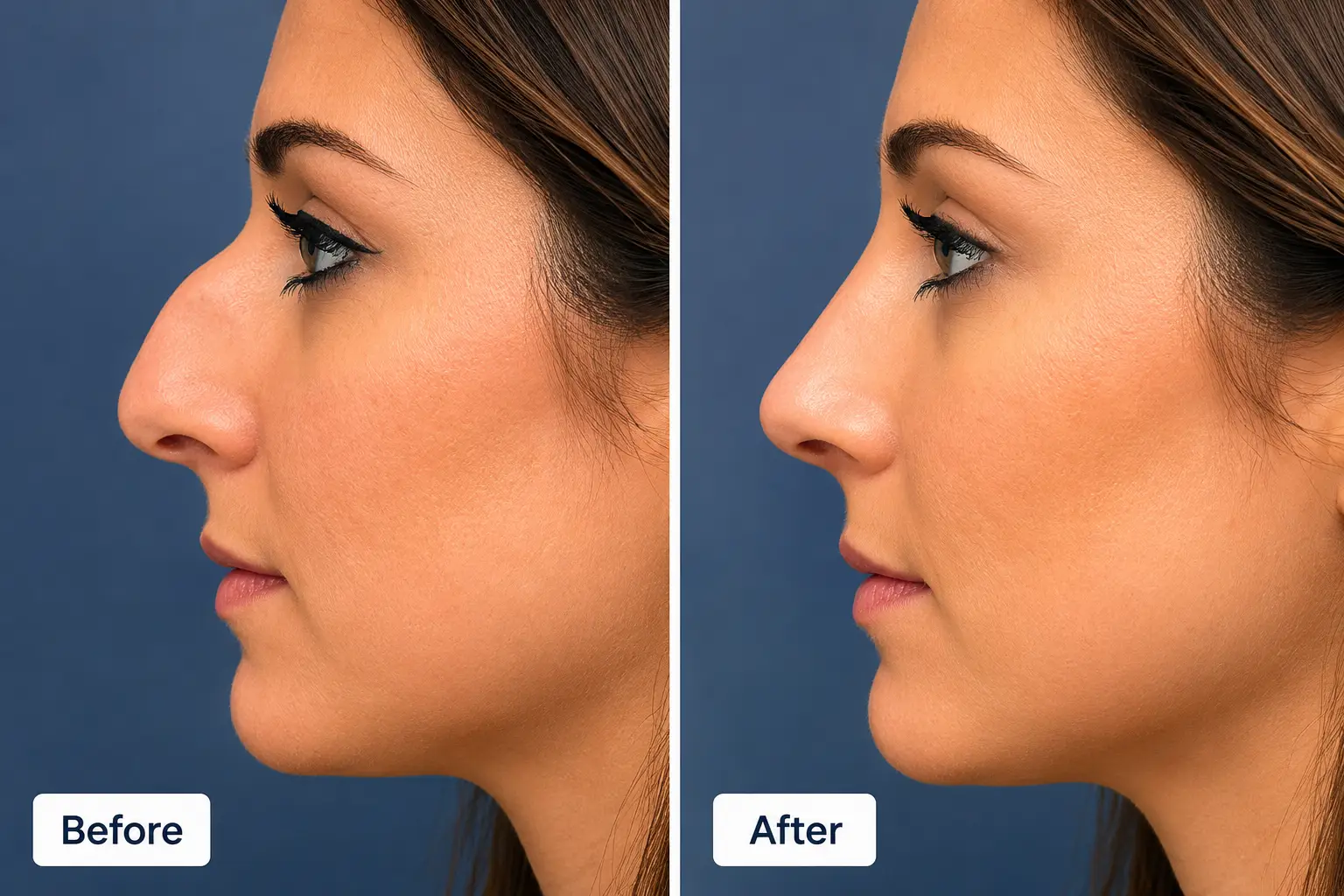
Below, we cover how the procedure works, how long results last, what risks to expect, and who makes a good candidate.
What Is Non Surgical Rhinoplasty
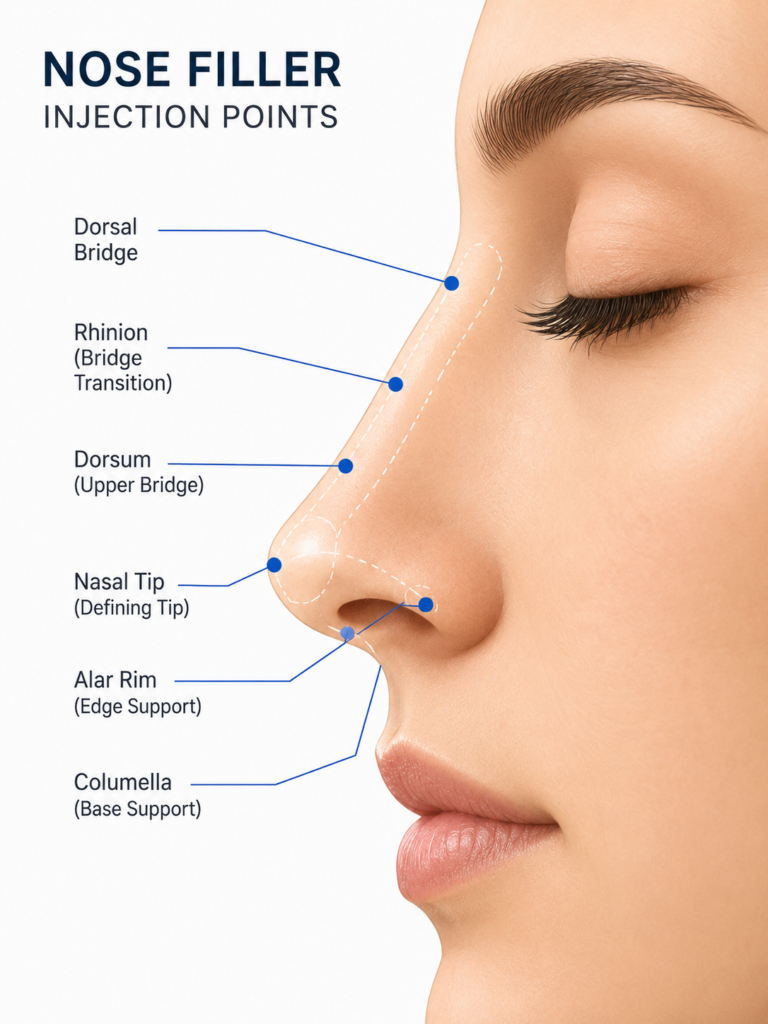
Non surgical rhinoplasty is a cosmetic procedure that uses dermal fillers to reshape the nose. A trained provider injects small amounts of filler into targeted spots. This adds volume, lifts the tip, or smooths out a bump along the bridge.
Most providers use hyaluronic acid fillers such as Juvéderm or Restylane. Hyaluronic acid is a substance the body already produces naturally. That makes it well tolerated by most people. One major advantage is that these fillers can be reversed. If you are unhappy with the outcome, an enzyme called hyaluronidase can dissolve the filler. According to the Cleveland Clinic, non surgical rhinoplasty is growing in popularity because of its immediate results and minimal downtime.
How Does Non Surgical Rhinoplasty Work
A typical appointment takes 15 to 45 minutes. The steps are straightforward and most patients find the process manageable.
- Your provider cleans and numbs the skin around your nose first.
- Small amounts of filler are then injected using a fine needle or cannula.
- Your provider shapes and smooths the filler right after injection.
- Results are visible immediately, though minor swelling may settle over a few days.
No general anesthesia is needed. Most people describe the discomfort as mild and brief. You can typically return to your daily routine the same day.
What Non Surgical Nose Reshaping Can and Cannot Do
This procedure adds volume. It does not remove bone, cartilage, or tissue. Because of that, it works well for specific goals and falls short on others.
Non surgical rhinoplasty can help with these concerns:
- Smoothing a dorsal hump on the nose bridge
- Lifting a drooping nasal tip
- Correcting mild left-to-right asymmetry
- Adding height to a flat nasal bridge
- Refining the overall nose profile from the side
Non surgical rhinoplasty cannot address these goals:
- Making a wide or large nose significantly smaller
- Fixing structural breathing problems
- Creating permanent changes to bone or cartilage
- Narrowing the nasal base or nostrils
If reducing overall nose size is your main goal, surgical rhinoplasty is the only path that achieves that. Non surgical nose reshaping works well for adding balance and definition. However, it cannot take size away.
How Long Does Non Surgical Rhinoplasty Last
Results from non surgical rhinoplasty typically last between nine months and 18 months. The Cleveland Clinic notes that most patients see results for about one year. That said, the timeline varies from person to person.
Three main factors shape how long your results last.
- Filler type. Thicker, more cohesive fillers like Juvéderm Voluma or Restylane Lyft tend to last longer than lighter formulas.
- Your metabolism. People with faster metabolisms tend to break down filler more quickly than those with slower ones.
- Amount of filler used. Larger volumes can dissolve faster as the body works to process them.
Once the filler dissolves, your nose gradually returns to its natural shape. To keep results looking fresh, most people return for a touch-up session every 12 to 18 months.
Non Surgical Rhinoplasty vs Surgical Rhinoplasty
Choosing between the two options depends on your goals, budget, and readiness for surgery. This comparison breaks down the key differences clearly.
| Feature | Non Surgical Rhinoplasty | Surgical Rhinoplasty |
|---|---|---|
| Average Cost | $600 to $1,500 per session | $9,000 to $50,000 total |
| Downtime | None to minimal | 1 to 2 weeks |
| Results Duration | 9 to 18 months | Permanent |
| Can Reduce Nose Size | No | Yes |
| Reversible | Yes | No |
| Anesthesia Required | No | Yes |
| Addresses Breathing Issues | No | Yes |
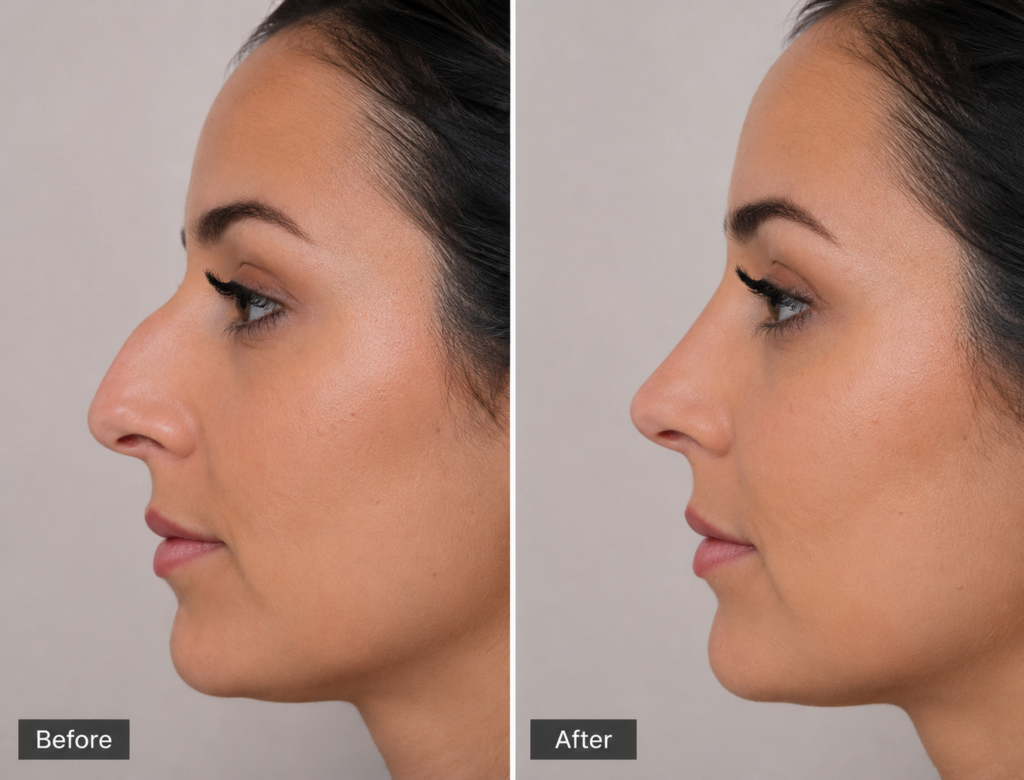
Some people use non surgical rhinoplasty as a preview step. They test a new nose shape with fillers first. Then, once they are sure of the look they want, they decide whether to pursue permanent surgery.
Nose Filler Side Effects and Risks You Should Know
Non surgical rhinoplasty carries real risks. Knowing them upfront helps you make a confident and fully informed decision.
Common side effects are usually mild.
- Swelling at the injection site
- Bruising around the nose
- Redness or tenderness lasting 24 to 48 hours
These effects typically resolve on their own within a few days.
Serious risks require more careful attention.
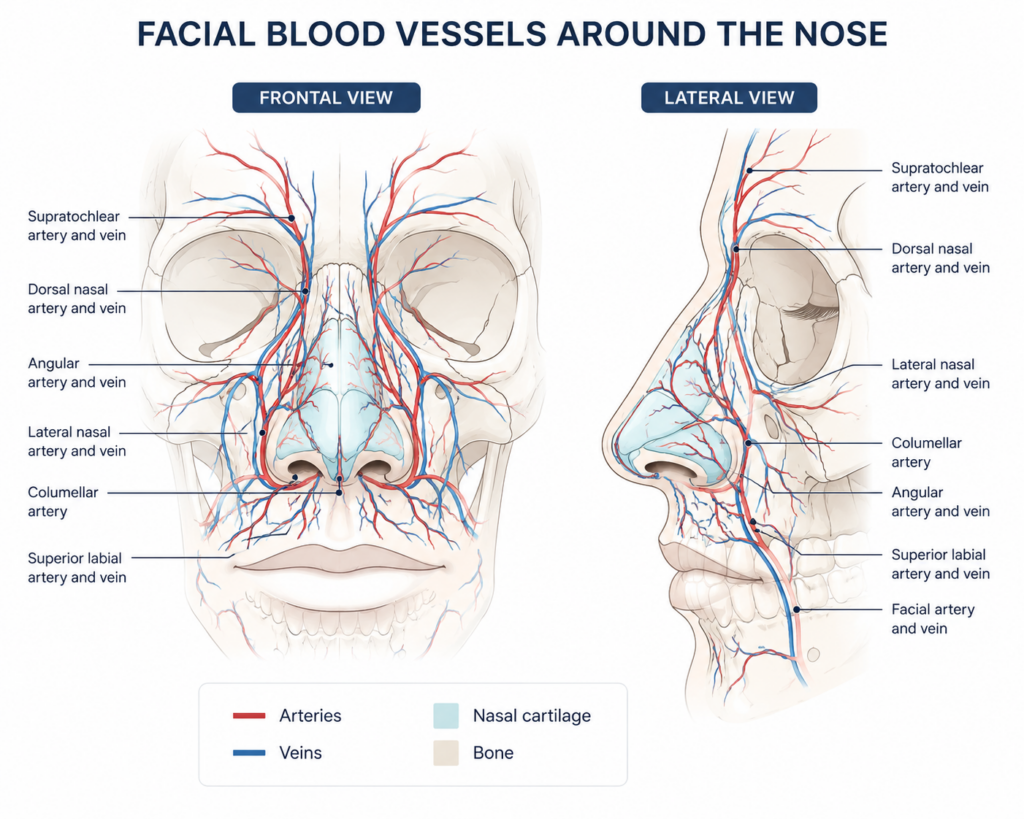
Vascular occlusion is the most dangerous complication associated with nose filler. This happens when filler accidentally enters a blood vessel and blocks blood flow to surrounding tissue. In serious cases, it can cause tissue death, scarring, or partial vision loss. A 2024 systematic review published on PubMed found that severe vascular complications occurred in 0.27% of patients across a large study group.
The nose has a particularly dense network of blood vessels. That makes it a higher-risk injection zone compared to many other facial areas. The American Society of Plastic Surgeons advises that this procedure should only be performed by clinicians with thorough training in nasal anatomy and safe injection techniques.
Repeated treatments can also lead to volume accumulation over time. Too many sessions without adequate spacing may cause the nose to look larger rather than more refined. Working with an experienced provider and allowing sufficient time between treatments reduces this risk significantly.
Who Is a Good Candidate for Non Surgical Rhinoplasty
Not everyone benefits equally from this procedure. Understanding whether you are a good fit saves time and helps you get the result you are actually after.
Good candidates generally include people who:
- Want to smooth a bump along the nose bridge
- Have a slightly drooping or asymmetrical nasal tip
- Want to add height to a flat bridge
- Are considering surgery but want to preview results first
- Are in good overall health with no active skin infections near the nose
This procedure is not the right fit for people who:
- Want to reduce the overall size of their nose
- Have structural breathing problems requiring surgical correction
- Have experienced serious filler complications in the past
- Are currently pregnant or breastfeeding
If you are new to exploring cosmetic treatments and want to understand how non-invasive procedures work more broadly, our article on what cupping therapy is and how it works offers a useful starting point for understanding non-invasive body treatments.
How to Choose a Safe Provider

Provider skill and training matter more here than in most cosmetic procedures. The nose sits in a high-risk injection zone. A mistake can cause serious harm very quickly.
When looking for a provider, prioritize these qualities.
- Board certification in plastic surgery, facial plastic surgery, or dermatology
- Hands-on experience with both rhinoplasty surgery and injectable fillers
- Access to hyaluronidase on site for emergency reversal if needed
- A thorough review of your full medical history before any injection begins
Be cautious of deeply discounted offers at medspas where the injector may lack adequate training in nasal anatomy. The savings are never worth the added risk.
According to NIH StatPearls, non surgical rhinoplasty should only be carried out by clinicians who fully understand the relevant facial anatomy and proven injection techniques.
When to See a Doctor
Most side effects after non surgical rhinoplasty are mild and resolve quickly. Still, certain signs call for urgent medical attention.
Reach out to your provider right away, or go to urgent care, if you experience any of these.
- Skin near the injection site turns white, blue, or purple
- Sudden, severe pain during or right after the procedure
- Any changes in your vision or new eye pain
- Skin that begins to blister or peel
These signs can point to vascular occlusion. Fast treatment with hyaluronidase can reverse the damage if caught early. Do not wait to see if it settles on its own. After any cosmetic procedure, it is also smart to watch for skin changes in general. Our article on how to tell melanoma from age spots and skin cancer can help you stay alert to anything unusual on your skin.
Frequently Asked Questions
Can I make my nose smaller without surgery?
Non surgical rhinoplasty cannot reduce nose size. The procedure only adds volume. You can create the look of a slimmer profile by smoothing a bump or lifting the tip. But the actual size and width of your nose stays the same. Surgical rhinoplasty is the only method that permanently reduces nose size.
How much does a non surgical nose job cost in the US?
The cost typically ranges from $600 to $1,500 per session. Some providers charge up to $3,000 depending on the filler used and your location. Because results are temporary, ongoing touch-up sessions add to your total long-term cost. Most health insurance plans do not cover cosmetic rhinoplasty of any kind.
How long does non surgical rhinoplasty last?
Results last between nine months and 18 months for most patients. Thicker fillers tend to last longer than lighter ones. Your personal metabolism also plays a role, since faster metabolisms break down filler sooner. Most people return for a maintenance session every 12 to 18 months to keep their results looking their best.
What are the most important nose filler side effects to know?
Common side effects include swelling, bruising, and redness at the injection site. These usually clear within a few days. The most serious risk is vascular occlusion, which happens when filler blocks a blood vessel. This is rare but can cause tissue damage or vision changes in severe cases. Choosing a highly qualified provider is the most effective way to minimize this risk.
Is non surgical rhinoplasty reversible?
Yes. Hyaluronic acid fillers can be dissolved using an injectable enzyme called hyaluronidase. If you are unhappy with your results or develop a complication, a trained provider can reverse the treatment relatively quickly. This reversibility is one of the biggest practical advantages of non surgical rhinoplasty over permanent surgical options.
Written by Theo James
The information on this page is for general educational purposes only and is not a substitute for professional medical advice, diagnosis, or treatment. Always talk with your doctor or another qualified healthcare provider about any questions you have regarding a medical condition. Never ignore professional medical advice or delay seeking it because of something you read on the internet.