That sharp, sudden ache in your lower belly during pregnancy can feel alarming the first time it hits. For many pregnant women, it turns out to be round ligament pain, and it is far more common than most people realize.
In fact, up to 30% of pregnant women experience round ligament pain at some point, according to the American Pregnancy Association. The good news is that this discomfort is normal, manageable, and temporary. We are here to walk you through what is going on and how to feel better.
What Is Round Ligament Pain?
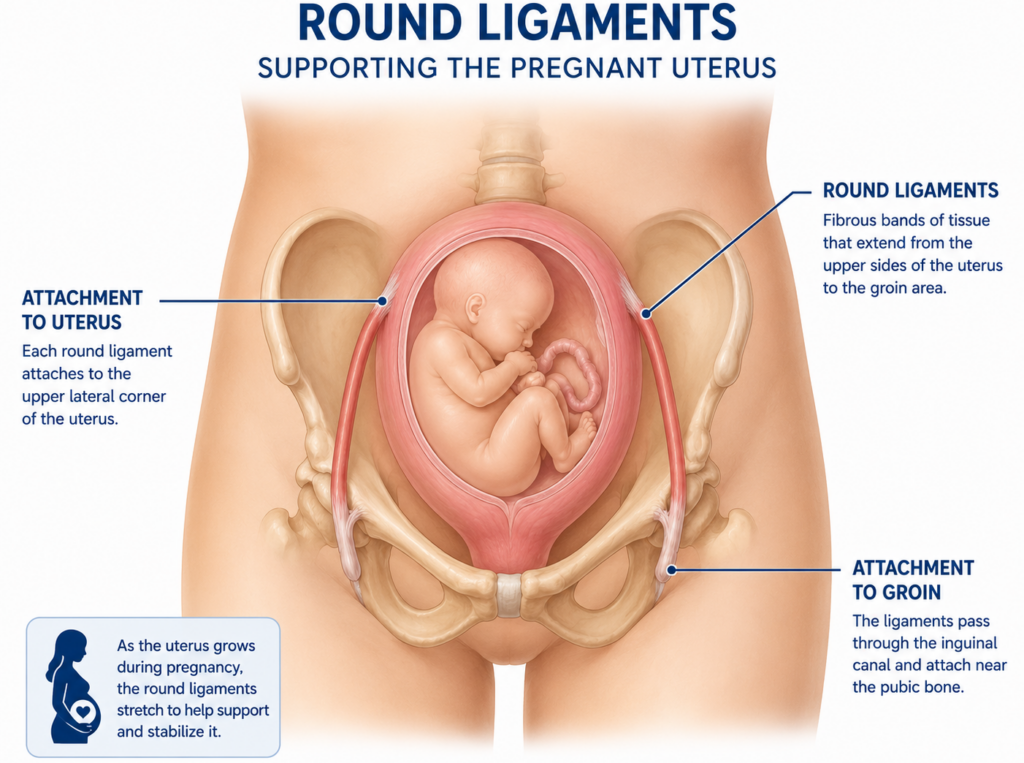
Your uterus is supported by two firm bands called round ligaments. These bands connect the front of your uterus down to your groin area on each side. According to the Cleveland Clinic, each ligament measures about 10 to 12 centimeters before pregnancy begins.
As your baby grows, your uterus gets bigger and heavier. The round ligaments must stretch and thicken to keep up with that growth. That stretching is what causes the aching or sharp pain you may feel in your lower abdomen, hips, or groin.
Round ligament pain is especially common during the second trimester of pregnancy. That is when your uterus grows the fastest and puts the most demand on those ligaments. It is a normal physical response, not a sign that something is wrong.
What Does Round Ligament Pain Feel Like?
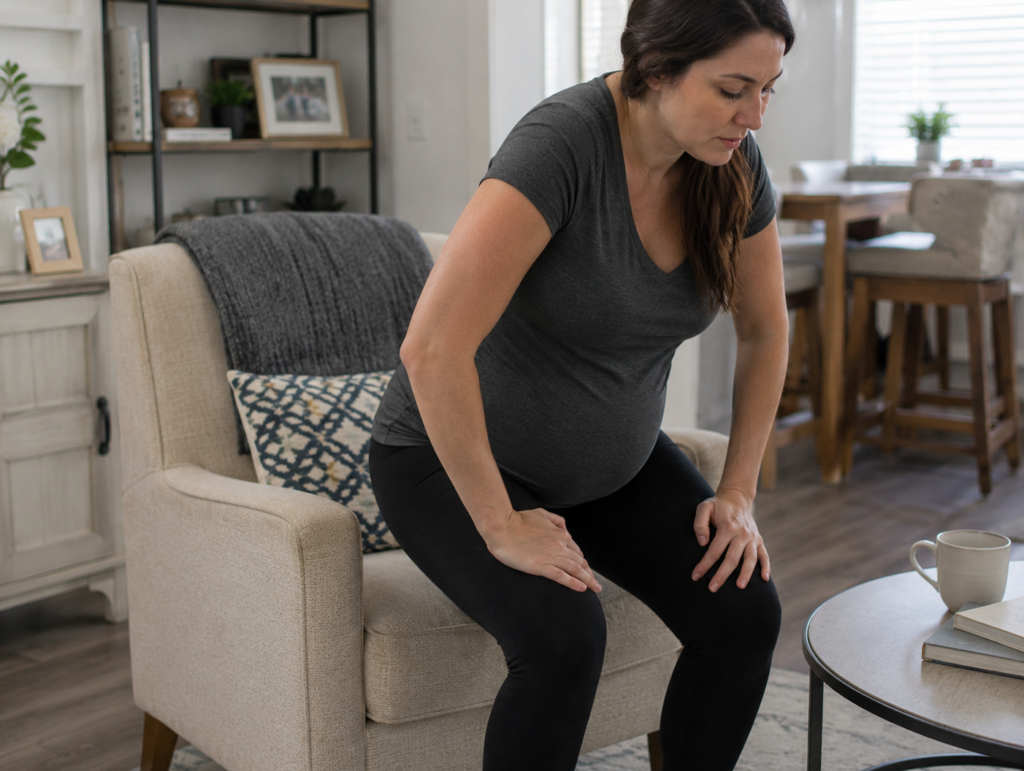
Most women describe round ligament pain as a sharp, stabbing, or pulling sensation. It tends to hit suddenly and fade within a few seconds to a couple of minutes. Some women feel it on just one side of their lower belly, while others feel it on both sides at once.
The pain often follows a quick movement. A few actions are known to bring it on right away.
- Standing up too fast
- Rolling over in bed
- Sneezing, coughing, or laughing hard
- Starting a burst of exercise suddenly
- Twisting your torso quickly
Typically, this sensation fades on its own after a moment. After that, most women feel completely fine. If your pain lasts longer than a few minutes or keeps getting worse, that is worth a conversation with your doctor.
When Does Round Ligament Pain Start in Pregnancy?
For most pregnant women, round ligament pain begins around week 14 of pregnancy. This marks the start of the second trimester, when your uterus begins its most rapid growth phase. You are most likely to notice it between weeks 14 and 27.
Some women feel it as early as the first trimester, especially those who have been pregnant before. A uterus that has already stretched once may respond more quickly to growth. Either way, you are not alone in noticing this change alongside other early pregnancy symptoms.
By the third trimester, many women find the pain eases up. Your ligaments have stretched and adjusted by then. Most women experience full relief after delivery, though it can take a few weeks postpartum to feel completely back to normal.
After delivery, your body faces a whole new set of physical challenges too. One example is mommy thumb pain, a common wrist strain that affects many new mothers in the early postpartum weeks.
Round Ligament Pain Relief That Actually Works
Using a Maternity Belt for Round Ligament Pain
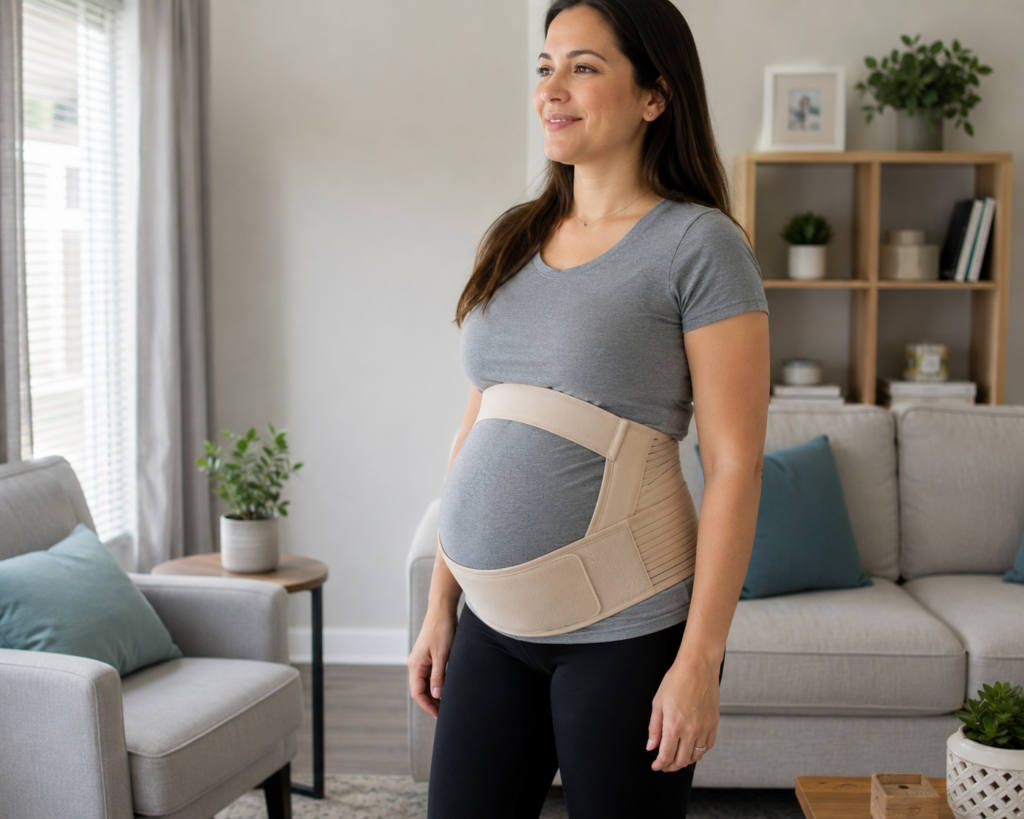
A maternity belt is one of the most practical tools for managing round ligament discomfort. These belts gently lift your belly and take pressure off the ligaments below. Many women feel noticeably better within minutes of putting one on.
You can find maternity support belts at most pharmacies and baby stores. Look for one that wraps firmly but comfortably around your lower abdomen. Wearing it during long walks, work shifts, or daily errands makes a real difference.
Heat, Rest, and Simple Habit Changes
A warm compress applied to your lower abdomen can ease the aching. A warm bath also helps, though the water should be comfortable rather than hot. Rest is equally important, especially after a long or active day.
Additionally, changing how you move throughout the day reduces strain on your ligaments. A few practical adjustments make a real difference.
- Move slowly when changing positions
- Support your belly with your hands before you cough or sneeze
- Use a pillow between your knees when sleeping on your side
- Take regular breaks if you stand for long periods
Doctors generally consider acetaminophen safe for short term use during pregnancy. However, always check with your doctor before taking any medication while pregnant.
Best Stretches for Round Ligament Pain
Gentle stretching is one of the safest ways to ease round ligament pain. It loosens the surrounding muscles and reduces strain on the ligaments themselves. Always move slowly and stop if anything feels sharp or uncomfortable.
Three Prenatal Stretches That Help
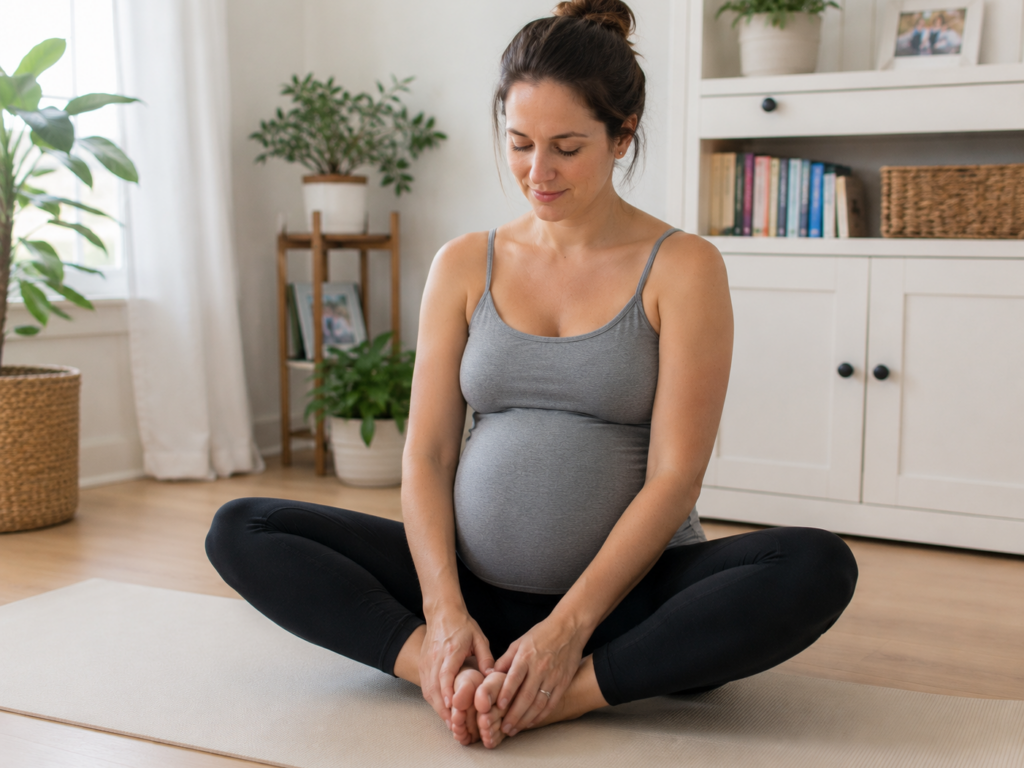
The Butterfly Stretch helps release tension in your inner thighs and groin area. Sit with the soles of your feet together and let your knees fall outward. Lean forward slightly and hold for 20 to 30 seconds.
The Cat Cow Pose is done on all fours with your hands under your shoulders. Inhale and let your belly drop toward the floor, then exhale and round your spine upward. Repeat this five to ten times slowly.
Child’s Pose gently opens your hips and stretches your lower back. Sit back on your heels with your arms stretched out in front of you. Hold for 20 to 30 seconds and breathe deeply.
The American Pregnancy Association recommends gentle movement as a primary approach for managing round ligament pain throughout pregnancy. A prenatal yoga class or physical therapist can also show you safe modifications for each trimester. You can also pair these stretches with other safe home remedies during pregnancy to stay more comfortable overall.
Round Ligament Pain When You Are Not Pregnant
Round ligament pain is almost always tied to pregnancy. However, some women do experience similar pelvic pain when they are not pregnant. This situation is uncommon and often signals a different underlying condition.
One possible cause is endometriosis, where tissue similar to the uterine lining grows outside the uterus. This condition places pressure on the round ligaments and causes comparable discomfort, as noted in a review published in the National Institutes of Health’s StatPearls database. Other causes can include ovulation pain, hip flexor strain, or an inguinal hernia.
If you are not pregnant and you feel pain in your lower abdomen or groin area, see your doctor. Getting a proper diagnosis is the most important step. Do not assume it is round ligament pain without a medical evaluation.
Round Ligament Pain vs Other Pregnancy Pains
Not all belly pain during pregnancy is round ligament pain. Some types of pain are warning signs that need prompt medical attention. Telling these pains apart matters greatly. Research published in the National Library of Medicine confirms that round ligament pain can sometimes mimic more serious acute conditions during pregnancy.
This table can help you tell the difference.
| Pain Type |
Location |
Duration |
Common Trigger |
| Round Ligament Pain |
Lower abdomen, hips, groin |
Seconds to minutes |
Quick movement, coughing |
| Appendicitis |
Lower right abdomen |
Constant, worsening |
No specific trigger |
| Preterm Labor |
Lower back and abdomen |
Regular intervals |
N/A |
| Ectopic Pregnancy |
One side of the abdomen |
Persistent |
N/A |
| Braxton Hicks |
Across the whole abdomen |
30 seconds to 2 minutes |
Activity or dehydration |
If you are unsure what type of pain you are feeling, call your doctor or midwife. It is always better to ask than to wait.
When to See a Doctor
Round ligament pain on its own is harmless. However, certain symptoms alongside the pain are warning signs that require immediate medical attention.
Call your doctor or go to the emergency room right away if you notice any of the following.
- Fever or chills
- Bleeding or spotting
- Pain that does not ease after a few minutes of rest
- Regular cramping or contractions
- Nausea and vomiting paired with severe pain
- Pain beginning before 14 weeks of pregnancy
- Dizziness or fainting
These symptoms can point to conditions like appendicitis, ectopic pregnancy, or preterm labor. If your pelvic pain feels unusual or different from your typical round ligament discomfort, trust your instincts. Call your doctor right away. You may also find our article on ovarian cancer symptoms and signs helpful if you notice persistent pelvic pain that goes beyond normal pregnancy changes.
Round ligament pain is a common part of pregnancy and rarely signals anything serious. Knowing what causes it and how to manage it gives you real confidence throughout your pregnancy. Try gentle stretches, invest in a good maternity belt, and move slowly through your day. Do not hesitate to call your doctor if something feels off. We also cover safe home remedies during pregnancy for extra guidance on staying comfortable while expecting.
Frequently Asked Questions
What does round ligament pain feel like?
Round ligament pain feels like a sharp, stabbing, or pulling sensation in the lower belly or groin. It usually strikes suddenly and fades within seconds to a couple of minutes. The pain is most often triggered by quick movements like standing up fast, rolling over in bed, or sneezing.
When does round ligament pain start during pregnancy?
Round ligament pain most commonly starts around week 14, at the beginning of the second trimester. Some women notice it earlier, particularly those who have been pregnant before. It tends to be most noticeable between weeks 14 and 27 of pregnancy.
Can round ligament pain last all day?
Round ligament pain typically lasts only seconds to minutes at a time. If your pain persists for several hours or feels constant throughout the day, that is not typical. Contact your doctor, as ongoing or worsening pain may indicate a different condition that needs evaluation.
Is there round ligament pain when you are not pregnant?
Round ligament pain when not pregnant is rare but possible, most often in women with endometriosis. If you experience lower abdominal or groin pain outside of pregnancy, see your doctor for a proper diagnosis. Similar symptoms can also stem from conditions such as ovulation pain or an inguinal hernia.
What is the best way to get round ligament pain relief?
The most effective approaches include wearing a maternity support belt and applying a warm compress to your lower abdomen. Moving slowly when changing positions also helps, as do gentle prenatal stretches like the butterfly stretch and the cat cow pose. For persistent pain, a physical therapist who specializes in prenatal care can provide personalized guidance.
Where is round ligament pain felt in the body?
Round ligament pain is most often felt in the lower abdomen, the groin, or the hips. It can appear on one side only, or on both sides at the same time. The sensation is usually concentrated just below the belly line and may sometimes radiate into the upper thigh area.
Written by Theo James
The information on this page is for general educational purposes only and is not a substitute for professional medical advice, diagnosis, or treatment. Always talk with your doctor or another qualified healthcare provider about any questions you have regarding a medical condition. Never ignore professional medical advice or delay seeking it because of something you read on the internet.