
Your head is pounding again. Your nose is running and your eyes will not stop watering. So can allergies cause headaches, or is something else going on?
The short answer is yes. Swollen sinuses and rising histamine levels can both set off real head pain.
Can Allergies Cause Headaches?
Yes, allergies can cause headaches. Swelling inside your nasal passages builds pressure. That pressure spreads pain across your forehead, cheeks, and the area around your eyes. The American Academy of Allergy, Asthma and Immunology notes that headaches connected to rhinitis are common. Doctors often find that what feels like sinus pain is actually a migraine in disguise.
About one in four American adults reported a seasonal allergy in 2021. That figure comes from the Centers for Disease Control and Prevention. This overlap touches a large share of the population every year.
If headaches related to allergies return during the same weeks each year, the pattern is probably seasonal. Spring tree pollen, summer grass, and fall ragweed each bring their own wave of histamine release. Tracking when your headaches start can help you and your doctor confirm the trigger. Not sure if allergies or a cold are behind your symptoms? A quick symptom comparison can clear up the confusion fast.
How Allergies Trigger Headache Pain
Allergies trigger headache pain through two separate paths inside your body, and both start with the same chemical messenger.
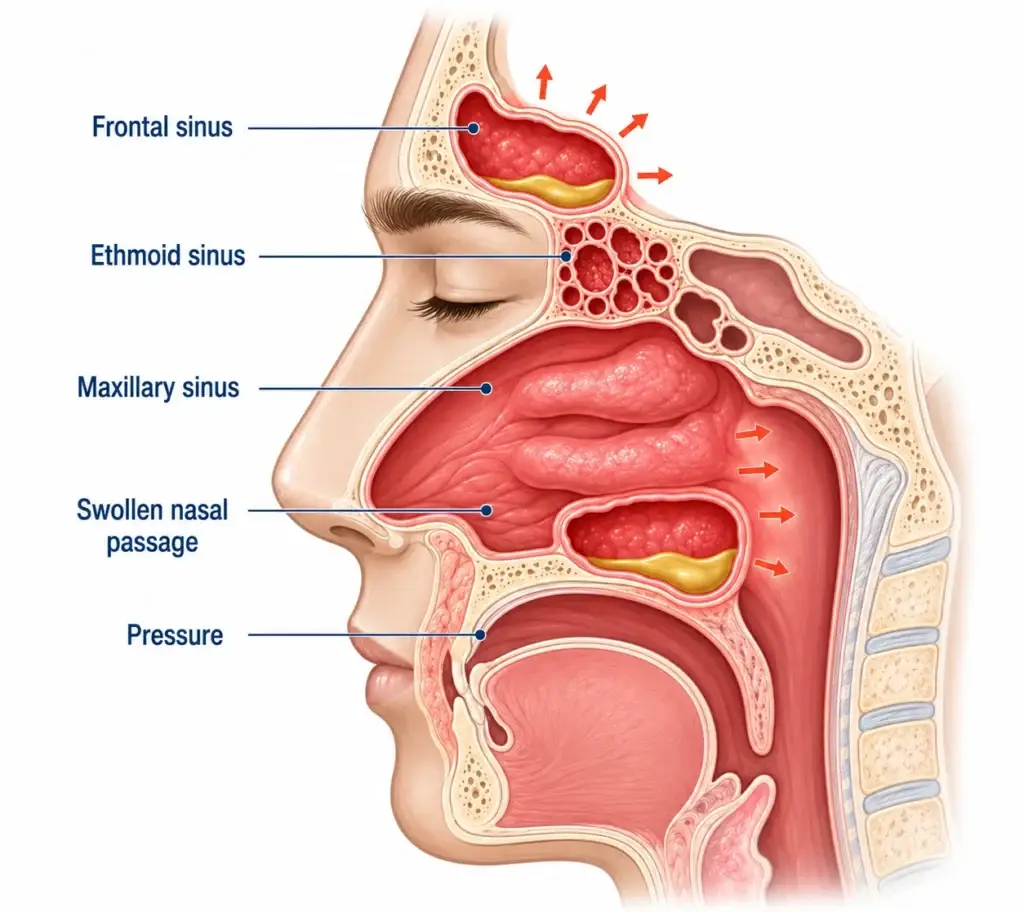
Sinus Pressure From Inflammation
Histamine causes the lining of your nose and sinuses to swell the moment your immune system flags an allergen. That swelling blocks normal drainage, so mucus and air pressure build up behind your cheekbones and forehead.
The result is a dull, heavy ache that often gets worse when you bend forward or lie down. Many people describe this feeling as their whole face throbbing in rhythm with their pulse. This is one clear way allergies can cause headaches that feel impossible to ignore.
Allergies Can Also Set Off Migraines
Allergies can also set off a true migraine, not just sinus pressure. A study published through the National Institutes of Health looked closely at allergic rhinitis and migraine. Researchers found migraine in 34 percent of people with allergic rhinitis. Only 2 percent of people without allergies had migraine in that same study.
The same research linked chronic sinus inflammation to a ninefold higher risk of developing chronic headaches over time. Other research points to something striking about self diagnosed sinus headaches. Up to 88 percent turn out to be migraines once a doctor takes a closer look. Knowing which type you have changes how you treat it. Migraine medication and sinus relief do not work the same way.
Do Allergies Make You Tired Too?
So do allergies make you tired too? Yes, and the fatigue is just as real as the pain. Your immune system spends a surprising amount of energy fighting off pollen, dust, or pet dander. That effort leaves less in the tank for everything else. Histamine release also disrupts the chemical signals your body uses to regulate sleep.

Falling asleep and staying asleep both get harder as a result. Add a stuffy nose that forces you to breathe through your mouth all night. Most people wake up feeling like they barely rested at all. Some even wake up with a headache that hits the moment they open their eyes.
A few specific habits make allergy exhaustion fatigue even worse.
- Your immune system burns extra energy responding to allergens every single day during a flare
- Nasal congestion makes deep, restful breathing difficult once you fall asleep
- Certain antihistamines list drowsiness as a common side effect
- Constant sneezing, itching, or coughing interrupts sleep cycles throughout the night
Allergy Headache vs Migraine vs Sinus Infection
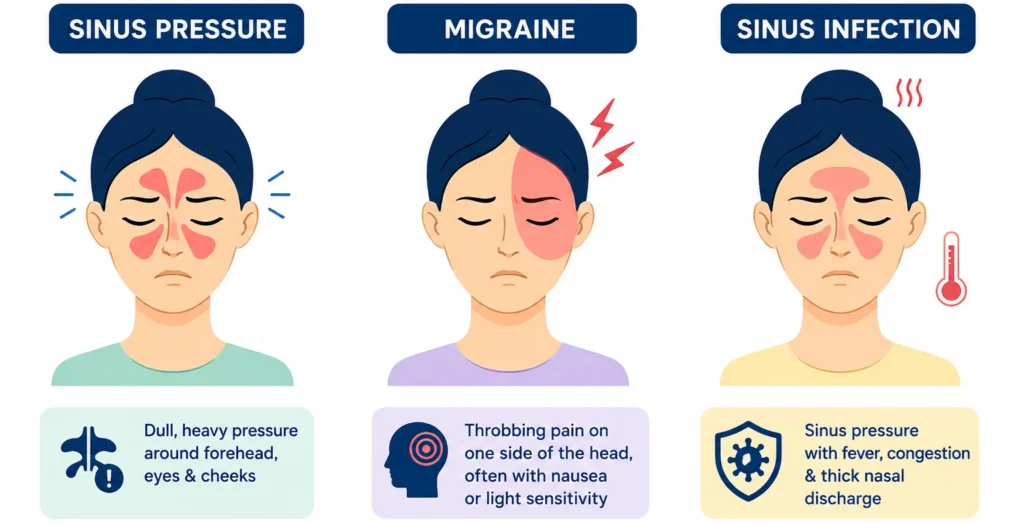
Allergy headaches, migraines, and sinus infections can feel similar. They are not the same condition. The table below shows how they typically differ.
| Type | Main Trigger | Pain Location | Other Symptoms | Typical Duration |
|---|---|---|---|---|
| Allergy Headache | Histamine and nasal swelling | Forehead, cheeks, around eyes | Sneezing, itchy eyes, runny nose | A few hours, often clearing once allergies are treated |
| Migraine | Allergy related nerve irritation | One sided, throbbing | Light sensitivity, nausea, sometimes aura | 4 to 72 hours |
| Sinus Infection | Bacterial or viral infection | Forehead, cheeks, upper teeth | Thick, discolored mucus, fever, fatigue | 7 to 10 days or longer |
Common Symptoms of an Allergy Headache
Allergy headaches share a recognizable set of symptoms, as outlined by the American College of Allergy, Asthma and Immunology. Spotting them early makes treatment more effective.
- A dull, steady pressure across your forehead, cheeks, or around your eyes
- Pain that gets worse when you bend forward or lie flat
- Itchy, watery eyes alongside a runny or stuffy nose
- Fatigue, brain fog, or trouble concentrating during a flare
- Symptoms that line up with pollen season or a specific allergen
How to Relieve an Allergy Headache
Relief usually starts with managing the allergy itself rather than chasing the pain alone.

- Try an over the counter antihistamine to calm the histamine response at its source
- Rinse your sinuses with a saline solution to relieve sinus pressure and clear allergens
- Drink plenty of water throughout the day, since dehydration makes headaches worse
- Apply a cool compress across your forehead and sinuses for fast, simple relief
- Check your local pollen count and limit time outdoors when levels spike
- Ask your doctor about allergy testing if the same headaches return every season
Most allergy headaches respond well to these steps within a day or two. If yours keeps coming back despite consistent treatment, a longer term plan may help more than repeated quick fixes.
When to See a Doctor
Allergies can cause headaches and exhausting fatigue at the same time, and both are frustrating to live with. They respond well once you treat the underlying cause instead of just the pain. Pay attention to your patterns and keep allergy symptoms under control.
Loop in a doctor if anything feels outside the ordinary. With the right plan, you can feel clear headed again well before the next pollen season hits.
Frequently Asked Questions
Do allergies cause headaches every day?
Allergies can cause headaches daily during a heavy pollen season, especially with ongoing sinus swelling. Most people only notice them on high pollen days. A headache that shows up daily for weeks at a time often points to allergies as a steady trigger.
What does an allergy headache feel like?
It usually feels like a dull, steady pressure across your forehead, cheeks, and the area around your eyes. The ache often gets worse when you bend forward or lie down. Many people also notice congestion, sneezing, or itchy eyes at the same time.
Can allergies make you sleepy during the day?
Yes. Broken sleep from nighttime congestion and the drowsy side effects of certain antihistamines both add to daytime sleepiness. Switching to a less sedating antihistamine often helps with this.
Do allergies make you exhausted even with enough sleep?
Yes, because your immune system uses real energy fighting allergens around the clock. That ongoing immune response can leave you feeling drained even after a full night of sleep.
How long does an allergy headache usually last?
Most allergy headaches ease within a few hours once the underlying allergy is treated. If pressure lingers for days, a doctor can check for a sinus infection or migraine instead.
Can allergies give you a headache without other symptoms?
It happens, though it is less common. Mild congestion or sinus pressure can build up quietly and trigger a headache first. Sneezing or itchy eyes may show up later, if at all.