
The short answer: choose regular fish oil if you only want omega 3s, and choose cod liver oil if you also want vitamin D and vitamin A in the same dose. The tradeoff is that cod liver oil’s vitamin A sets a real ceiling on how much you can safely take, especially alongside a multivitamin or during pregnancy.
The two bottles sit next to each other on the shelf, look identical, and cost about the same. They are not interchangeable, and the difference comes down to which part of the fish the oil comes from.
The Difference in One Table
| Feature | Cod Liver Oil | Regular Fish Oil |
| Source | Liver of the cod fish | Body tissue of fatty fish like sardines and anchovies |
| Omega 3 (EPA/DHA) | Present | Present, often at higher doses per serving |
| Vitamin A | High, naturally present | Little to none |
| Vitamin D | High, naturally present | Little to none |
| Overdose risk | Vitamin A buildup with high or stacked doses | Mainly mild stomach upset |
| Pregnancy | Needs doctor sign off, preformed vitamin A risk | Generally preferred, DHA supports fetal brain |
| Best for | Omega 3s plus vitamins A and D in one dose | A pure, higher omega 3 dose |
Why the Source Changes Everything
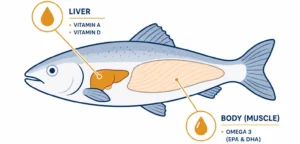
Cod liver oil comes from the liver of the Atlantic cod, and the liver is the organ where fish store fat soluble vitamins. That is why cod liver oil naturally carries vitamin A and vitamin D alongside the omega 3 fats EPA and DHA.
Regular fish oil is pressed from the body tissue of fatty fish like sardines, anchovies, and mackerel. Body tissue holds the omega 3 fats but almost none of the stored vitamins. Manufacturers can therefore concentrate fish oil to higher EPA and DHA doses without worrying about vitamin buildup.
One related point of confusion: plain cod fillet, the fish you eat at dinner, is lean and low in fat. Eating cod is not a substitute for either supplement, since the fillet lacks the vitamin and omega 3 concentration found in the liver.
Choose Fish Oil If
Your goal is omega 3s, full stop. For triglyceride support, general heart health, or joint comfort, the NIH Office of Dietary Supplements notes EPA and DHA are the active players, and fish oil delivers them at higher doses per capsule without any vitamin ceiling.
You already take a multivitamin. Most multivitamins contain vitamin A and D. Fish oil stacks safely on top. Cod liver oil may not, as covered below.
You are pregnant or trying to conceive. DHA matters for fetal brain and eye development, and plain fish oil provides it without the preformed vitamin A risk. More on this in the pregnancy section.
Choose Cod Liver Oil If
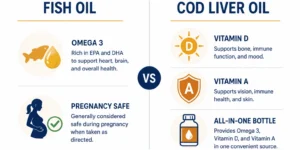
You want vitamin D without another pill. A teaspoon of cod liver oil covers a meaningful share of daily vitamin D, which matters most in winter months and for people who get little sun. Vitamin D also drives calcium absorption for bone strength and plays a role in immune response.
Your diet is low in vitamin A. If you rarely eat liver, dairy, or eggs, cod liver oil fills both gaps in one dose. Cleveland Clinic lists it among supplements that may support brain, heart, and joint health.
You prefer one supplement over three. One dose covering omega 3s, vitamin A, and vitamin D is the entire historical appeal, the reason it sat in every American medicine cabinet a century ago.
The Vitamin A Ceiling: Cod Liver Oil’s One Real Risk
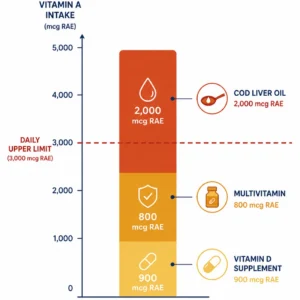
This is the section that decides the comparison for many people. The NIH sets the tolerable upper limit for preformed vitamin A at 3,000 micrograms RAE per day for adults. A single teaspoon of liquid cod liver oil can supply over half of an adult’s daily vitamin A needs.
That is fine on its own. It stops being fine when doses stack:
- Cod liver oil plus a multivitamin containing vitamin A
- Cod liver oil plus a separate vitamin D supplement, doubling the other vitamin too
- A larger-than-label dose because more feels better
Vitamin A buildup over time can cause persistent nausea, blurred vision, and bone pain. So the practical rules are simple. Follow the dose on your specific label, not a number from the internet. Do not combine cod liver oil with separate vitamin A or D supplements without a doctor’s sign off. And if you take a multivitamin, ask your pharmacist to check the combined totals, the same habit our beetroot powder dosage guide recommends for any supplement stack.
For omega 3s themselves, most healthy adults do well around 250 to 500 milligrams of combined EPA and DHA daily, an amount either product covers.
Cod Liver Oil and Pregnancy
This group needs the clearest warning. A peer reviewed analysis on vitamin A and birth defects found that high doses of preformed vitamin A in early pregnancy have been linked to fetal harm. Cod liver oil contains exactly this form, not the gentler plant based beta carotene.
Talk with your doctor before taking cod liver oil if you are pregnant, trying to conceive, or breastfeeding. The first weeks of pregnancy matter most for development, often before anyone knows. Many prenatal vitamins already supply safe, measured vitamin A, and adding cod liver oil on top can push past the safe range unnoticed. If omega 3s are the goal during pregnancy, a plain fish oil or algae based DHA supplement is the standard recommendation, with your OB’s approval.
Side Effects and Interactions for Both
Most healthy adults tolerate either oil well. The common effects are the same for both and usually fade: burping, a fishy aftertaste, mild stomach upset, and bad breath. Taking either oil with food reduces all of them.
Both oils have a mild blood thinning effect. Anyone on blood thinning medication should clear either supplement with their doctor first, and unusual bruising or bleeding on the combination deserves a same day call. Cod liver oil adds the vitamin buildup risk covered above. Fish oil’s risks essentially end at digestive complaints, which is why it is the lower maintenance choice.
How to Buy a Quality Bottle of Either
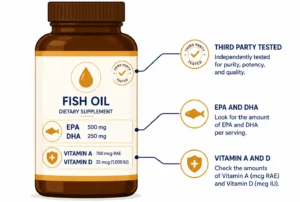
- Look for third party testing seals, such as USP, NSF, or IFOS, confirming the product matches its label
- For cod liver oil, confirm the label lists exact vitamin A and vitamin D amounts per serving, not just “cod liver oil” as an ingredient
- For fish oil, check the actual EPA and DHA milligrams, since “1,000 mg fish oil” often contains only 300 mg of the active omega 3s
- Smell liquid oils. A mild ocean scent is normal, a sharp rancid smell means oxidation
- Refrigerate liquid versions after opening
The same label skepticism applies across the supplement aisle, as our guide on shilajit and ashwagandha covers for another popular category.
Canned Cod Liver as Food
Outside the supplement aisle, canned cod liver is a traditional food across Scandinavia, Iceland, and parts of Eastern Europe. It delivers a nutrient profile similar to the liquid oil, vitamin A, vitamin D, and omega 3s, plus added sodium from canning. Enjoying it occasionally is fine for most healthy adults, but it counts toward the same daily vitamin A total as the supplement.
When to See a Doctor or Seek Emergency Care
- Signs of an allergic reaction, including hives, facial swelling, or trouble breathing, need emergency care right away
- Unusual bruising or bleeding while combining either oil with blood thinners should prompt a call to your doctor
- Symptoms of vitamin A buildup, such as persistent nausea, blurred vision, or bone pain, deserve prompt medical attention
- Any reaction in a child should be reviewed by their pediatrician first
Contact Poison Control at 1 800 222 1222 if you suspect an overdose, or call 911 for severe symptoms. Your doctor can also run blood tests to check your current vitamin A and vitamin D levels, which settles the “do I even need this” question with data instead of guesswork.
Frequently Asked Questions
Is cod liver oil the same as regular fish oil?
No. Regular fish oil comes from the body tissue of fatty fish and mainly supplies omega 3s. Cod liver oil comes from the liver instead, which adds naturally occurring vitamin A and vitamin D on top of those same fats. That addition is both its main benefit and its main risk.
Which is better for vitamin D, cod liver oil or fish oil?
Cod liver oil, and it is not close. Regular fish oil contains little to no vitamin D, while a teaspoon of cod liver oil covers a meaningful share of the daily requirement. If vitamin D is your main goal, cod liver oil or a dedicated vitamin D supplement are the options, and your doctor can say which fits better.
Can I take cod liver oil and fish oil together?
There is rarely a reason to. Both supply the same EPA and DHA, so combining them mostly stacks cost and fishy burps. If you want higher omega 3s plus vitamins, a cod liver oil alongside a doctor approved omega 3 top up is possible, but check combined vitamin A totals first.
How much cod liver oil should I take a day?
Follow the dose listed on your specific product label, since vitamin strength varies between brands. Do not combine it with a separate vitamin A or vitamin D supplement without medical advice, and mention it to your pharmacist if you take a multivitamin. For omega 3s, 250 to 500 mg of combined EPA and DHA daily covers most healthy adults.
Can pregnant women take cod liver oil?
Only with a doctor’s approval. The vitamin A in cod liver oil is the preformed type, and high doses of this type have been linked to birth defects, particularly in early pregnancy. Most OBs point pregnant women toward plain fish oil or algae DHA instead, since prenatal vitamins already cover measured vitamin A.
Is canned cod liver healthy to eat?
In moderation, yes. It carries vitamin A, vitamin D, and omega 3 fats similar to the oil, plus added sodium from canning. It counts toward your daily vitamin A total, so factor it in if you also take supplements.