
Spotting when you expected your period is stressful and confusing. Telling apart implantation bleeding vs period bleeding is not always simple at first glance.
The two can look surprisingly similar, but they have real, measurable differences in color, flow, and timing. At BannerHealth.io, we hear this question often, and we want to give you clear, straightforward answers. Understanding what your body is doing brings real peace of mind during an uncertain time.
What Is Implantation Bleeding?
Implantation bleeding is light spotting that happens when a fertilized egg attaches to the wall of the uterus. This is a completely normal part of early pregnancy. About one in four pregnant women notice some spotting at this stage, according to the Cleveland Clinic. The spotting is usually very light and fades on its own in a day or two. Many women do not notice it at all, or they assume it is the start of a period.
When Does Implantation Bleeding Happen?
Implantation bleeding typically occurs six to 12 days after ovulation. More specifically, it tends to appear around 10 to 14 days after conception. That timing puts it very close to when your next period would normally arrive. This overlap is a major reason why so many women mix up the two. So if you notice faint spotting right around your expected period date, implantation is a real possibility worth considering.
Implantation Bleeding vs Period Key Differences
Knowing how the two compare makes the whole picture much clearer. Here is a quick side-by-side comparison.
| Feature | Implantation Bleeding | Period |
|---|---|---|
| Color | Pink, light brown, or dark brown | Bright red or dark red |
| Flow | Very light, a few drops | Moderate to heavy |
| Duration | A few hours to three days | Three to seven days |
| Clots | None | Often present |
| Cramping | Mild and brief | Stronger and longer |
| Flow pattern | Stays consistently light | Starts light, then gets heavier |
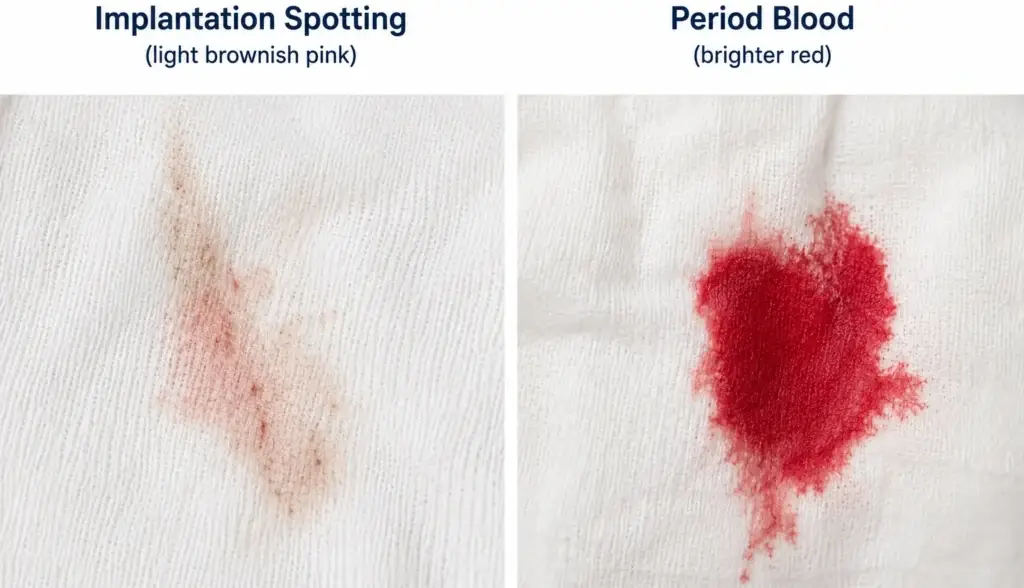
What Is the Color of Implantation Bleeding?
Color is one of the strongest clues when comparing implantation bleeding vs period. Implantation spotting is almost always pink, light brown, or dark brown. Period blood, by contrast, is typically bright red or dark red. The brownish shade comes from older blood that moved slowly through the body before leaving. So if you see fresh, bright red blood from the very start, that points more clearly toward a period.
Flow and Clotting
Implantation bleeding is very light. You might notice a small stain on your underwear or just a faint mark on a pantyliner. A period, however, builds in flow over time and often includes clots. Passing clots is a strong sign that you are experiencing menstrual bleeding rather than implantation spotting. Additionally, implantation spotting stays consistently light from start to finish. It does not build or progress as the hours pass.
Cramping During Implantation Bleeding vs Period
Cramping can come with both, but the feel is quite different. Implantation cramps are mild and short. They often feel like a gentle flutter or light twinge in the lower belly. Period cramps, by contrast, tend to be stronger and can last for hours. If cramping gets progressively worse alongside heavier bleeding, a period is the far more likely explanation.
How Long Can Implantation Bleeding Last?
The American Pregnancy Association confirms that implantation bleeding lasts anywhere from a few hours to three full days. Bleeding that continues beyond three days is unlikely to be implantation related. A period, in comparison, typically lasts three to seven days and follows a steady increase before it tapers off. Implantation spotting, however, stays light throughout with no increase in flow.
Implantation Bleeding Symptoms
Spotting is the main sign, but implantation bleeding can arrive alongside other early pregnancy symptoms at the same time. Watch for these signs alongside the spotting.
- Mild cramping or a light twinge in the lower belly
- Breast tenderness or soreness
- Bloating
- Nausea
- Fatigue
- Headaches
- Mild lower backache
- Mood changes

These signs overlap heavily with PMS, so they cannot confirm pregnancy on their own. However, if the spotting is light and pink or brown, and these symptoms appear at the same time, early pregnancy is worth considering. Our guide on early pregnancy symptoms covers each of these signs in more detail and explains what to do next.
Plan B Spotting vs Implantation Bleeding
If you recently took emergency contraception like Plan B, spotting afterward is common and expected. However, that spotting is different from implantation bleeding. The high hormone dose in Plan B can cause the uterine lining to shed lightly. This spotting usually appears within one to five days of taking the pill. Additionally, it can range from light pink to reddish brown in color.
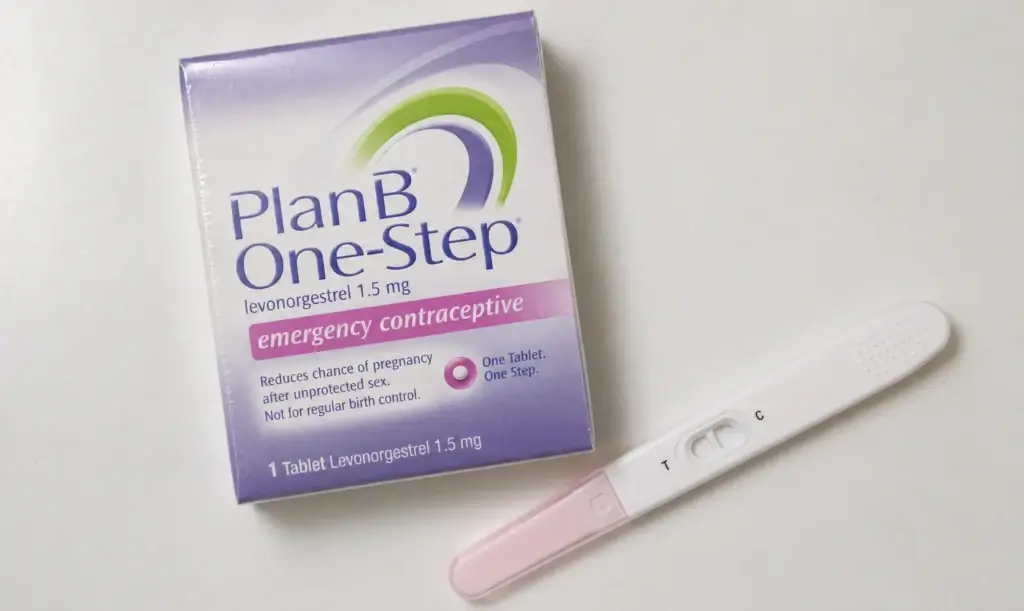
Here is how Plan B spotting differs from implantation bleeding.
- Timing. Plan B spotting appears within one to five days of taking the pill. Implantation bleeding appears 10 to 14 days after ovulation, well after the pill would have taken effect.
- Cause. Plan B spotting is a hormonal response from the medication, not a sign of pregnancy. Implantation bleeding means a fertilized egg has attached to the uterus.
- Flow. Both are light, but Plan B spotting can sometimes be slightly heavier than implantation spotting.
The only reliable way to confirm whether Plan B was effective is to take a home pregnancy test. Wait at least three weeks after taking the pill, or test when your period is more than a week late.
How Long After Implantation Bleeding Can I Test?
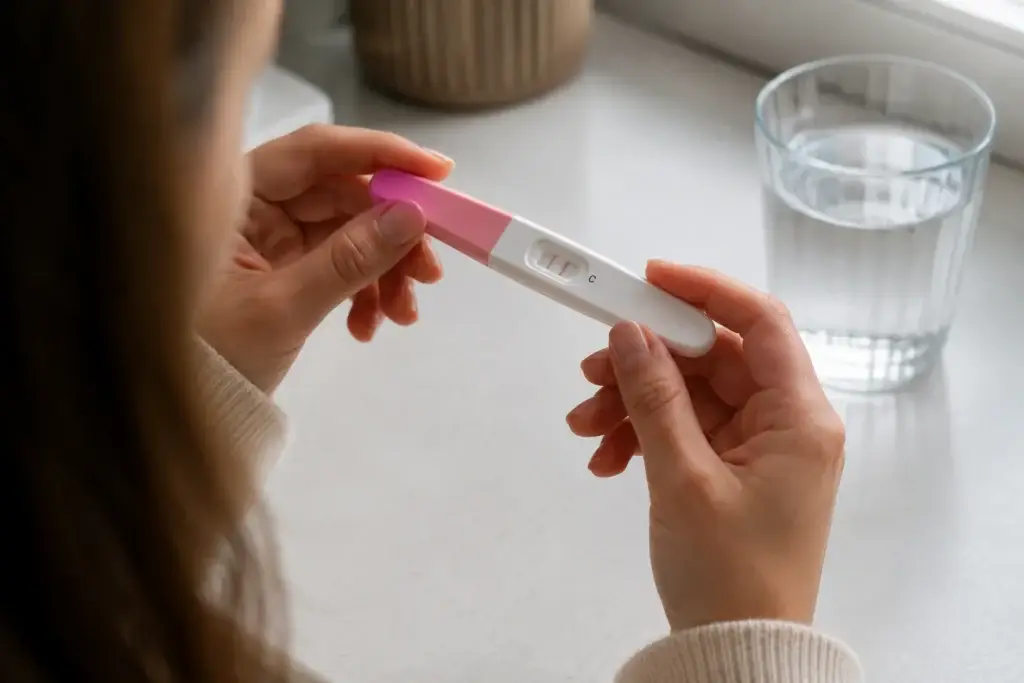
After noticing spotting, the urge to test right away is completely understandable. However, testing too early often leads to a false negative result. Your body needs time to build enough of the pregnancy hormone hCG for a test to detect it. Most health providers recommend waiting at least three to five days after the spotting ends. For the most accurate reading, though, wait until the first day of your missed period.
Take the test first thing in the morning with your first urine of the day. That is when hCG is most concentrated. If you are also noticing signs like nausea or breast tenderness, our article on early pregnancy symptoms explains what else to watch for while you wait.
When to See a Doctor
Light spotting in very early pregnancy is often not a cause for alarm. However, some signs mean you should contact a doctor right away. Reach out to your doctor if you notice any of these.
- Bleeding heavy enough to soak through a pad
- Spotting that lasts longer than three days
- Bright red blood with visible clots
- Severe cramping or sharp pelvic pain
- Dizziness or shoulder pain alongside bleeding
- Any bleeding after a confirmed positive pregnancy test
These symptoms can sometimes point to an ectopic pregnancy or a miscarriage, both of which need urgent medical care. If you are also dealing with unusual discharge, our article on STIs during pregnancy can help you understand other possible causes. For pelvic pain or pressure that feels unusual, our guide on round ligament pain during pregnancy explains what normal pregnancy discomfort looks like versus when to seek help.
Knowing the real differences between implantation bleeding vs period takes careful observation. Light, pink or brown spotting that stays consistently light and lasts under three days is most likely implantation bleeding. Anything heavier, redder, or longer points more clearly toward a period. When you are unsure, a home pregnancy test taken at the right time gives a much clearer answer. And if you are ever worried about what you are seeing, your doctor is always the right next step.
Frequently Asked Questions
Is it always easy to tell implantation bleeding vs period apart at home?
Not always. The clearest differences are color (pink or brown vs bright red), flow (very light vs heavier), and duration (one to three days vs three to seven days). Tracking all three signs together gives the most reliable picture at home.
What is the color of implantation bleeding?
Implantation bleeding is usually light pink, brown, or dark brown. It is rarely bright red. The brownish color comes from older blood that moved slowly before leaving the body.
How long can implantation bleeding last?
Implantation bleeding typically lasts a few hours to three full days. Spotting that continues beyond three days or grows heavier is more likely a period or another cause worth discussing with your doctor.
When does implantation bleeding happen in the cycle?
It usually occurs six to 12 days after ovulation, or about 10 to 14 days after conception. This timing falls very close to when your next period would normally begin, which is why the two are so often confused.
Can Plan B spotting look like implantation bleeding vs period spotting?
Yes. Both Plan B spotting and implantation bleeding are light and can appear pink or brown. The key difference is timing. Plan B spotting arrives within one to five days of taking the pill. Implantation bleeding appears about 10 to 14 days after ovulation.
How long after implantation bleeding can I take a pregnancy test?
Wait three to five days after the spotting stops for a more reliable result. For the most accurate reading, wait until the first day of your missed period. Always test with your first morning urine, when hCG levels are at their highest concentration.