
You wake up at 2 a.m. with a sharp pull in your calf. It ruins a good night’s sleep. Leg pain at night is a common complaint.
The causes range from a harmless muscle cramp to a warning sign that needs attention. Maybe it’s a classic charley horse, or maybe caffeine and alcohol played a role earlier in the evening. This guide breaks down why your legs hurt after dark, what helps fast, and when the pain means something more.
At BannerHealth.io, we pulled together current research and practical steps to help you find relief tonight and prevent it going forward.
What Is Leg Pain at Night
Leg pain at night refers to any ache, cramp, or burning feeling in your legs. It often shows up once you lie down or try to sleep. Often it centers on the calf, though some people feel it in the thigh, shin, or foot. Unlike pain from an injury, this kind of leg pain tends to appear without warning.
Doctors often group nighttime leg pain into a few broad categories.
- Muscle related pain, such as cramps or fatigue after exercise
- Circulation related pain, linked to blood flow problems in the legs
- Nerve related pain, often a burning or tingling feeling
- Sleep position related pain, from staying still for hours at a time
What Causes Leg Pain at Night
Several everyday habits can trigger leg pain at night. Long hours of sitting or standing during the day often leave muscles tight by bedtime. Dehydration reduces the fluid and minerals your muscles need to relax properly. Overexertion from a hard workout can also leave muscle fibers fatigued and prone to cramping.
- Dehydration or low levels of potassium, calcium, or magnesium
- Muscle fatigue from exercise or standing most of the day
- Restless legs syndrome, which brings an urge to move your legs
- Nerve compression or diabetic nerve damage
- Certain medications, including diuretics and statins
- Pregnancy, which shifts mineral levels and adds weight on the legs
- Reduced blood flow from peripheral artery disease
Charley Horse Causes While Sleeping
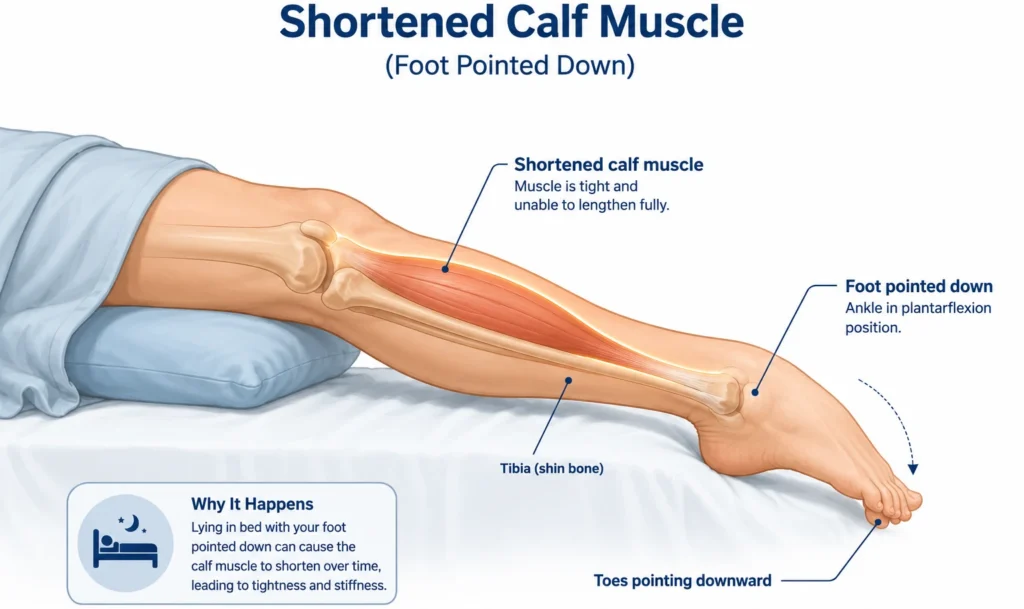
A charley horse is a sudden, painful muscle cramp. It often strikes the calf in the middle of the night. When you lie down, your feet naturally point downward, and this position shortens your calf muscle fibers. In that shortened state, even a small nerve signal can trigger a full cramp. The muscle has no slack left to absorb it.
Charley horse causes while sleeping usually come down to a mix of factors. Dehydration is one of the biggest, since low fluid levels change how your muscles contract. Low magnesium, potassium, or calcium can also make cramping more likely. Sitting or standing too long during the day adds to the risk too. Some people spell it charlie horse causes while sleeping instead of charley horse, but the cause is the same.
- Dehydration or an electrolyte imbalance
- Muscle fatigue from standing, walking, or exercise
- Sitting in one position for hours at a time
- Age, since muscle cramps become more frequent after age 50
- Pregnancy, due to shifts in circulation and mineral needs
Why Does Caffeine Cause Leg Cramps
Caffeine is a stimulant, and it can make muscles more likely to cramp in some people. Researchers think caffeine blocks a receptor called adenosine, which normally calms nerve activity. Without that calming effect, nerve signals to the muscle fire more easily. This does not mean one cup of coffee will cause a cramp. Most research points to high or frequent caffeine intake, not a single cup, as the bigger risk factor. So does caffeine cause leg cramp risk for everyone? Not exactly, since the effect varies by person and total daily intake.
- Switch your afternoon coffee for water or herbal tea
- Watch for hidden caffeine in energy drinks and soda
- Space out caffeinated drinks instead of drinking them one after another
- Add a glass of water for every caffeinated drink you have
How to Prevent Leg Cramps After Drinking Alcohol

Alcohol pulls water out of your body, and this raises your risk of cramps overnight. It also flushes out electrolytes like potassium and magnesium, which your muscles need to relax. Drinking on an empty stomach makes the effect worse. Fortunately, a few habits can lower your risk without cutting out alcohol completely.
- Drink a full glass of water between each alcoholic drink
- Eat a meal with protein and healthy fats before drinking
- Choose drinks lower in sugar, since sugary mixers worsen dehydration
- Add an electrolyte drink or coconut water before bed
- Cut back on the total amount you drink in one sitting
Nighttime Leg Cramps vs Restless Legs Syndrome
Nighttime leg cramps and restless legs syndrome feel different, though people often confuse the two. A cramp is a sudden, painful muscle contraction that you can usually feel and locate. Restless legs syndrome brings an uncomfortable urge to move your legs, often without real pain. Cleveland Clinic reports that up to 60% of adults experience nighttime leg cramps at some point in life.
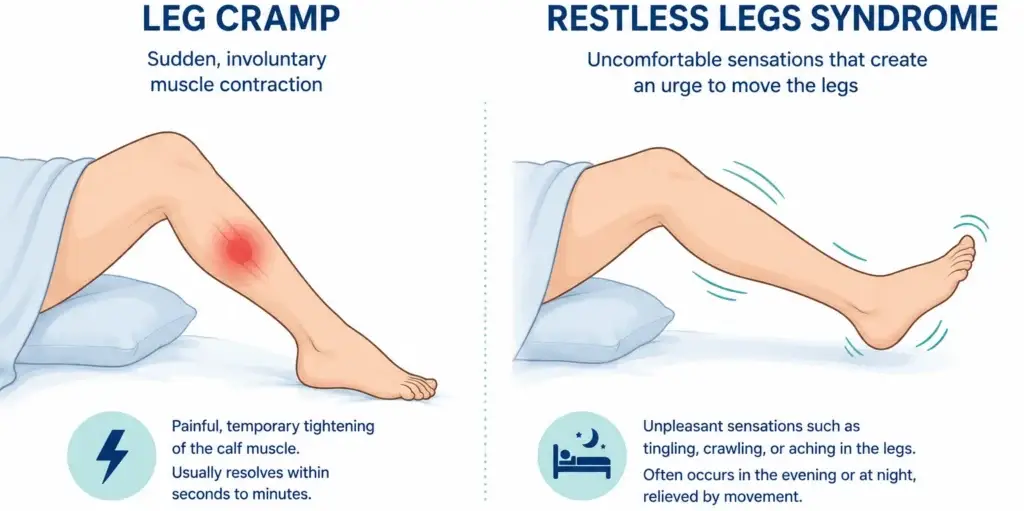
Restless legs syndrome has a stronger tie to pregnancy, iron deficiency, and diabetes, based on research published through the National Institutes of Health. If you’re low on iron, raising your levels may help calm symptoms, and our guide on how to increase ferritin levels walks through food and supplement options. Pregnancy raises the risk of both conditions, and our article on muscle cramps during pregnancy covers the hormonal and mineral shifts behind it.
| Feature | Nighttime Leg Cramp | Restless Legs Syndrome | PAD Related Leg Pain |
|---|---|---|---|
| Feeling | Sudden, sharp muscle tightening | Urge to move, tingling or crawling | Aching or burning pain at rest |
| Timing | Strikes suddenly, often mid sleep | Builds in the evening, eases with movement | Worsens at night, may wake you from sleep |
| Common Triggers | Dehydration, exercise, alcohol | Iron deficiency, pregnancy, diabetes | Narrowed arteries, reduced blood flow |
| Fast Relief | Stretching, massage, walking | Moving the legs, stretching | Requires medical evaluation |
| Needs a Doctor | Rarely, unless frequent or severe | Often, for diagnosis and treatment | Always, and promptly |
When Leg Pain at Night Signals Something More Serious
Most leg pain at night is harmless, but some patterns point to a bigger problem. Peripheral artery disease, or PAD, narrows the arteries that carry blood to your legs. According to the CDC, classic PAD pain shows up during activity and eases with rest. Pain that shows up at rest, especially at night, can mean the arteries are more severely narrowed.
- Leg pain that continues even while resting
- Sudden swelling in one leg only
- Skin that looks pale or feels cool to the touch
- A sore or wound on the leg or foot that will not heal
- Numbness, weakness, or a change in skin color
- Chest pain or shortness of breath along with leg pain
The Mayo Clinic and the American Heart Association both list these symptoms as reasons to call a doctor right away, not wait for a scheduled visit. Some people also look at circulation supporting foods, and our piece on beetroot powder benefits covers what current research does and does not support.
How to Relieve Severe Leg Pain at Night Fast
When a cramp hits, quick action can shorten how long it lasts. Straighten your leg and pull your toes back toward your shin. This stretches the calf muscle and can break the spasm. Walking a few steps or shaking out your leg also helps in the moment.
- Stretch the calf by pulling your toes toward your shin
- Massage the muscle firmly with your hands
- Apply a warm towel or heating pad to relax tight muscles
- Try an ice pack if the area feels swollen or hot
- Get up and walk for a minute to reset the muscle
- Take acetaminophen or ibuprofen if pain lingers afterward
These steps handle a single episode well. For leg pain at night that keeps repeating, prevention matters more than any quick fix.
How to Prevent Leg Pain at Night Long Term
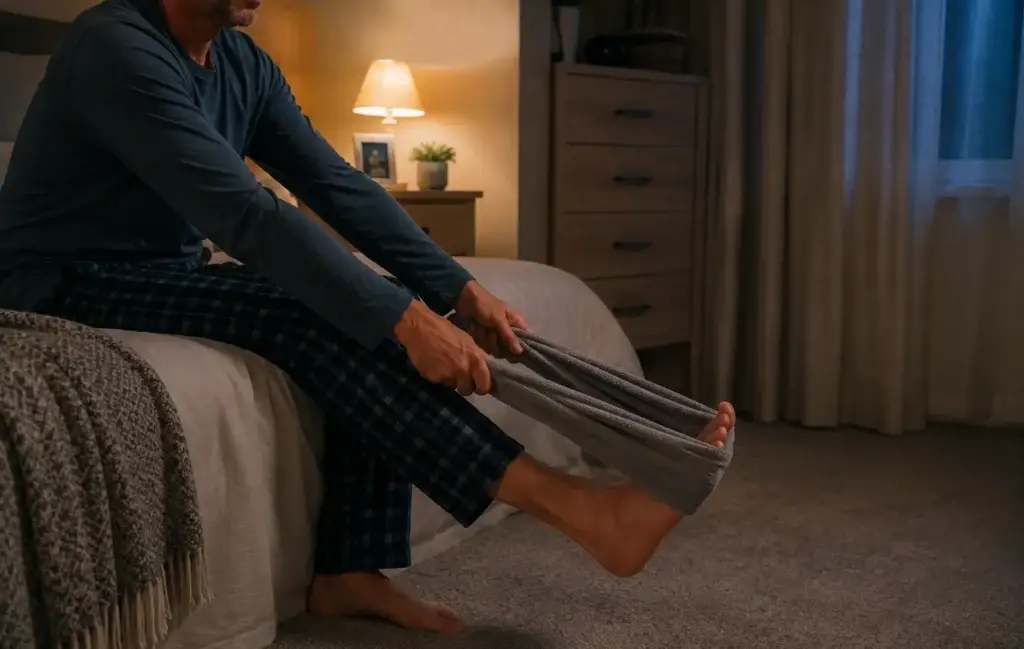
Consistent habits during the day cut down on leg pain at night more than anything you do in bed. Staying hydrated keeps your muscles and nerves working the way they should. Stretching your calves and hamstrings before bed keeps muscle fibers from starting the night too tight. Comfortable, supportive shoes also reduce strain that builds up by evening.
- Drink water steadily through the day, not all at once
- Stretch your calves and hamstrings for a few minutes before bed
- Wear shoes with good arch support, especially if you’re on your feet a lot
- Keep bedsheets and blankets loose around your feet
- Talk to your doctor about your current medications, since some raise cramp risk
Getting enough magnesium also plays a real role in muscle relaxation, and our guide on magnesium bisglycinate benefits and dosage explains how this form is absorbed. Some people also turn to mineral rich water as an easy way to support hydration and electrolyte intake throughout the day.
When to See a Doctor
Most causes of leg pain at night respond well to home care, but not all of them. See a doctor if cramps happen several times a week, last longer than 10 minutes, or keep disrupting your sleep. According to MedlinePlus, leg pain that occurs at rest along with numbness or a wound that will not heal needs prompt evaluation. Pregnant women with new or severe leg pain should also check with their doctor, since pregnancy changes the usual risk picture.
- Cramps more than three or four nights a week
- Pain that lasts more than 10 minutes
- Swelling, redness, or warmth in one leg
- Numbness, weakness, or skin color changes
- A wound on your leg or foot that won’t heal
Conclusion
Leg pain at night usually comes down to something fixable, like dehydration, muscle fatigue, or too much caffeine or alcohol before bed. Small changes such as steady hydration, evening stretches, and cutting back on late night caffeine solve the problem for most people. Still, pain that shows up at rest, spreads suddenly, or comes with numbness deserves a doctor’s attention rather than another home remedy. Pay attention to your body’s patterns, and you’ll know when a simple fix is enough and when it’s time to get checked out.
Frequently Asked Questions
What causes leg pain at night?
Leg pain at night often comes from dehydration, muscle fatigue, or an electrolyte imbalance. Restless legs syndrome, nerve issues, and reduced blood flow can also play a role. In most cases, the cause is simple and responds well to hydration, stretching, and rest. Pain that repeats often or feels severe deserves a closer look from a doctor.
What causes a charley horse while sleeping?
A charley horse comes from a sudden, involuntary muscle contraction, usually in the calf. Feet naturally point downward during sleep, which shortens calf muscles and makes them more likely to spasm. Dehydration, low magnesium, and long hours of standing during the day add to the risk.
Why does caffeine cause leg cramps?
Caffeine stimulates the nervous system, and this can make muscles fire more easily than usual. Researchers believe it affects how nerve signals reach the muscle, though the exact process is still being studied. High or frequent intake carries more risk than one regular cup of coffee.
How do you prevent leg cramps after drinking alcohol?
Drink a glass of water between each alcoholic beverage to replace lost fluids. Eating before you drink and choosing lower sugar drinks also helps. Adding an electrolyte drink before bed can lower your risk of waking up with a cramp.
How do you relieve severe leg pain at night fast?
Stretch the affected muscle by pulling your toes toward your shin. Massage and gentle heat can also ease the tightness quickly. Walking for a minute often helps reset the muscle and stop the spasm.
Are nighttime leg cramps a sign of a serious problem?
Most nighttime leg cramps are harmless and linked to dehydration or muscle fatigue. Pain that happens at rest, comes with swelling or numbness, or does not improve can point to peripheral artery disease or nerve damage. These patterns are worth a doctor’s visit.
What is the difference between a charley horse and restless legs syndrome?
A charley horse is a sudden, painful muscle contraction that you can usually pinpoint. Restless legs syndrome causes an uncomfortable urge to move your legs, often with tingling, rather than sharp pain. The two also differ in what triggers them and how you find relief.
What deficiency causes leg cramps at night?
Low levels of magnesium, potassium, or calcium are commonly linked to nighttime leg cramps. Iron deficiency is also tied to restless legs syndrome, which can feel similar to cramping. A blood test can confirm whether a deficiency is contributing to your symptoms.