
A crack at the corner of your mouth is usually angular cheilitis. It happens when trapped saliva, a yeast or bacterial infection, or a vitamin gap breaks down the thin skin where your lips meet. Most cases heal in one to two weeks once you match the treatment to the actual cause.
A lip edge crack can show up overnight and turn a normal day into a sore one. Smiling, eating spicy food, even brushing your teeth can suddenly sting.
The skin where your upper and lower lip meet is thin. It splits fast when it gets too dry, too wet, or short on certain nutrients. Sometimes the cause is simple weather related chapping. Other times, a cracked corner simply will not heal. That can point to an infection or a vitamin gap your body is trying to flag.
What Causes a Lip Edge Crack
A lip edge crack rarely comes from just one thing. Doctors usually sort the causes into three groups, everyday habits, infections, and nutrition gaps. Knowing which group fits your case helps you pick the right fix instead of guessing with random lip balms.
Everyday Reasons Your Lips Sides Crack

Cold, dry air pulls moisture straight out of your skin, and the corners of your mouth dry out first. Constant lip licking adds to the problem because saliva evaporates and leaves skin drier than before. Other common triggers include the following.
- Breathing through your mouth at night
- Wearing braces or dentures that do not fit well
- Drooling during sleep, which pools saliva at the corners
- Thumb sucking or pacifier use in young children
- Long term mask wear that traps moisture against the skin
These habits create a damp, irritated environment at the corners of your mouth. Once the skin barrier breaks, it stays open and sore until you change something about the routine. Poorly fitting dentures or braces can also change how your teeth sit against each other, and if you have noticed new aching in your teeth along with corner cracks, a dental checkup can address both at once.
Infections That Cause Stubborn Mouth Corner Cracks
When a lip edge crack will not close after a few days, an infection is often the reason. Damp, cracked skin gives yeast and bacteria an easy way in. Once they take hold, healing stalls. These corners can stay raw and inflamed from fungal infections, bacterial infections, or eczema, according to Cleveland Clinic.
This is the medical condition known as angular cheilitis, also called perleche. It is not contagious, so you cannot catch it from kissing someone or sharing a cup.
Vitamin and Mineral Gaps Linked To Lip Edge Cracks
Sometimes a lip edge crack is your body’s way of flagging a nutrition problem. Low riboflavin, also known as vitamin B2, is a well documented cause of cracked, inflamed mouth corners. The NIH Office of Dietary Supplements lists cracked lip corners among the classic signs of this deficiency.
Low iron tells a similar story. A 2025 case report in the National Library of Medicine looked at a patient with angular cheilitis. Iron deficiency was a significant factor, since low iron lowers immunity and raises the skin’s risk for infection. Low vitamin B12 and low protein intake can also play a role.
If you already deal with low iron, our article on how to increase ferritin levels can help. It walks through food sources and supplement options that may support healing.
Fungal, Bacterial, or a Vitamin Gap? How to Tell Which One You Have
You cannot pick the right treatment without a rough idea of the cause. These patterns will not replace a doctor’s swab test, but they point you in the right direction.
Signs that point to yeast. A white or pearly coating inside the crack is the classic sign of a candida infection. Yeast thrives in damp corners, so this pattern is common in people who drool during sleep, wear dentures, or breathe through the mouth at night. Both corners are often affected.
Signs that point to bacteria. A honey colored or golden crust over the crack suggests a bacterial cause. These cracks tend to feel more sore and inflamed, and they may weep small amounts of fluid before crusting over.
Signs that point to a vitamin or mineral gap. Cracks at both corners that keep coming back, especially alongside fatigue, pale skin, or a sore tongue, fit the nutritional pattern. The corners often look dry and split rather than coated or crusted.
Signs that point to plain dryness. If the cracking appeared with cold weather, affects the whole lip surface too, and improves within days of consistent ointment use, simple chapping is the likely cause.
Lip Edge Crack vs Other Lip Problems
Not every sore spot on your lips is angular cheilitis. A simple comparison makes the differences easier to spot.
| Feature | Lip Edge Crack (Angular Cheilitis) | Chapped Lips | Cold Sore |
| Location | Corners only, where lips meet | Anywhere on the lip surface | Usually on the outer lip edge |
| Cause | Saliva buildup, infection, or vitamin gap | Dry air, sun, or wind | Herpes simplex virus |
| Contagious | No | No | Yes |
| Typical look | Cracked, red, sometimes crusted corners | Dry, flaky, peeling skin | Fluid filled blisters that scab over |
| Usual healing time | One to two weeks with treatment | A few days with moisture | One to two weeks, often returns |
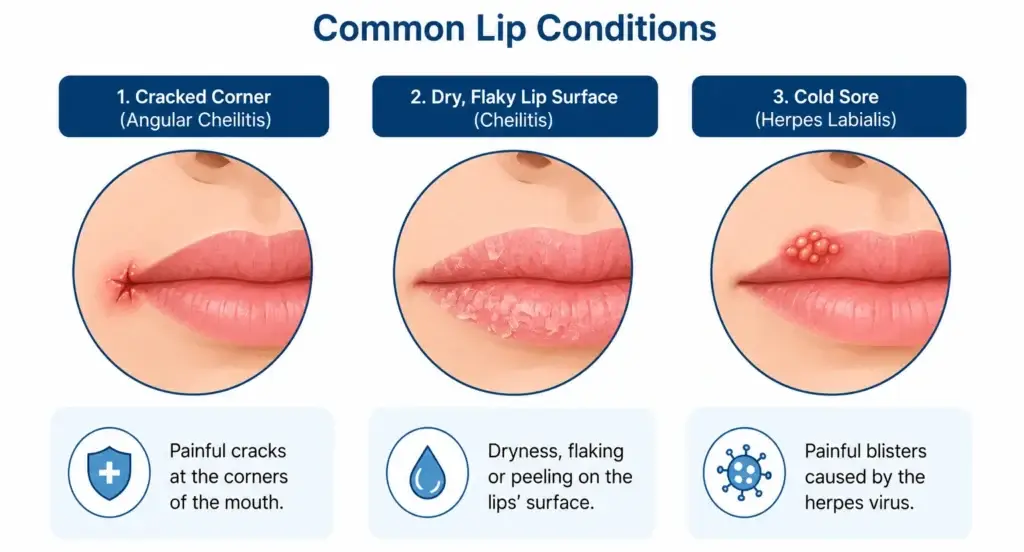
A split lip corner that keeps reopening points more toward angular cheilitis than plain dryness. This is especially true with redness or a white coating.
Symptoms of a Cracked Lip Corner You Should Not Ignore
Most cases start small and get worse without care. Watch for the following signs.
- Redness or swelling at one or both corners of the mouth
- Cracking that splits open when you open your mouth wide
- A burning or stinging feeling with salty or spicy food
- Crusting or a white film in the crease
- Bleeding when the crack is deep
- Pain that makes eating or talking uncomfortable
Sores that spread past the lip line, or that ooze fluid, often signal a deeper infection. That kind of sore needs more than lip balm.
Which Over the Counter Treatment Should You Try?
Drugstore shelves offer three very different tools for a cracked lip corner, and they are not interchangeable. Match the product to the likely cause you identified above.
Barrier ointments, like petroleum jelly or zinc oxide. This is the right first step for every type of crack. A thick barrier keeps saliva out and moisture in, which is the single most important healing condition. If the cause is simple dryness, this alone usually closes the crack within days.
Antifungal creams, like clotrimazole or miconazole. These target yeast. If you see a white coating in the crack, or you wear dentures or drool at night, an antifungal applied as directed is the logical next step when a barrier alone has not worked. Apply the antifungal first and let it absorb, then seal with a barrier ointment.
What not to use. Skip flavored balms, cinnamon or strong mint toothpaste, and anything with fragrance while the corner is open. Do not use plain hydrocortisone on a suspected yeast infection on your own, because steroids can feed a fungal problem if used without an antifungal alongside it.
If an over the counter approach has not clearly improved the crack within three or four days, stop experimenting. A doctor can prescribe a targeted antifungal or antibacterial cream that works faster than anything on the shelf.
How To Heal a Lip Edge Crack Fast
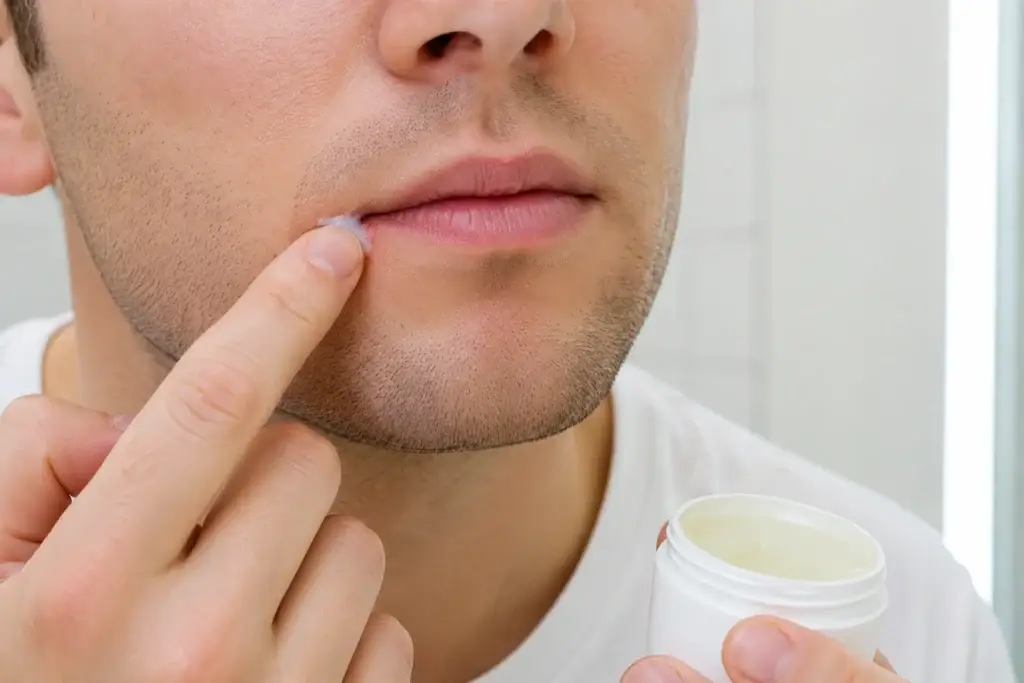
There is no shortcut that clears a lip edge crack in one night. Still, you can speed up healing a lot in the first 48 hours. Start with these steps.
- Clean the area gently with warm water and pat it dry
- Apply a thick barrier like petroleum jelly or zinc oxide ointment after every meal
- Avoid licking the corners, even though it feels soothing in the moment
- Skip flavored lip products and toothpaste with cinnamon or strong mint, since both can sting
- Use a humidifier at night if your home air is dry
- Switch to a soft, low friction toothbrush if brushing pulls at the corners
Is There a Real Angular Cheilitis Overnight Cure
Searches for an angular cheilitis overnight cure are common. The honest answer is that no product erases a deep crack in a single night. What actually helps overnight is reducing irritation so your body can start repairing itself. A thick ointment before bed, paired with not licking the area, gives skin its best chance to heal overnight.
If the crack looks white, crusted, or will not improve after three or four days, see a doctor. A prescription antifungal or antibacterial cream usually works faster than anything sold over the counter.
A Simple Routine For Sides Of Lips Chapped
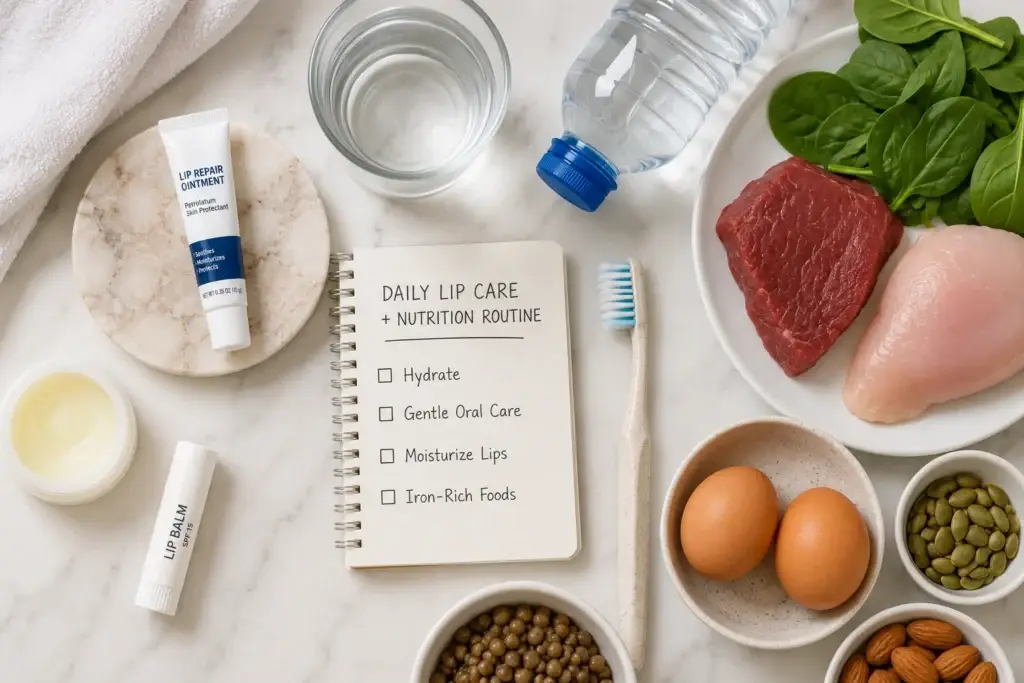
When the sides of your lips stay chapped no matter what you try, a daily routine matters most. Follow this order each day.
- Wash your hands before touching your lips
- Apply a fragrance free ointment in the morning and before bed
- Reapply after meals, since eating washes away the barrier
- Check your pillowcase and water bottle for buildup that could reintroduce bacteria
- Add iron and B vitamin rich foods to your meals, like lean meat, eggs, leafy greens, and fortified cereal
Consistency matters more than intensity here. A thin layer applied four or five times a day beats one thick layer applied once.
When To See a Doctor About a Lip Edge Crack
Most lip edge cracks heal within one to two weeks with simple care. Call your doctor or dentist if you notice any of the following.
- The crack has not improved after a week of home treatment
- Pain, swelling, or redness gets worse instead of better
- You see pus, a foul smell, or spreading redness on the face
- You have a fever along with the mouth symptoms
- Cracks keep coming back every few weeks
- You also have signs of anemia, such as fatigue, pale skin, or shortness of breath
A doctor can swab the area to check for a fungal or bacterial cause. Blood work can also rule out a nutrition gap. That way, treatment targets the real reason behind the crack, not just the symptom.
How To Stop Lip Edge Cracks From Coming Back
Once healed, a few habit changes lower your odds of another flare.
- Keep a barrier ointment in your bag, car, and bathroom so it is always within reach
- Treat seasonal dryness early, before cracking starts, especially heading into winter
- Get dentures or braces checked if they no longer fit well
- Eat a varied diet with enough iron, B vitamins, and protein
- Ask your doctor about a vitamin panel if cracks return often
Frequently Asked Questions
Why are the corners of my mouth cracking?
The most common reasons are trapped saliva, an infection, or a vitamin gap like low B2, B12, or iron. Cold weather and lip licking make all of these worse.
How do I know if my lip edge crack is fungal?
A white or pearly coating inside the crack is the strongest sign of a yeast infection. Fungal cracks are also more common in people who wear dentures, drool during sleep, or breathe through the mouth at night. A doctor can confirm the cause with a quick swab test before prescribing an antifungal cream.
What cream is best for cracked mouth corners?
Start with a plain barrier ointment like petroleum jelly or zinc oxide, applied after every meal and before bed. If you see a white coating or the crack has not improved in three or four days, an over the counter antifungal like clotrimazole targets the yeast that commonly infects mouth corners. Persistent cracks need a prescription cream matched to the cause.
Why does my mouth crack at the corners every winter?
Cold air holds less moisture, so skin loses water faster, and the thin skin at the corners cracks first. Wind and indoor heating add to the dryness.
Is angular cheilitis contagious?
No. Angular cheilitis itself is not contagious. The yeast or bacteria involved can sometimes spread to other damp areas of your skin if left untreated.
What is the fastest way to heal a split lip corner?
Keep the area clean and dry, apply a thick barrier ointment several times a day, and avoid licking it. See a doctor if it has not improved within three or four days.
Can a lip edge crack be a sign of anemia?
Yes. Low iron is a recognized factor in angular cheilitis. Other signs of anemia, like fatigue or pale skin, often show up alongside the cracking.
Should I pop or pick at sores in the corner of my mouth?
No. Picking can tear the skin further and introduce bacteria, which slows healing and raises the risk of a deeper infection.
Written by Tejanshu Jaluthria, Editor, Banner Health. Last updated: July 14, 2026.
Every claim in this article is checked against the sources linked throughout, including the NIH, FDA, WHO, the American Academy of Orthopaedic Surgeons and Mayo Clinic. Read more about how we review our content.
Disclaimer: The information on this website is for general educational purposes only and is not a substitute for professional medical advice, diagnosis, or treatment. Always talk with your doctor or another qualified healthcare provider about any questions you have regarding a medical condition. Never ignore professional medical advice or delay seeking it because of something you read on the internet.