
The form decides what magnesium does for you. Bisglycinate absorbs well and is gentle on the stomach, which makes it the pick for sleep, stress, and muscle relaxation. Citrate absorbs well but loosens stools, which makes it the pick for occasional constipation. Oxide is the cheapest and the worst absorbed. Most adults should stay at or under 350 mg of supplemental magnesium daily.
You toss and turn at night, and a friend mentions magnesium as the fix. Then you reach the supplement aisle and find six different words after “magnesium” on the labels. Here is what each one actually means and how to choose.
The Forms Compared
| Form | Absorption | Stomach Effect | Best For |
| Bisglycinate (glycinate) | High | Very gentle | Sleep, calm, muscle relaxation |
| Citrate | Good | Mild laxative effect | Occasional constipation, general use |
| Oxide | Low | Often causes loose stools | Budget buys, not much else |
| Malate | Good | Gentle | Daytime use, energy support |
| L-threonate | Moderate | Gentle | Marketed for brain benefits, still early research, expensive |
| Taurate | Good | Gentle | Often paired with heart health goals |
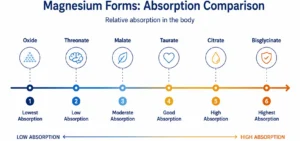
The pattern to remember: the mineral is the same in every form, what changes is how much survives the trip through your gut and what it does on the way.
What Makes Bisglycinate Different

Magnesium bisglycinate is magnesium bonded to two molecules of the amino acid glycine. You will also see it called magnesium glycinate, since both names point to the same compound. That bond shields the mineral as it moves through your stomach, so more of it reaches your bloodstream intact, and the leftover mineral causing loose stools, the classic magnesium side effect, mostly disappears.
Plain magnesium salts like oxide lack that amino acid shield. Your gut absorbs less, and the unabsorbed remainder pulls water into the bowel. That is precisely why citrate and oxide help constipation and why bisglycinate does not.
A close cousin is magnesium glycinate lysinate, often sold under the Albion brand name, which pairs magnesium with both glycine and lysine for an extra absorption pathway. It behaves much like standard bisglycinate.
Small amounts of magnesium also come from food and mineral water, which count toward your daily total.
Which Form for Which Goal
For sleep and stress: bisglycinate. Magnesium interacts with GABA receptors tied to relaxation and sleep onset, per a research review published through the NIH. The Cleveland Clinic suggests about 200 mg of elemental magnesium roughly 30 minutes before bedtime. Glycine itself has mild calming properties, which is why this form owns the sleep category. If you are comparing sleep options broadly, our piece on whether sleep gummies work covers the alternatives.
For constipation: citrate. The mild laxative effect is the point. Taking bisglycinate for constipation disappoints, and taking citrate for sleep means unplanned bathroom trips.
For daytime supplementation: malate or bisglycinate. Neither causes drowsiness at normal doses. Bisglycinate promotes calm rather than sedation, and daytime grogginess usually signals too high a dose rather than a normal reaction.
For the lowest price: oxide, with eyes open. It contains a lot of elemental magnesium per pill but absorbs poorly, so much of what you pay for leaves the body unused, often uncomfortably.
For brain claims: threonate, cautiously. It is marketed on early research about brain magnesium levels, at several times the price of bisglycinate. The human evidence is not yet strong enough to justify the premium for most people.
How Long Does Magnesium Bisglycinate Take to Work
Magnesium does not work like a sleeping pill. It builds as your body’s stores refill.
- Within one to four hours, a subtle sense of calm as the mineral interacts with your nervous system
- Within three to seven days, sleep quality and muscle tightness often start to ease for consistent users
- Within two to four weeks, levels steady out and effects on mood and sleep feel more dependable
- For muscle cramps, some people notice relief within days
Your starting level matters. If a blood test flagged you as low, you may notice changes faster than someone topping up. Consistency beats timing, though for sleep, an evening dose about 30 minutes before bed makes practical sense. Taking any form with food further reduces stomach upset.
Dosage: How Much Is Too Much
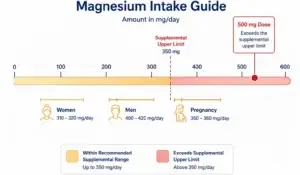
Adult men need 400 to 420 mg of magnesium daily from all sources, women 310 to 320 mg, and pregnant women closer to 350 to 360 mg, per the National Institutes of Health.
The number that matters for supplements: the Tolerable Upper Intake Level for supplemental magnesium is 350 mg per day for adults, separate from food sources. A 200 mg dose is the sensible starting point for sleep or stress. A 500 mg supplement dose exceeds the upper limit and raises the risk of diarrhea, nausea, and cramping, so doses that high belong under a doctor’s guidance only.
Label reading matters here more than anywhere: check the elemental magnesium amount, not the compound weight. A capsule listing “2,000 mg magnesium bisglycinate” may contain only around 200 mg of elemental magnesium, and reputable brands state the elemental figure clearly. Third party testing seals apply here the same way they do across the supplement aisle, as our shilajit and ashwagandha guide covers.
Magnesium for Restless Legs
Restless legs syndrome keeps plenty of people up at night, and magnesium comes up constantly as a remedy. A randomized controlled trial published through the NIH tested magnesium with vitamin B6 for restless legs and found symptom improvement over several weeks. Bisglycinate is among the gentler options for this use.
One caveat matters as much as the magnesium: iron deficiency is a well documented trigger for restless legs, so it is worth ruling out. Our guide on how to increase ferritin levels covers that side of the equation. Frequent or severe symptoms deserve a doctor’s evaluation rather than a supplement experiment.
Safety, Side Effects and Interactions

Bisglycinate causes fewer digestive issues than other forms, but it is not risk free for everyone.
Kidney disease is the biggest caution. Impaired kidneys cannot clear excess magnesium efficiently, allowing it to build to unsafe levels even at standard doses. Anyone with kidney disease needs a doctor’s sign off first.
Medication interactions:
- Magnesium can reduce absorption of some antibiotics, including tetracyclines and fluoroquinolones. Space doses several hours apart
- It can interfere with bisphosphonates used for bone health
- It may interact with certain diuretics and blood pressure medications
The same label discipline applies across your supplement shelf, whether it is magnesium doses or the vitamin A ceiling in cod liver oil. Upper limits exist for reasons.
Signs magnesium is too high: muscle weakness, irregular heartbeat, or confusion need prompt medical attention. Persistent diarrhea or cramping that does not improve after lowering the dose, and dizziness or fainting after starting, both deserve a doctor’s call.
Frequently Asked Questions
What is the difference between magnesium bisglycinate and citrate?
Both absorb reasonably well, and the practical difference is the gut effect. Citrate pulls water into the bowel, which makes it useful for occasional constipation and inconvenient for everyone else. Bisglycinate is bonded to glycine, absorbs gently, and suits sleep, stress, and daily use without bathroom surprises.
Is magnesium glycinate the same as bisglycinate?
Yes. Both names describe magnesium bonded to two glycine molecules. Labels use the terms interchangeably, and glycinate lysinate is a close variant that adds lysine for an extra absorption pathway.
Is 500 mg of magnesium glycinate too much?
From supplements alone, yes for most adults. The Tolerable Upper Intake Level for supplemental magnesium is 350 mg daily, separate from food. Doses above that raise the risk of diarrhea, nausea, and cramping, and should only happen under a doctor’s guidance. Also check whether the 500 mg on your label means elemental magnesium or compound weight, because they differ several fold.
Does magnesium glycinate make you sleepy the next day?
Rarely. It promotes calm rather than sedation, and most people feel no grogginess from a typical 200 mg evening dose. If drowsiness shows up the next day, the dose is usually too high, and lowering it resolves the issue.
Is magnesium threonate better than glycinate?
Threonate is marketed based on early research about raising brain magnesium levels, and it costs several times more than glycinate. The human evidence is not yet strong enough to justify that premium for sleep or stress, where glycinate already has the practical track record. Threonate is a watch in this space form, not a proven upgrade.
Can I take magnesium bisglycinate every day?
Yes, most healthy adults can take it daily within the 350 mg supplemental limit, and consistency is what produces results. People with kidney disease, anyone on antibiotics, bone medications, or blood pressure drugs, and pregnant women should involve their doctor first.