
‘Why does it burn when I pee’ is one of the most common questions people type into Google at night.
The sting can hit during the stream, right at the end, or even after you finish. It happens to women and men, and it almost always means your body needs attention. Most causes are treatable once you know what is behind the feeling. This guide walks through the real reasons behind burning when you pee, plus when to call a doctor.
What It Means When You Feel Burning When Urinating
Doctors call this symptom dysuria, but you do not need the medical term to understand it. MedlinePlus describes painful urination as pain, stinging, or heat along the path urine travels, from the bladder to the urethra. For some people the feeling is mild and passes fast. For others, peeing feels like the last thing they want to do.
The cause behind it burns when I pee ranges from a simple irritation to an infection that needs antibiotics. When the burning starts, how long it lasts, and what other symptoms tag along all help narrow down the cause.
Common Causes of Burning When You Pee
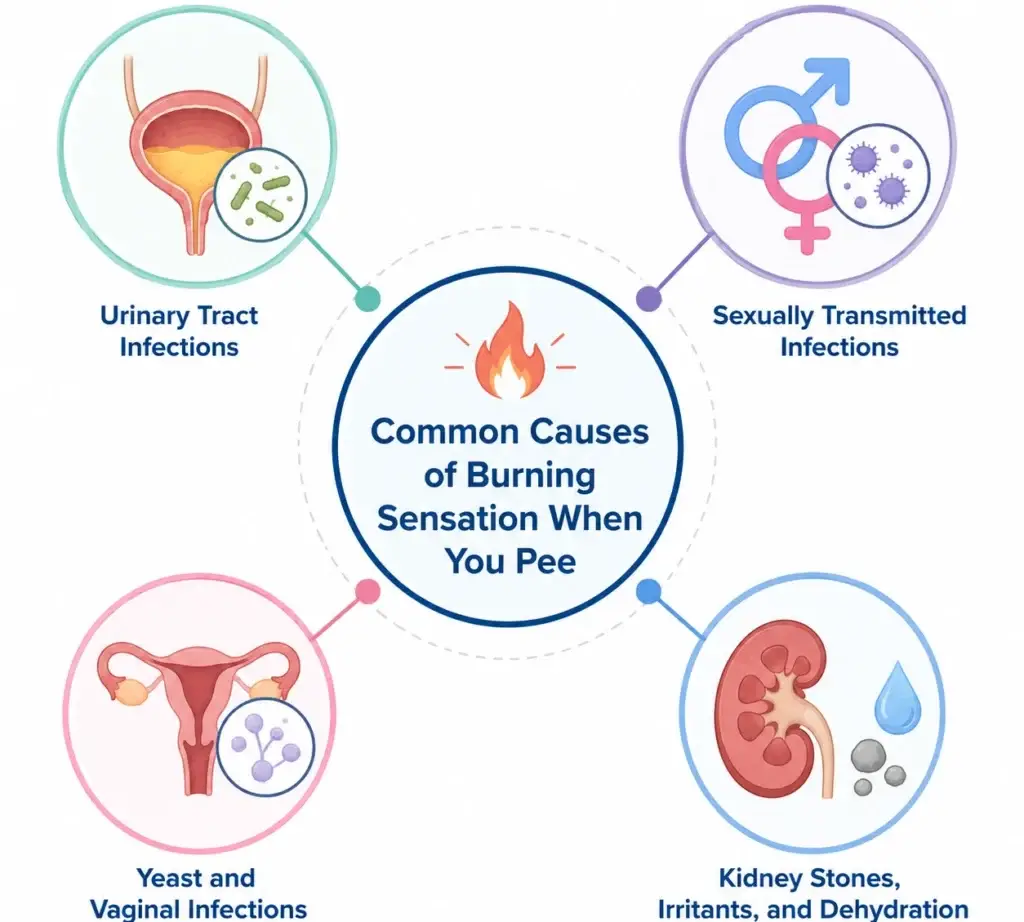
Several conditions share this same symptom, and small details often reveal the exact cause.
Urinary Tract Infections
A urinary tract infection, or UTI, is the top cause of burning when you pee, especially in women. Bacteria travel up the urethra and irritate the bladder lining. The body reacts with pain, urgency, and that classic sting. According to Mayo Clinic, women face a higher UTI risk than men. A woman’s urethra is shorter, letting bacteria reach the bladder more easily.
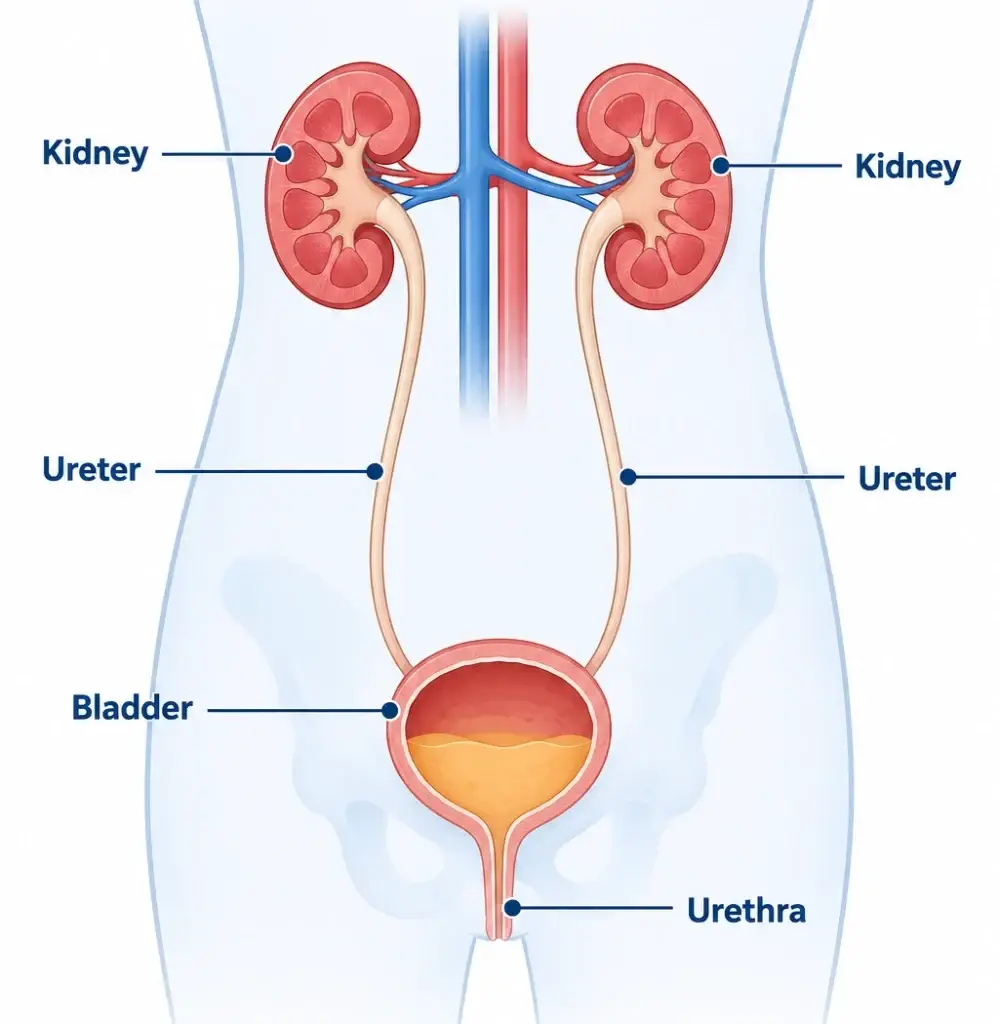
Common UTI signs include the following.
- A strong, sudden urge to pee even right after you just went
- Cloudy or strong smelling urine
- Pressure or cramping low in the belly
- A low fever in some cases
A urine test confirms a UTI in minutes, and treatment usually means a short course of antibiotics.
Sexually Transmitted Infections
Chlamydia and gonorrhea both list burning during urination as a top symptom in men and women. The CDC reported more than 1.5 million chlamydia cases in the United States in 2024 alone. This is more common than most assume, and many people show no other signs.
Because these infections can spread without treatment, testing matters even if the burning feels mild. Anyone who is pregnant and notices burning urine should ask about STI screening early. Untreated infections can affect the pregnancy, a point covered in our article on STI risks during pregnancy.
Yeast and Vaginal Infections
For women, burning urine female symptoms sometimes trace back to a yeast infection. Other times, the cause is an imbalance in normal vaginal bacteria rather than the urinary tract itself. Urine passing over irritated skin causes the sting, even though the bladder stays healthy. Itching, thick discharge, and redness usually come along with it.
Vaginal pH normally sits in a narrow, healthy range. Small shifts from soap, antibiotics, or hormone changes can throw that balance off. Our guide on vaginal pH balance explains this in more depth. Restoring the balance often clears the burning within a few days.
Kidney Stones, Irritants, and Dehydration
A kidney stone moving into the ureter or bladder can scrape the lining on its way out. This scraping causes sharp pain, burning during urination, and sometimes blood in the urine. The pain often feels more intense than a routine infection.
Sometimes nothing is infected at all. Scented soap, tight underwear, spicy food, coffee, and alcohol can all irritate the urethra and trigger the same sting. Cutting back on these often calms the burning within a day or two.
Not drinking enough water concentrates the urine and makes it more acidic, which can sting on the way out. More water is often the simplest fix.
Why It Burns When You Pee at Different Times
The exact moment the sting hits is a clue. It often points straight to the cause.
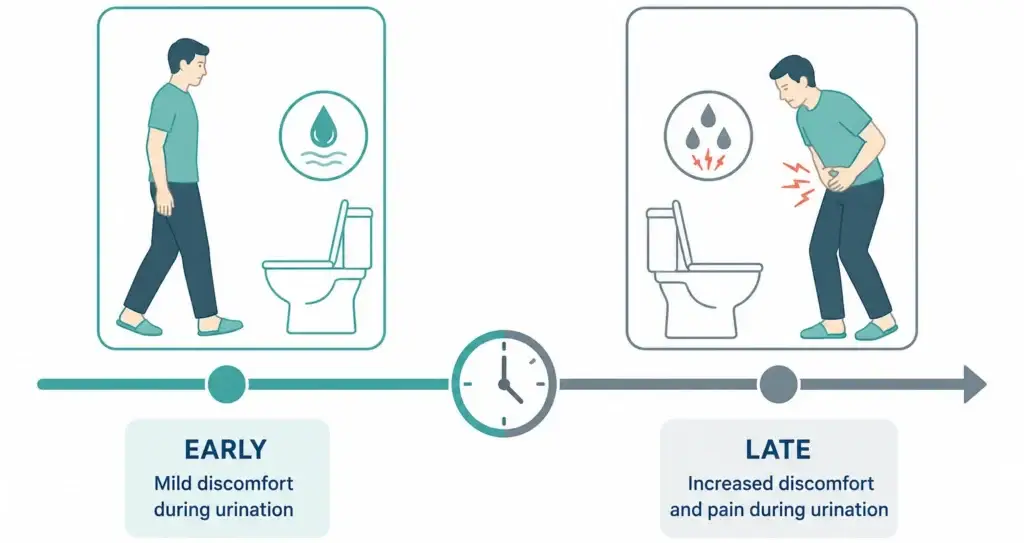
Burning During the Stream
Pain that starts the moment urine begins to flow usually points to irritation right at the urethral opening. Cleveland Clinic notes that pain at the start of urination often signals a urinary tract infection. The bacteria usually sit closest to that opening. Sting pee and mild burning right away often follow this same pattern.
Burning After Urination or a Sting at the End
Pain at the end of peeing, or a burning feeling after peeing that lingers, often points somewhere different. Cleveland Clinic explains that pain after urination can signal a problem higher up in the bladder. In men, this can also point to the prostate. Burning after urination that keeps happening for more than a couple of days deserves a doctor’s look. Do not just wait and see.
Burning Urine in Women vs Men
Both women and men get burning urine, but the likely cause shifts depending on anatomy and age.
Burning Urine in Women
Women report burning urine far more often, largely because a shorter urethra gives bacteria a faster path to the bladder. Yeast infections, bacterial imbalance, and UTIs top the list of female causes. Pregnancy also raises the odds of both UTIs and STIs needing quick treatment.
Why It Burns When You Pee in Men
Burning urine in men often traces back to STIs, prostate irritation, or a UTI reaching the bladder or kidneys. This is sometimes searched as why does it burn when I pee male. A yeast infection can affect men too, and it can look similar to jock itch. Our piece on yeast infections in men covers this distinction in detail. Prostate changes are also a common cause in men over 50.
Comparing the Most Likely Causes
This table compares the most common causes side by side.
| Cause | Typical Symptoms | Usual Timing | Relief Often Starts |
|---|---|---|---|
| UTI | Urgency, cloudy urine, pelvic pressure | Start of stream | Within 1 to 2 days of antibiotics |
| STI | Discharge, mild burning, sometimes no other signs | Throughout urination | After testing and prescribed treatment |
| Yeast or vaginal infection | Itching, discharge, redness | Stream passes over irritated skin | A few days into treatment |
| Kidney stone | Severe back or side pain, blood in urine | Sharp pain during flow | After the stone passes or is treated |
| Irritant or dehydration | Mild sting, no discharge or fever | Varies, often at the end | Within 1 to 2 days of avoiding the trigger |

How to Ease Burning When You Pee at Home
Simple habits ease mild burning while you wait for treatment to work.
- Drink more water so urine becomes lighter and less concentrated
- Skip scented soap, bubble bath, and douches near sensitive skin
- Wear breathable cotton underwear instead of tight synthetic fabric
- Cut back on coffee, alcohol, citrus, and spicy food for a few days
- Pee soon after sex to help flush bacteria out of the urethra
These steps help with mild irritation. They are not a substitute for antibiotics when an infection is the real cause.
When to See a Doctor for Burning Urination
Burning that lasts more than two days or keeps coming back needs medical attention. Our care team recommends booking a visit if you notice any of the following.
- Fever, chills, or nausea along with the burning
- Blood in the urine or urine that looks unusually dark
- Pain in your back or side, which can point to a kidney infection
- Discharge from the penis or vagina
- Burning that returns again and again over a few months
- Pregnancy combined with any burning or pain while urinating
Seek emergency care right away if fever and back pain show up together. This combination can mean the infection has reached the kidneys.
Burning when you pee is uncomfortable, but a doctor can almost always identify the cause quickly. Paying attention to timing and other symptoms gives your provider what they need for a fast, accurate diagnosis.
Frequently Asked Questions
Why does it burn when I pee but I don’t have an infection?
Burning without an infection often comes from irritants like scented soap, tight underwear, or spicy food. Dehydration also concentrates urine enough to cause a sting. A urine test can rule out a hidden infection.
What does it mean if it stings only at the end of peeing?
A sting only at the end often points to irritation in the bladder. In men, this can also mean the prostate rather than the urethral opening.
Can dehydration cause burning when you pee?
Yes. Concentrated, acidic urine from not drinking enough water can sting on its way out, even without infection. More water for a day or two often clears it.
Why does it burn when I pee after sex?
Friction during sex can irritate the urethra, and bacteria can get pushed toward the bladder. This raises UTI risk. Peeing soon after sex helps flush bacteria out.
Is burning when you pee always a UTI?
No. UTIs are the most common cause. Still, STIs, yeast infections, kidney stones, and dehydration can all produce the same sting.
Why does burning when peeing happen more in men over 50?
Prostate changes become more common with age and can affect urine flow and comfort. An enlarged prostate can also make UTIs more likely. Any new burning in men over 50 deserves a prompt doctor visit.
How long does burning urine usually last?
Mild irritation from soap or diet often clears within a day or two once the trigger is removed. Infections typically ease within 1 to 3 days of antibiotics. Burning lasting longer than three days needs evaluation.
Can certain foods cause burning when you pee?
Yes. Spicy dishes, citrus fruit, caffeine, and alcohol act as bladder irritants for many people. Cutting them out for a few days often shows whether diet is the trigger.