
Mommy Thumb Pain, What It Is and How to Find Relief

Mommy thumb pain shows up in thousands of new parents every year, often without warning, and it can turn a simple task like lifting your baby from the crib into something that makes you wince. The good news is that this pain is common, easy to understand, and very treatable once you know what is behind it. This guide walks through the causes, the warning signs, and the steps that bring real relief.
What Is Mommy Thumb Pain?
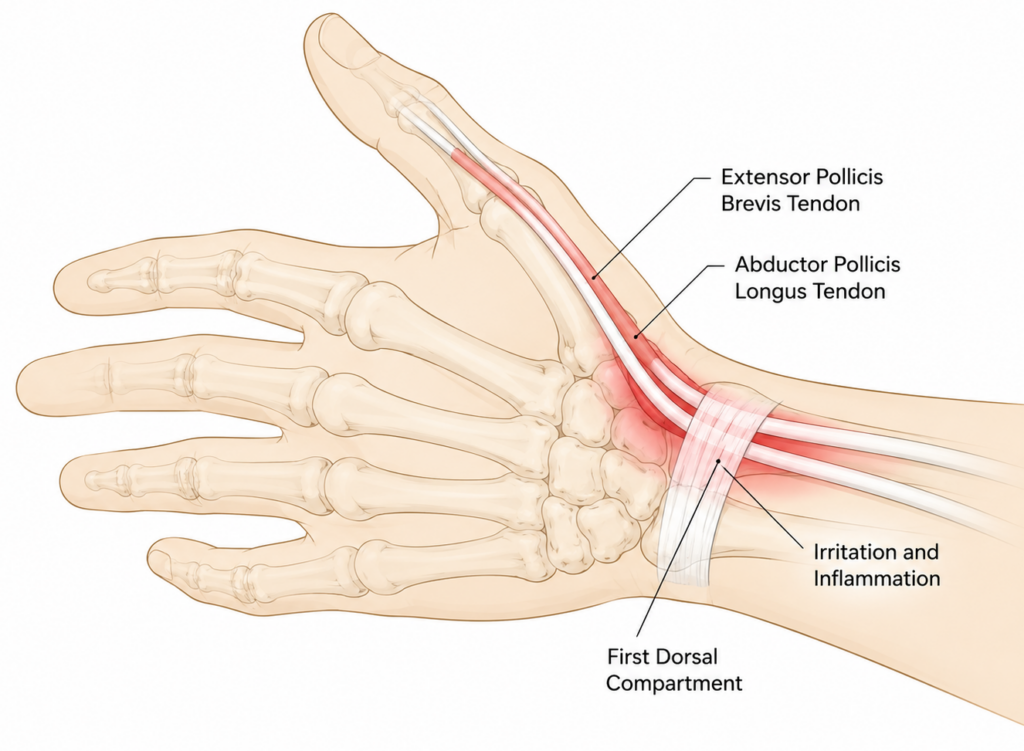
Doctors call this condition de Quervain tenosynovitis. It happens when the tendons running along the thumb side of your wrist become irritated and swollen. Those tendons sit inside a narrow tunnel near the base of the thumb, so when they swell, every grip or twist sends pain shooting toward your hand. New parents often hear it called mommy’s thumb or mommy wrist, since it shows up so often during the early months of caring for a newborn.
This is not a rare problem. Research shared through the National Institutes of Health shows the condition turns up far more often in new mothers than in the general adult population. The constant lifting, carrying, and supporting of a baby’s weight, hour after hour, is exactly how mommy thumb pain often begins.
What Causes Wrist Hurts From Holding Baby?
Your thumb and wrist were not built to support a growing baby for hours on end. Yet that is exactly what new parents do, often while feeding, rocking, or trying to grab a few minutes of rest. Each time you tuck your thumb under your baby to lift them, you place direct pressure on the tendons running along the side of your wrist. Over weeks and months, that pressure adds up.
Common triggers include the following.
- Lifting your baby from a crib or car seat with your thumb stretched out for support
- Holding a bottle or nursing in the same position for long stretches without a break
- Carrying a diaper bag, infant carrier, or car seat on one side of your body
- Scrolling or texting one handed while your other arm holds the baby steady
- Skipping rest between feedings, which gives swollen tendons no chance to settle down
If that last point sounds familiar, our piece on hand pain caused by holding your phone covers more everyday habits that strain these same muscles and tendons.
Mommy’s Thumb Symptoms to Watch For

Mommy’s thumb symptoms tend to build slowly before they become hard to ignore. Most parents notice pain first along the thumb side of the wrist, right where the hand meets the forearm. From there, other signs often follow.
- A dull ache or sharp pain when you grip, pinch, or twist your wrist
- Swelling or a small, tender bump near the base of the thumb
- Soreness when you press on the side of your wrist
- A catching or snapping feeling when you move your thumb
- Weakness that makes it hard to hold a bottle, your phone, or your baby steady
- Pain that spreads up the forearm after a long day of lifting and carrying
Catching these signs early gives you a real chance to calm the irritation before it grows into a longer lasting problem. Small adjustments, made soon enough, often save weeks of discomfort later.
Mommy Thumb Pain Compared to Carpal Tunnel Syndrome
New parents often confuse mommy thumb pain with carpal tunnel syndrome, since both can show up after childbirth and both affect the hand. The table below shows how to tell them apart.
| Feature | Mommy Thumb Pain | Carpal Tunnel Syndrome |
|---|---|---|
| Where it hurts | Thumb side of the wrist | Palm side of the wrist and fingers |
| What sets it off | Gripping, pinching, twisting the wrist | Often worse at night or with repeated hand use |
| Numbness or tingling | Uncommon | Common in the thumb, index, and middle fingers |
| What causes it | Strain on the thumb tendons from lifting and holding | Swelling that presses on the median nerve |
| First step in care | Splinting the thumb and resting the wrist | Wearing a wrist splint at night |
Both conditions usually respond well to early, steady care, so getting the right diagnosis matters more than guessing at home.
Mommy’s Thumb Treatment Options That Actually Work
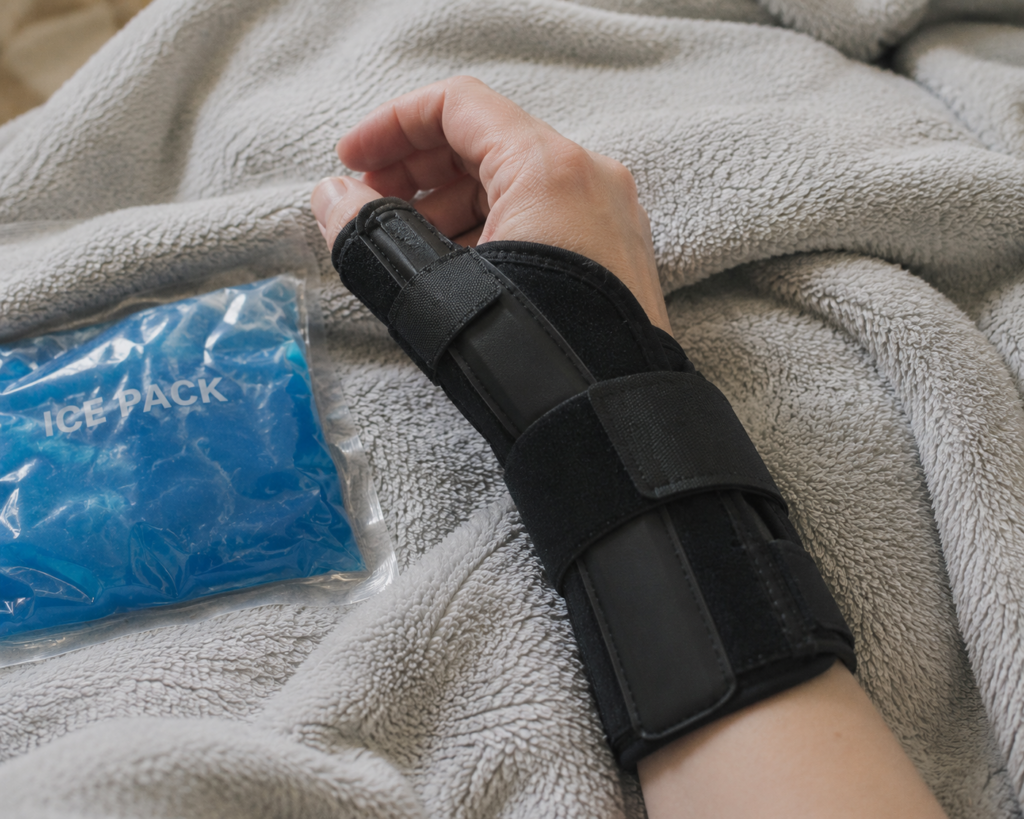
Most cases of mommy’s thumb improve with simple, steady care at home. Mayo Clinic points out that rest and a thumb splint are usually the first step, and many people start to feel real improvement within a few weeks. The goal is to take pressure off the irritated tendons long enough for the swelling to calm down.
- Wear a thumb spica splint to keep the joint still while the tendons heal
- Apply ice for ten to fifteen minutes a few times a day to ease swelling
- Ask your doctor whether an over the counter anti inflammatory medication is safe for you
- Adjust how you lift and hold your baby to take pressure off the thumb side of your wrist
- Add gentle stretching once the sharp pain fades, guided by a physical therapist
If the pain does not ease after several weeks of steady home care, your doctor may suggest a corticosteroid injection to bring down swelling around the tendon. Surgery is rarely needed. Cleveland Clinic notes that doctors usually only consider it when symptoms last well beyond six weeks of consistent, conservative treatment. Ongoing tendon strain can sometimes lead to other joint issues, like the ones we cover in our guide to bone spur symptoms and treatment.
Simple Daily Habits That Ease Wrist Hurts From Holding Baby

Small changes in how you move through your day can take real pressure off your wrist and thumb, both now and after the pain eases.
- Support your baby’s weight with your forearm instead of your thumb when you lift them
- Switch arms often during feedings so the same tendons are not doing all the work
- Use a nursing pillow or cushion to bring your baby up to chest height
- Take short breaks to stretch your fingers and roll your wrists during the day
- Set your phone aside and rest your hands whenever your baby naps
These habits will not erase pain that has already set in, but they can help keep it from coming back once it fades. Tired hands also make every task harder, so slow down where you can. A rushed step on a toy left on the floor can just as easily lead to an injury like a dislocated toe, and your body deserves rest too.
When to See a Doctor for Mommy Thumb Pain
Most mommy thumb pain calms down with rest and home care, but certain signs mean it is time to call your doctor.
- Pain that does not ease after two to three weeks of rest and splinting
- Swelling that spreads up your forearm or feels warm to the touch
- Numbness, tingling, or weakness that makes it hard to hold your baby safely
- Pain severe enough to stop you from lifting, feeding, or changing your baby
- A fever along with wrist pain and swelling, which could point to an infection
Your doctor can confirm what is going on with a short physical exam and guide you toward care that fits your situation. New parents sometimes notice odd aches in unexpected places during this stage of life. Our guide to slipping rib syndrome covers another condition that can surface during the physical demands of caring for a newborn.
Caring for a newborn already asks a great deal of your body, and mommy thumb pain can make that work feel even harder than it already is. Once you understand what is happening in your wrist and thumb, you can take steady steps that bring real relief. Rest, support, and small changes in how you lift and hold your baby go a long way toward easing the strain. At BannerHealth.io, we want every new parent to feel steady, supported, and able to enjoy these early months without being slowed down by pain that can be treated.
Frequently Asked Questions
What does mommy thumb pain feel like?
Most people feel a sharp or aching pain along the thumb side of the wrist, especially when gripping or twisting something. Many also notice swelling, tenderness, or a catching feeling when they move their thumb. The discomfort often grows worse after long stretches of lifting or carrying a baby.
Is mommy thumb the same as carpal tunnel syndrome?
No, though the two are often mixed up. Mommy thumb pain centers on the tendons along the thumb side of the wrist, while carpal tunnel syndrome involves a nerve that runs through the palm side of the wrist. A short physical exam from your doctor can tell them apart.
How long does mommy’s thumb usually last?
Many people start to feel better within a few weeks of resting the thumb and wearing a splint. Cases tied to heavier daily lifting may take a bit longer to heal fully. Sticking with care, even after the pain eases, helps keep it from coming back.
Can breastfeeding cause mommy thumb pain?
Holding the same feeding position for long periods can add steady strain to the thumb and wrist, which may bring on or worsen the pain. Switching arms and using a support pillow during feedings can ease that load. Small position changes throughout the day make a real difference.
What is the fastest way to ease mommy thumb pain at home?
Resting the thumb, wearing a splint, and applying ice are usually the quickest ways to calm the pain. Adjusting how you lift and hold your baby also helps stop the irritation from building back up. Many people notice some relief within the first week of steady care.
Will mommy thumb pain go away without treatment?
It can ease on its own in mild cases, but the ongoing demands of baby care often keep it going. Without rest or support, the irritation can turn into a longer lasting problem. Early care gives you the best chance at a full and steady recovery.
Written by Theo James
The information on this page is for general educational purposes only and is not a substitute for professional medical advice, diagnosis, or treatment. Always talk with your doctor or another qualified healthcare provider about any questions you have regarding a medical condition. Never ignore professional medical advice or delay seeking it because of something you read on the internet.