
How Long Does It Take to Recover from the Flu

For most healthy adults, recovery takes about five to seven days. However, certain symptoms, especially fatigue, can linger well beyond that. We’re here to walk you through exactly what to expect and how to heal as fast as possible.
How Long Does Flu Recovery Typically Take
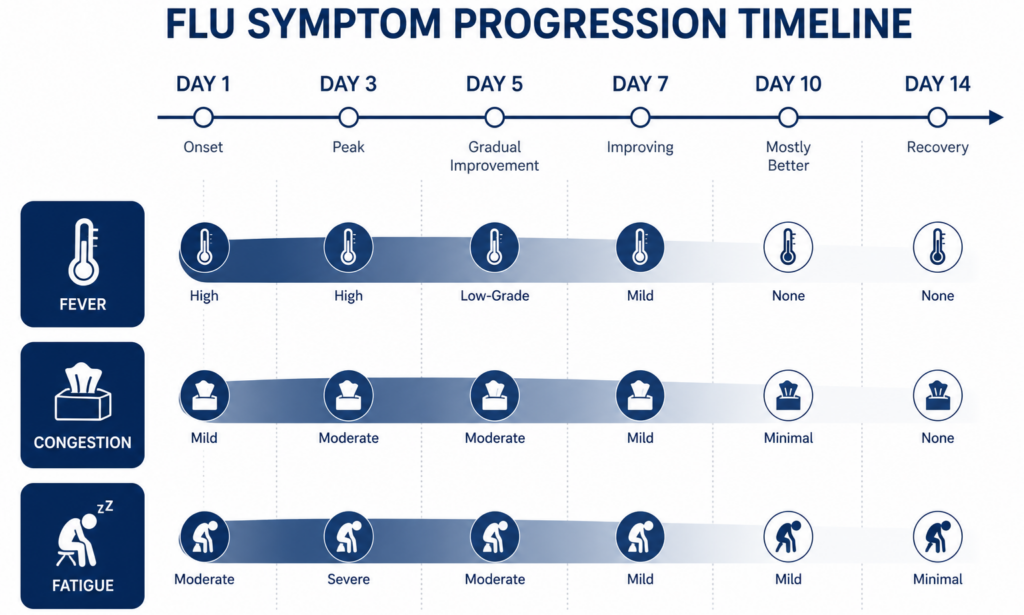
For most healthy adults, the flu lasts between five and seven days. Fever and body aches tend to improve first. A cough and tiredness, however, can stick around for up to two full weeks. So full recovery often takes longer than the main illness itself.
Your overall health, age, and how early you sought treatment all affect your timeline. Children under five, adults over 65, and people with chronic conditions like asthma or diabetes often take longer to bounce back. In some cases, people in these groups may need three to four weeks to fully recover.
Not sure if you have the flu or something else entirely? Our post on flu vs. cold breaks down the key differences and helps you figure out what you’re dealing with fast.
A Day-by-Day Flu Recovery Timeline
Understanding what happens each day makes recovery feel far less overwhelming. Here is what most people go through.
Days 1 and 2
- Sudden fever, often above 100°F
- Severe chills, muscle aches, and headaches
- Dry cough and sore throat begin
- Extreme fatigue sets in fast
Days 3 and 4
- Fever may peak, then begin to drop
- Body aches remain intense but ease slightly
- Congestion and runny nose often get worse
- Appetite drops noticeably
Days 5 to 7
- Fever breaks for most healthy adults
- Energy slowly starts returning
- Cough and congestion begin to clear
- Many people feel ready for light daily activity
After Day 7
- Lingering cough and tiredness are still common
- Most people reach full recovery by day 14
- Any symptoms that suddenly worsen after day seven need medical attention
How Long Does Flu Fatigue Last

Flu fatigue is one of the hardest after flu symptoms to shake. Even after your fever breaks and your aches fade, deep tiredness often stays behind. For most people, post-flu fatigue lasts one to two weeks after other symptoms clear. In more serious cases, especially following a severe illness, it can persist for four to eight weeks.
Your immune system pushes every resource it has toward fighting the virus. After the infection clears, your body still needs time to rebuild. Think of it like finishing a long, hard physical challenge. Your energy stores need time to fully refill, even after the challenge is over.
Dehydration also makes fatigue worse. Even mild fluid loss forces your heart to work harder, and that extra strain drains energy faster. Staying well hydrated is one of the most effective ways to shorten how long flu fatigue lasts. During a fever, your body loses more fluids than usual. If you notice your heart rate feeling unusually fast during illness, our article on elevated heart rate when sick explains what is happening and when to take it seriously.
How to Get Your Energy Back After the Flu
Getting your energy back after the flu takes patience and the right habits. There is no shortcut, but the right steps make a real difference in how quickly you feel like yourself again.
Prioritize sleep above everything else
Your body heals most efficiently during sleep. Your immune system completes much of its repair work overnight. Aim for eight to ten hours of sleep each night while recovering. Short daytime naps also help move healing along. If you struggle to sleep well during recovery, read our piece on whether sleep gummies actually work as a natural sleep aid.
Drink fluids throughout the entire day
Water, warm broth, and herbal teas are your best options. Electrolyte drinks help replace fluids lost through sweating and fever. Avoid alcohol and caffeine during recovery, as both dehydrate you further. Keeping a water bottle nearby makes it easier to drink consistently.
Ease back into movement gradually
Don’t rush back to the gym. Start with short, slow walks once your fever is completely gone. Build up your activity level slowly over one to two weeks. Jumping back into intense workouts too early can push your recovery back by days.
Give yourself real permission to rest
Many people feel pressure to bounce back too fast. Recovery does not move in a straight line, though. Some days will feel noticeably better than others, and that’s completely normal. Listening to your body is one of the smartest things you can do during flu recovery.
Best Foods to Regain Strength After the Flu

The right foods can speed up flu recovery in a meaningful way. Your body needs specific nutrients to rebuild energy and repair tissue. Here are the best foods to focus on during recovery.
- Chicken broth and soups deliver protein, sodium, and warm fluids. They ease congestion and help prevent dehydration. Research from Cleveland Clinic confirms that broth is rich in nutrients and antioxidants that directly support healing.
- Citrus fruits such as oranges and grapefruits provide vitamin C. Vitamin C supports immune function and helps reduce post-flu inflammation.
- Leafy greens like spinach and kale offer iron and vitamin C. Both nutrients fight inflammation and support faster energy recovery.
- Eggs supply high-quality protein and B vitamins. B vitamins play a direct role in converting food into usable energy.
- Oatmeal and whole grains give you steady, lasting energy without spiking blood sugar. They’re also easy on your stomach when digestion is still sensitive.
- Bananas offer potassium and natural sugars for a gentle energy boost. They’re soft and easy to eat even when your appetite is low.
- Yogurt with live cultures supports gut health. A healthy gut microbiome is closely linked to faster immune recovery.
Avoid fried foods, sugary drinks, and heavily processed snacks during recovery. These can increase inflammation and drain your energy even further.
Can Antiviral Treatment Speed Up Flu Recovery
Many people don’t know that antiviral medications can shorten flu recovery time. Drugs like oseltamivir, commonly known as Tamiflu, can cut illness short by about one day. More importantly, they reduce the risk of serious flu complications like pneumonia. According to CDC guidelines on antiviral treatment, these medicines work best when started within 48 hours of your first symptoms.
Antivirals are especially important for high-risk groups. These include adults over 65, children under two, pregnant women, and people with chronic conditions like asthma or heart disease. For most healthy adults with mild flu, rest and home care are typically enough. But if your symptoms feel unusually severe from the very start, reach out to your healthcare provider early rather than waiting.
Lingering After Flu Symptoms to Watch For
Certain after flu symptoms often continue even after the main illness passes. Most of them are a completely normal part of healing. Knowing what to expect can prevent a lot of unnecessary worry.
Common lingering symptoms include:
- A cough that continues for two to three weeks after fever clears, usually caused by airway irritation rather than an ongoing infection
- Fatigue that persists beyond the first week of recovery, which is normal for up to two weeks
- Runny nose or nasal congestion lasting seven to ten days after the illness peak
- Mild sore throat, especially in the morning. Our article on why your throat hurts when you wake up covers this common experience in detail.
- Low-grade headaches during the first week of recovery
These symptoms ease on their own as healing continues. None of them require emergency care unless they suddenly worsen after a period of improvement.
When to See a Doctor After the Flu

Most people recover from the flu safely at home without needing medical treatment. Still, certain warning signs demand immediate attention. Contact your doctor or go to urgent care if you experience any of the following:
- Difficulty breathing or shortness of breath
- Chest pain or persistent tightness
- Confusion or being very difficult to wake up
- Bluish or grayish lips or face
- Severe vomiting that prevents you from keeping fluids down
- Symptoms that improve and then suddenly return much worse
Pregnant women face higher flu risks and should contact their doctor early in the illness. For practical care tips during pregnancy, our guide on home remedies for cold during pregnancy offers additional advice for illness management.
The CDC recommends staying home until you have been fever-free for at least 24 hours without taking fever-reducing medication. This protects the people around you from getting sick.
Frequently Asked Questions
How long to recover from the flu for most healthy adults?
Most healthy adults recover from the flu within five to seven days. Fever and body aches usually improve first. Cough and fatigue can linger for up to two weeks. People with chronic health conditions or weakened immune systems often need more time to fully recover.
How long does flu fatigue last?
For most people, flu fatigue lasts one to two weeks after other symptoms clear up. In more serious cases or among older adults, fatigue can persist for four to eight weeks. Proper rest, hydration, and nutrient-rich meals are the most effective ways to shorten how long flu fatigue lasts.
What are the best foods to regain strength after the flu?
The best foods to regain strength after the flu include chicken soup, citrus fruits, leafy greens, eggs, oatmeal, bananas, and yogurt. These foods supply the vitamins, protein, and fluids your body needs to recover well. Avoid sugary, fried, and heavily processed foods while you heal.
How do I get my energy back after the flu?
To get your energy back after the flu, prioritize sleep, hydration, and gentle movement. Start with short daily walks once your fever breaks. Eat balanced meals rich in protein and vegetables. Give your body at least one to two weeks before pushing yourself back to full activity.
How long are you contagious with the flu?
Most people with the flu are contagious for five to seven days after symptoms first appear. The CDC notes that people are most contagious during the first three days of illness. Stay home until you have been fever-free for at least 24 hours without using fever-reducing medication.
When should I worry about symptoms after the flu?
Contact your doctor if symptoms suddenly worsen after improving, if breathing becomes difficult, or if you develop chest pain. Fatigue that lasts more than four to six weeks without improving also warrants medical attention. These signs may point to a flu complication that needs prompt treatment.
Written by Theo James
The information on this page is for general educational purposes only and is not a substitute for professional medical advice, diagnosis, or treatment. Always talk with your doctor or another qualified healthcare provider about any questions you have regarding a medical condition. Never ignore professional medical advice or delay seeking it because of something you read on the internet.