
Beetroot powder is dried, ground beets concentrated into a scoopable form. One teaspoon delivers roughly the nitrate of a whole fresh beet, which your body converts into nitric oxide to support blood flow and blood pressure.
Most adults do well on one teaspoon daily, taken two to three hours before exercise if performance is the goal. Your blood pressure reads a little high again, and your doctor mentions diet before medication. Or maybe a friend mixes a bright pink scoop into her water bottle before a run. That scoop is usually beetroot powder, and here is what it actually does, how much to take, and what to check before buying.
Why Are Beets Good for You
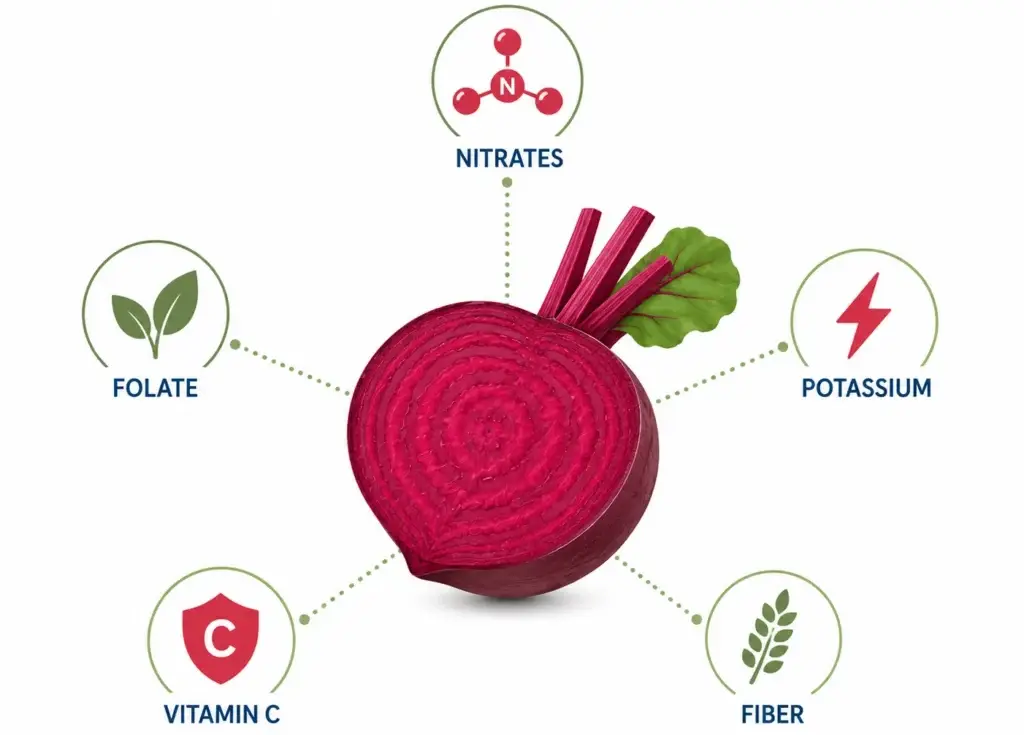
Beets pack a lot of nutrition into a small root vegetable. They contain natural nitrates, which your body converts into nitric oxide. Nitric oxide relaxes and widens blood vessels, which supports healthy blood flow, according to the Cleveland Clinic.
Beets also contain betalains, the pigments that give them their deep red color. Betalains act as antioxidants and may help calm inflammation in the body. Beyond that, beets supply fiber, folate, potassium, manganese, and vitamin C, all in one small root.
Beetroot powder concentrates these same nutrients into a dried, easy to use form. A small scoop stirred into water or juice delivers much of what a fresh beet offers. That makes beetroot powder a practical choice on busy mornings when roasting fresh beets is not realistic.
Here is what beetroot powder typically provides in one serving.
- Natural nitrates that support nitric oxide production
- Betalains for antioxidant and anti inflammatory support
- Fiber for digestion and steady blood sugar
- Folate for cell growth and red blood cell production
- Potassium and manganese for muscle and bone function
- Vitamin C for immune support
Powder, Juice, Capsules or Fresh Beets: Which Form Wins?
All four forms deliver the same core compound, nitrate. They differ in convenience, dose control, and how much you have to consume to get there.
| Form | Nitrate Delivery | Convenience | Best For |
| Fresh beets | One whole beet per serving, varies by size and soil | Needs cooking and prep | People who prefer whole foods |
| Beetroot powder | One teaspoon roughly equals one fresh beet | Mixes into any drink in seconds | Daily use with dose control |
| Beet juice | Concentrated shots pack the highest single dose | Ready to drink, needs refrigeration | Pre workout timing |
| Capsules | Often lower per capsule unless concentrated | Swallow and go, no taste | Travel and taste sensitive users |
Two practical takeaways. Fiber survives in powder and fresh beets but mostly disappears in juice and capsules. And nitrate content varies widely between brands in every form, so the milligrams on the label matter more than the format.
What Does Beetroot Powder Taste Like
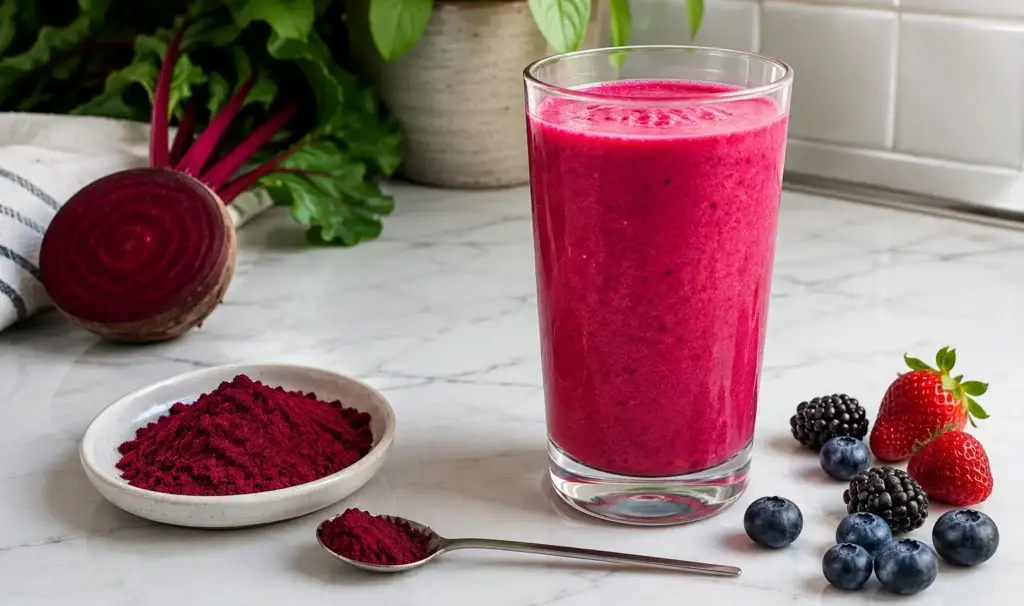
Beetroot powder tastes earthy and slightly sweet, with a flavor close to fresh beets. Some people notice a faint mineral note, similar to fresh soil, which fades once it is mixed into a drink.
Most people blend beetroot powder into smoothies, juice, or oatmeal to soften the taste. Pairing it with fruit, like berries or apple, balances the earthy notes nicely. A few brands also add natural flavoring to make the taste milder for sensitive palates.
If you already enjoy bold flavored natural supplements, beetroot powder will likely feel familiar. Our saffron health benefits piece covers another bold flavored option. Start with a small amount in a strong flavored drink, then increase it once your taste buds adjust.
How Much Beetroot Powder Per Day Should You Take
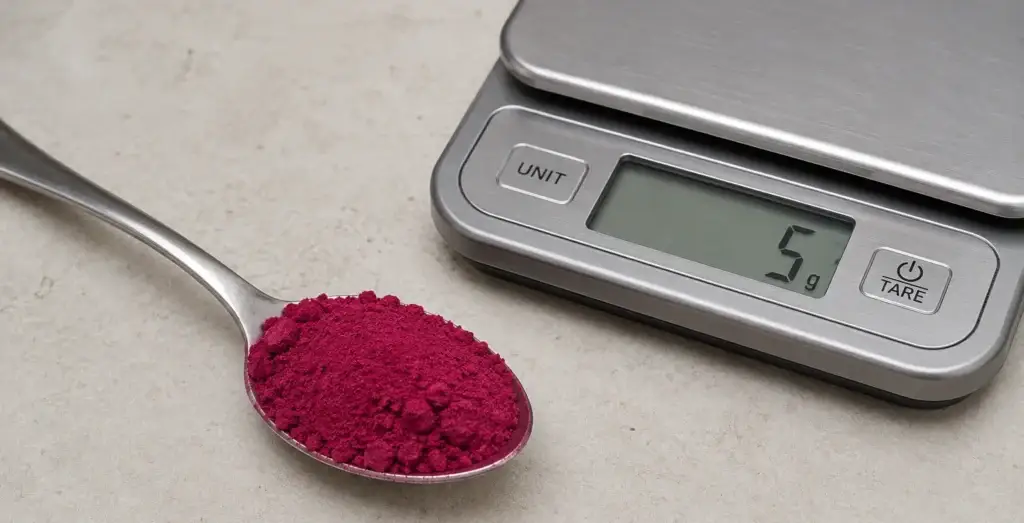
The right answer depends on your goal. Cleveland Clinic research notes that one teaspoon of beetroot powder delivers roughly the same nitrate as a whole fresh beet. Most healthy adults do well starting with one teaspoon, or about two to three grams, once a day.
- For general wellness, about one teaspoon daily mixed into water or mineral water
- For blood pressure support, look for a product delivering 300 to 600 milligrams of nitrate
- For exercise performance, take your dose about two to three hours before activity
- For first time users, start with a half dose for a few days before working up
Nitric oxide levels tend to peak in that two to three hour window, so timing matters most for workouts. For blood pressure support, consistency matters more than timing, and the same time each morning is the easiest habit to keep. Because nitrate content varies between brands, always check the label rather than the scoop size.
A review of beetroot research in athletes found measurable endurance benefits, though results varied by sport. Mixing your scoop into mineral water instead of plain water also adds electrolytes.
Beet Root Capsules vs Beetroot Powder: Which Should You Choose
Beet root capsules and beetroot powder both deliver the same core nutrient, but they work a little differently in practice.
| Feature | Beetroot Powder | Beet Root Capsules |
| Nitrate content | Easy to standardize per scoop | Often lower unless concentrated |
| Typical serving | One to two teaspoons | Two to eight capsules |
| Taste | Earthy and slightly sweet | None, swallowed whole |
| Best for | Flexible dosing | Convenience and travel |
| Mixing required | Yes, with water or juice | No |
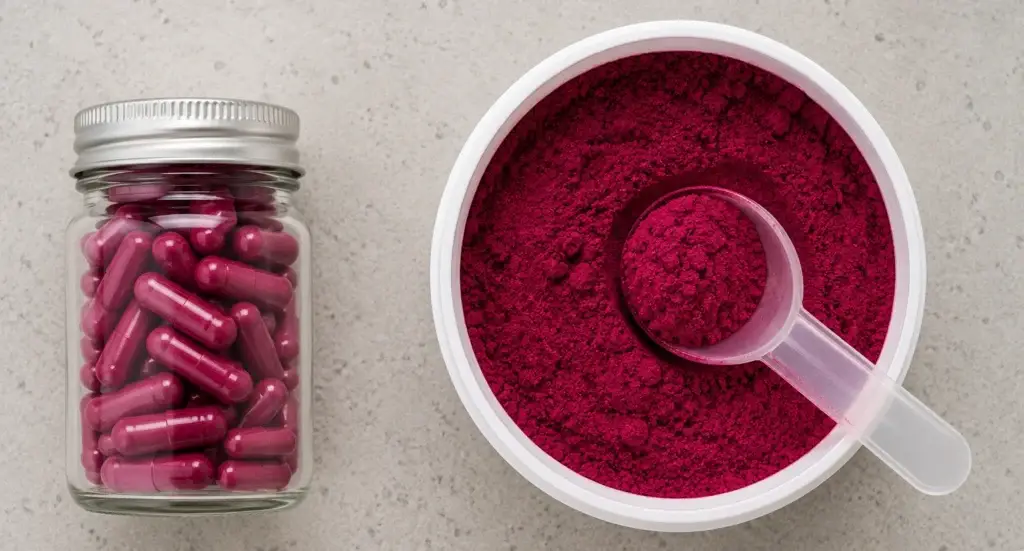
If you have tried other supplements in multiple forms, you already understand this tradeoff. Our shilajit benefits article covers a similar powder and resin choice. Supplement format also matters for things like sleep aids, as we cover in our piece on whether sleep gummies work. Choose powder if you want flexibility. Choose beet pills if convenience matters more than taste or dose control.
Beet Benefits for Female Health
Beet benefits for female health start with folate, a nutrient that supports healthy cell division. The NIH Office of Dietary Supplements notes that folate is especially important for women who could become pregnant, which is why it appears in nearly every prenatal vitamin.
Beets also supply potassium and vitamin C, which support heart health. Heart disease remains a leading health concern for women, not just men. Nutrient dense foods like beets can play a supporting role. Many women also track hormone related changes, and our pH balance for women article covers another piece of that picture.
Beets are sometimes believed to be high in iron, but the actual amount is modest. Still, the vitamin C in beets helps your body absorb iron from other foods. That makes beets a useful pairing for women managing low iron levels.
Does Beetroot Lower Cortisol
Many people ask this when searching for natural stress support. Right now, no direct clinical study has tested beetroot powder against cortisol levels specifically. Research is still mixed and limited on this exact connection.
What we do know comes from related research on vitamin C, a nutrient also found in beets. A review of stress related research suggests vitamin C may help blunt cortisol spikes during stressful periods. That finding applies to vitamin C broadly, not to beetroot powder as a standalone product. Treat this benefit as possible rather than proven.
How to Choose an Organic Beet Supplement
Picking a quality organic beet supplement takes a bit more than reading the front label. A few simple checks can help you avoid weak or misleading products.
- Look for a USDA organic seal, confirmed under USDA organic standards, meaning no prohibited pesticides or synthetic fertilizers
- Choose brands with third party testing, such as NSF Certified for Sport, especially if you compete in sports
- Confirm the label lists actual nitrate content in milligrams, not just total powder weight
- Skip products with added sugar, artificial colors, or vague proprietary blend labeling
- Store your beet supplement in a cool, dry place to protect its potency
Third party testing matters because supplement labels are not always independently verified before reaching store shelves. A certification mark gives you outside confirmation that what is on the label matches what is in the container.
Possible Side Effects and Who Should Be Careful
Beetroot powder is generally well tolerated, but a few side effects are worth knowing before you start.
- Beeturia, a harmless pink or reddish tint to urine or stool
- An upset stomach if you take too much too quickly
- A higher kidney stone risk for people prone to stones, since beets are high in oxalates
- Lightheadedness from lower blood pressure, especially if you already take blood pressure medication
Research on oxalates and kidney health backs up that caution for stone prone people. People managing kidney disease, low blood pressure, or who take blood thinners should check with a doctor first. Pairing beets with a calcium source, like yogurt, can help reduce oxalate absorption for those prone to kidney stones.
When to See a Doctor
Most people can try beetroot powder without any issue, but certain signs call for medical attention.
- Your blood pressure reads 180 over 120 or higher, especially with chest pain or vision changes
- You feel unusually dizzy, weak, or confused after starting a new supplement
- You take blood pressure medication and want to add beetroot powder to your routine
- You are pregnant, nursing, or managing kidney disease and are considering a new supplement
Call 911 right away if you notice those emergency signs, per the American Heart Association. Otherwise, a quick conversation with your doctor can confirm beetroot powder fits safely alongside any medication you already take.
Frequently Asked Questions
Is beetroot powder safe to take every day?
For most healthy adults, a daily teaspoon of beetroot powder is considered safe. Start with a smaller amount and increase slowly to see how your body reacts. People with kidney stones or low blood pressure should talk to a doctor first.
What time of day should I take beetroot powder?
For exercise performance, take it two to three hours before your workout, since that is when nitric oxide levels peak. For blood pressure or general wellness, timing matters less than consistency, so pick a time you will remember daily, like with breakfast. Avoid taking it right before bed if you find the extra fluid wakes you at night.
Can I take beetroot powder with blood pressure medication?
Only after checking with your doctor. Beetroot powder lowers blood pressure through nitric oxide, and stacking it on top of medication can drop your pressure too far, causing dizziness or lightheadedness. Your doctor may still approve it, sometimes with a dose adjustment, but this combination should not be self managed.
How long does beetroot powder take to work?
Nitric oxide levels typically rise within two to three hours of taking beetroot powder. For blood pressure support, benefits often build over several weeks of regular use. Results vary based on dose and individual body chemistry.
What is the difference between beet pills and beetroot powder?
Beet pills, often called beet root capsules, pack dried beet extract into a capsule you swallow whole. Beetroot powder is loose and mixed into water, juice, or smoothies. Powder usually makes it easier to see and adjust your nitrate dose.
Does beetroot powder change the color of urine or stool?
Yes, this is a harmless condition called beeturia. It causes a pink or reddish tint and is more common in people with certain digestive conditions. It is not a sign of a health problem.
Is organic beetroot powder better than regular beetroot powder?
Organic beetroot powder is grown without synthetic pesticides or fertilizers, which some shoppers prefer. Nutrient and nitrate content depends more on the beet variety and processing method than on organic status alone. Either option can be a healthy choice if it is third party tested.
Can pregnant women take beetroot powder?
Beets naturally contain folate, an important nutrient during pregnancy. Even so, beetroot powder supplements have not been well studied in pregnant women specifically. Always check with your doctor before adding any new supplement during pregnancy.
Written by Tejanshu Jaluthria, Editor, Banner Health. Last updated: July 15, 2026.
Every claim in this article is checked against the sources linked throughout, including the NIH, FDA, WHO, the American Academy of Orthopaedic Surgeons and Mayo Clinic. Read more about how we review our content.
Disclaimer: The information on this website is for general educational purposes only and is not a substitute for professional medical advice, diagnosis, or treatment. Always talk with your doctor or another qualified healthcare provider about any questions you have regarding a medical condition. Never ignore professional medical advice or delay seeking it because of something you read on the internet.