
Can You Fly With Broken Bones? What to Know

Is It Safe to Fly With Broken Bones?
Flying with a broken bone can be safe, but certain conditions must come first. Your bone needs proper immobilization in a cast, splint, or rigid brace before you board. A loosely wrapped or unstable fracture puts you at real risk during travel.
The most common physical danger during a flight is swelling. At altitude, cabin pressure drops slightly. That drop causes fluid to collect in your body’s tissues, a process called peripheral edema. When this happens inside a tight cast, there is nowhere for the swelling to go. The result is increased pain and restricted blood flow to the injured area.
In rare cases, that pressure buildup leads to compartment syndrome. This dangerous condition cuts off blood supply to the muscles around the fracture. It requires immediate medical attention. If you notice sudden, severe pain or numbness in the injured limb during a flight, tell a flight attendant right away and ask for help.
How Soon Can You Fly After a Fracture?
Timing matters more than most travelers realize. Most orthopedic doctors recommend waiting at least 24 hours after a cast fitting before a short flight. For flights over three hours, the wait is at least 48 hours. That gap gives early swelling time to settle before you board.
Surgery changes this timeline significantly. If your fracture required an operation, your surgeon will give you a specific clearance date. Never book any flights before receiving that date in writing.
The table below gives general timelines by fracture type. Always confirm these with your own doctor first.
| Fracture Type | Short Flight Wait | Long Flight Wait | Key Note |
|---|---|---|---|
| Arm fracture | 24 hours | 48 hours | Needs rigid immobilization |
| Leg fracture | 24 to 48 hours | 48 hours | Requires extra legroom |
| Cracked rib | 24 to 48 hours | 48 hours or more | Breathing risk at altitude |
| Hip fracture | Several weeks | Several weeks | Surgeon clearance required |
| Post-surgical fracture | As your surgeon directs | As your surgeon directs | No travel without written clearance |
Can You Fly With a Cracked Rib?
Flying with a cracked rib is more involved than flying with a limb fracture. Pressure changes inside the cabin can cause cracked ribs to shift slightly. That movement sharpens pain and makes breathing harder. Cabin oxygen levels at altitude are also slightly lower than on the ground. For someone already struggling to take a full breath, that added factor carries real consequences.
Cracked ribs typically heal on their own in three to six weeks. During that healing window, even a deep breath causes discomfort. Spending hours in a confined airplane seat adds real physical strain on top of that.
Before flying with a cracked rib, get your doctor’s written approval. They may suggest:
- A chest support wrap to limit rib movement during the flight
- Pain medication timed around your departure and landing
- An aisle seat so you can adjust your position throughout the journey
- Avoiding long-haul routes until healing is further along
Slipping rib syndrome is a related condition that creates chest pain similar to a rib fracture. Read more in our guide on slipping rib syndrome symptoms, causes, and treatment.
Many airlines ask for a medical fitness to fly certificate when a rib injury is recent. Call your airline before booking to confirm their policy.
Can You Drive With a Broken or Fractured Foot?
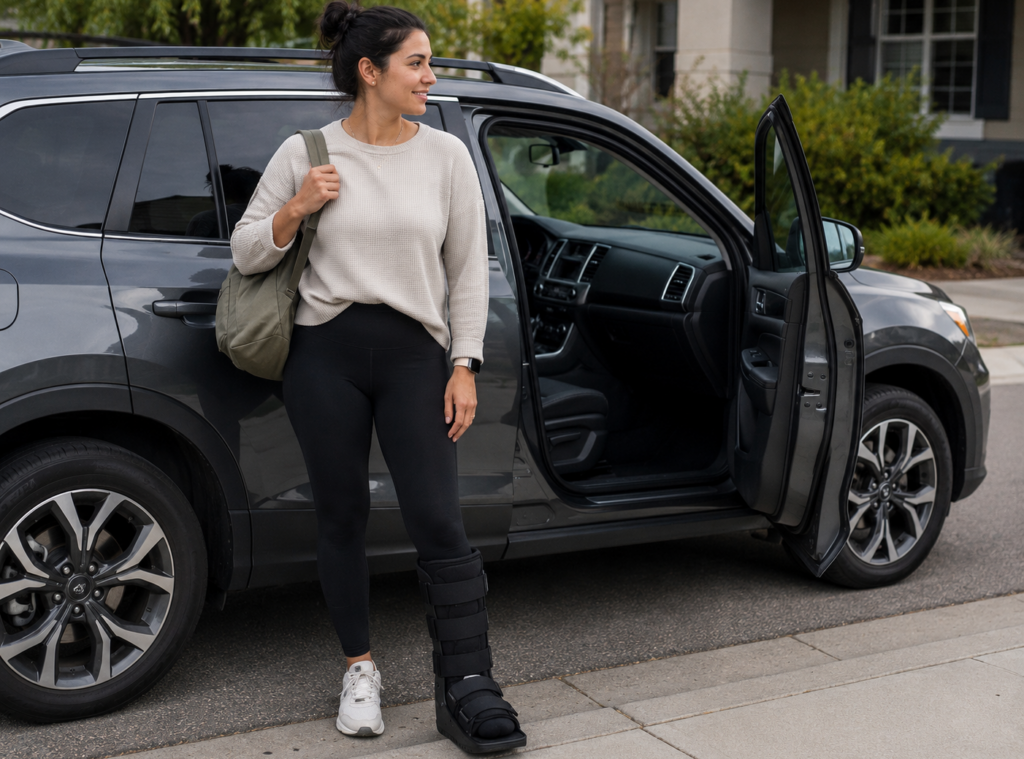
Driving with a fractured foot is one of the most common questions we hear after a foot injury. If your right foot is fractured, driving is not safe. Your right foot controls the brake and gas pedals. A cast or walking boot on that foot slows your reaction time to a level that road safety cannot tolerate.
A study tracked on PubMed found that patients with right ankle fractures took about nine weeks after surgery before braking function returned to a safe level. That timeline is longer than most patients expect.
If your left foot is fractured and you drive an automatic car, some doctors may allow limited driving after a careful assessment. Even so, you must never drive while taking narcotic pain medication. These medications slow reaction time as much as alcohol does.
Foot fractures often come alongside related injuries like toe dislocation or forefoot pain. Our guide on dislocated toe signs, treatment, and recovery covers those related injuries in more detail. We also address pain in the 2nd toe and its causes for those dealing with multiple foot concerns during recovery.
Safer transport options while your foot heals include:
- Asking a friend or family member to drive you
- Using a rideshare app for daily travel needs
- Checking whether your health insurance covers medical transportation
- Requesting formal medical transport for more serious injuries
Always get written clearance from your doctor before getting back behind the wheel.
DVT Risk When Flying With Broken Bones
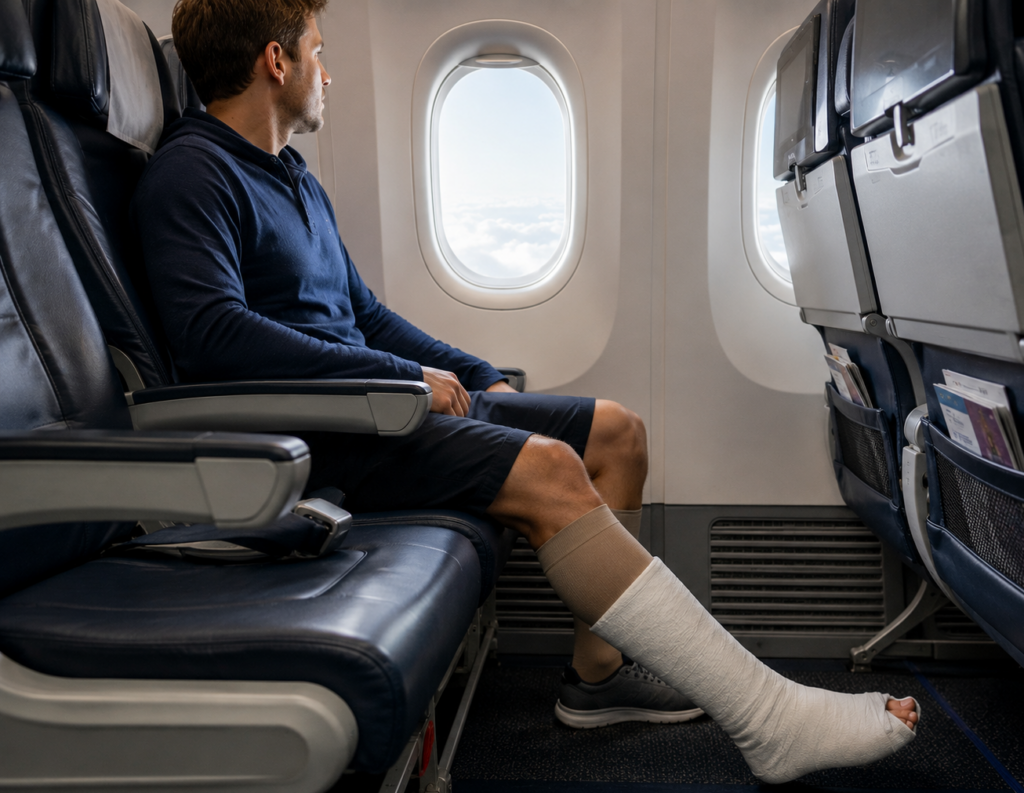
One of the most serious risks when flying with broken bones is deep vein thrombosis, also called DVT. A DVT is a blood clot that forms in a deep vein, most often in the leg. Fractures already raise your clotting risk because movement is limited and blood flow around the injury slows down. Adding a long flight means sitting still for hours on top of an already elevated risk.
The CDC reports that for flights over four hours, the absolute VTE risk is about 1 in 4,656 person-flights. That risk rises when a pre-existing fracture or recent orthopedic surgery is involved. Research published on PubMed confirms that patients with fractures show a higher DVT rate than the general population.
Watch for these warning signs during or after a flight:
- Swelling in one leg, especially around the calf
- Warmth or redness over the swollen spot
- A dull aching or cramping that does not ease with movement
If a clot reaches the lungs, it becomes a pulmonary embolism, which is life threatening. Go to an emergency room immediately if you feel chest pain or sudden breathlessness after a flight.
To lower your DVT risk, your doctor may recommend compression stockings and blood-thinning medication. Walking the aisle every hour during the flight also helps keep circulation moving.
Tips to Fly Safely With a Broken Bone

Once your doctor has cleared you to fly, these steps will help protect you throughout the journey:
- Notify your airline before check-in. Many airlines need advance notice for cast or brace injuries. Leg casts need extra legroom. Some carriers will not board passengers whose cast was fitted within the last 24 hours.
- Carry a fitness to fly letter. Get written medical clearance from your doctor. Several major airlines require this document for passengers with recent fractures.
- Choose an aisle seat near the front of the plane. This position gives you more room and makes it easier to stand and move during the flight.
- Stay hydrated throughout the trip. Drink water consistently before and during the flight. Skip alcoholic drinks, as they worsen dehydration and increase swelling.
- Move as often as your injury allows. Walk the aisle at least once every hour. Flex your calves and ankles while seated to keep blood flowing.
- Pack all medical documents in your carry-on. Bring your X-rays, discharge notes, and prescription list in case of questions at the airport or on arrival.
- Declare your fracture to travel insurance. An undeclared injury may not be covered if complications arise during your trip.
When to See a Doctor Before You Travel
Always talk to your doctor before flying or driving after a fracture if any of the following apply:
- Your fracture happened in the last two weeks
- Surgery was required to fix the bone
- The injury is in your hip, pelvis, or spine
- You have a personal history of blood clots
- You are currently on blood-thinning medication
- Your cast was fitted fewer than 48 hours before your travel date
- You notice redness, warmth, or discharge near the fracture site
Your doctor can assess the specific injury and confirm whether travel is safe. General advice is not a substitute for a direct evaluation of your own condition. Bone health problems like bone spurs can sometimes complicate fracture recovery, so a thorough check before travel is always worthwhile.
Frequently Asked Questions
Can you fly with broken bones if the fracture is in a cast?
Yes, flying with broken bones is often possible when the fracture is well immobilized and your doctor has given clearance. Most doctors recommend waiting 24 hours after a cast fitting for short flights and 48 hours for longer ones. Always confirm the plan directly with your doctor before booking any travel.
Can you fly with a cracked rib?
Flying with a cracked rib carries real risks. Cabin pressure changes can shift the rib and increase breathing pain at altitude. Your doctor must assess the injury before you travel. They may recommend a chest support wrap, timed pain medication, and a shorter route if flying is necessary.
Can you drive with a broken foot?
Driving with a fractured right foot is not safe. Your right foot controls braking and acceleration, and a cast or boot reduces your reaction time to a dangerous level. Research shows braking function can take up to nine weeks to recover after a right-foot fracture. Get written medical clearance before attempting to drive.
How long after a fracture can you fly?
Most doctors advise waiting at least 24 hours for short flights and 48 hours for longer ones after a cast fitting. If your fracture was treated with surgery, the wait is longer and depends on your surgeon. Always get written clearance before booking any flight after a bone fracture.
What is the DVT risk when flying with a broken bone?
Fractures raise your baseline risk of deep vein thrombosis. Flying adds further risk through prolonged immobility. The CDC reports an absolute VTE risk of about 1 in 4,656 person-flights for flights over four hours, and that figure is higher when a fracture is present. Wear compression stockings, move regularly, and ask your doctor about preventive medication.
Do airlines have rules for passengers with a cast?
Yes, many airlines do. Carriers frequently require a fitness to fly certificate for passengers with recent fractures. Some will not allow boarding if the cast was fitted within 24 hours of the flight. Always contact your airline directly before buying your ticket to confirm their current requirements.
Written by Theo James
The information on this page is for general educational purposes only and is not a substitute for professional medical advice, diagnosis, or treatment. Always talk with your doctor or another qualified healthcare provider about any questions you have regarding a medical condition. Never ignore professional medical advice or delay seeking it because of something you read on the internet.