
Infected Tattoo Signs and Symptoms You Need to Know
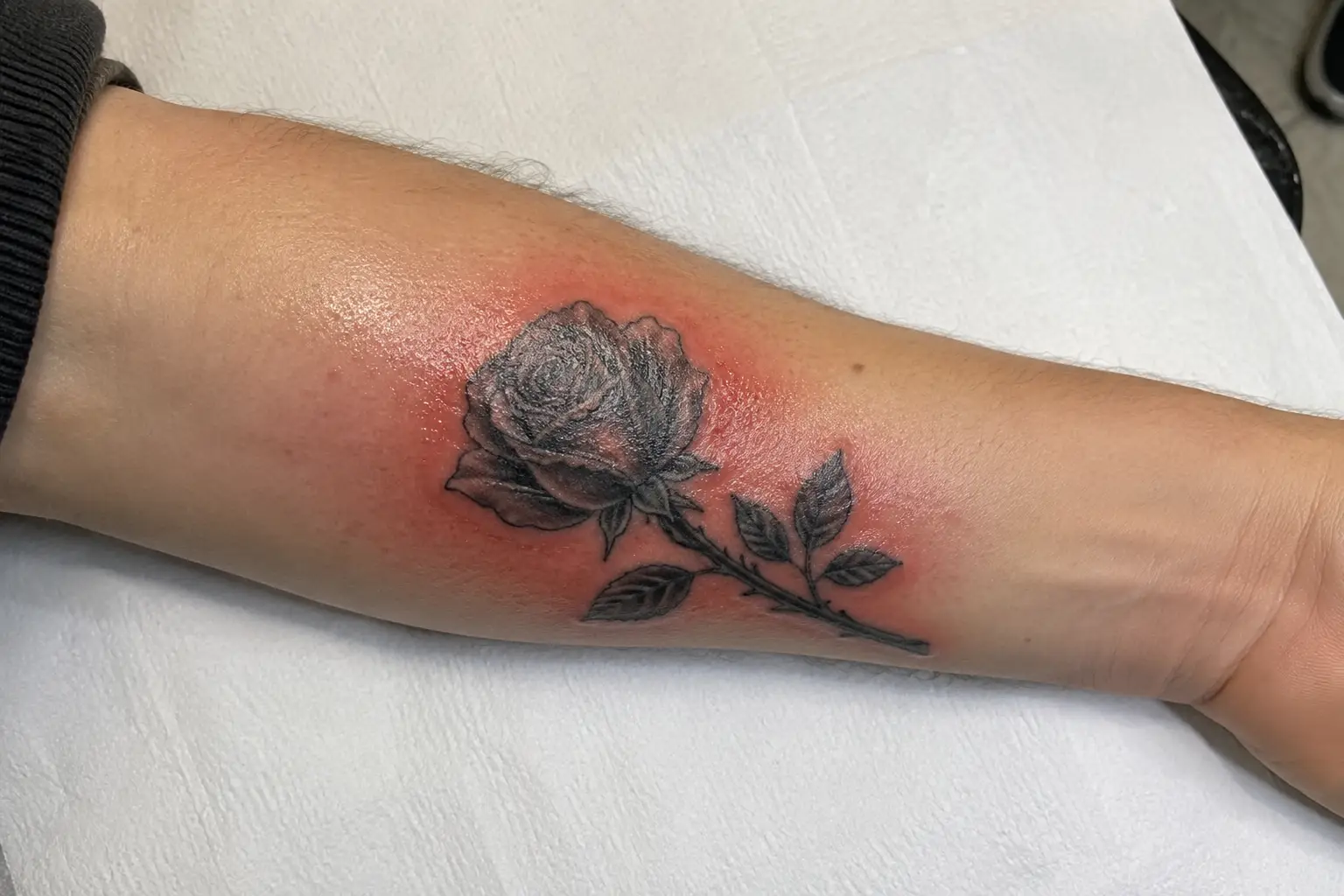
Some early reactions look alarming and turn out to be nothing. Others look mild and quickly grow worse. Acting fast on the right signals protects both your skin and your overall health.
What Are the Infected Tattoo Signs and Symptoms to Watch For
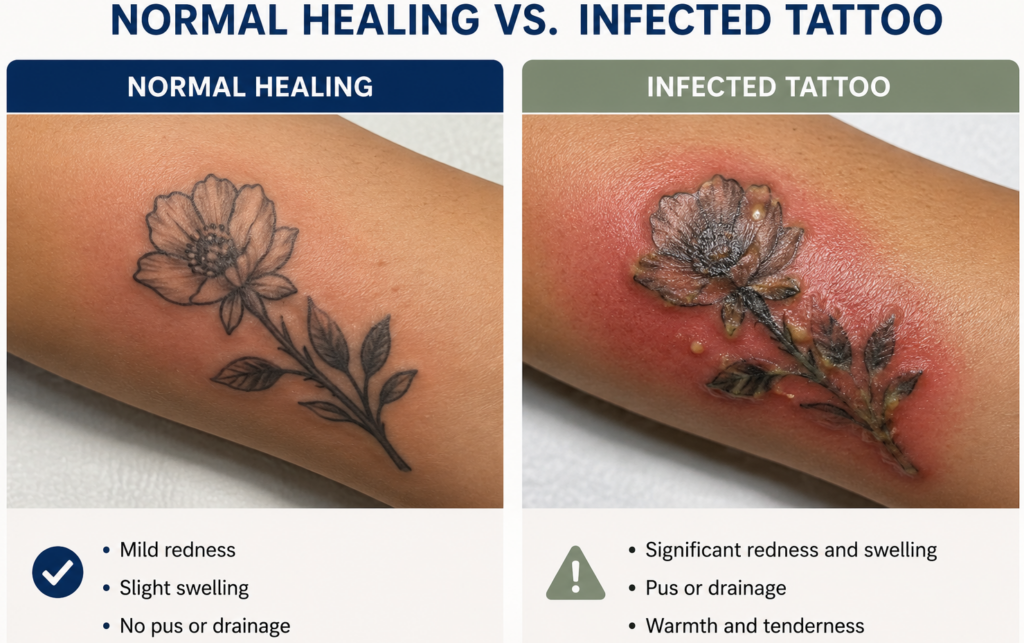
Most infected tattoo signs and symptoms appear within the first week after getting inked. However, some infections take much longer to show up. Nontuberculous mycobacteria, for example, can trigger symptoms weeks or even months after the tattoo is done.
Watch for these warning signs.
- Spreading redness that moves beyond the tattoo edges after day 3
- Increasing swelling that gets worse rather than better
- Worsening pain that intensifies after the first 48 hours
- Hot skin radiating heat from the tattooed area
- Yellow, green, or foul-smelling discharge from the site
- Fever or chills developing alongside local skin symptoms
- Raised bumps on or under the skin that may contain pus
If two or more of these appear together, contact a healthcare provider right away. Not all procedure-related skin reactions mean infection. Just as temporary skin reactions from cupping therapy can look alarming but fade on their own, some early tattoo reactions are completely normal. Knowing the difference is what matters.
Infected Tattoo vs. Normal Healing
A fresh tattoo always causes some irritation. The critical difference is the direction your symptoms take. Normal healing improves every day. An infected tattoo does not.
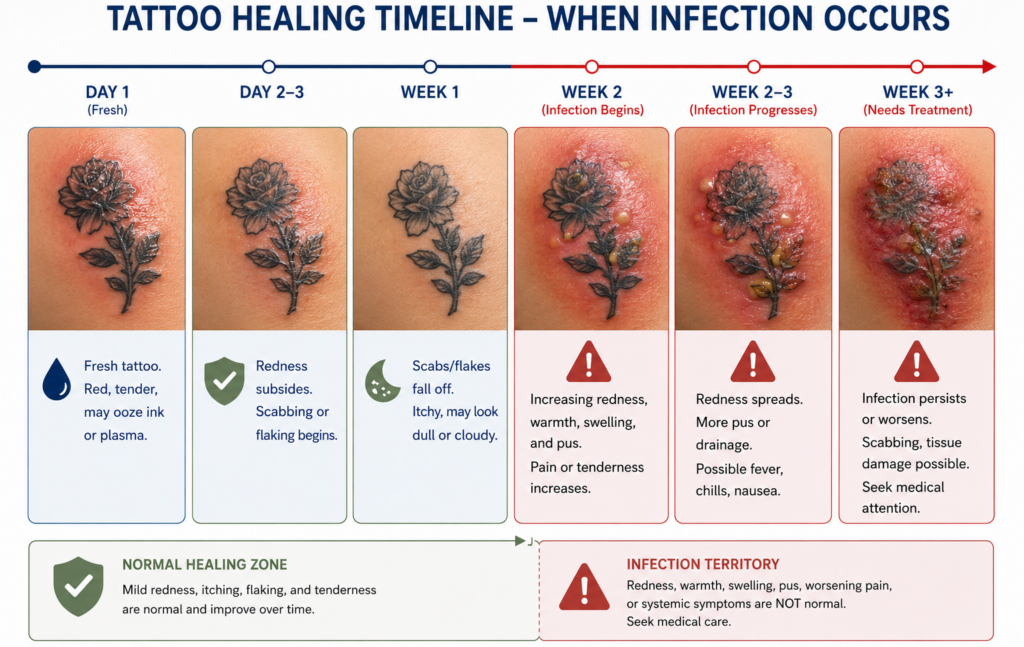
Use this comparison as a guide.
| Symptom | Normal Healing | Infected Tattoo |
|---|---|---|
| Redness | Mild, fades in 2 to 3 days | Spreading and getting worse |
| Swelling | Light, improves daily | Increases or stays the same |
| Pain | Mild soreness that fades | Gets worse after day 3 |
| Discharge | Clear or slight plasma fluid | Yellow, green, or foul-smelling |
| Skin temperature | Normal | Hot to the touch |
| Fever | None | Possible |
| Overall trend | Gets better daily | Gets worse over time |
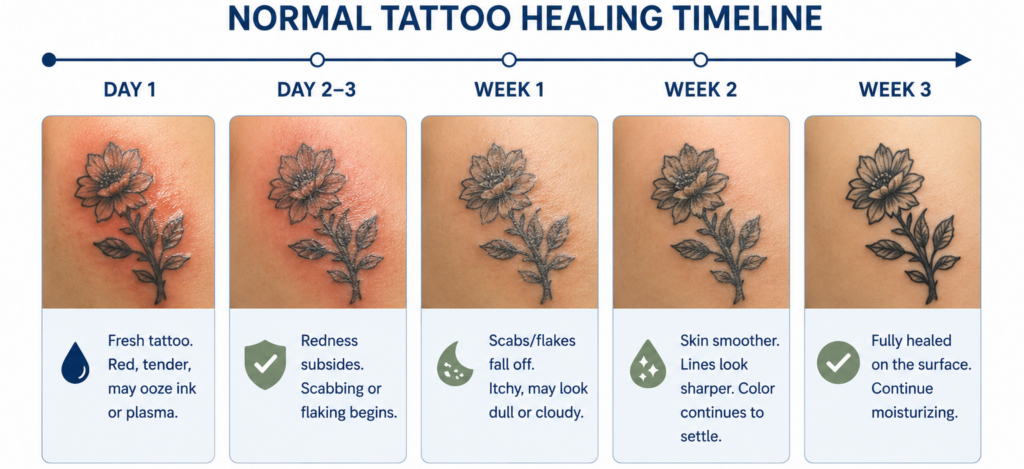
If your symptoms match the right column, see a doctor without delay.
How Do You Know If Your Tattoo Is Infected
How do you know if your tattoo is infected when symptoms are not immediately clear? The most direct answer is this. A healing tattoo improves every single day. An infected tattoo moves in the opposite direction.
Look specifically for these red flags.
- Symptoms that keep getting worse after the first 3 days
- Discharge that changes color or develops an odor
- Redness or swelling that spreads beyond the tattoo’s borders
- Fever, chills, or general illness alongside local skin symptoms
Telling two conditions apart based on overlapping symptoms can be tricky. If that process feels confusing, our guide on spotting the difference between similar-looking symptoms can help. Reading your body’s signals gets easier with practice.
What Causes a Tattoo Infection
Several factors raise your infection risk. Understanding them helps you make smarter choices both before and after getting inked.
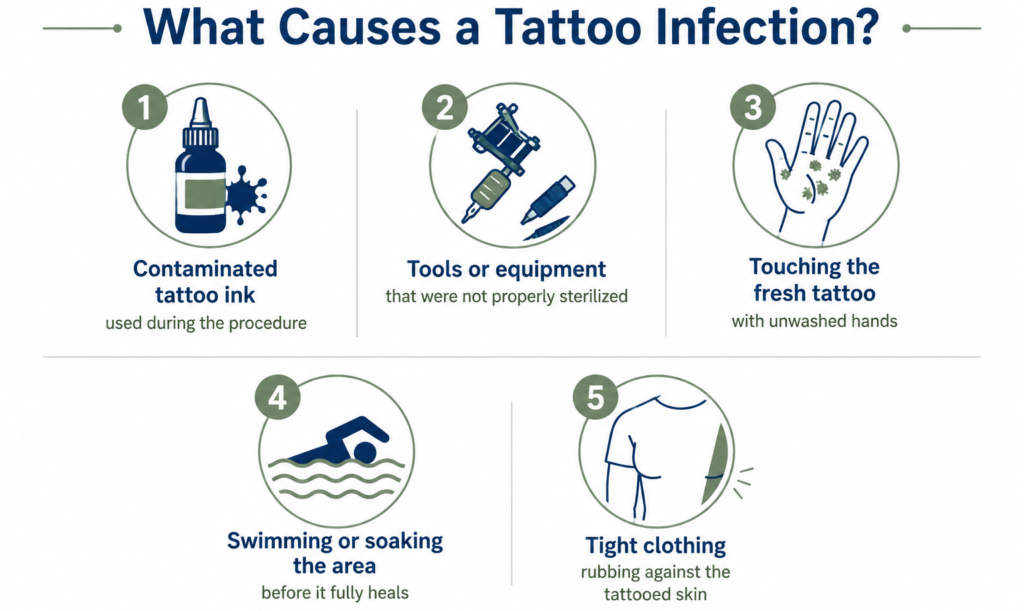
Common causes include the following.
- Contaminated tattoo ink used during the procedure
- Tools or equipment that were not properly sterilized
- Touching the fresh tattoo with unwashed hands
- Swimming or soaking the area before it fully heals
- Tight clothing rubbing against the tattooed skin
The FDA issued final guidance in October 2024 on tattoo ink contamination risks. Testing found that over 30 percent of sampled inks contained bacteria. Bacteria can contaminate tattoo ink even when the container looks sealed. A sterile label on the bottle does not guarantee safety.
Between 2003 and 2023, the FDA documented 18 recalls of contaminated tattoo inks. The most common bacteria in infected tattoos include Staphylococcus aureus, Pseudomonas aeruginosa, and nontuberculous mycobacteria.
What to Do If Your Tattoo Is Infected
Acting early shortens recovery time and helps prevent complications. Here is what to do for mild infections.
- See your primary care doctor or a dermatologist promptly
- Your doctor may take a skin swab to identify the specific bacteria
- Your doctor may prescribe a topical antibiotic ointment for 7 to 10 days
For more serious infections, your doctor may take a different approach.
- You will likely need oral antibiotics, sometimes for up to six weeks
- Some infections require more than one antibiotic at the same time
- In severe cases, you may need IV antibiotics at a hospital
- If an abscess forms, your doctor may need to drain it surgically
Do not pick at bumps or try to drain pus yourself. Doing so can push bacteria deeper into the tissue. Also avoid applying petroleum jelly or random creams without a doctor’s guidance first.
Antibiotic Ointment for an Infected Tattoo
For mild infections caught early, your doctor often recommends an antibiotic ointment. An antibiotic ointment for an infected tattoo works best on surface infections treated right away. Commonly used options include bacitracin or mupirocin, though your doctor decides which one fits your specific case.
Apply only as directed and do not use more product than your doctor tells you to. Overusing these ointments can reduce their effectiveness over time.
Cleveland Clinic notes that some infections require multiple antibiotics and may take months to clear completely. If symptoms do not improve within 48 to 72 hours of starting an ointment, contact your doctor again. A deeper infection will need oral antibiotics rather than a topical ointment alone.
For skin changes that appear outside the tattoo zone and do not go away, we cover additional warning signs you should not overlook.
How to Heal an Infected Tattoo
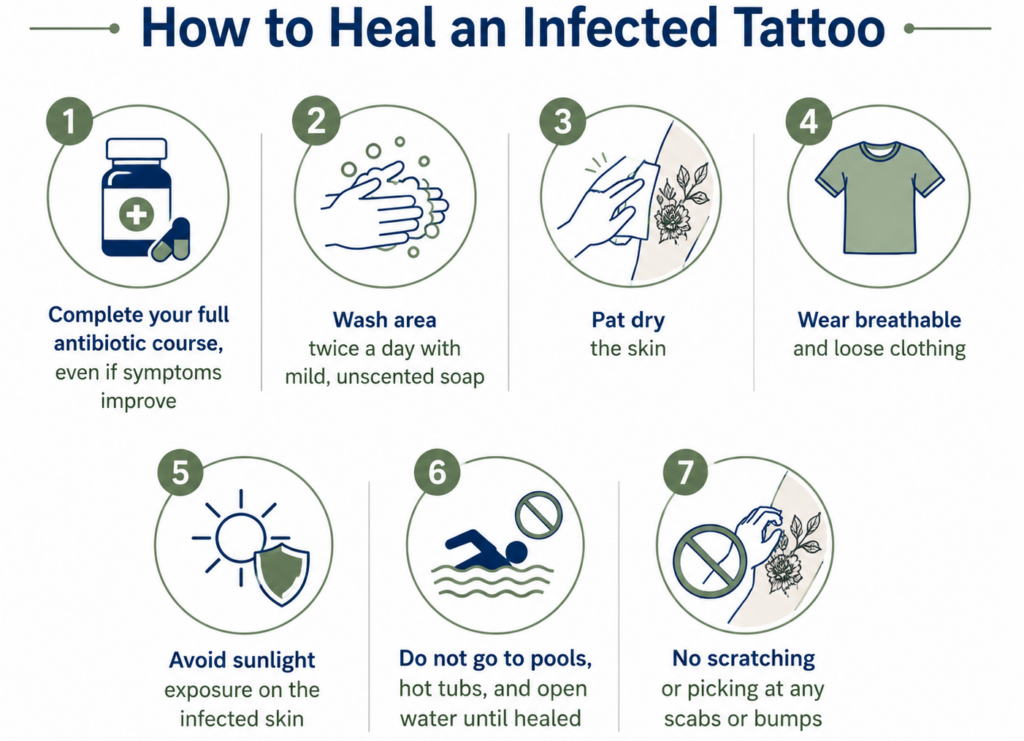
Once treatment starts, consistent daily care makes a real difference. Follow these steps throughout your recovery.
- Complete your full antibiotic course, even if symptoms improve before it ends
- Wash the area gently twice a day with mild, unscented soap
- Pat the skin dry instead of rubbing it
- Wear loose, breathable clothing over the tattooed area
- Avoid direct sun exposure on the infected skin during recovery
- Stay out of pools, hot tubs, and open water until fully healed
- Do not scratch or pick at any scabs or bumps
Additionally, nontuberculous mycobacteria infections can take several months to fully resolve. Stopping treatment early is one of the main reasons infections return. Therefore, finishing your full course is essential every single time.
When to See a Doctor for an Infected Tattoo
Some infected tattoo signs and symptoms require urgent care. See a doctor right away if you notice any of these.
- Fever above 100.4 degrees Fahrenheit
- Chills or night sweats combined with local skin symptoms
- Pus, yellow or green discharge, or a bad odor from the tattoo
- Redness or swelling spreading beyond the tattoo’s borders
- Pain that keeps worsening after the first few days
- A hard lump or deep tenderness below the skin surface
Also go to the emergency room if you feel severely unwell or notice red streaks extending outward from the tattoo. Red streaks can signal a spreading blood infection. That kind of infection needs immediate medical attention.
How to Prevent a Tattoo Infection
Prevention is far easier than treating a full infection. These steps significantly lower your risk before and after you get inked.
Before your appointment, do the following.
- Research and verify the studio holds a valid license
- Ask how the artist sterilizes tools between clients
- Make sure the artist opens fresh needles in front of you
- Ask about the ink brands and where the studio sources them
- Talk to your doctor first if you have diabetes or a weakened immune system
After getting your tattoo, follow these steps.
- Follow all aftercare instructions your artist provides
- Wash the area gently twice a day with unscented soap
- Apply only the aftercare product your artist or doctor recommends
- Avoid direct sun, swimming, and tight clothing for at least 2 to 3 weeks
- Always wash your hands before touching the tattooed area
The same sterility standards apply to any cosmetic procedure that involves needles. Our guide on choosing a qualified provider for cosmetic treatments covers the same key questions worth asking before booking. Also, the FDA’s 2024 guidance on tattoo ink safety outlines specific contamination risks. Both consumers and studios should know about these before any tattoo appointment.
Catching infected tattoo signs and symptoms early is the most important thing you can do. Most infections respond well to treatment when you act quickly. The key is not waiting and hoping things improve on their own. If symptoms worsen after the first few days, see a doctor. Fast action turns a manageable situation into a full recovery.
Frequently Asked Questions
Can a tattoo look healed but still get infected?
Yes. Some infections, especially those caused by nontuberculous mycobacteria, develop weeks or months after the tattoo appears healed. If new symptoms appear after an initial recovery period, see a doctor promptly. Do not assume a late reaction is just normal skin sensitivity.
What does an infected tattoo look like?
An infected tattoo typically shows spreading redness, increasing swelling, and skin that feels hot to the touch. You may also see pus or discharge that is yellow or green. In some cases, raised bumps form on or directly under the skin surface.
Should I use antibiotic ointment on a tattoo infection at home?
Only use antibiotic ointment if a doctor has prescribed or recommended it. Over-the-counter options may help with very mild surface irritation. However, using the wrong product can delay proper treatment. Always get a confirmed diagnosis before starting any infection treatment at home.
How long does it take to heal an infected tattoo?
Recovery time depends on the type of infection and how early you caught it. Mild bacterial infections often clear up in 1 to 2 weeks with proper treatment. Nontuberculous mycobacteria infections can take several months. Completing your full treatment course is the most important factor.
Is it safe to get a tattoo if I have a weak immune system?
Talk to your doctor before getting a tattoo if you have diabetes, an autoimmune condition, or take immunosuppressive medications. These factors raise your infection risk noticeably. Your doctor can help you weigh the risks. Only your doctor can tell you if a tattoo is safe for you right now.
What bacteria most commonly cause tattoo infections?
The most common bacteria include Staphylococcus aureus, Pseudomonas aeruginosa, and nontuberculous mycobacteria. The FDA has documented ongoing contamination risks in commercial tattoo inks, finding multiple bacteria strains that can cause both surface and deeper tissue infections.
Written by Theo James
The information on this page is for general educational purposes only and is not a substitute for professional medical advice, diagnosis, or treatment. Always talk with your doctor or another qualified healthcare provider about any questions you have regarding a medical condition. Never ignore professional medical advice or delay seeking it because of something you read on the internet.