
Skin tag removal is something millions of Americans deal with every year. These small, soft growths hang off the skin and can appear almost anywhere on the body.
They’re rarely dangerous, but they can be irritating, painful when rubbed, and a real source of worry. This guide covers every removal option, from what a dermatologist does in the office to what you can safely try at home.
What Is a Skin Tag?
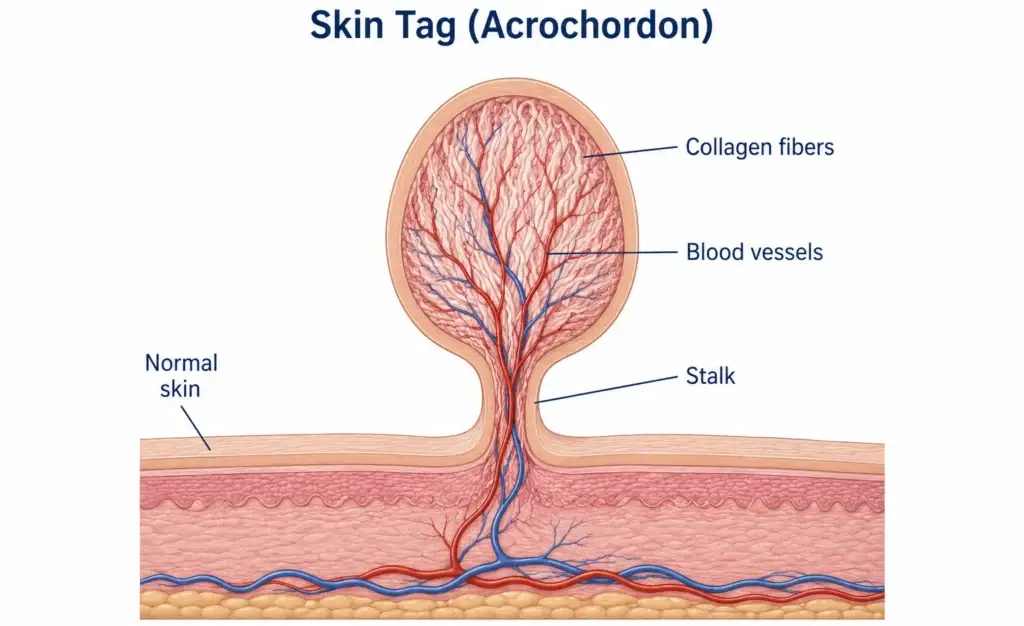
A skin tag is a small, soft flap of skin attached to the body by a thin stalk. Doctors call them acrochordons. They’re made up of collagen fibers and blood vessels, wrapped in a thin outer layer of skin. Most skin tags match your skin tone, though some may look slightly darker.
Skin tags are benign and extremely common. Cleveland Clinic reports that skin tags affect up to 60 percent of adults at some point in their lives. They appear equally in men and women, and your risk of getting one grows as you age.
Why Am I Getting Skin Tags?
Friction is the main driver behind skin tag growth. They form where skin repeatedly rubs against other skin or clothing. However, several other factors raise your risk as well.
Common reasons you may be getting skin tags include:
- Carrying excess body weight, which creates more skin folds and friction
- Hormonal changes during pregnancy
- Insulin resistance or type 2 diabetes
- A family history of skin tags
- Wearing tight or ill-fitting clothing consistently
The connection between insulin resistance and skin tags is well-documented in medical research. If many new skin tags appear in a short time, ask your doctor to check your blood sugar levels. Pregnancy also triggers rapid skin changes due to hormonal shifts. If new skin growths are appearing alongside other body changes, our guide on early pregnancy symptoms explains what to watch for and when to reach out to your doctor.
Where Do Skin Tags Usually Appear?
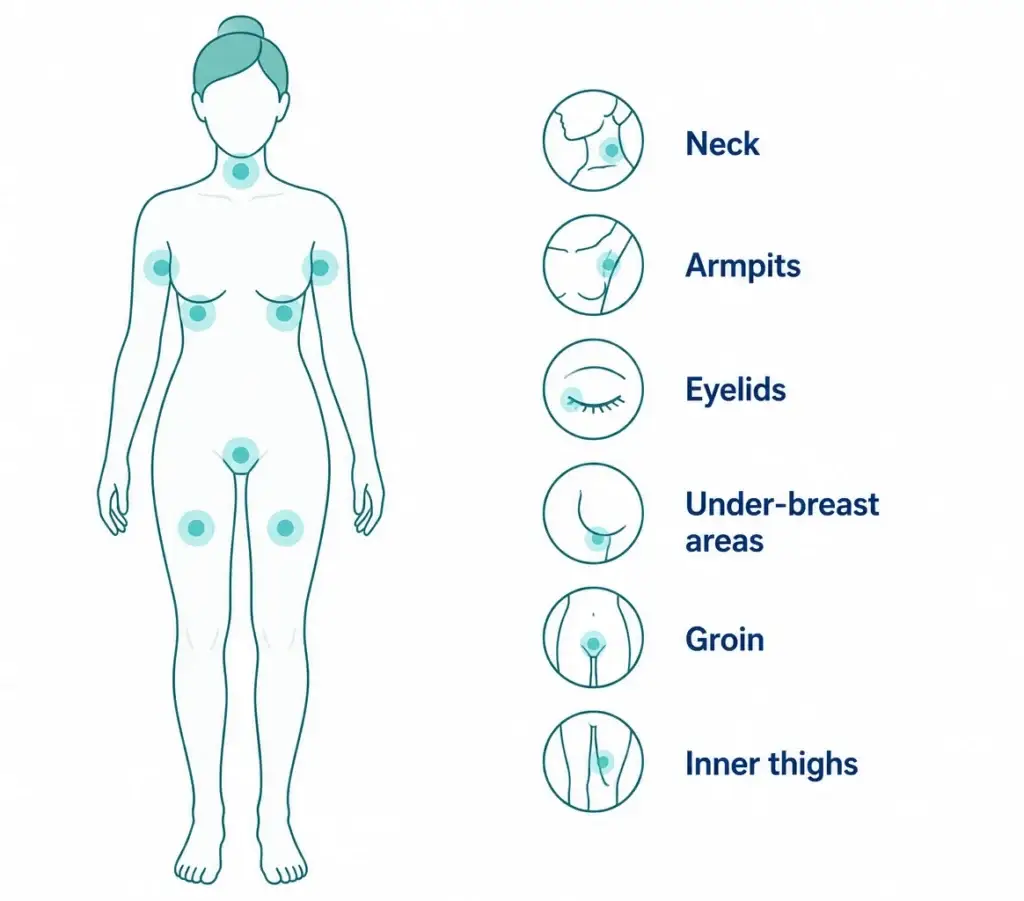
Skin tags tend to grow in warm, moist areas where friction is a daily reality. The most common locations are the neck, armpits, eyelids, groin, inner thighs, and the area under the breasts.
Skin Tags in the Armpit
Armpit skin tags are among the most common type. The underarm area stays warm and moist, and your arm moves constantly throughout the day. That repeated motion creates the ideal environment for skin tags to form. Tight shirts and bra straps add even more friction to the area over time.
When an armpit skin tag catches on clothing or gets nicked while shaving, it can bleed and become sore. That pain comes from mechanical irritation, not from the tag itself being dangerous.
Skin Tag on the Face
Face skin tags usually appear on the eyelids, sides of the neck, or around the mouth. They tend to be smaller than tags on the body. Because they’re visible, many people want them gone quickly.
Never attempt to remove a skin tag on or near your eyelid at home. That area is far too delicate for any DIY method. A dermatologist can remove it safely and precisely during a single short visit.
Do Skin Tags Fall Off on Their Own?
A skin tag can occasionally fall off without any treatment. This happens when the stalk twists and cuts off blood flow to the growth. Without a blood supply, the tag dries out, darkens, and eventually drops off.
That process is uncommon, though, and it can take a long time. Most skin tags stay put unless you remove them. If a tag keeps getting irritated or bothers you regularly, waiting for it to fall off on its own is rarely the most practical solution.
Does a Skin Tag Hurt?
A healthy skin tag causes no pain on its own. If your skin tag hurts, friction is almost always the reason. Tight clothing, jewelry, a bra strap, or a razor blade can all irritate a skin tag and cause soreness. That kind of pain typically clears up once the friction source is removed.
Persistent pain is a different matter. A skin tag that hurts without obvious friction, or one that’s red, swollen, and bleeding, warrants a doctor’s evaluation. These signs can mean irritation has turned into infection. For a clear breakdown of what infected skin looks like, our article on infected skin signs and symptoms outlines the warning signs to look for.
Are Skin Tags Bad? Should You Be Worried?
Skin tags are completely benign. They’re not cancerous, and they don’t develop into cancer over time. For most people, a skin tag is simply a cosmetic nuisance.
However, a growth that looks like a skin tag but changes color, grows quickly, bleeds without being touched, or has an irregular shape may not be a skin tag. It could be a mole, a wart, or in rare cases, something needing medical attention. Our in-depth article on melanoma, liver spots, and age spots compared to skin cancer helps you understand the key differences. When you’re uncertain about any skin growth, a dermatologist can give you a clear and quick diagnosis.
Skin Tag Removal at Home: What Works and What Doesn’t
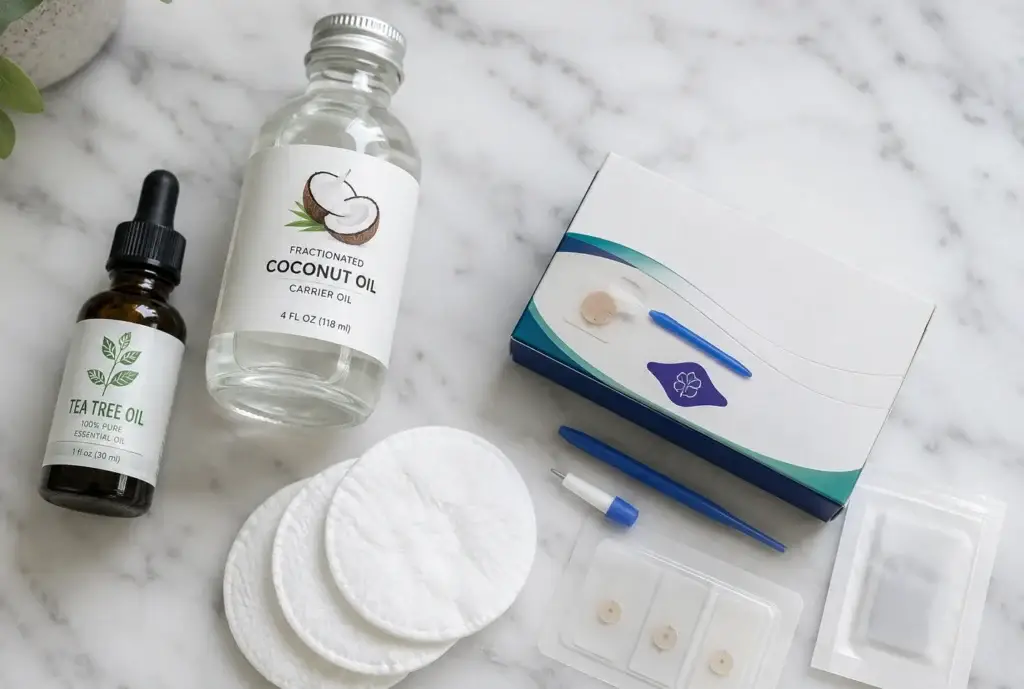
Many people try home options before visiting a dermatologist for skin tag removal. Some methods have more evidence behind them than others.
Over-the-Counter Freezing Kits
These products use a mild freezing solution to cut off blood supply to the skin tag, similar to professional cryotherapy. They can be effective for small skin tags on the body. Always follow the product instructions closely, and never use these kits on or near your eyes or on sensitive skin areas.
Tea Tree Oil for Skin Tags
Tea tree oil is a widely tried natural remedy. It’s well known for its antimicrobial and antifungal properties. However, no clinical trial has directly confirmed that tea tree oil removes skin tags reliably. Many people report that consistent diluted application causes the tag to gradually dry and shrink over several weeks.
Always mix tea tree oil with a carrier oil such as coconut or jojoba before applying it to skin. Using pure tea tree oil directly can cause redness, burning, and irritation.
Castor Oil for Skin Tags
Castor oil appears often on natural remedy lists for skin tag removal. The reality is that scientific evidence for this use is very limited. Castor oil is primarily a moisturizer, which actually works against the goal of drying out a skin tag. Most dermatologists don’t recommend it as a reliable removal method.
What You Should Never Do at Home
Do not try to cut off a skin tag using scissors, nail clippers, or any blade. Cutting without sterile instruments causes serious bleeding, infection, and permanent scarring. It also risks leaving stalk tissue behind, which can cause the tag to regrow. Professional removal is far safer and, for most people, more affordable than expected.
Professional Skin Tag Removal Options
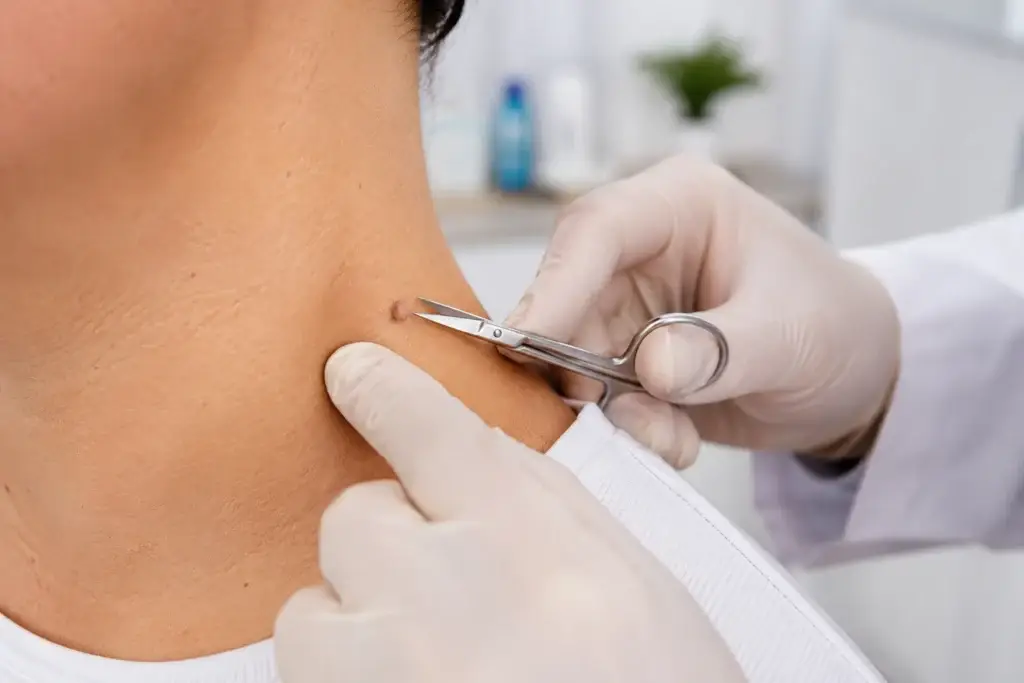
A dermatologist can remove a skin tag in a single office visit, quickly and with very little recovery time. According to Cleveland Clinic, these procedures take only a few minutes and cause minimal discomfort.
Common professional methods include:
- Excision cuts the tag off cleanly with sterile surgical scissors or a scalpel
- Cryotherapy uses liquid nitrogen to freeze the tag, which then falls off within days
- Cauterization burns the tag off using a small electric current
- Laser removal uses a focused beam of light to destroy the skin tag tissue
Recovery after any of these options is fast. Most patients return to normal activities the same day.
How Much Does Skin Tag Removal Cost?
Professional skin tag removal generally costs between $100 and $500 per session. Individual tags typically run $45 to $150 each, depending on the removal method used, your location, and your provider.
Health insurance classifies skin tag removal as cosmetic, so most plans won’t cover it. If a skin tag causes a genuine medical problem, such as an eyelid tag that affects your vision, insurance coverage may be possible. Always call your insurer before your appointment to confirm what’s included in your plan.
When to See a Doctor for Skin Tag Removal
You don’t need to see a doctor for every skin tag. Certain situations, though, do call for professional care.
See a doctor if your skin tag:
- Bleeds without being rubbed or touched
- Grows noticeably faster over a short period
- Changes color, particularly to red or black
- Causes pain without any obvious source of friction
- Is on or near your eyelid
- Looks irregular or different from other skin tags on your body
The American Academy of Dermatology advises that any unusual or changing skin growth be evaluated by a board-certified dermatologist before you attempt removal. A single appointment can give you a diagnosis and a safe removal in the same visit.
Frequently Asked Questions
Can I cut off a skin tag at home?
You should not cut off a skin tag at home. Cutting without sterile surgical tools causes serious bleeding, infection, and scarring. A dermatologist can remove a skin tag safely in a few minutes. The procedure causes minimal discomfort and carries very low risk of complications.
Why am I getting skin tags suddenly?
Sudden skin tag growth is often linked to weight gain, pregnancy, or rising blood sugar levels. Insulin resistance is a well-documented trigger. If new skin tags keep appearing quickly and without an obvious cause, talk to your doctor about testing your blood glucose levels.
Do skin tags fall off on their own?
In rare cases, a skin tag falls off on its own. This happens when the stalk twists and cuts off blood flow to the growth. Most skin tags stay in place without treatment. Home removal kits or a dermatologist visit are far more reliable options than simply waiting.
Does tea tree oil really remove skin tags?
Tea tree oil has proven antimicrobial properties, but no clinical trial has confirmed it removes skin tags reliably. Some people report the tag gradually drying and shrinking after weeks of consistent diluted application. Results are not guaranteed, and pure tea tree oil can irritate the skin if applied without dilution.
Is skin tag removal covered by insurance?
Health insurance typically classifies skin tag removal as cosmetic and won’t cover the cost. If a skin tag causes a documented medical problem, such as impaired vision, your insurer may make an exception. Always call your insurance provider before booking to ask about your specific coverage.
Are skin tags contagious?
Skin tags are not contagious. They develop because of friction, genetics, and hormonal changes, not infection. You cannot pass a skin tag to another person, and touching one does not cause new ones to grow elsewhere on your body.