Why Sore Bum Bones Hurt and What to Do About It
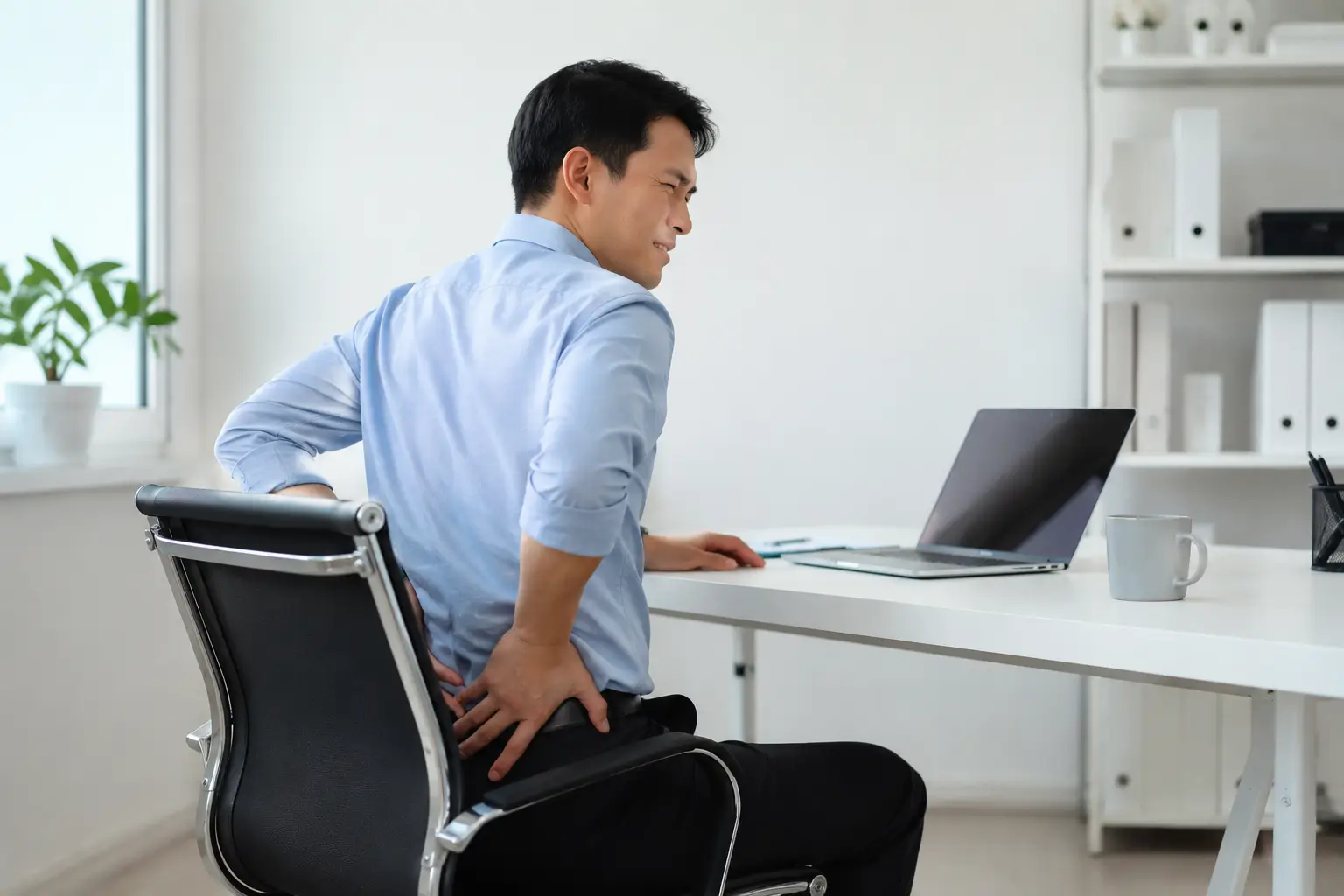
Sore bum bones affect millions of people who work at desks, drive for long hours, or spend most of their day seated. The pain can range from a mild throb to a sharp sting that makes it hard to stay focused. Sometimes it shows up only while sitting, and other times it lingers even after you stand up. Either way, there are clear causes behind it, and most people recover fully with the right care.
What are Sore Bum Bones?
Your “bum bones” are called the ischial tuberosities. They are the two rounded bony points at the base of your pelvis. When you sit down, these bones carry most of your body weight. Small fluid filled sacs called bursae, along with tendons and muscle tissue, cushion these bones from the pressure of sitting.
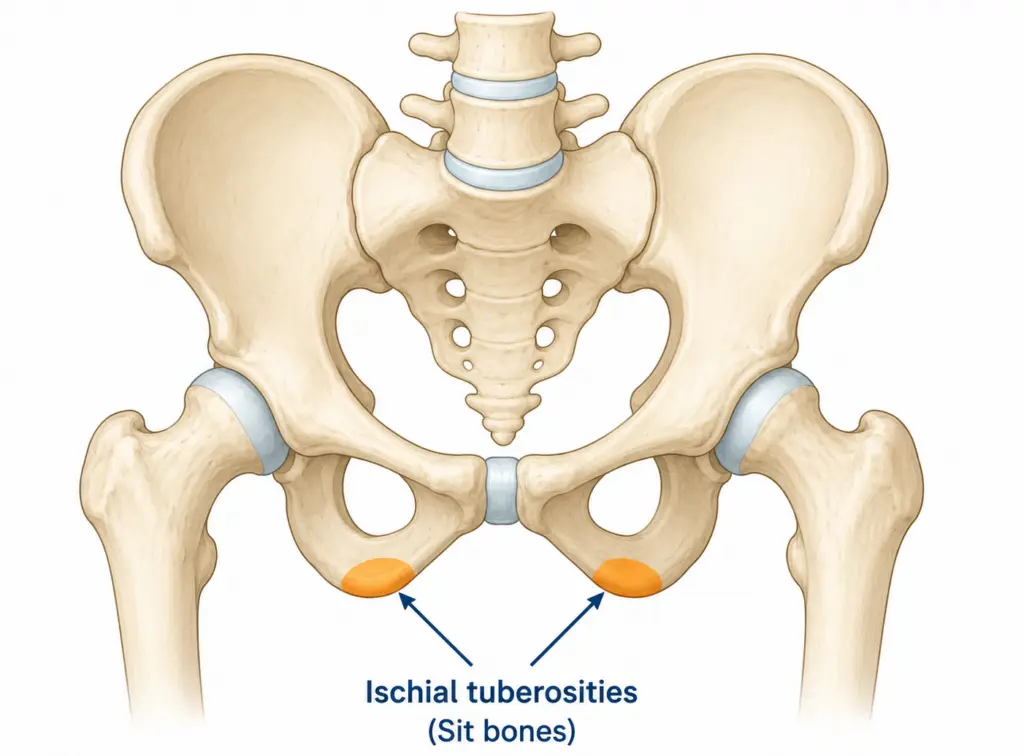
When that cushioning tissue gets irritated or inflamed, you feel pain deep in your buttocks. Often, the ache travels down the back of your thighs. Typically, the longer you sit without a break, the worse the discomfort becomes.
Common Causes of Sore Bum Bones When Sitting
Several conditions can make your sore bum bones ache. Some start after a fall. Others build up slowly from sitting too much every day.
Ischial Bursitis
Ischial bursitis is the most frequent cause of deep sore bum bones. Fluid filled sacs called bursae sit between your ischial tuberosity and your gluteus maximus muscle. When these sacs get inflamed, they produce a dull, deep ache in the buttocks. Often, the pain spreads down the back of the thigh. The Cleveland Clinic confirms that sitting on hard surfaces for long periods is the top trigger for this condition.
The main risk factors are:
- Sitting on hard chairs or floors for many hours each day
- Cycling, rowing, or horseback riding
- A fall or direct impact to the tailbone area
- Conditions like rheumatoid arthritis or gout
Research published in the NIH’s medical library also confirms that ischial bursitis carries a notably high recurrence rate. Without tackling the root cause, the pain tends to return.
Dead Butt Syndrome
Dead butt syndrome is also called gluteal amnesia. When you sit for too long, your glute muscles gradually stop activating the way they should. Over time, your brain loses the habit of firing those muscles. This leads to aching pain in the buttocks and hips, along with weakness and numbness in the area.
Fortunately, this condition is fully reversible. Regular movement breaks and targeted glute exercises help the muscles activate again. We cover the best exercises in the relief section below.
Tailbone Pain (Coccydynia)
Tailbone pain sits lower than sit bone pain. Your tailbone, the coccyx, rests at the very bottom of your spine. A fall, prolonged sitting on a hard surface, or childbirth can bruise or irritate it. The pain usually feels sharp right at the tip of the spine. It gets worse when you go from sitting to standing.
Pulled Muscle in the Buttock
A pulled muscle in the buttock happens when the gluteal muscles get overstretched or strained. Heavy lifting, a sudden sprint, or an awkward movement can all cause it. You will feel tenderness directly in the bum cheek. The area also feels tight and sore when pressed.
Soft tissue injuries like this often follow a similar pattern across different body areas. Just as mommy thumb stems from repeated strain on a joint and the tissue around it, a pulled gluteal muscle needs proper rest and gradual strengthening to heal well.
Sore Bum Bones vs. Other Causes of Buttock Pain
| Condition | Where It Hurts | Main Trigger | Key Sign |
|---|---|---|---|
| Ischial Bursitis | Deep sit bones | Hard surface sitting | Dull ache, worse when seated |
| Dead Butt Syndrome | Buttocks and hips | Too much sitting | Weakness, numbness |
| Tailbone Pain | Base of spine | Fall or hard seating | Sharp pain when rising |
| Pulled Muscle | Bum cheek tissue | Exercise or lifting | Tender to touch |
| Sciatica | Buttock down one leg | Nerve compression | Burning, shooting pain |
Why Does My Butt Hurt When I Poop?
This is a common question, and it has a few clear answers.
When you strain during a bowel movement, the muscles in your pelvic floor pull on the coccyx. That pressure stretches the tailbone and triggers pain. So if you already have sore bum bones or tailbone pain, any straining tends to make it noticeably worse.
Hemorrhoids are another common cause. They develop inside or around the anus and become inflamed during bowel movements. The pain often radiates into the lower back bum area. Research from the NIH confirms that defecation is one of the most consistent triggers for worsening coccyx pain.
Other causes to be aware of are:
- Anal fissures, which are small tears in the anal lining
- Constipation putting extra pressure on the pelvic bones
- Pelvic floor muscle tension from prolonged sitting
See a doctor right away if you notice blood in your stool, sharp worsening pain, or any changes in your bowel habits.
How to Ease Sore Bum Bones and Bum Pain at Home
Most sore bum bone pain responds well to home care. These strategies work across most types of buttock discomfort.
Take regular movement breaks
Stand up and walk for a few minutes every 30 to 45 minutes. This relieves pressure on the sit bones and keeps your glutes active. Even a short walk to another room makes a real difference.
Switch to a supportive cushion
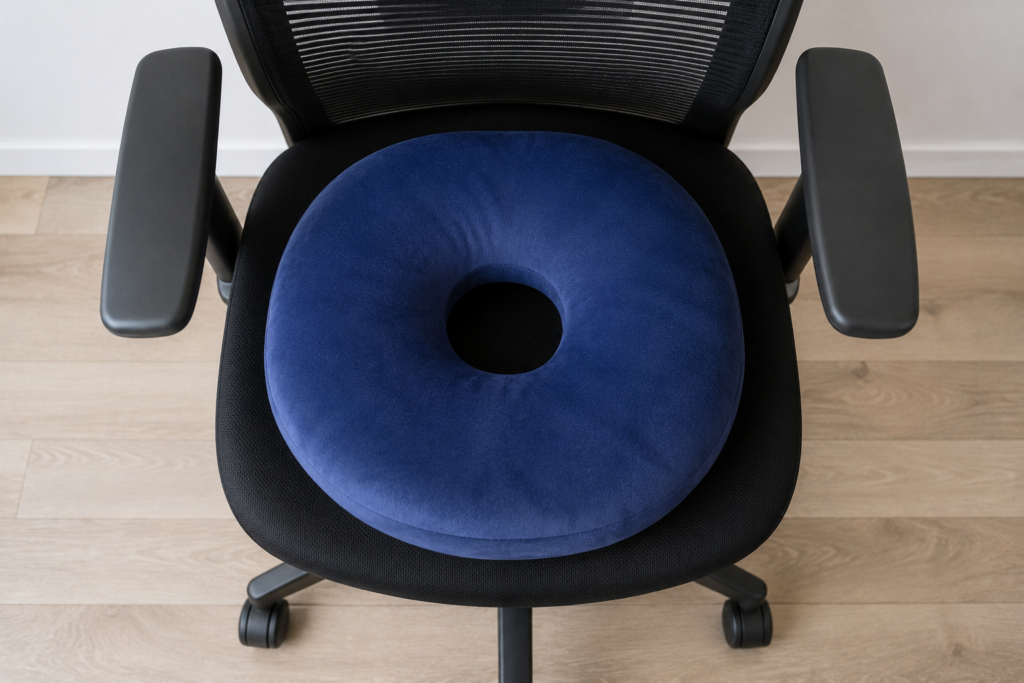
A donut shaped or coccyx cutout cushion lifts your sore bum bones off the hard surface. These cushions work particularly well for ischial bursitis and tailbone pain. Many people notice a strong drop in discomfort just from making this one change.
Apply ice or heat
For the first 48 to 72 hours after pain starts, apply an ice pack for 15 to 20 minutes at a time. After that window, a warm compress relaxes the surrounding muscles more effectively.
Try these glute exercises
Gentle exercises help wake up the glutes and reduce buttock pain over time.
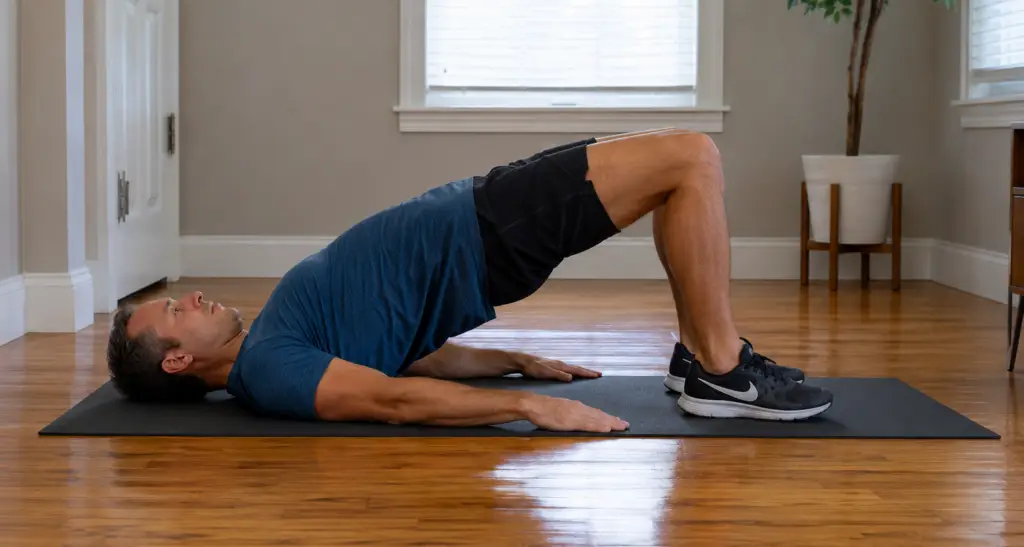
- Glute bridge. Lie on your back, press your feet into the floor, and lift your hips. Hold for three seconds, then lower slowly.
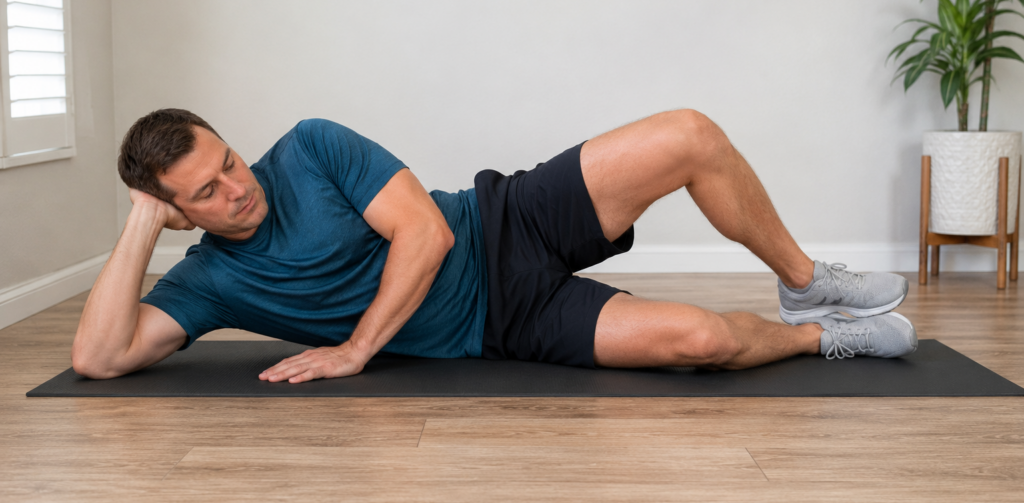
- Clamshell. Lie on your side with knees bent. Lift your top knee while keeping your feet together. This targets the gluteus medius.
- Standing hip hinge. Stand with feet hip width apart. Hinge forward at the hips and keep your back flat. Return to standing and squeeze your glutes at the top.