
What Does C Diff Poop Look Like and What It Means for Your Gut
It also comes up after a long course of antibiotics, especially once diarrhea will not let up. Clostridioides difficile, known as C diff, is a bacterial infection. It throws off the balance of bacteria living in your gut. It often shows up with watery stools, cramping, and a smell that catches your attention right away.
What Is C Diff and Why Your Poop Changes
C diff is short for Clostridioides difficile. It is a bacterium that can overgrow once antibiotics wipe out your helpful gut bacteria. Once those protective bacteria are gone, C diff multiplies fast. It releases toxins that irritate the lining of your colon. That irritation is the main reason your stool changes so much during an active infection.
The Centers for Disease Control and Prevention tracks C diff closely. It reports close to half a million infections across the United States every year. People are up to 10 times more likely to develop the infection while taking an antibiotic. That higher risk continues through the following month too. Adults over 65 face a higher risk. So does anyone who has spent time in a hospital or nursing home, according to NIH MedlinePlus.
Diarrhea has many possible causes, so it helps to rule out common culprits first. Our guide on the difference between stomach flu and food poisoning walks through how those illnesses usually show up. It can help you spot when something else, like C diff, is more likely.
What Does C Diff Poop Look Like
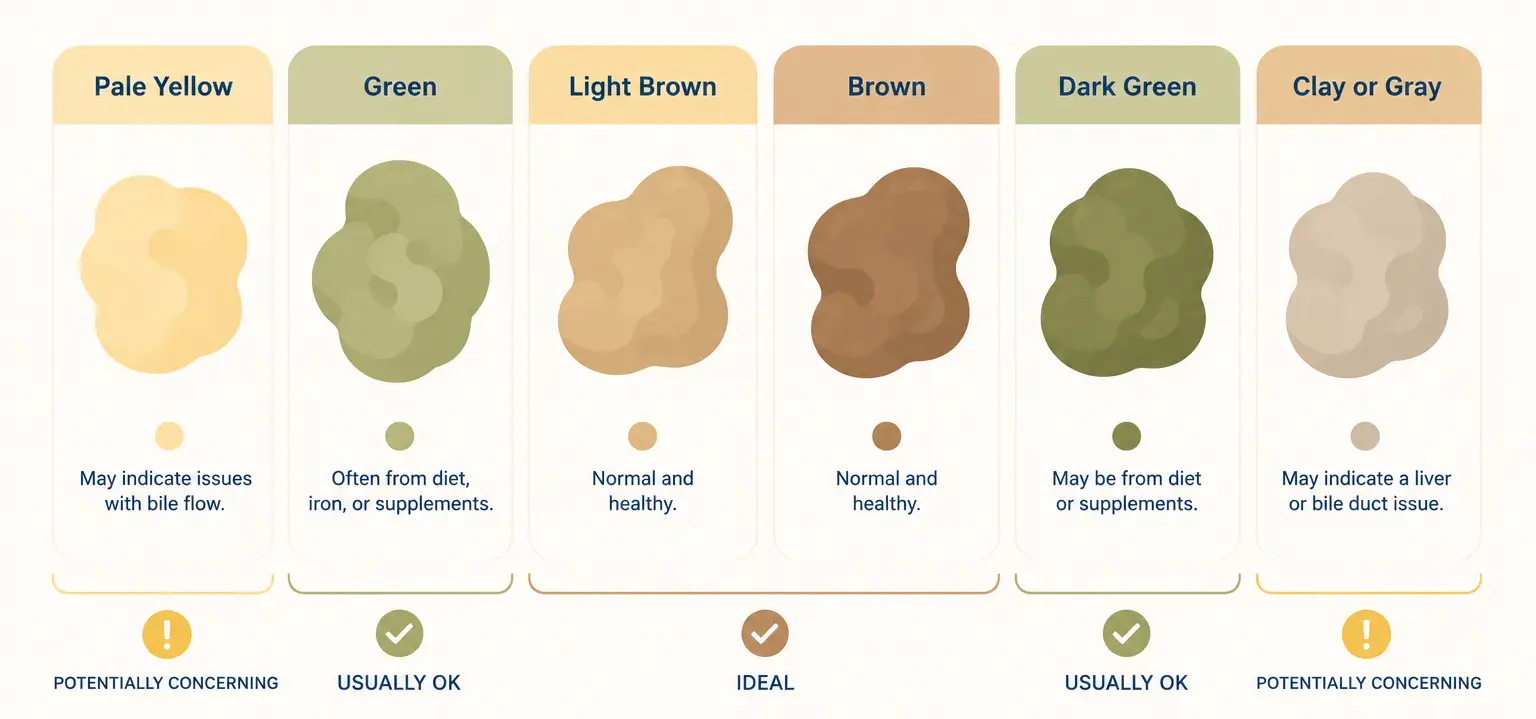
C diff poop has a few telltale features that set it apart from regular diarrhea.
C Diff Poop Color and Texture
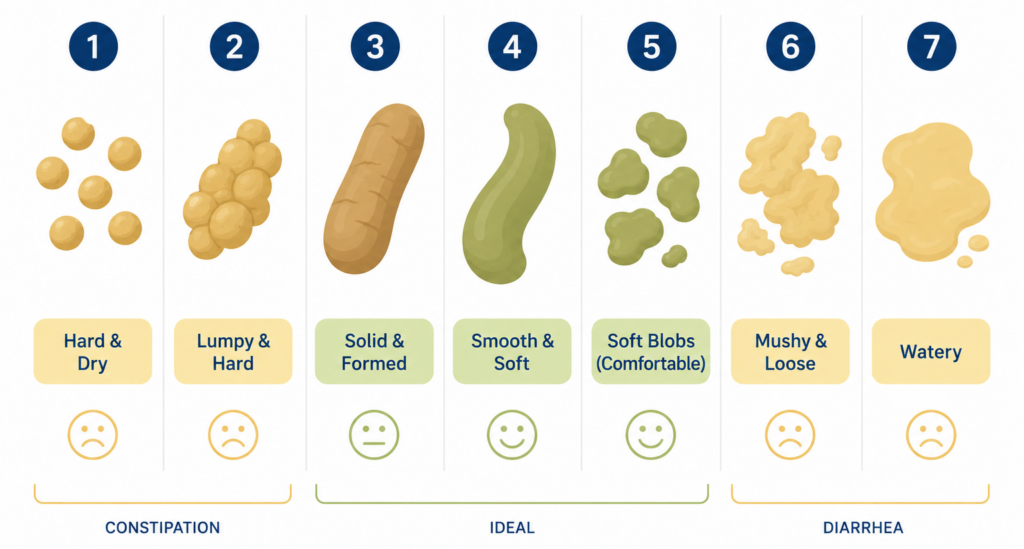
C diff stool is almost always loose or watery. It often looks mushy rather than fully liquid, similar to wet oatmeal. The color usually lands somewhere between yellow, green, and light brown. Some people notice streaks of mucus in their stool. A smaller number see streaks of blood. Blood in your stool is a sign you should call your doctor right away.
C Diff Poop Smell
The smell is one of the clearest clues. C diff diarrhea tends to carry a strong, distinct odor. Many people describe it as sour or unusually sharp. Higher bile acid levels in the stool likely cause that sharper smell. Nurses and doctors often notice it before lab results confirm the diagnosis, according to Cleveland Clinic.
How Often Symptoms Show Up
Doctors generally look for three or more loose stools in a single day. That pattern usually needs to continue for two days or longer to count. Cramping, mild fever, and a loss of appetite often show up alongside the diarrhea. Symptoms most often start while you are still taking an antibiotic. They can also start within a few weeks after you stop one.
| Feature | Typical Diarrhea | C Diff Poop |
|---|---|---|
| Frequency | Occasional, often resolves in a day | Three or more times a day for two or more days |
| Color | Varies, often brown | Yellow, green, or light brown |
| Texture | Watery or loose | Mushy or watery, sometimes with mucus |
| Smell | Mild | Strong and distinct |
| Blood or mucus | Uncommon | Possible, especially in severe cases |
| Recent antibiotic use | Not always linked | Often linked |
Can C Difficile Cause Constipation Instead of Diarrhea
Most people picture diarrhea when they think about C diff. A smaller group of patients experience the opposite instead. Bloating, stomach pain, and constipation can show up on their own. This happens especially when the infection affects the right side of the colon or slows the bowel down. This pattern is less common and easy to miss. That is why doctors still consider C diff in anyone with new stomach pain, fever, or swelling after antibiotics. This holds even when there is no diarrhea at all. If your bowel habits suddenly shift after antibiotics, mention it to your doctor. That advice holds true no matter which direction your symptoms shifted.
What To Eat When You Have C Difficile
Diet will not cure C diff on its own. The right foods can ease cramping and support your gut while you recover.
Foods For C Diff Recovery
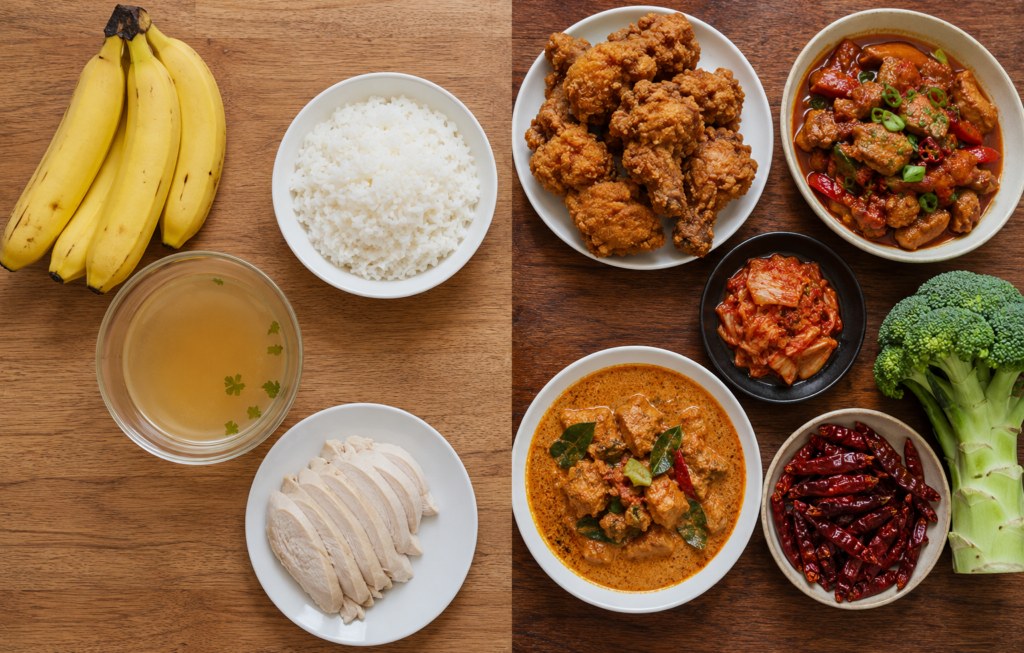
Gentle, easy to digest foods give your gut a break while it heals. Good choices include the following.
- Plain chicken, turkey, and eggs
- Cooked carrots, peeled zucchini, and well cooked beets
- Bananas, applesauce, and canned peaches
- Oats and white rice
- Broth, water, and oral rehydration drinks
These foods supply protein and gentle fiber without forcing your digestive system to work too hard.
Foods To Avoid With C Diff
Some foods make cramping and diarrhea worse while your gut lining is inflamed. It helps to limit the following.
- Fried, greasy, or heavily buttered foods
- Raw vegetables and cruciferous vegetables such as broccoli and cabbage
- Spicy dishes and heavy sauces
- Whole milk and other high fat dairy
- Caffeine and alcohol
A low residue diet follows many of these same principles. It can give you a useful starting framework while your symptoms settle down.
Probiotics and C Diff Infection
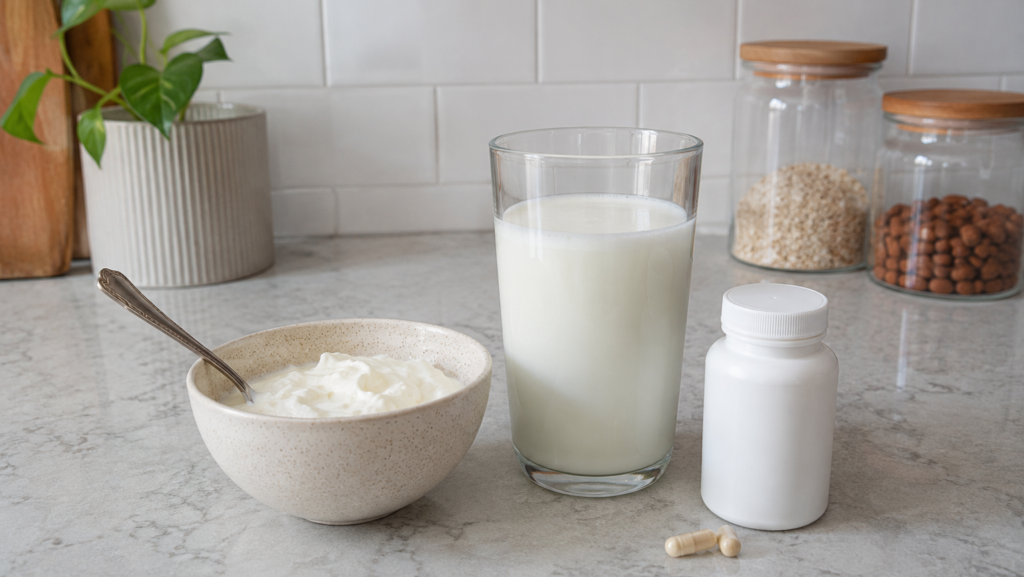
Probiotics get recommended often. The science on probiotics and C diff infection is more mixed than most people expect. Some strains, including specific Lactobacillus and Bifidobacterium combinations, showed modest benefit for preventing a first infection in research reviews. Other strains showed no benefit at all. One study found that a common strain, Lactobacillus acidophilus, may actually support C diff growth instead of blocking it.
Because of that mixed picture, the American College of Gastroenterology advises against routine probiotic use. This applies to preventing a first C diff infection or a repeat one. So can probiotics make C diff worse? For certain strains, early research says it is possible. That is exactly why picking a probiotic without guidance is not a great idea.
If you are still curious about probiotics for C diff, ask your doctor or pharmacist first. They can help you figure out which strain, if any, fits your situation. Self treating with whatever probiotic sits on the shelf is not the same thing. Using one backed by evidence for your specific case works better.
Home Remedies For C Diff That Support Recovery
Home remedies for C diff work alongside medical treatment, not instead of it. A few habits make a real difference while your body fights the infection.
- Wash your hands with soap and water rather than hand sanitizer, since alcohol does not kill C diff spores
- Drink water, broth, or an electrolyte drink often to replace what diarrhea takes from you
- Rest as much as your schedule allows, since your body uses a lot of energy fighting this infection
- Clean bathroom surfaces with a bleach based cleaner, since regular disinfectants often will not kill spores
- Use a separate towel and washcloth until your symptoms clear
These steps lower your chances of spreading the infection to people you live with. They also support the treatment your doctor has already prescribed.
Will C Diff Resolve On Its Own
Will C diff resolve on its own? Sometimes, but not reliably enough to skip a call to your doctor. Carrying C diff bacteria without any symptoms often clears up without treatment. Once symptoms start, though, roughly one in five mild cases may ease up after the triggering antibiotic is stopped. The rest need targeted treatment to fully clear.
Waiting too long carries real risk. Untreated C diff can lead to severe dehydration and, in rare cases, more dangerous complications. If your diarrhea has not improved within two or three days, contact your doctor. The same goes if it keeps getting worse instead of better.
Long Term Problems After C Diff
Long term problems after C diff are more common than most people realize. Research published on PMC followed people who recovered from C diff. About one in four of them met the criteria for irritable bowel syndrome within six months. Bloating, irregular bowel habits, and stomach discomfort can linger well after the infection itself has cleared.
Recurrence is another concern. Roughly 20 to 30 percent of people develop a second infection after their first episode. That risk climbs with each additional round. Digestive issues can persist for up to a year for some patients. That is part of why doctors keep a close eye on gut symptoms during checkups after treatment.
If new stomach pain or digestive changes show up months later, do not assume it is automatically C diff again. Conditions such as gastritis share some of the same symptoms. Our gastritis symptoms guide can help you tell the difference.
C Diff Recovery Timeline

C diff recovery usually starts with a 10 day course of an antibiotic such as vancomycin or fidaxomicin. Doctors prescribe these specifically to treat the infection, not worsen it. Diarrhea often improves within a few days of starting treatment. Your energy and appetite may take longer to bounce back.
Full C diff recovery means your gut bacteria return closer to their normal balance. That can take several weeks beyond your last dose. Easing back into a normal diet, staying hydrated, and getting enough sleep all support that slower part of healing. Patience matters here, since rushing back to your usual diet too fast can bring cramping right back.
When To See A Doctor
Call your doctor if you notice any of the following.
- Diarrhea three or more times a day that lasts more than two days
- Blood or a large amount of mucus in your stool
- A fever of 101 degrees Fahrenheit or higher
- Severe stomach pain, swelling, or tenderness
- Signs of dehydration, including dizziness, a dry mouth, or very little urination
- A heart rate that stays high even after your fever comes down, which our guide on elevated heart rate during illness explains further
- Symptoms that return after you finish treatment
Seek emergency care right away for severe abdominal pain paired with a swollen belly. That combination can point to a rare but serious complication. Trust your instincts here. You know your body, and a quick call to your doctor costs far less than waiting through a complication.
What does C diff poop look like in the end? Watery, often yellow or green, and noticeably more pungent than typical diarrhea, especially alongside a recent antibiotic prescription. Gentle foods, good hydration, and careful hand washing all help. So does following your doctor’s prescribed treatment plan until your gut feels back to normal. At BannerHealth.io, we built this guide so you can recognize the signs early and act with confidence. Watch your symptoms closely, follow your treatment plan, and reach out to your doctor whenever something feels off.
Frequently Asked Questions
Can probiotics make C diff worse?
For certain strains, yes, at least according to early research. Lactobacillus acidophilus showed signs of supporting C diff growth in one study. Other strains showed no clear benefit or harm. The evidence depends so much on the exact strain used. Ask your doctor before adding any probiotic during or after a C diff infection.
Will C diff resolve on its own?
Sometimes, especially if you carry the bacteria without symptoms. It can also resolve if stopping the antibiotic that triggered it is enough on its own. Most symptomatic cases still need targeted antibiotic treatment to clear fully and to avoid complications like severe dehydration. Contact your doctor if symptoms last more than two or three days.
Can I eat meat with C diff?
Plain, lean meats such as chicken and turkey are usually fine and easy to digest during a C diff infection. Fatty or heavily processed meats can be harder on your gut while it is inflamed. It helps to keep portions simple and well cooked. Pay attention to how your body responds and adjust from there.
Can you eat peanut butter with C diff?
Peanut butter is high in fat, which can be harder to digest while your gut is recovering from C diff. Some people tolerate small amounts without trouble, while others notice more cramping or bloating. Starting with a small spoonful rather than a full serving is a reasonable way to test your tolerance.
Can C difficile cause constipation?
Yes, although it happens less often than diarrhea. Some patients develop bloating, stomach pain, and constipation instead, particularly when the infection affects the right side of the colon. Doctors still consider C diff a possible cause of new stomach symptoms after antibiotic use, even without diarrhea.
What does C diff poop smell like?
C diff diarrhea tends to have a strong, distinct odor that many people describe as sour or unusually sharp. Higher bile acid levels in the stool are part of the reason for the smell. Many nurses and doctors recognize this odor as a possible sign of C diff even before test results come back.
Written by Theo James
The information on this page is for general educational purposes only and is not a substitute for professional medical advice, diagnosis, or treatment. Always talk with your doctor or another qualified healthcare provider about any questions you have regarding a medical condition. Never ignore professional medical advice or delay seeking it because of something you read on the internet.