
Why Should You Remove Tonsils and When Is It the Right Call
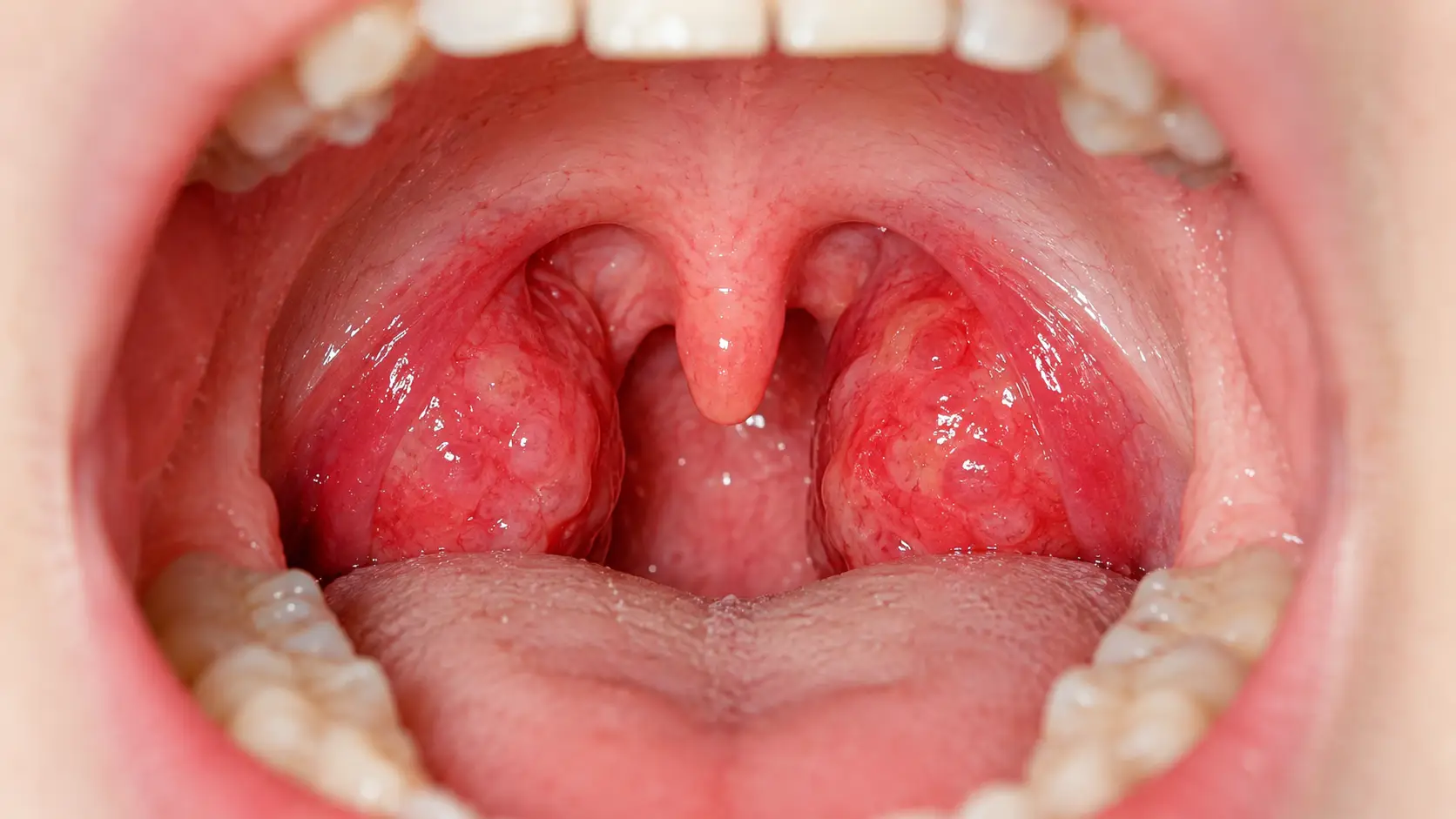
Tonsil surgery, also called a tonsillectomy, is one of the most common surgical procedures performed in the United States. Understanding the warning signs helps you work with your doctor to make the right decision.
What Your Tonsils Do and Why They Matter
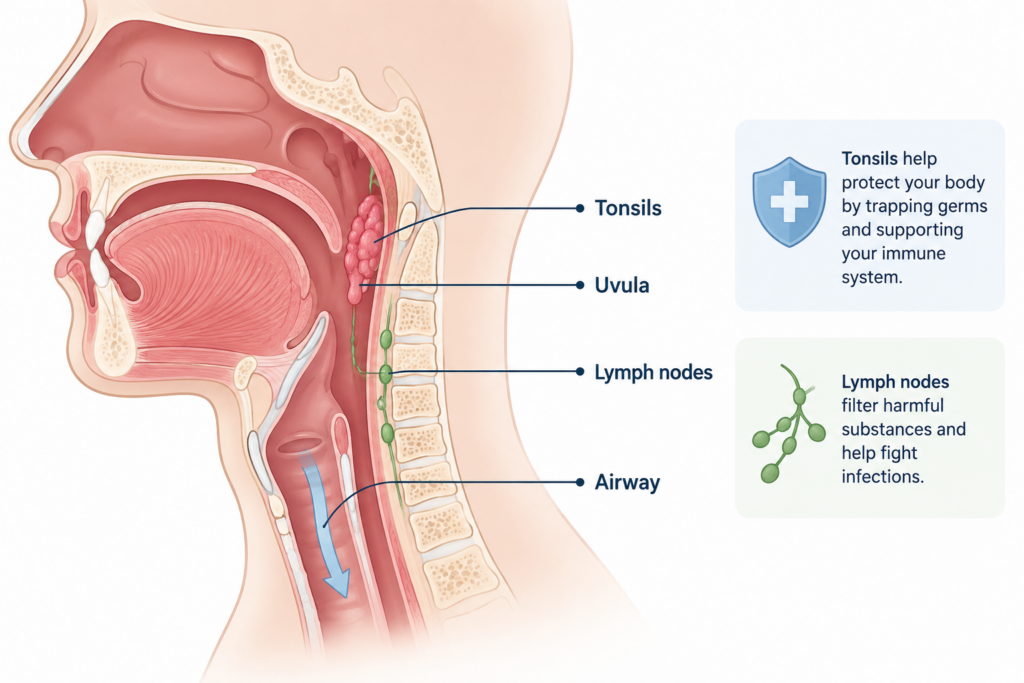
Your tonsils are two small oval masses of tissue at the back of your throat, one on each side. They act as early responders to bacteria and viruses you breathe or swallow each day.
Tonsils produce white blood cells and antibodies to catch germs before they spread deeper into your body. This immune role is most active during early childhood, when your immune system is still building strength.
By adulthood, other parts of your immune system take over this job fully. Your lymph nodes, spleen, and airway lining all continue this protective work. So when your tonsils cause more harm than protection, removing them is a sound medical decision.
Are Tonsils Necessary Once You Are an Adult
This question comes up often, and the short answer is no. Tonsils are not strictly necessary for adults.
Research on long-term immune function after tonsil removal shows that adults with a tonsillectomy do not face higher rates of upper respiratory infections. Other lymphoid tissues step in and handle the immune work your tonsils once did.
When your tonsils cause repeated illness, airway problems, or other serious complications, removing them brings clear health benefits that far outweigh the risks of keeping them.
Why Should You Remove Tonsils
You should remove tonsils when they cause recurring infections, blocked breathing during sleep, persistent tonsil stones, or repeated abscesses. Most doctors recommend tonsil surgery after 7 or more throat infections in one year, 5 or more per year for two years, or 3 or more per year for three years.
There are well-defined medical reasons why should you remove tonsils. Here are the most common ones ENT doctors use to recommend surgery.
Recurring Throat Infections
Recurring tonsillitis is the most common reason doctors recommend tonsil surgery. Most ENT doctors apply these standard criteria when considering the procedure.
- 7 or more throat infections in a single year
- 5 or more infections per year over two consecutive years
- 3 or more infections per year over three consecutive years
Each infection typically brings fever, swollen lymph nodes, and a painful sore throat. Repeated antibiotic use also raises the risk of antibiotic resistance over time.
Enlarged Tonsils and Sleep Problems
Swollen tonsils can narrow or block your airway during sleep. This causes loud snoring, gasping, and disrupted sleep patterns linked to obstructive sleep apnea.
If you wake up exhausted every morning, your tonsils may be affecting your breathing at night. Our article on the best sleep position for sleep apnea explains how nighttime airway blockage affects your overall health.
Tonsil Stones That Keep Coming Back
Tonsil stones form when food particles, dead cells, and bacteria get trapped in the folds of your tonsil tissue. They harden into small, foul-smelling deposits over time.
Tonsil stones and chronic bad breath often go hand in hand. If you notice a foul smell that does not improve with brushing or rinsing, tonsil stones may be the cause. When they keep forming despite good oral hygiene, tonsil surgery becomes a practical long-term solution.
Peritonsillar Abscess
A peritonsillar abscess is a pocket of pus that forms around a tonsil after a severe infection. It causes intense throat pain and makes swallowing nearly impossible.
One abscess can be drained and treated with antibiotics. Two or more abscesses, though, strongly signals that the tonsils should be removed to prevent the pattern from continuing.
Tonsil Cancer Risk
If one tonsil looks noticeably larger than the other, or changes in texture or appearance, a doctor may recommend removal to check for cancer. About 70 percent of oropharyngeal cancers are linked to HPV. The tonsils are one of the primary sites for these cancers. Early evaluation is critical.
How Do You Know If You Need Your Tonsils Out
Figuring out how do you know if you need your tonsils out starts with tracking your symptoms honestly over time. This comparison can help guide your conversation with a doctor.
| Symptom | Watch and Wait | Time to See a Doctor |
|---|---|---|
| Sore throat once or twice a year | Yes | No |
| Throat infections 3 or more times a year | No | Yes |
| Chronic bad breath despite good hygiene | Maybe | Yes |
| Loud snoring with disrupted sleep | Maybe | Yes |
| One tonsil noticeably larger than the other | No | Urgent |
| Trouble swallowing regularly | No | Yes |
If you wake up every morning with throat pain, our article on why your throat hurts when you wake up covers other causes you should not ignore.
Signs You Need Your Tonsils Removed as an Adult
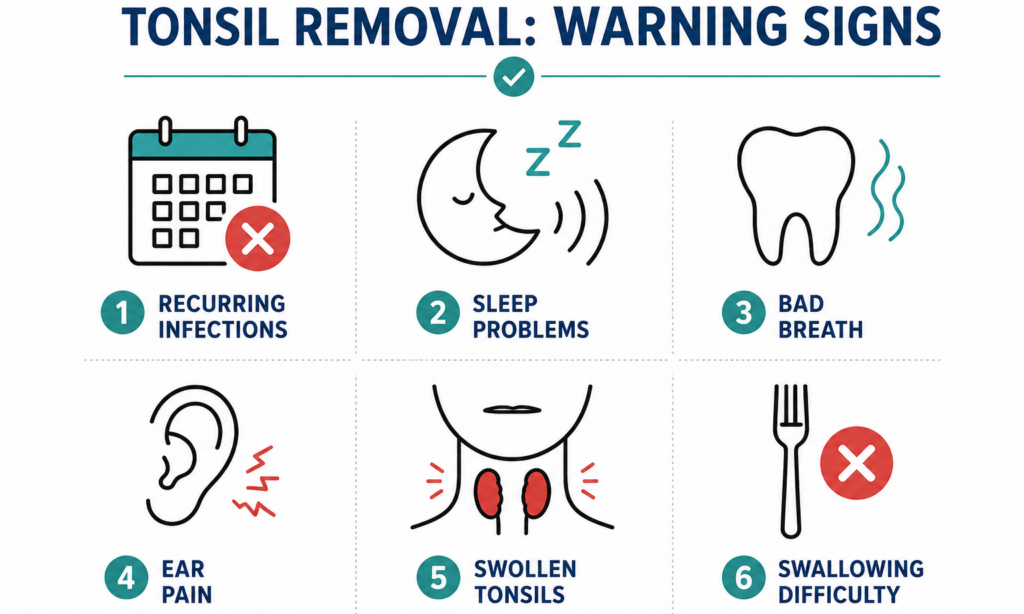
Adults often assume tonsil surgery is only for children. That is a common misconception. Adults develop signs you need your tonsils removed that are just as serious, and sometimes more so.
Watch for these warning signs:
- Throat infections that require antibiotics multiple times a year
- Tonsils that stay visibly swollen between infections
- Persistent bad breath that returns even after regular dental care
- Ear pain that traces back to ongoing throat soreness
- Difficulty fully opening your mouth during a flare-up
- Daytime fatigue caused by poor sleep from nighttime breathing problems
A combination of several of these signs is a clear reason to see an ENT specialist soon.
What the Tonsil Removal Operation Involves
A tonsil removal operation is performed under general anesthesia and takes about 30 to 45 minutes. Most patients go home the same day.
Your surgeon removes both tonsils through your mouth. No external cuts or outside incisions are needed. Before surgery, your doctor reviews your medications, allergies, and health history. You will be asked to stop eating and drinking the night before to prepare safely for anesthesia.
According to established tonsillectomy guidelines, the procedure is considered safe and well-tolerated in adults when performed by a trained ENT surgeon.
What to Expect During Tonsil Surgery Recovery

Recovery from tonsil surgery in adults takes about 10 to 14 days. Adults tend to have a harder recovery than children because adult tissue heals more slowly.
Here is what a typical recovery looks like:
- Days 1 to 3. The most intense pain. Cold fluids, ice chips, and prescribed pain medicine bring relief.
- Days 4 to 6. Pain can briefly spike as surgical scabs begin to form in the throat.
- Days 7 to 10. Scabs start to loosen and throat discomfort fades steadily.
- Days 10 to 14. Most people feel close to normal and can return to desk work.
Recommended foods during recovery include yogurt, mashed potatoes, scrambled eggs, and cold smoothies. Avoid crunchy, spicy, or hard-to-chew foods until your throat is fully healed.
When to See a Doctor
Make an appointment with your doctor or an ENT specialist if any of these apply:
- Three or more throat infections in the past year
- A throat infection that does not clear up after a full antibiotic course
- Nightly loud snoring that affects your sleep quality
- Difficulty swallowing solid food on a regular basis
- One tonsil that looks bigger or different from the other
- Bad breath that keeps coming back despite good oral hygiene
After tonsil surgery, go to the emergency room right away if you experience heavy bleeding from the throat, a high fever, or serious trouble breathing. These are urgent warning signs that need immediate care.
Sometimes it is hard to tell what is causing recurring throat symptoms. Our article on how to tell the difference between a cold and allergies can help you rule out overlapping causes before your appointment.
Frequently Asked Questions
Why should you remove tonsils if they support your immune system?
Tonsils play an immune role mainly during early childhood. By adulthood, other tissues in your body fully take over that function. When your tonsils cause repeated infections or airway problems, removing them offers clear health benefits. Studies show adults do not face higher infection rates after a tonsillectomy.
How do you know if you need your tonsils out?
Track your throat infections over the past year or two. If you have had seven or more in a single year, or five or more per year for two years in a row, you likely meet the standard clinical criteria for tonsil surgery. Other red flags include chronic bad breath, visibly swollen tonsils, and nightly snoring linked to breathing difficulty.
Are tonsils necessary for adults?
No, tonsils are not strictly necessary in adults. Your body has many other lymphoid tissues that handle immune defense after tonsil removal. When your tonsils cause more harm than good through repeated illness or airway blockage, removing them is a safe and medically supported option.
What does the tonsil removal operation involve?
Tonsil surgery takes about 30 to 45 minutes under general anesthesia. Your surgeon removes both tonsils through your mouth with no outside incisions needed. Most patients go home the same day. Recovery at home takes about 10 to 14 days for adults.
What are the signs you need your tonsils removed as an adult?
Key signs include recurring throat infections, persistent tonsil stones, bad breath that does not go away, snoring and poor sleep, difficulty swallowing, and ear pain linked to ongoing throat soreness. If one tonsil looks noticeably different or larger than the other, see a doctor promptly to rule out tonsil cancer.
Can tonsils grow back after tonsil surgery?
In rare cases, a small amount of tonsil tissue can regrow if a fragment was left behind during surgery. This is uncommon after a complete tonsillectomy. If you notice returning swelling or symptoms after your procedure, contact your doctor right away.
Written by Theo James
The information on this page is for general educational purposes only and is not a substitute for professional medical advice, diagnosis, or treatment. Always talk with your doctor or another qualified healthcare provider about any questions you have regarding a medical condition. Never ignore professional medical advice or delay seeking it because of something you read on the internet.