
The cinnamon in your kitchen is almost certainly cassia, the cheaper, stronger type that carries meaningful amounts of coumarin, a compound linked to liver concerns at high daily doses. Ceylon cinnamon contains only trace coumarin, which makes it the safer pick for anyone using cinnamon every day. Here is how to tell them apart and how much of each is safe.
You sprinkle cinnamon on your oatmeal and never think twice about it. For occasional baking, the type genuinely does not matter. The moment cinnamon becomes a daily habit, for blood sugar, for tea, for a supplement routine, the type becomes the most important thing on the label.
Ceylon vs Cassia at a Glance
| Feature | Ceylon Cinnamon | Cassia Cinnamon |
| Common source | Sri Lanka, southern India | China, Indonesia, Vietnam |
| Flavor | Mild, slightly sweet | Strong, slightly bitter |
| Coumarin content | Trace amounts | Substantially higher |
| Stick appearance | Thin, papery layers rolled like a cigar | One thick, hard curl |
| Price | Higher | Lower, the grocery store default |
| Best for | Daily use, supplements, tea | Occasional baking and cooking |
What Is Coumarin and Why Does It Matter
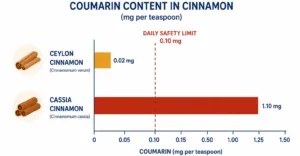
Coumarin is a natural plant compound found in cassia cinnamon in meaningful amounts, and in Ceylon cinnamon only in traces. The National Center for Complementary and Integrative Health links coumarin to liver concerns in large or long term amounts.
European food safety authorities set the tolerable daily intake for coumarin at 0.1 milligrams per kilogram of body weight. For an average adult, regular heaped teaspoons of cassia cinnamon can approach or pass that line, especially when the same person also takes a cinnamon supplement. Occasional cassia in a recipe is nowhere near a concern. A daily cassia habit, stacked with a cassia based capsule, can be.
That is the entire practical difference between the two types. Ceylon removes the question. With trace coumarin, daily Ceylon use stays far below any threshold, which is why it is the standard recommendation for anyone using cinnamon as more than an occasional spice.
People with existing liver disease should treat cassia with particular caution, and yellowing skin or eyes while using cinnamon heavily is a reason to see a doctor promptly.
How to Tell Which Cinnamon You Have
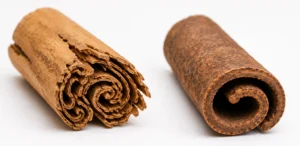
Labels rarely say “cassia.” Here is how to identify your cinnamon in ten seconds.
Check the sticks first. A Ceylon stick is made of many thin, papery layers rolled together, soft enough to crumble by hand, like a rolled newspaper. A cassia stick is one thick, hard curl of bark that you could not break with your fingers.
Check the label’s origin. “Product of Sri Lanka” or the words “Ceylon cinnamon” or “true cinnamon” mean Ceylon. “Product of China, Indonesia, or Vietnam,” or the species name Cinnamomum cassia, means cassia. A jar that just says “cinnamon” with no origin is almost always cassia.
Check the price. Ceylon typically costs two to three times more. A bargain price on a big jar is cassia, every time.
For ground cinnamon, color offers a weak clue, Ceylon runs lighter tan and cassia darker reddish brown, but origin on the label is the only reliable check once the bark is ground.
Does Cinnamon Actually Lower Blood Sugar?
This is the reason most people move from sprinkling cinnamon to dosing it daily, so the evidence deserves an honest summary.
A 2025 review in Frontiers in Nutrition pooled data from 21 separate meta analyses and tied cinnamon supplementation to lower fasting blood sugar and lower total cholesterol, with the strongest results at higher doses over two months or less.
Context matters just as much. Mayo Clinic notes results vary widely across studies because doses and cinnamon types differ. The American Diabetes Association says evidence is not strong enough to recommend cinnamon as routine treatment for type 1 or type 2 diabetes. And the Cleveland Clinic is direct that cinnamon does not approach the effectiveness of prescribed diabetes medication.
The takeaway: cinnamon may offer a small supporting effect alongside a healthy diet, and it should never replace medication. And if you do take it daily for this purpose, the coumarin math above is exactly why that daily habit should be Ceylon, not cassia. Beetroot powder is another kitchen supplement studied for heart and blood pressure support with a similar “supporting role, not treatment” verdict.
Beyond blood sugar, research points to a familiar supplement pattern: antioxidant activity, possible modest effects on cholesterol, triglycerides, and inflammation markers, and natural antibacterial properties in lab studies. Promising directions, none of them proven treatments.
How Much Cinnamon Is Safe Per Day
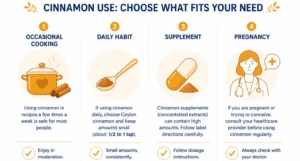
- As an occasional spice in cooking: either type is fine for most healthy adults, no measuring needed
- As a daily habit, up to about a teaspoon: choose Ceylon and the coumarin question disappears
- As a supplement: check the label for the species. Capsules made from Cinnamomum cassia carry the same coumarin load in concentrated form. Ceylon based or coumarin-free extracts exist, and the label should say so
- During pregnancy: normal food amounts are considered fine, but large amounts and concentrated supplements are not recommended. Check with your doctor
- With medications: cinnamon may interact with certain drugs, including some anticancer medications. Ask your pharmacist before adding supplements
Large amounts of any cinnamon can trigger stomach upset, mouth irritation, or allergic reactions in sensitive people.
Cinnamon Oil Is a Different Product Entirely
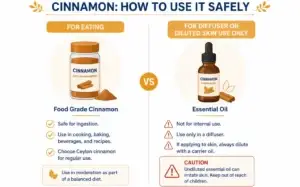
Cinnamon essential oil is far more concentrated than the spice and follows different rules. Lab research shows it can fight certain bacteria and fungi, which is why it appears in oral care products in small regulated amounts.
Use it only in a diffuser for scent or diluted in a carrier oil for skin. Never apply undiluted cinnamon oil to skin, since it can cause burns, and never swallow essential oil as a substitute for the spice. Food grade cinnamon is for eating, the oil is not. Concentrated traditional products deserve this same caution across the board, as our guide on shilajit and ashwagandha covers for another category.
Cinnamon Tea, Honey Mixes and Canela Traditions
Cinnamon tea is the easiest daily format: steep a Ceylon stick or half a teaspoon of ground Ceylon in hot water for 10 minutes. It is caffeine free, naturally sweet, and a pleasant evening ritual. Hibiscus tea is another antioxidant rich option often brewed alongside it.
Cinnamon and honey appear together in countless home remedies. Both carry antioxidants, and honey has its own history in cough relief, but the combination is not a proven cure for anything. One hard rule sits above the folklore: never give honey to a baby under 12 months, including in mixtures, because of the infant botulism risk the CDC warns about.
Canela, the Spanish word for cinnamon, carries deep roots in Latin American kitchens, in coffee, rice pudding, and warm milk drinks. The cultural value is real. The clinical proof for treating conditions is not, and the NCCIH’s review found no clear support for cinnamon as treatment for any specific condition.
Cinnamon sticks are for steeping and simmering, not chewing. If you want the flavor without the bark, ground cinnamon or a strained tea wins.
When to See a Doctor
- Hives, swelling, or trouble breathing after eating cinnamon, which needs emergency care
- Ongoing stomach pain or digestive changes that do not improve, which can also signal conditions like gastritis
- Yellowing skin or eyes, which can signal liver trouble, especially with heavy cassia or supplement use
- Blood sugar that stays high despite diet changes and medication
Frequently Asked Questions
How do I know if my cinnamon is Ceylon or cassia?
Check the sticks: Ceylon rolls in many thin, papery layers you can crumble by hand, cassia is one thick, hard curl. On labels, Sri Lanka origin or the words “Ceylon” or “true cinnamon” mean Ceylon, while China, Indonesia, or Vietnam origin means cassia. A jar that just says “cinnamon” at a bargain price is almost always cassia.
How much cassia cinnamon is too much per day?
European food safety guidance sets the coumarin limit at 0.1 milligrams per kilogram of body weight daily, a line that regular heaped teaspoons of cassia can approach for an average adult. Occasional cassia in cooking is not a concern. If you use cinnamon daily or take a cinnamon supplement, switching to Ceylon removes the question entirely.
Is Ceylon cinnamon really worth the extra price?
For daily use, yes. Its trace coumarin content makes quantity a non issue, and its milder flavor suits drinks and daily recipes. For occasional baking a few times a month, cassia is fine and the savings are real.
Can cinnamon lower blood sugar?
Some research links cinnamon to modest drops in fasting blood sugar, including a 2025 review pooling 21 meta analyses. The American Diabetes Association still says evidence is not strong enough to recommend it as treatment. Treat it as a small supporting habit alongside diet, never as a replacement for prescribed medication.
Is cinnamon safe during pregnancy?
As a normal food spice, yes. Large amounts and concentrated supplements are not recommended during pregnancy, and that includes heavy daily Ceylon use. Check with your doctor before adding any cinnamon supplement.
Is cinnamon tea good for you?
It is a caffeine free, naturally sweet drink that carries cinnamon’s antioxidants into hot water, and it makes a calm evening ritual. Brew it with Ceylon if you drink it daily. No tea is a treatment for any condition, but as daily habits go, this is a pleasant, low risk one.