
Itchiness on the breast is a strange thing to feel and an even stranger thing to talk about. You notice it in the shower, or right when you take off your bra at night.
Suddenly it is all you can think about. Most of the time this itch comes from something simple, like dry skin, a new detergent, or shifting hormones.
What Itchiness on the Breast Really Means
Skin on the chest and breast area is thin and sits close to nerve endings. So it reacts fast to dryness, friction, sweat, and hormone shifts. This skin also stretches and rubs against fabric all day. Because of that, it picks up irritation quicker than skin on your arm or leg. For most people, itchiness on the breast is a skin response, not a breast health problem. The cause usually sits in the top layer of skin, not the breast tissue itself.
That said, your body is telling you something when it itches. It might be flagging a fabric that does not suit you, or a soap that is too harsh. It could also point to a hormone shift tied to your cycle or a pregnancy. Reading those signals correctly is the first step toward real relief instead of guessing.
What Causes Itchy Boobs
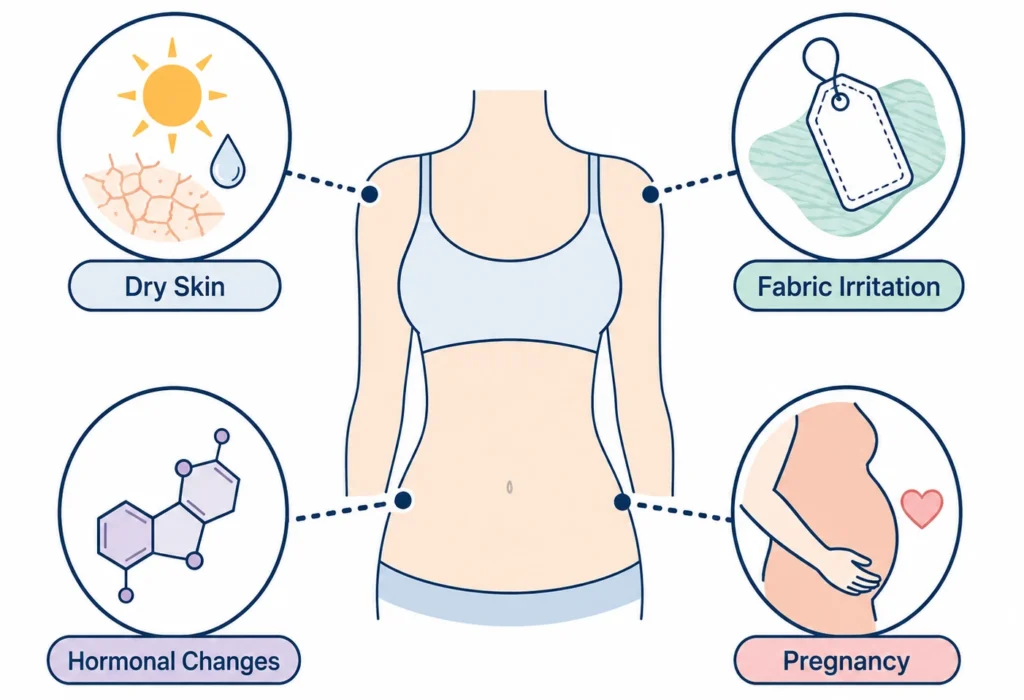
Itchy boobs almost always trace back to one of a handful of triggers. Once you know the usual suspects, you can match your own pattern to a likely cause within minutes.
Dry Skin and Everyday Irritants
Dry skin is the single most common reason breasts itch. Cold months and long hot showers make it worse. Soap strips natural oils faster than people expect, and fragranced body wash adds to the problem. A simple fix is switching to a fragrance free cleanser and applying lotion while skin is still damp.
Allergic Reactions and Contact Dermatitis
New bras, laundry detergent, dryer sheets, and scented lotions are common triggers for contact dermatitis on the chest. Cleveland Clinic lists synthetic fabrics, nickel underwires, latex straps, and perfume as frequent culprits behind this reaction. Swapping to cotton and fragrance free products often calms things down within a week or two.
Hormonal Changes Throughout the Month
Estrogen and progesterone rise and fall across your cycle. Breast tissue is one of the first places that shows it. Many women notice itchiness on the breast right before their period, alongside tenderness and slight swelling. Puberty and menopause bring similar hormone swings, so itching can show up at either end of life too.
Pregnancy and Breastfeeding
Pregnant skin stretches quickly to support fast tissue growth, and stretched skin itches as it adjusts. Breast tenderness is one of the most common early pregnancy symptoms, often within the first couple weeks after conception. Itching tends to follow that same hormonal pattern. Nursing adds friction and moisture from feeding and pumping, which can leave nipples and nearby skin irritated.
Yeast Infections and Heat Rash
Warm, damp skin folds are a perfect home for Candida yeast and trapped sweat. This combination explains a lot of cases where someone feels itching like crazy under the breast. Heat rash forms when sweat glands get blocked under a tight bra. It shows up most during workouts or hot weather.
Eczema and Psoriasis on the Chest
Both eczema and psoriasis can flare on the chest and produce dry, scaly, intensely itchy patches. According to Cleveland Clinic, eczema affects roughly 2 to 10 percent of adults. That makes it far from rare on any part of the body, including the breasts. The same patches can also show up as itchy feet or on other parts of the body. These conditions usually respond well to fragrance free moisturizers and, when needed, a mild steroid cream from your doctor.
Why Does It Itch Like Crazy Under Your Breast
Under breast itching has its own set of causes, much like itchy armpits on the other side of the body. Both areas trap heat, sweat, and moisture all day long. Skin rubbing against skin in that crease creates friction, and friction alone can trigger irritation called intertrigo. Add sweat and a few hours in a tight bra. Yeast or bacteria then get the warm, wet environment they need to multiply. The same warm, damp fold can also lead to skin tags forming over time.
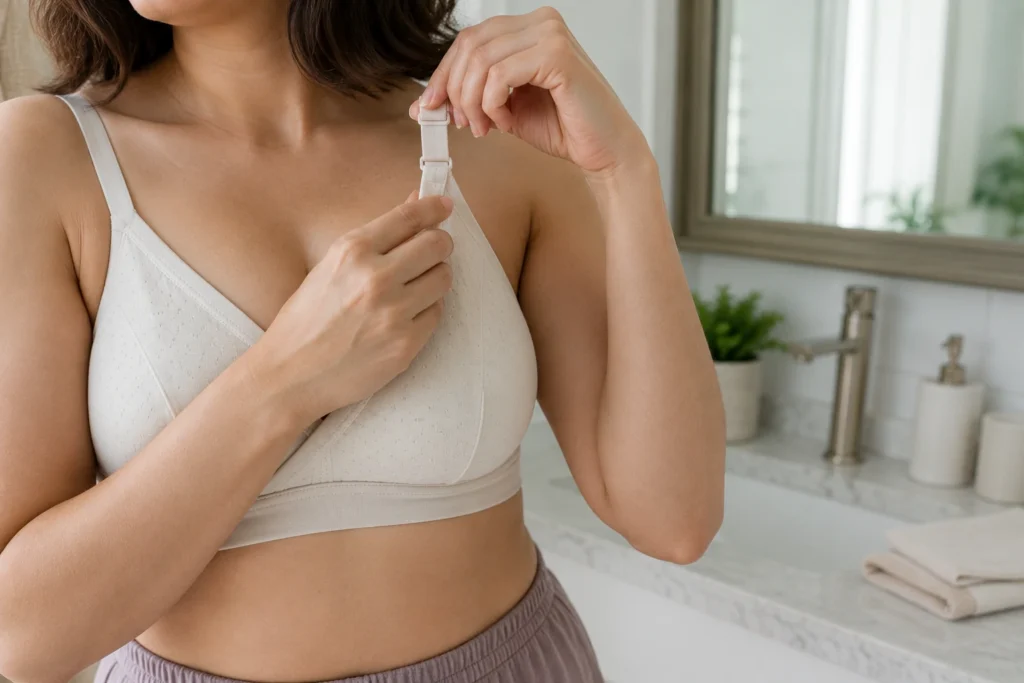
A few habits make a real difference.
- Dry the area fully after a shower or workout, including a few extra seconds with a towel under each breast.
- Choose breathable cotton bras over synthetic blends, especially for daily wear.
- Change out of damp workout clothes as soon as possible instead of staying in them.
- Use a fragrance free antifungal powder if sweating is heavy and frequent.
Redness, a rash, or a sour smell along with the itch points to one likely cause. A yeast or bacterial infection is probably to blame, and a doctor can confirm it quickly with a simple look.
The Itch Scratch Cycle and Why Scratching Your Breast Makes It Worse
Scratching feels like instant relief, but it actually damages the skin barrier. That damage triggers more histamine release, which brings the itch right back, often stronger. This loop is called the itch scratch cycle. Breast skin is thin enough that it shows the damage fast, through redness, small cuts, or thickened patches.
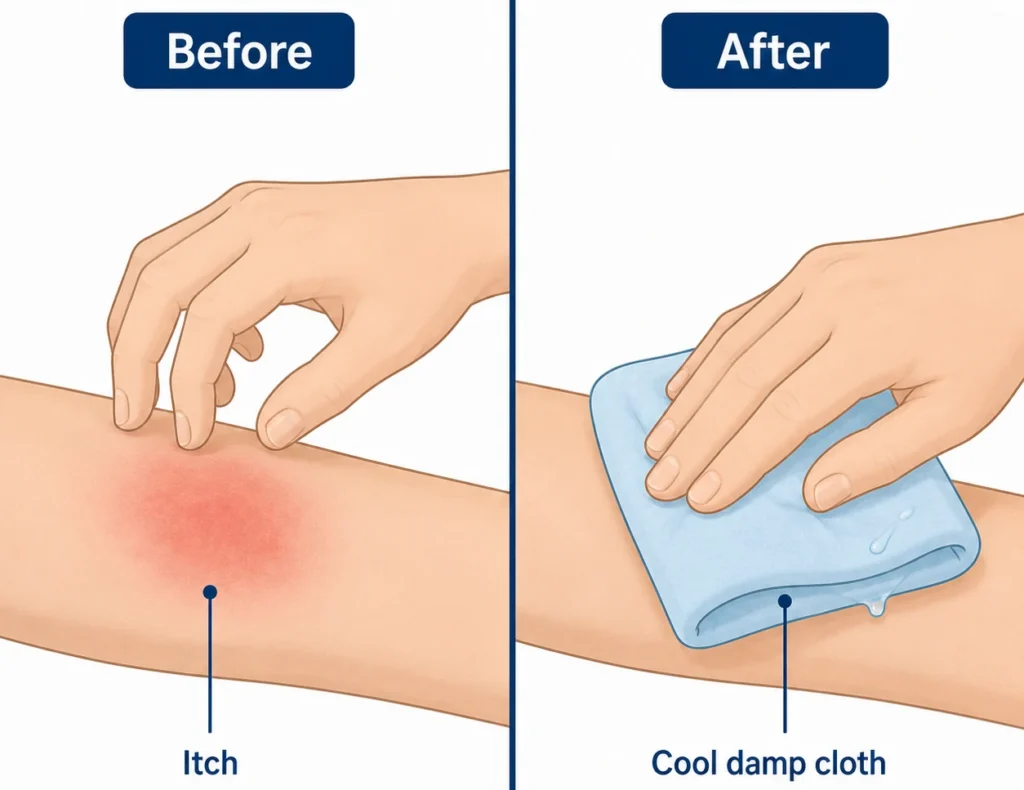
Try these steps before reaching for your nails.
- Press a cool, damp cloth on the area for a minute or two instead of scratching.
- Pat, do not rub, when drying off after a shower.
- Keep nails short during a flare so accidental scratching causes less damage.
- Apply a fragrance free moisturizer right after the urge to scratch hits.
When Itchy Breasts Could Signal Something More Serious
Itching on its own is almost never a sign of breast cancer. Most cases trace back to skin, not breast tissue. Still, two rare conditions are worth knowing about, so you can act fast if something feels off.
Paget disease of the breast is a rare cancer that starts in the nipple. According to Mayo Clinic, it often looks like a stubborn case of eczema that will not clear up. The National Cancer Institute also lists nipple itching, crusting, and discharge among the early symptoms. Inflammatory breast cancer is rare as well. It makes up about one to five percent of breast cancers, per the American Cancer Society. It also tends to move fast, causing redness and swelling within weeks. The skin can also look pitted, like an orange peel.
| Common, Everyday Itch | Signs That Need a Doctor’s Look |
|---|---|
| Comes and goes with weather, soap, or your cycle | Stays in one exact spot on one breast only |
| Responds to lotion or a fabric change within days | Skin looks pitted, dimpled, or thickened like orange peel |
| No change in breast shape, size, or skin color | Nipple changes shape, flattens, or starts leaking fluid |
| Both breasts are affected fairly evenly | A new lump is present along with the itch |
| Mild irritation, no real pain | Redness covers a third or more of one breast |
When to See a Doctor for Itchy Breasts
Most itchy breasts clear up with simple skin care. Still, a few signs mean it is time to book an appointment rather than wait it out. Reach out to your doctor if you notice any of the following signs.
- Itching lasts more than two weeks despite moisturizer and fragrance free products.
- The itch sits in one spot on one breast instead of spreading evenly.
- You see skin dimpling, thickening, or a texture like an orange peel.
- A nipple flattens, turns inward, or releases fluid that is not breast milk.
- A new lump shows up along with the itch.
- Redness, warmth, or swelling spreads quickly across the breast.
Acting on these signs quickly matters. Both Paget disease and inflammatory breast cancer respond best to early treatment. Your doctor can usually tell within one visit whether you need further testing or simple skin care.
How to Soothe Itchy Breasts at Home
Once a serious cause has been ruled out, most itchiness on the breast responds well to a few steady habits. Small daily changes tend to beat any single product.
- Switch to fragrance free soap, detergent, and lotion for at least two weeks to see if symptoms ease.
- Wear breathable cotton bras and swap out underwire styles that rub or dig in.
- Moisturize right after showering while skin is still slightly damp.
- Apply a thin layer of over the counter hydrocortisone cream for short term relief from eczema flares.
- Keep the under breast area dry, especially after exercise or in humid weather.
- Avoid hot showers, since they strip natural oils and make dry skin itch more.
Most people notice improvement within one to two weeks, once they remove the trigger and stick with gentle products.
Frequently Asked Questions
Why do my breasts itch?
Most breast itching comes from dry skin, sweat, or a new soap or detergent. Hormone shifts tied to your cycle, pregnancy, or menopause play a role too. Skin conditions like eczema and yeast infections in skin folds are also common causes. Itching alone is rarely a sign of a serious problem.
What does it mean when your boob is itchy?
An itchy boob usually means the skin is reacting to dryness, friction, or an irritant. It is rarely a sign of disease inside the breast itself. Your hormones can also trigger itching around your period or during pregnancy. Pay closer attention only if the itch stays in one exact spot or comes with skin or nipple changes.
Why does it itch like crazy under my breast?
The skin fold under the breast traps heat, sweat, and moisture. That combination creates the perfect setup for friction, yeast, and heat rash. It often feels far more intense than itching elsewhere on the chest. Keeping the area dry and wearing breathable cotton bras usually brings quick relief.
What causes itchy boobs?
The most common causes are dry skin, contact dermatitis from fabrics or detergent, and hormone changes. Pregnancy related skin stretching, yeast infections, and eczema or psoriasis also play a part. Most of these clear up with fragrance free products and a few habit changes. Stubborn or one sided itching deserves a doctor’s look.
Is scratching my breast skin bad for it?
Yes, scratching breaks the skin barrier and releases histamine. That release brings the itch back stronger, in a loop doctors call the itch scratch cycle. Repeated scratching can also lead to small cuts, thickened skin, or infection. Cool compresses and fragrance free moisturizer work better than scratching for lasting relief.
Can itchy breasts be a sign of breast cancer?
Itching by itself is almost never a sign of breast cancer, since skin irritation explains nearly every case. In rare situations, persistent one sided itching can point to something more. Watch for it paired with nipple changes, a lump, or skin that looks pitted. Any of those combined signs should be checked by a doctor right away.