
Mineral water is the only bottled water required to contain at least 250 parts per million of naturally occurring minerals, which is why it delivers meaningful calcium and magnesium while spring and purified water mostly do not. For healthy hydration any of them works. If you want your water to contribute nutrients, mineral water is the only category that reliably does.
Mineral water has become one of the most popular bottled water choices in the US, and it usually costs more than the bottles next to it. Whether that premium buys you anything depends entirely on what is dissolved in it. Here is the comparison, down to the brand level.
The Four Water Types Compared
| Feature | Mineral Water | Spring Water | Purified Water | Tap Water |
| Source | Protected underground mineral source | Natural underground spring | Municipal tap, heavily filtered | Municipal supply |
| Mineral content | 250 ppm or higher, by FDA rule | Under 250 ppm, varies by season | Mostly stripped in processing | Low, varies by city |
| Calcium and magnesium | Meaningful amounts | Low and variable | Near zero | Low |
| Added minerals allowed | No, natural only | No | Sometimes added back for taste | Fluoride commonly added |
| Typical cost | Highest | Moderate | Low to moderate | Cheapest |
The FDA sets the defining standard: mineral water must contain at least 250 parts per million of dissolved mineral solids, and those minerals must come from the natural source itself, with nothing added after bottling.
That standard is what separates it from purified brands like Aquafina, which is municipal tap water run through multiple filtration steps. Purified water is perfectly good hydration, but it carries almost no minerals. Spring water sits in between: natural source, real but lower and seasonally shifting mineral content.
How the Brands Compare on Minerals
Every mineral water lists its profile on the label, and the differences between brands are bigger than most people expect. These are approximate label values in milligrams per liter, which can vary slightly by lot.
| Brand | Calcium | Magnesium | Sodium | Notable For |
| Gerolsteiner | ~348 | ~108 | ~118 | Highest calcium and magnesium, bicarbonate rich |
| San Pellegrino | ~174 | ~52 | ~33 | Balanced profile, sparkling |
| Perrier | ~150 | ~4 | ~10 | Calcium with very low sodium, sparkling |
| Evian | ~80 | ~26 | ~7 | Gentle profile, very low sodium |
| Ice Mountain (spring) | low | low | ~2.5 | Shows how much lower spring water sits |
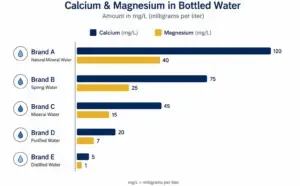
Two takeaways. One liter of Gerolsteiner covers roughly a third of an adult’s daily calcium needs, while a liter of a typical spring water covers almost none. And the sodium spread matters in the other direction, which the low sodium section below covers.
What Those Minerals Actually Do
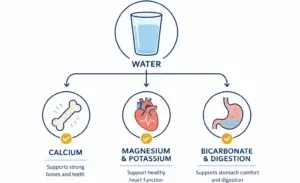
Calcium for bones. Adults between 19 and 50 need about 1,000 milligrams of calcium daily, and those over 50 need up to 1,200. A peer reviewed trial in the NIH database found that calcium and magnesium rich water supports musculoskeletal health, and research confirms your body absorbs calcium from mineral water as effectively as from dairy. That makes high calcium brands a genuinely useful supplemental source for people who limit dairy.
Magnesium and potassium for heart and blood pressure. A four week study in 70 adults with borderline hypertension found that one liter of mineral water daily produced meaningful blood pressure reductions. Another study in postmenopausal women found two months of daily mineral water intake lowered LDL and raised HDL cholesterol. The American Heart Association highlights magnesium as a key nutrient for heart function. Proper hydration also supports heart rate stability during illness, as our guide on elevated heart rate when sick explains.
Magnesium and bicarbonate for digestion. The NIH lists magnesium as essential for over 300 biochemical reactions, including the muscle contractions that keep your gut moving. Magnesium also draws water into the intestines, supporting regularity. Bicarbonate rich waters can help neutralize excess stomach acid, a practical option for mild heartburn. For persistent stomach trouble, our guide on gastritis symptoms and treatment covers when diet changes are not enough.
Which Water for Which Goal
- Bone support: calcium above 150 mg per liter. Gerolsteiner is the standout example
- Heart and muscle support: magnesium above 50 mg per liter. Gerolsteiner and San Pellegrino qualify, Perrier and Evian do not
- Low sodium diet: Evian (~7 mg/L), Perrier (~10 mg/L), or spring waters like Ice Mountain (~2.5 mg/L)
- Mild heartburn: bicarbonate rich brands
- Plain daily hydration: any of the four types, and the cheapest one you will drink consistently wins
pH is a separate question from minerals, and marketing often blurs the two. Our guide on alkaline water covers why the pH number matters less than the labels suggest.
Low Sodium Mineral Water and Who Needs It
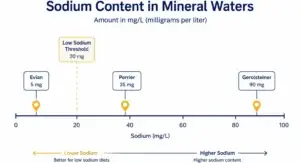
Some mineral waters carry substantial sodium, which matters for anyone managing high blood pressure, heart conditions, or kidney disease. If your doctor has you on a low sodium diet, look for under 20 milligrams of sodium per liter, and note that a high mineral brand like Gerolsteiner sits far above that line while Evian and Perrier sit comfortably under it. The label lists sodium per liter or per serving on every bottle.
What About Vitamin Water?
Standard vitamin water contains up to 32 grams of added sugar per bottle, a load that rivals soda and, over time, contributes to weight gain, elevated LDL cholesterol, and insulin resistance. Zero sugar versions swap in sweeteners like stevia and erythritol, avoiding the sugar problem, though long term research on sweeteners and gut health remains mixed. Mineral water delivers natural electrolytes with zero sugar and no additives, which makes it the cleaner daily choice by a wide margin.
How to Add Minerals to Water at Home
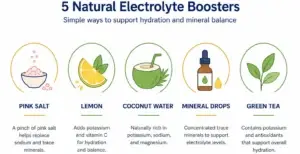
You do not need bottled mineral water every day, especially if you use a reverse osmosis or heavy filtration system that strips minerals.
- Add a small pinch of Himalayan pink salt, which carries trace calcium, magnesium, and potassium
- Squeeze fresh lemon or lime juice for potassium and a little magnesium
- Mix in a small amount of coconut water for natural electrolytes
- Use liquid mineral drops or electrolyte powder made for remineralizing filtered water
- Steep green tea, which releases potassium, calcium, and phosphorus naturally
For daily mineral intake beyond water, our comparison of shilajit and ashwagandha covers a mineral rich traditional supplement and when it makes sense.
When to See a Doctor
Mineral water is safe for most healthy adults daily. Talk to your doctor first if you have high blood pressure, heart failure, or kidney disease, follow a supervised low sodium or low potassium diet, deal with recurring kidney stones, are pregnant with specific mineral needs, or take medications like diuretics that interact with electrolyte levels. And never treat any water as a substitute for prescribed care.
Frequently Asked Questions
Which mineral water has the most calcium and magnesium?
Among widely available brands, Gerolsteiner leads with roughly 348 mg of calcium and 108 mg of magnesium per liter, based on label values. San Pellegrino offers a balanced middle profile. Evian and Perrier sit much lower on magnesium, so if heart and muscle support is your goal, the label numbers matter more than the brand prestige.
Is mineral water better than spring water?
For mineral intake, yes. Spring water comes from a natural source but typically carries under 250 ppm of dissolved minerals, with a profile that shifts by season. Mineral water is required to hold 250 ppm or more from its source. For plain hydration, both are fine, and spring water usually costs less.
Is sparkling mineral water as healthy as still?
The minerals are the same, so the health value carries over. Two caveats: carbonation can aggravate reflux or bloating in sensitive people, and sparkling water is slightly acidic, though far less than soda and not a meaningful enamel concern at normal intake. Choose whichever you will actually drink daily.
Is mineral water good for you every day?
Yes, for most healthy adults. It provides calcium, magnesium, and other minerals in a form your body absorbs well. Pick a low sodium brand if your doctor has you limiting salt, and check with your doctor if you have kidney disease or take diuretics.
What is Aquafina water?
Aquafina is purified municipal tap water processed through multiple filtration steps. It is neither mineral water nor spring water, and it carries almost none of the natural mineral content that gives mineral water its bone and heart benefits. It hydrates fine, it just does not contribute nutrients.
Is vitamin water good for you?
Standard vitamin water carries up to 32 grams of added sugar per bottle, comparable to soda. Zero sugar versions avoid that but rely on sweeteners with mixed long term research. For daily hydration with actual nutrients and no sugar, mineral water is the stronger choice.