
Pain inside the belly button can feel confusing because the navel sits so close to several different organs and tissues. Some people feel a dull ache after eating. Others notice redness, swelling, or a bad smell that points to infection. A few feel a soft bulge that gets worse with coughing or lifting.
The good news is that most cases have a clear cause and a straightforward fix. This guide walks through every common reason for pain inside the belly button, including infection, hernia, pregnancy, and digestion, so you know exactly what you are dealing with and when it is time to call a doctor.
What Causes Pain Inside the Belly Button
Your belly button is a small, folded scar left over from your umbilical cord. Because it has creases and sits close to the abdominal wall, several unrelated problems can all show up as pain inside the belly button.
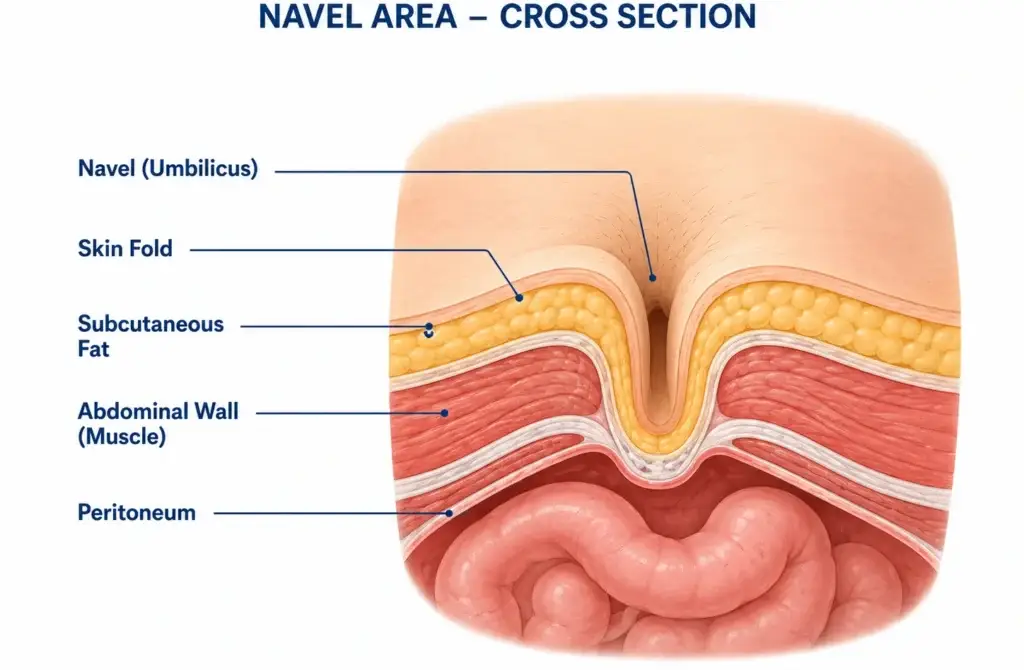
Common causes include the following.
- Bacterial or yeast infection, often from trapped sweat, dirt, or a piercing
- An umbilical hernia, where tissue pushes through a weak spot near the navel
- Digestive issues like gas, bloating, or constipation
- Skin irritation from soap, lotion, or jewelry
- Pregnancy, as the uterus stretches the skin and tissue around the navel
- Poor hygiene that lets moisture build up in the folds of skin
Each of these has its own pattern of symptoms. The sections below break down how to tell them apart.
Signs of a Belly Button Infection
A belly button infection usually announces itself clearly. Watch for these signs together, since one alone rarely means much.
- Redness that spreads beyond the rim of the navel
- Swelling or warmth around the area
- A foul smell coming from the belly button
- Yellow, green, or cloudy discharge
- Itching or a burning feeling
- Pain when you touch or press the area
If you notice two or more of these at once, an infection is the most likely explanation for your belly button pain. The next few sections cover the two main types.
Bacteria Infection in the Belly Button
A tummy button infection caused by bacteria usually starts small. Sweat, lint, and dead skin collect in the fold, and bacteria that normally live harmlessly on your skin begin to multiply. Staphylococcus aureus is one of the most common culprits behind skin infections like this, according to the CDC.
A bacterial infection tends to look angry and inflamed fairly fast. You may notice thick discharge, a sharper pain than you would expect from simple irritation, and skin that feels hot to the touch. Fever is possible if the infection spreads.
Piercings raise the risk significantly, since the metal creates an open channel for bacteria to enter. People who are pregnant, have diabetes, or carry extra weight around the midsection also face a higher chance of bacterial infection, since the navel fold traps more moisture in those cases.
Belly Button Yeast Infection and Candidiasis in the Navel
A belly button yeast infection works differently than a bacterial one. Candida, a fungus that thrives in warm, damp spaces, causes candidiasis in the navel when moisture sits in the fold for too long. The Cleveland Clinic notes that this type of infection produces a bright red, intensely itchy rash rather than the sharper pain seen with bacteria.
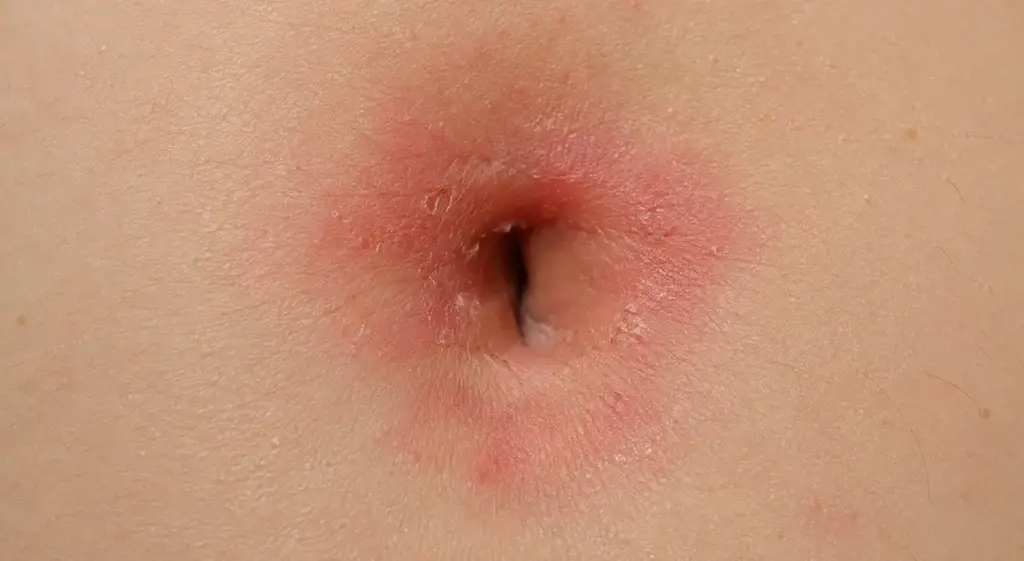
Yeast infections rarely produce the strong odor that bacterial infections do. Instead, you will likely see white or flaky discharge, along with skin that looks scaly or slightly raised. According to MedlinePlus, candida skin infections favor warm, creased areas of the body, which is exactly why the navel is such a common site.
Since the two infections look and feel different but share several overlapping symptoms, a side by side comparison helps.
| Feature | Bacterial Infection | Yeast Infection (Candidiasis) |
|---|---|---|
| Main symptom | Sharp pain, warmth | Intense itching |
| Discharge color | Yellow or green | White or clear |
| Smell | Often strong | Usually mild or absent |
| Skin appearance | Red, swollen | Red, scaly, flaky |
| Common trigger | Piercing, poor hygiene | Trapped moisture, sweat |
| Typical treatment | Antibiotic ointment or oral antibiotics | Antifungal cream or powder |
Keeping the navel dry, especially after workouts or showers, is one of the simplest ways to prevent both types. Readers managing recurring fungal issues elsewhere on the body may also want to look at our guide on yeast infection in men, since the same Candida species is often responsible.
Rash in the Umbilical Area
Not every rash umbilical area problem is an infection. Contact dermatitis from soap, lotion, laundry detergent, or nickel in a belt buckle or piercing can cause a belly button rash that looks similar to a mild infection.
The main difference is timing. A rash from irritation usually shows up shortly after contact with the trigger and calms down once you remove it. An infectious rash tends to get worse over a day or two instead of better.
A few practical checks help narrow things down.
- Did the rash appear right after a new soap, lotion, or piercing?
- Does it stay the same size, or is it spreading?
- Is there any discharge, or is the skin simply dry and flaky?
If the rash keeps spreading or starts to ooze, treat it as a likely infection rather than simple irritation, and follow the treatment steps later in this guide.
Bleeding From the Navel or Belly Button
Bleeding from navel belly button skin can be alarming, but it is often less serious than it looks. Small amounts of blood mixed into discharge usually mean the skin has cracked from scratching an itchy infection or rash.
Bleeding tummy button symptoms that come with a bad smell, thick discharge, or fever point toward an infection that has broken the skin’s surface. In babies, bleeding from the navel can also happen if the umbilical cord stump has not fully healed, and a pediatrician should confirm the cause.
Persistent or heavy bleeding is different from the occasional spot of blood. If the area is actively bleeding rather than just lightly spotting, or if bleeding continues for more than a day, it needs a same day medical evaluation. For general guidance on how a healing wound should look during recovery, our article on signs your wound is healing explains what normal healing looks like compared to a wound that is getting worse.
Other Causes of Pain Inside the Belly Button
Infection is not the only explanation. These three causes are frequently missed, even though they are common reasons for inside of belly button hurts complaints.
Umbilical Hernia
An umbilical hernia happens when tissue pushes through a weak spot in the abdominal wall near the navel, according to the Mayo Clinic. It often shows up as a soft bulge that grows more noticeable when you cough, laugh, or strain.
Unlike an infection, a hernia rarely causes redness or discharge. The pain instead feels like pulling or pressure, and it often eases when you lie down flat. A hernia that becomes hard, painful, and impossible to push back in needs emergency care right away.
Belly Button Pain During Pregnancy

As pregnancy progresses, the skin and connective tissue around the navel stretch to make room for the growing uterus. This stretching can cause a dull ache or a sharp pulling feeling directly at the belly button, especially in the second and third trimesters.
Some pregnant women also develop an umbilical hernia for the first time, since the extra pressure on the abdominal wall can expose a weak spot that never caused problems before. Our guide on cramps during pregnancy covers how to tell normal stretching discomfort apart from pain that needs a call to your OB.
Digestive Causes Like Gas and Constipation
Gas, bloating, and constipation put pressure on the abdominal wall from the inside, and that pressure often radiates straight to the belly button. This kind of pain tends to come and go with meals, and it often improves after a bowel movement or passing gas.
Chronic digestive discomfort in this area is worth a closer look, since ongoing bloating and pain can point to an underlying issue like gastritis. Our article on gastritis symptoms, causes, and treatment breaks down when stomach pain is more than everyday indigestion.
Treatment for Belly Button Infections Including Antibiotics for Navel Infection
Treatment depends entirely on which type of problem you have.
- Bacterial infections typically respond to a topical antibiotic ointment for mild cases. More significant infections may need oral antibiotics for navel infection, prescribed after a provider examines the area or sends a sample for testing.
- Yeast infections clear up with an antifungal cream, ointment, or powder applied directly to the navel, usually within about two weeks.
- Hernias are not treated with medication. Small, painless hernias in adults are sometimes monitored, while larger or painful ones typically need surgical repair.
- Irritation and rashes often resolve simply by removing the trigger and keeping the area clean and dry.
Never start antibiotics on your own without a diagnosis, since bacterial and fungal infections need completely different medications. A provider can confirm which one you have with a quick exam or a swab. Readers dealing with a different type of skin infection, such as one that develops after a new piercing or tattoo, may find our guide on infected tattoo signs and symptoms useful for spotting similar warning signs.
How to Prevent Belly Button Infections and Keep the Area Healthy

Most belly button problems are preventable with a few daily habits.
- Wash the navel gently with mild soap and water every day
- Dry the area completely after showering or sweating, since moisture feeds both bacteria and yeast
- Avoid scented lotions, powders, or soaps that can irritate the skin
- Clean any piercing exactly as your piercer instructs, and avoid touching it with unwashed hands
- Wear loose, breathable clothing if you sweat heavily around your midsection
- Keep maintaining a healthy skin pH balance, since disrupted skin pH makes it easier for yeast to take hold
Readers who deal with recurring yeast related issues elsewhere may also benefit from our guide on pH balance for women, since skin pH plays a similar protective role across the body.
When to See a Doctor or Get Emergency Care
Most belly button pain clears up with basic home care within a few days. Still, certain symptoms mean you should not wait it out.
Call your doctor if you notice:
- Pain that lasts more than three days without improving
- Discharge that keeps returning after cleaning
- A rash that spreads instead of shrinking
- Mild fever alongside redness or swelling
Seek emergency care right away if you experience:
- A hard, painful bulge that will not push back in
- Heavy or continuous bleeding from the navel
- High fever with chills
- Red streaks spreading away from the belly button
- Severe pain paired with vomiting or an inability to pass gas or stool
These emergency signs can point to a strangulated hernia or a spreading infection, both of which need prompt medical attention.
The Bottom Line
Pain inside the belly button has more possible causes than most people expect, ranging from a simple bacterial infection to an umbilical hernia or ordinary gas. Matching your specific symptoms, whether that is discharge, a bulge, bleeding, or a rash, to the sections above gives you a solid idea of what you are facing. When symptoms are mild, simple hygiene and time usually solve the problem. When they are not, a quick visit to your provider settles the question and gets you the right treatment fast.
Frequently Asked Questions
What causes pain inside the belly button?
Pain inside the belly button most often comes from a bacterial or yeast infection, an umbilical hernia, digestive gas, or skin irritation. Pregnancy can also stretch the tissue around the navel enough to cause discomfort. Matching your other symptoms, like discharge, a bulge, or bloating, helps identify the exact cause.
How do you know if your belly button is infected?
An infected belly button usually shows redness, swelling, discharge, and a noticeable smell. The skin often feels warm or tender to the touch. If two or more of these signs appear together, an infection is likely rather than simple irritation.
Can a yeast infection cause pain inside the belly button?
Yes, though yeast infections tend to cause intense itching more than sharp pain. Candida thrives in the warm, moist fold of the navel and produces a red, scaly rash that can feel tender when touched or scratched.
Why is my belly button bleeding?
Light bleeding often happens when scratching breaks the skin during an itchy infection or rash. Heavier or ongoing bleeding can signal a more serious infection or, in infants, an umbilical cord stump that has not fully healed, and it should be checked by a doctor.
Is pain inside the belly button a sign of a hernia?
It can be. An umbilical hernia causes a soft bulge near the navel that often worsens with coughing, laughing, or lifting. Unlike an infection, a hernia rarely produces redness or discharge, and pain usually eases when you lie down.
What antibiotics treat a navel infection?
Bacterial navel infections are typically treated with a topical antibiotic ointment for mild cases or oral antibiotics for more significant infections. A doctor needs to confirm the infection is bacterial rather than fungal before prescribing, since antifungal treatment works differently.
Why does pressing on my belly button hurt?
Tenderness when pressing can come from an infection, an inflamed hernia, or simple gas pressure pushing against the abdominal wall. If pressing reveals a firm bulge underneath, a hernia is the more likely explanation.
Can pregnancy cause pain inside the belly button?
Yes. As the uterus grows, it stretches the skin and connective tissue around the navel, which can cause a dull ache or a sharp pulling sensation. Some pregnant women also develop an umbilical hernia for the first time during this stretching.