
Standing in the kitchen with no real plan for dinner is a common problem for anyone starting the paleo diet.
A paleo meal plan solves that problem. It maps out real meals built from meat, fish, vegetables, fruit, and nuts. You do not need a nutrition degree to follow it. You just need a clear structure for what to buy and what to cook each day.
This guide walks through a full paleo meal plan from breakfast to dinner. By the end, you will have a sample menu, a grocery list, and a clear picture of the benefits.
What Is a Paleo Meal Plan
A paleo meal plan is a daily or weekly menu built around foods available before farming began. Think meat, fish, eggs, vegetables, fruit, nuts, and seeds. The idea comes from the Paleolithic era, so many people call it the caveman diet.
The goal is simple. You eat whole foods and skip anything that came from modern farming or food processing. That means grains, dairy, legumes, added sugar, and packaged snacks are mostly off the table.
A good paleo meal plan is not about starving yourself. It is about building meals around protein, produce, and healthy fat. Planning gets easier once you know the basic food list.
What to Eat on a Paleo Diet Meal Plan
A paleo diet meal plan centers on a short list of whole food groups. The Mayo Clinic notes that the diet favors lean meat, fish, fruit, and vegetables. It limits foods that became common only after farming spread.
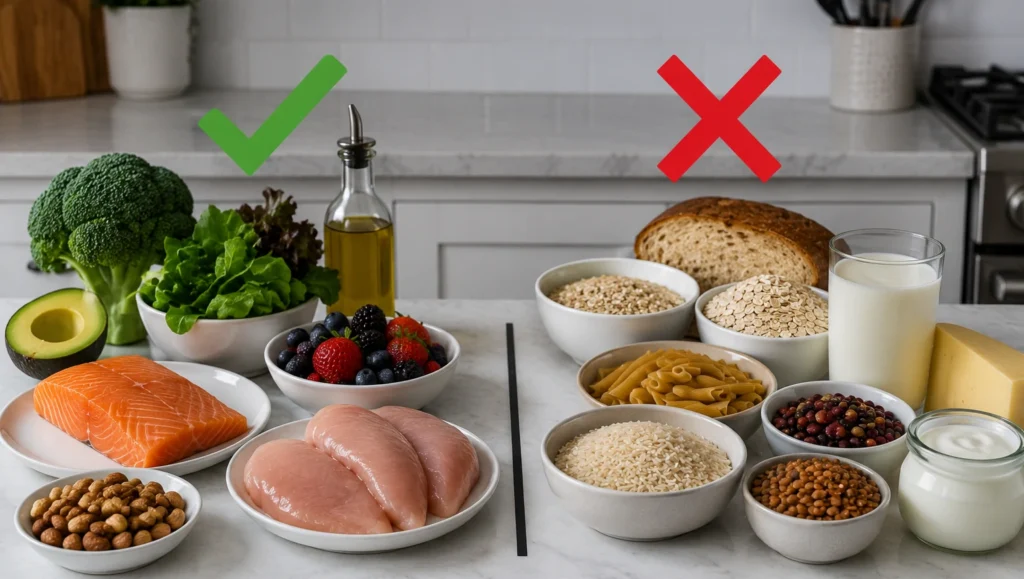
These are the foods to build your plate around.
- Lean meat and poultry, such as chicken, turkey, and grass fed beef
- Fish and seafood, including salmon, shrimp, and tuna
- Eggs
- Vegetables of every color, from leafy greens to peppers
- Fresh fruit like berries, apples, and citrus
- Nuts and seeds, in moderate portions
- Healthy oils, such as olive oil and coconut oil
Foods to skip on a paleo diet meal plan include grains, dairy, legumes, refined sugar, and most processed snacks. The Cleveland Clinic notes that potatoes, alcohol, and refined vegetable oils are also generally left off the plan.
Healthy fat matters more than people expect on paleo. Fatty fish and fish oil supply omega three fats that support heart health. Our guide to cod liver oil benefits breaks down how much you actually need from food or a supplement.
Is Dairy Paleo
Dairy is not part of a traditional paleo meal plan. Early humans did not milk animals, so dairy entered the human diet only after farming began. Because of this, most paleo plans leave out milk, cheese, and yogurt.
Some flexible versions make one exception for grass fed butter and ghee. They hold very little of the milk protein that causes problems for some people.
Cutting dairy raises a real question about calcium. The National Institutes of Health points out that leafy greens, canned fish with bones, and fortified foods can help. A paleo meal plan without dairy still needs a calcium source built in somewhere.
Are Beans Paleo
Beans are not part of a standard paleo diet meal plan. Legumes, including beans, peas, and lentils, arrived after the Paleolithic era, so classic paleo rules leave them out.
There is also a nutrition argument behind the rule. Beans contain lectins and phytates, compounds that can reduce mineral absorption and cause digestive discomfort for some people.
Even so, beans are hard to ignore nutritionally. MyPlate.gov lists beans, peas, and lentils as a source of both protein and fiber. Some flexible paleo eaters bring beans back in small amounts once they tolerate them well.
A Three Day Sample Paleo Meal Plan
Adjust this simple three day sample to your own taste and portion needs.
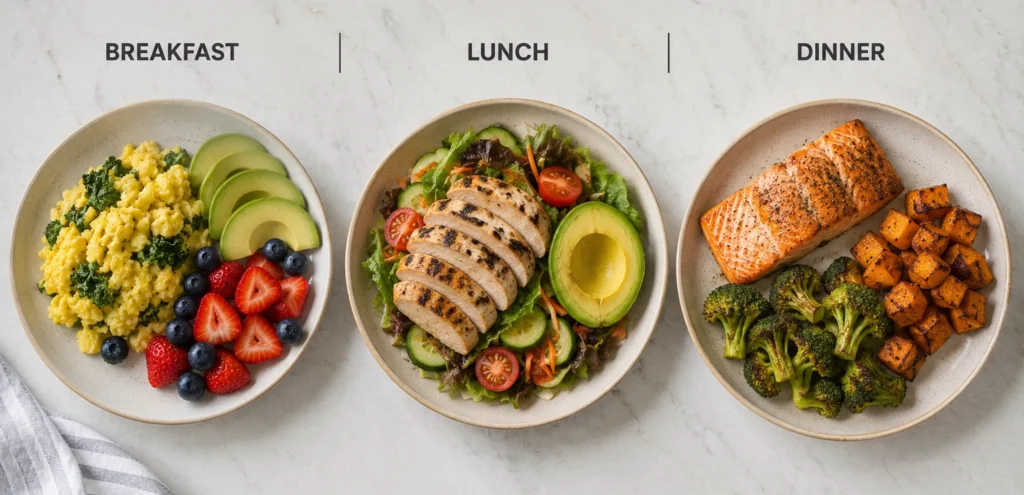
Day One
- Breakfast, scrambled eggs with spinach and avocado
- Lunch, grilled chicken salad with olive oil and lemon
- Dinner, baked salmon with roasted broccoli
Day Two
- Breakfast, sliced turkey with fruit and a handful of walnuts
- Lunch, beef and vegetable stir fry cooked in coconut oil
- Dinner, shrimp skewers with grilled peppers and zucchini
Day Three
- Breakfast, vegetable omelet with mixed berries on the side
- Lunch, tuna salad over greens with olive oil dressing
- Dinner, roast chicken thighs with sweet potato and green beans
Snacks between meals can include fruit, raw nuts, or hard boiled eggs.
Benefits of a Paleo Diet Meal Plan
Research on paleo eating shows some real, measurable benefits. A systematic review and meta analysis of randomized trials found paleo dieters lost about 2.17 kilograms more than comparison groups. Waist circumference also dropped more in the paleo group.
The same body of research links paleo eating to better blood sugar control in some study groups. Whole foods like cinnamon fit naturally into many paleo plans. Our breakdown of cinnamon benefits for blood sugar covers that connection in more depth.
Not every result is clear cut, though. Some trials found no real difference in cardiovascular markers between paleo eaters and people on other healthy diet patterns.
Risks and Nutrient Gaps to Watch
A paleo meal plan cuts out entire food groups, and that can create gaps if you are not careful. Calcium and vitamin D are the most common concerns once dairy leaves the plate.
Fiber is another area to watch. Grains and legumes are two of the biggest fiber sources in a typical American diet. Cutting both at once can lower your daily intake. Vegetables, fruit, and nuts can cover much of that gap if you eat enough of them.
Magnesium is worth tracking too, since it supports muscle and nerve function alongside calcium. Our guide to magnesium bisglycinate benefits and dosage explains food and supplement sources if your plan feels short on minerals. A restrictive eating pattern can look very different depending on the health goal behind it. Our guide to the low residue diet shows that contrast for digestive conditions.
Paleo Meal Plan Grocery List and Prep Tips
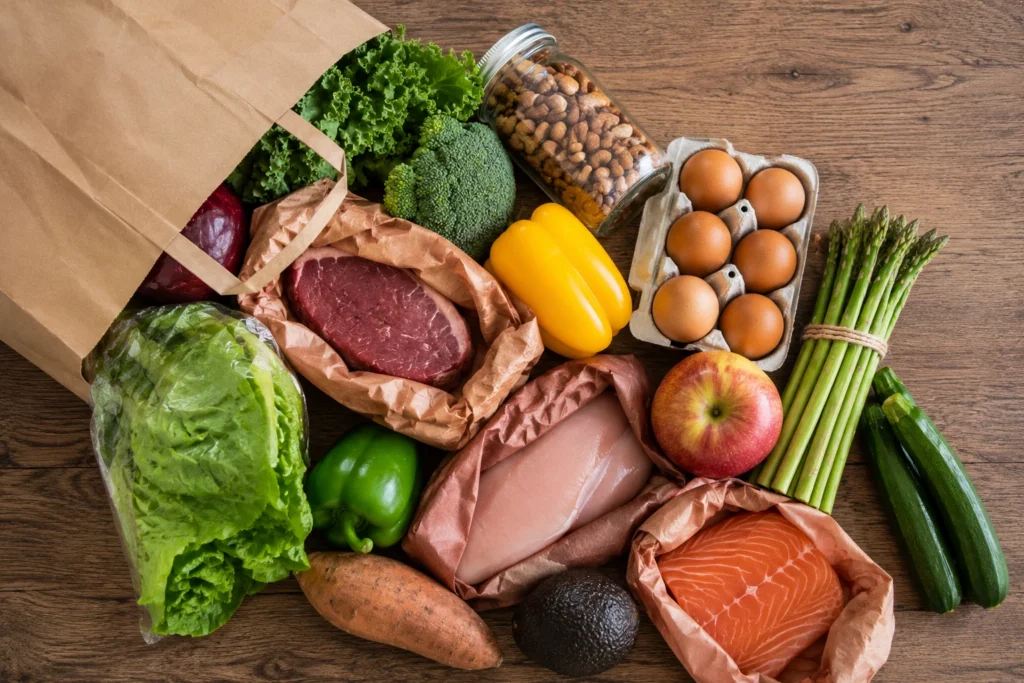
A little prep work makes a paleo meal plan much easier to follow.
- Protein, chicken, beef, turkey, fish, and eggs
- Produce, leafy greens, peppers, berries, apples, and sweet potatoes
- Pantry staples, olive oil, coconut oil, nuts, and seeds
- Extras, fresh herbs, spices, and unsweetened vinegar for flavor
- Cook a large batch of protein at the start of the week
- Wash and chop vegetables in advance so meals come together fast
- Hard boil a dozen eggs for quick breakfasts or snacks
- Keep fruit and nuts on hand for easy, grab and go snacks
Meal prep turns a paleo diet meal plan from an occasional effort into a routine you can keep up.
Paleo Diet Compared to the Mediterranean Diet
People often compare paleo eating to the Mediterranean diet, since both favor whole foods over processed ones. The table below shows where the two patterns agree and differ, based on Harvard Health guidance.
| Food Group | Paleo Diet | Mediterranean Diet |
|---|---|---|
| Whole grains | Not included | Included regularly |
| Dairy | Mostly excluded | Included in moderation |
| Legumes | Excluded | Included regularly |
| Fish and seafood | Encouraged | Encouraged |
| Olive oil | Included | Core fat source |
| Added sugar | Excluded | Limited |
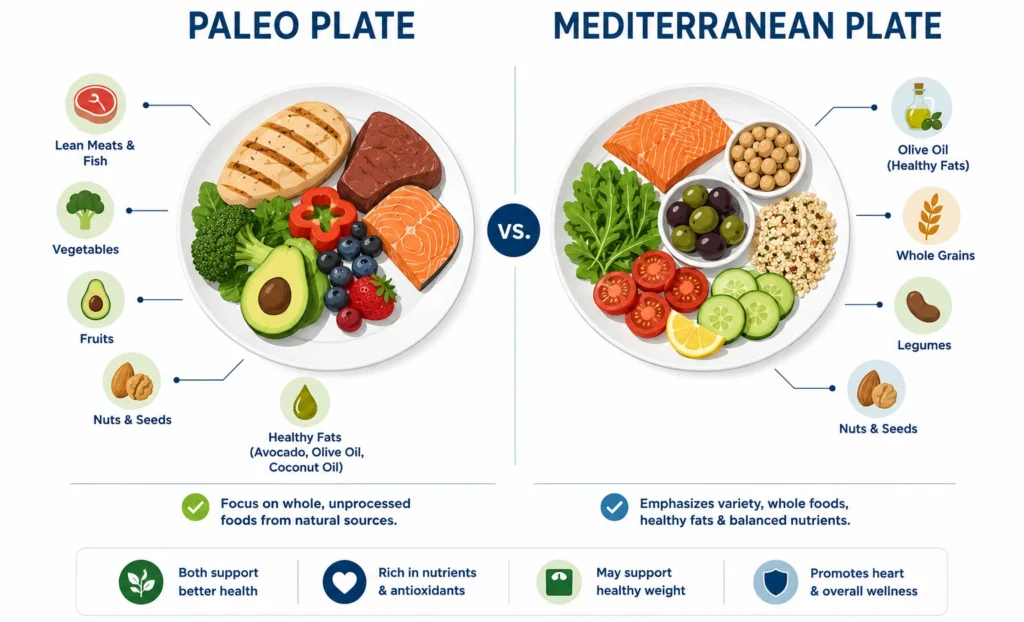
Both patterns push you toward vegetables, fruit, and healthy fat, with grains, dairy, and beans marking the biggest split.
When to Talk to a Doctor or Dietitian
A paleo meal plan is not the right starting point for everyone without guidance first. Anyone with kidney disease or diabetes on medication should check with a doctor before cutting out food groups. The same goes for anyone with a history of disordered eating.
Pregnant women and people managing digestive conditions also benefit from extra guidance. If ongoing stomach pain points to something like gastritis, get that checked before making a major diet change too.
A registered dietitian can also help you build a paleo meal plan that fits your lab work and health history.
Conclusion
A paleo meal plan works best when it stays simple. Build meals around protein, vegetables, fruit, and healthy fat, then plan ahead so grocery trips stay easy. Watch the nutrient gaps that come with cutting dairy and legumes. Loop in a doctor or dietitian if you manage a health condition. With a little structure, paleo eating becomes a routine instead of a guessing game.
Frequently Asked Questions
What is a paleo meal plan?
A paleo meal plan is a daily menu built around meat, fish, eggs, vegetables, fruit, and nuts. It leaves out grains, dairy, legumes, and refined sugar.
Is dairy paleo?
Dairy is not part of a traditional paleo meal plan, since it entered the human diet after farming began. Some flexible versions allow grass fed butter or ghee, while strict paleo eaters skip it completely.
Are beans paleo?
Beans are not considered paleo because legumes came into the human diet after the Paleolithic era. Some flexible paleo eaters still include beans in small amounts once they tolerate them well.
What can you eat for breakfast on a paleo diet meal plan?
Good paleo breakfast options include scrambled eggs with vegetables, a vegetable omelet, or sliced meat paired with fruit and nuts. Skip cereal, toast, and yogurt, since grains and dairy are not part of the plan.
How much weight can you lose on a paleo meal plan?
A review of randomized trials found paleo dieters lost about 2.17 kilograms more than people on comparison diets. Results vary by person, activity level, and how closely the plan gets followed. Weight loss is not guaranteed.
What is the difference between paleo and keto?
Paleo focuses on whole food groups and excludes grains, dairy, and legumes, but it does not strictly limit carbohydrate grams. Keto focuses on very low carbohydrate intake, and it allows dairy that paleo would exclude.
Can you eat rice on a paleo diet meal plan?
Rice is a grain, so it does not fit a traditional paleo meal plan. Some flexible versions allow white rice occasionally, while strict paleo eaters avoid it completely.
How long should you follow a paleo meal plan?
There is no fixed timeline for a paleo meal plan. Some people follow it long term, while others use it for a few months. A doctor or dietitian can help you decide how long the plan should last based on your health goals.