
By three months after surgery, anterior and posterior hip replacements produce essentially equal results. The differences all live in the first six weeks: anterior patients often walk sooner with fewer restrictions, posterior patients follow stricter precautions but avoid certain nerve and fracture risks. Here is the week by week timeline for both, and how to choose.
Your hip aches every time you climb stairs, and your doctor just said you might need a hip replacement. Both methods replace the same worn out joint, but the surgeon reaches it from a different angle, and that single choice shapes your first weeks of recovery far more than your final result.
The Two Approaches in One Table
A hip replacement swaps a damaged joint for an artificial one made of metal, ceramic, or strong plastic. Osteoarthritis is the most common reason, and US surgeons now perform about 544,000 of these procedures every year.
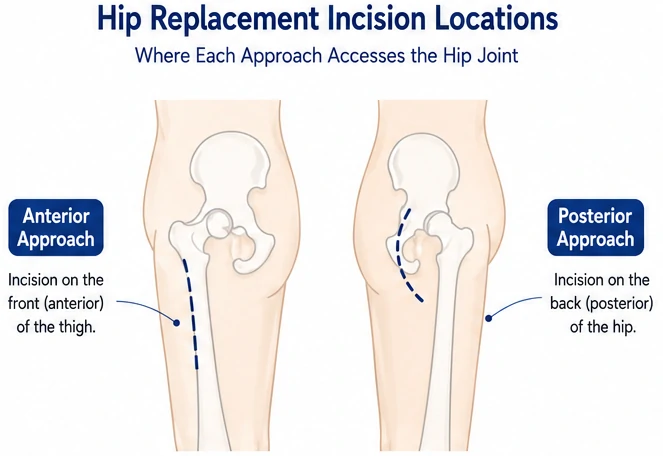
| Feature | Anterior Approach | Posterior Approach |
| Incision site | Front of the thigh | Back of the hip |
| Muscle handling | Mostly separated, rarely cut | Briefly released, then repaired |
| Typical hospital stay | One to three days | One to three days |
| Early walking ability | Often quicker in week one | Slightly slower in week one |
| Hip precautions | Usually fewer | Usually more, for about six weeks |
| Best candidates | Active patients of average build | Most patients, including complex cases |
| Long term outcome | Equal to posterior after three months | Equal to anterior after three months |
Recovery Week by Week
Individual timelines vary with age, fitness, and surgeon instructions, which always override a general guide. This is the typical arc.
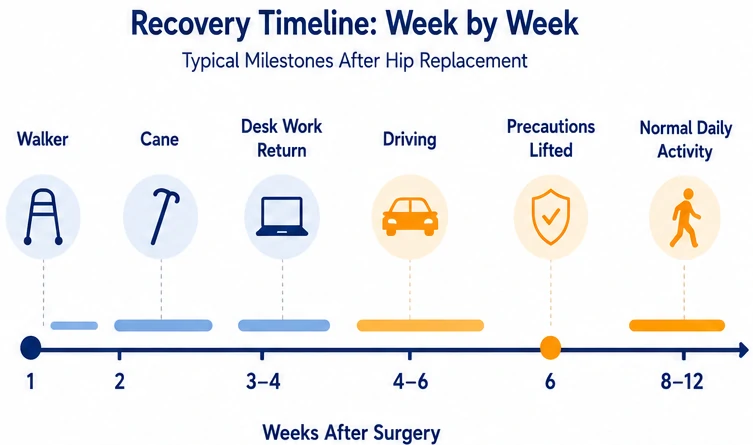
Day of surgery to day 3. Most patients stand and take steps with a walker within hours of surgery, and physical therapy starts before discharge. Hospital stays run one to three days for both approaches, and some anterior patients go home the same day.
Week 1. Walker at home, short walks several times a day, home or outpatient PT begins. Anterior patients often move more freely this week. Posterior patients start their six weeks of precautions, covered below. Swelling and bruising are normal, and ice plus elevation are your friends.
Week 2. Incision check, and staples or sutures come out if used. Many patients begin transitioning from walker to cane. Watch the incision daily, and our guide on how to tell a wound is healing properly covers exactly what normal healing looks like versus trouble.
Weeks 3 to 4. Cane walking, longer distances, and light daily activities return. Desk workers often return to work in this window if pain is controlled without opioids. Driving typically comes back around week 4 to 6, once you are off narcotic pain medication and, for right hip patients, can brake confidently. Your surgeon makes this call, not the calendar.
Week 6. The posterior milestone: most surgeons lift the hip precautions around now. Both groups are usually walking unaided or close to it, and stationary cycling and swimming often get approved.
Weeks 8 to 12. Most daily activities feel normal, low impact exercise builds, and physically demanding jobs start phased returns near the end of this window. By three months, the randomized trial evidence shows no meaningful difference in gait, function, or complications between approaches.
Months 3 to 12. Strength keeps building for up to a year. High impact sports need a specific conversation with your surgeon, and most artificial hips last 15 to 20 years before needing attention.
One travel note: sitting still for hours raises clot risk after any joint surgery, so clear air travel plans with your surgeon first. Our guide on flying after surgery and fractures covers the DVT precautions and airline rules that apply.
Posterior Precautions for the First Six Weeks
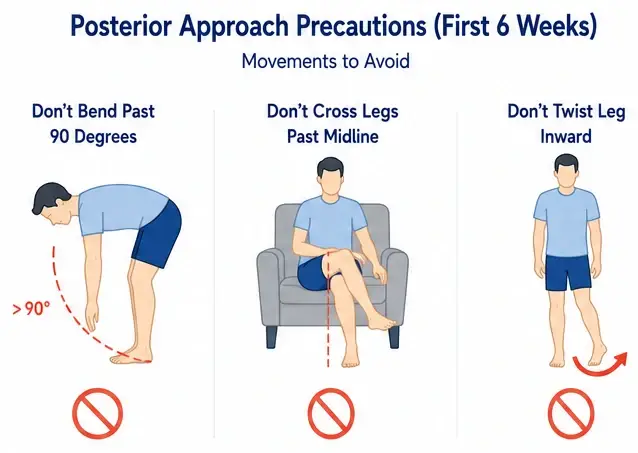
Posterior surgery protects the repaired joint capsule with stricter rules early on.
- Avoid bending your hip past 90 degrees
- Avoid crossing your legs past the midline
- Skip twisting the operated leg inward
- Sleep on your back with a pillow between your knees, and ask your surgeon when side sleeping can resume, usually around 4 to 6 weeks
- Use a raised toilet seat so sitting never forces the hip past its safe angle
Anterior surgery typically comes with fewer rules, though your surgeon still sets the pace. Either way, the real recovery drivers are the same: walk a little more each day, attend every PT session, and follow your specific instructions over any internet timeline, including this one.
The Benefits, Side by Side
Anterior approach:
- Muscle sparing technique that may ease early pain
- Shorter hospital stays, with some patients going home the same day
- Faster early walking and less reliance on a walker
- Fewer movement restrictions right after surgery
Posterior approach:
- A track record built over several decades
- A better fit for patients carrying extra weight or complex joint anatomy
- Easier access during revision surgery or unusual cases
- A lower reported rate of certain nerve injuries tied to the front approach
The Risks, Honestly
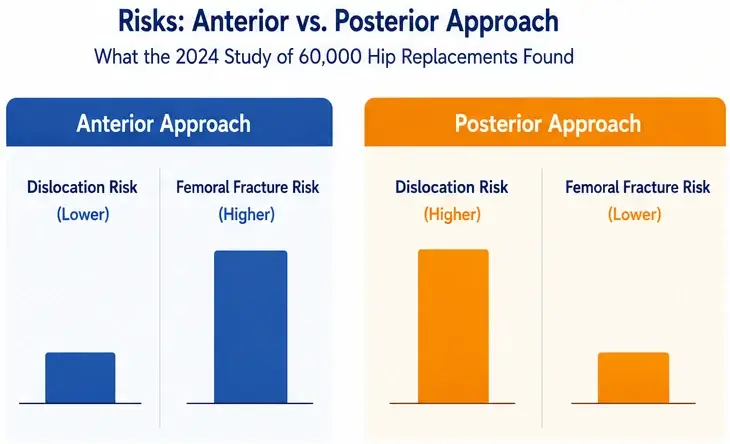
Possible complications include blood clots and infection regardless of approach, along with implant loosening over time, leg length differences, and dislocation. Overall complication rates run about 1 in 1,000 operations for either approach.
Why some surgeons have pulled back from the anterior approach: a large 2024 study of more than 60,000 hip replacements found the anterior approach lowers dislocation risk but raises the chance of femoral complications, including fractures around the implant and early loosening. Nerve irritation causing outer thigh numbness also shows up in a wide range of anterior patients, though it usually fades within a year. These tradeoffs are why some surgeons now reserve the anterior method for a narrower group.
Cost and Insurance
Cost rarely depends on the approach, since total hip replacement bills under the same procedure code, 27130, either way. For 2026, the standard Medicare Part B deductible is $283 and the Part A inpatient deductible runs $1,736 per benefit period, after which Medicare typically pays 80 percent of the approved amount. Medicare’s price lookup tool shows typical costs by facility type. Private plans vary widely, so confirm your copay, deductible status, and network coverage before scheduling.
How to Actually Choose
There is no universal winner. The right choice depends on your body, your goals, and most importantly your surgeon’s experience. The randomized trial following 400 patients found no meaningful difference between groups at final follow up, and a highly skilled surgeon using a familiar technique consistently beats an unfamiliar approach chosen for its reputation.
Ask these at your consultation.
- How many anterior or posterior cases have you personally performed this year?
- Does my weight, anatomy, or surgical history favor one approach?
- What precautions will I follow, and for how long?
- When do you expect me back at my specific job and activities?
When to Call Your Surgeon
- Fever above 101 degrees Fahrenheit
- Increasing redness, warmth, or drainage at the incision
- Sudden, severe pain or a feeling that your hip has shifted out of place
- Swelling, redness, or pain in your calf, which can signal a blood clot
- Chest pain or shortness of breath, which needs emergency care right away
Frequently Asked Questions
Is anterior hip replacement better than posterior?
Neither is universally better. Anterior patients often walk sooner with fewer early restrictions, while posterior surgery suits a wider range of bodies and avoids certain nerve and fracture risks. By three months the outcomes are essentially equal, and your surgeon’s experience with their preferred approach matters more than the approach itself.
How long is recovery after a hip replacement, week by week?
Walker for about a week, cane by weeks 2 to 4, desk work around weeks 3 to 4, driving at 4 to 6 weeks once off narcotics, precautions lifted near week 6, and most daily activities normal by 8 to 12 weeks. Full strength builds for up to a year. Anterior patients often hit the early milestones slightly sooner.
When can I drive after hip replacement?
Typically 4 to 6 weeks, with two conditions: you must be fully off narcotic pain medication, and you must be able to brake hard without hesitation, which matters most for right hip replacements. Your surgeon gives the final clearance, and your insurer may care about it too.
When can I sleep on my side after hip replacement?
Usually around 4 to 6 weeks with your surgeon’s approval, starting with the non operated side and a pillow between your knees. Posterior patients should follow their precaution rules strictly until cleared, since twisting during sleep is exactly what the pillow guards against.
Why do some surgeons no longer perform anterior hip replacement?
Research covering more than 60,000 cases links the anterior approach to higher rates of femoral fractures around the implant, early loosening, and outer thigh nerve irritation, despite its lower dislocation risk. Many surgeons now reserve it for select patients, while others continue using it with excellent results. Case volume drives outcomes either way.
Does insurance cover both approaches equally?
Yes. The procedure code, 27130, does not change with technique, so Medicare and private plans cover both identically. Your out of pocket cost depends on your plan, deductible, and facility, not the surgical approach.