
A pulled muscle in chest pain often hits during a workout, a hard cough, or a sudden twist. The first thought for most people is fear. Is this a strained muscle, or is it something far more serious?
A pulled muscle in chest tissue is common and rarely dangerous. It usually heals well with the right home care.
What Causes a Pulled Muscle in Chest
Yes, you can pull a muscle in your chest. The chest wall holds several muscle groups. These include the pectoral muscles across the front and the intercostal muscles between each rib. A strain happens when muscle fibers stretch or tear beyond their normal limit, according to Mayo Clinic.
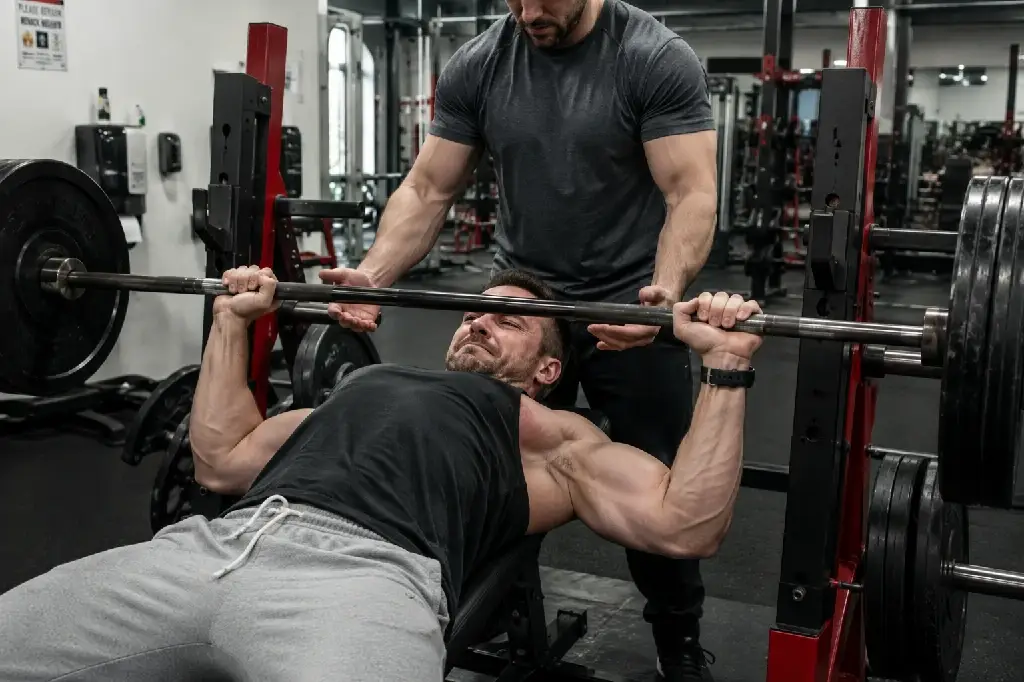
Common triggers include the following.
- Lifting weights, especially a heavy bench press or overhead press
- Throwing, swinging, or any sport that twists the upper body
- A hard fall or a direct blow to the chest
- Violent coughing or sneezing fits
- Reaching, pushing, or pulling something heavy at an odd angle
A strained pectoral muscle shows up often in weightlifters who push past their limit on a press. A pectoral muscle pull like this usually hurts most along the upper, inner chest. Meanwhile, a muscle strain in chest tissue from coughing tends to affect the smaller intercostal muscles instead. Either way, chest pain from a muscle pull tends to stay in one exact spot instead of spreading.
Symptoms of a Pulled Chest Muscle
A pulled chest muscle usually causes a sharp pain in one specific spot, not a spread out ache. The pain tends to grow worse with movement, coughing, or a deep breath, per Cleveland Clinic. This pattern helps set it apart from other causes of chest pain.
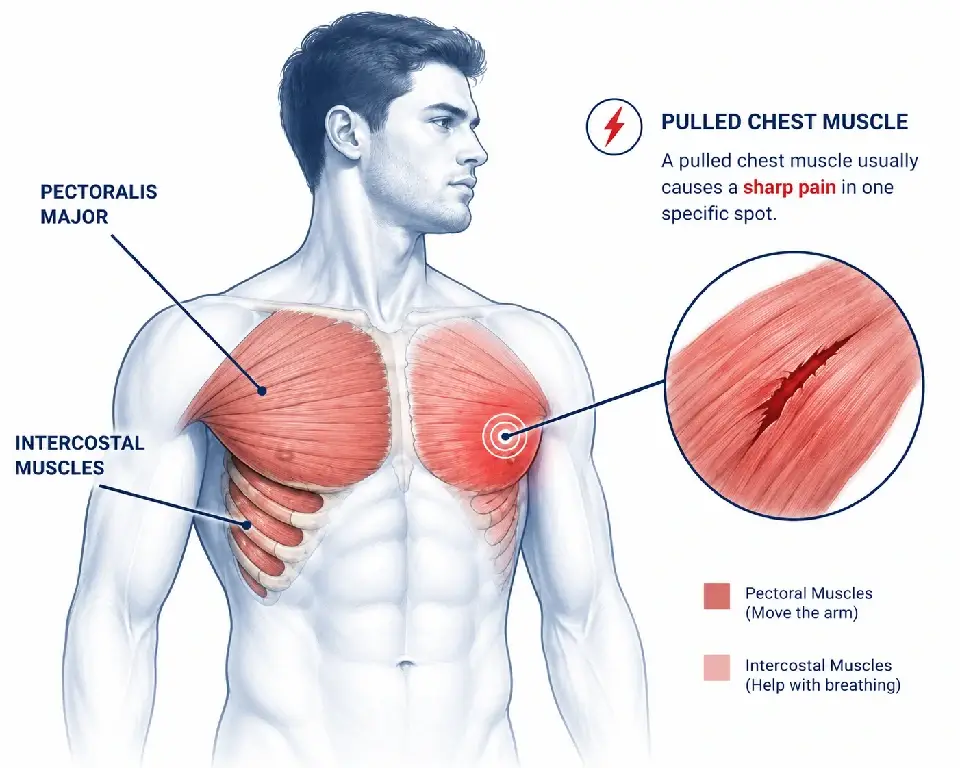
Typical signs include the following.
- Soreness that worsens when you twist, reach, or raise your arm
- Pain that spikes with a deep breath, cough, or sneeze
- Tenderness when you press directly on the sore spot
- Mild swelling or bruising near the injury
- A pulling or tight sensation across the chest wall
Symptoms of a Pulled Chest Muscle in Women
Symptoms of a pulled chest muscle in women generally match the same pattern described above. Even so, women need extra caution here because heart attack symptoms can look different in women than in men.
Women having a heart attack are more likely to report shortness of breath, nausea, or back and jaw pain. Often there is no obvious chest pressure at all, based on research on heart attack symptoms in women. Any new or unexplained chest pain in a woman still deserves a careful look, not a quick assumption.
Pulled Chest Muscle or Heart Attack
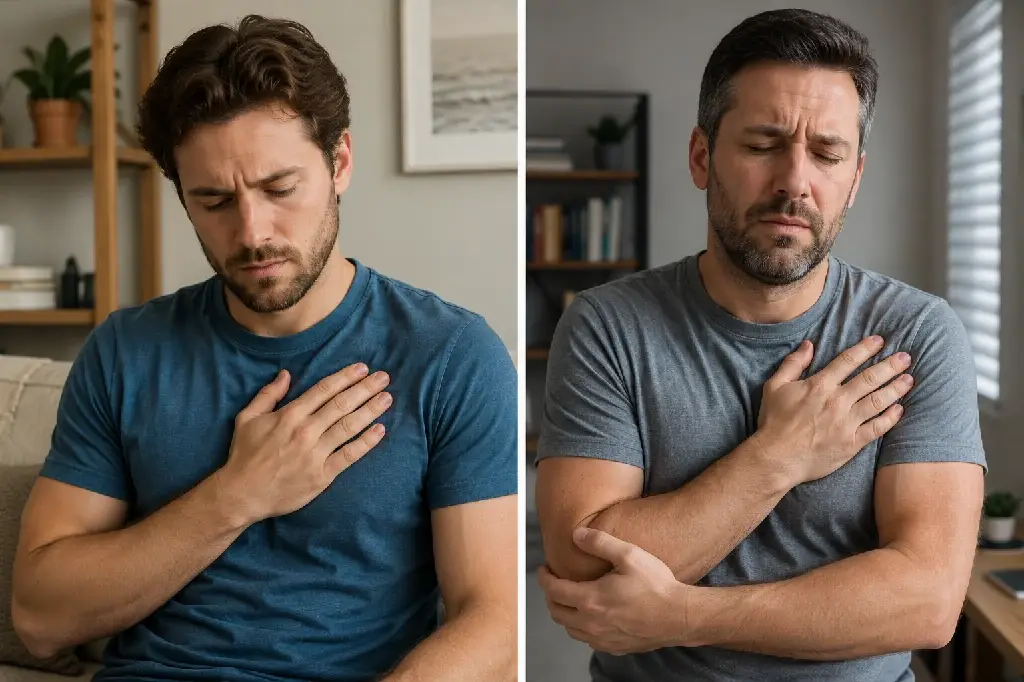
This question sits at the center of most searches about chest pain, and for good reason. A pulled chest muscle and a heart attack can both cause discomfort in the same general area. Even so, the two behave very differently once you look closer.
| Feature | Pulled Chest Muscle | Heart Attack |
|---|---|---|
| Pain type | Sharp, sore, or aching in one spot | Pressure, squeezing, or fullness |
| Trigger | Starts after lifting, twisting, or a hard cough | Can start with no clear trigger, even at rest |
| Movement | Gets worse with motion, stretching, or pressing on it | Stays much the same with movement or touch |
| Breathing | Hurts more with a deep breath or cough | Shortness of breath, often without tenderness |
| Other signs | Bruising or swelling at the site | Cold sweat, nausea, lightheadedness, arm or jaw pain |
Chest pressure or squeezing that lasts more than a few minutes is a recognized warning sign of a heart attack. When in doubt, treat the pain as an emergency first. Sort out the cause second.
Conditions That Feel Like a Pulled Chest Muscle
A few other conditions mimic a chest muscle strain closely enough to confuse even careful patients. Costochondritis, which is swelling where the rib cartilage meets the breastbone, brings on a similar sharp, localized pain.
Slipping rib syndrome is another condition often mistaken for a muscle strain. It also flares up with twisting or stretching motions. Pleurisy and a mild case of pneumonia can likewise cause chest wall soreness that feels muscular at first.
These conditions share many traits with a simple strain. Because of that overlap, a doctor visit becomes useful any time the pain does not follow a clear pattern. The same applies if it does not start to ease within a few days.
How Severe Is the Strain
Doctors generally sort muscle strains into three grades, and this same scale applies to a damaged chest muscle.
- Grade one is a mild strain. The muscle stretches slightly, and soreness stays manageable.
- Grade two brings a moderate strain. More fibers tear, and strength noticeably drops in that area.
- A grade three injury is a severe, ripped chest muscle. It tears all the way through. You often feel a pop, plus a visible gap or dent in the tissue.
A grade three tear usually needs an orthopedic evaluation, and surgery sometimes becomes necessary to reattach the torn ends.
How to Treat a Pulled Chest Muscle at Home
Most mild to moderate strains respond well to simple home care started right after the injury. The RICE method, recommended by the National Institute of Arthritis and Musculoskeletal and Skin Diseases, remains the standard first step.

- Rest the area and skip any activity that triggers the pain
- Ice the spot for 20 minutes at a time during the first two days
- Compress the area gently with an elastic wrap to limit swelling
- Raise your upper body with extra pillows while you sleep
- Take an over the counter pain reliever such as ibuprofen if needed
The same rest, ice, and compression routine helps with other injuries too, including fluid buildup in the knee. Swelling responds to the same basic steps no matter where it happens. If a chest muscle injury still hurts past two weeks, a physical therapist may add dry needling. This loosens the tight fibers and speeds recovery along.
How Long Does It Take to Heal
Recovery time depends heavily on the grade of the strain. A mild, grade one injury often eases within one to three weeks of steady home care. A moderate, grade two strain can take four to eight weeks before normal strength returns.
Severe tears heal more slowly and sometimes take two to three months, especially if surgery was part of the treatment. Soft tissue injuries in other parts of the body follow a similar pace. A bruised heel is one example. Healing speed usually tracks with how much tissue was damaged, not which body part got hurt.
Patience matters here. Returning to heavy lifting or sports too early raises the risk of a repeat injury in the same spot.
When to See a Doctor
Most chest muscle strains heal fine without a clinic visit. Still, certain warning signs change that equation fast. Our care team at BannerHealth always recommends treating chest pain as a medical question first, never a guessing game.
Seek care right away if you notice any of the following.
- Crushing, squeezing pressure in the chest instead of a sore, sharp spot
- Shortness of breath that does not match how sore the muscle feels
- Pain spreading to the arm, neck, jaw, or back
- Cold sweat, dizziness, nausea, or a racing heartbeat
- A visible deformity, deep bruising, or a popping sound at the time of injury
- Pain that keeps getting worse instead of slowly improving after a week
Call 911 or get to an emergency room immediately for any combination of chest pressure, shortness of breath, and sweating. A routine doctor visit is the right move for milder symptoms that simply are not improving on schedule.
How to Prevent a Chest Muscle Strain
A few simple habits lower the odds of a repeat injury substantially.
- Warm up for five to ten minutes before lifting, running, or playing sports
- Increase weight or intensity gradually instead of jumping levels at once
- Use proper form on presses and pushing movements, and ask for a spotter when needed
- Stretch the chest and shoulders regularly to keep the tissue flexible
- Stay hydrated, since dehydrated muscles tear more easily under load
Building strength steadily, rather than chasing fast progress, protects the chest wall over the long run.
A pulled muscle in chest tissue feels alarming in the moment. Even so, most cases follow a predictable path toward full recovery. Rest, ice, and a little patience handle the vast majority of strains within a few weeks. Still, any pain that brings pressure, breathlessness, or spreading discomfort deserves a same day medical check rather than a guess.
Frequently Asked Questions
Can you pull a muscle in your chest?
Yes. The chest wall has several muscles, including the pectoral and intercostal muscles. Any of them can stretch or tear under enough force. Lifting, twisting, a hard fall, or a violent coughing fit can all cause this injury.
What does a pulled chest muscle feel like?
Most people describe a sharp or sore pain in one specific spot. It gets worse with movement, a deep breath, or pressing on the area. Mild swelling or bruising sometimes shows up near the injury site too.
How long does a pulled chest muscle take to heal?
A mild strain often eases within one to three weeks of rest and home care. Moderate strains can take four to eight weeks, while severe tears sometimes need two to three months or surgery.
How can you tell a pulled chest muscle from a heart attack?
A muscle strain causes sharp, localized pain that worsens with movement or touch. A heart attack tends to bring pressure or squeezing that does not change much with motion. Any chest pain paired with shortness of breath, sweating, or arm and jaw pain needs emergency care right away.
What are the symptoms of a pulled chest muscle in females?
Women feel the same sharp, localized soreness as men do with a chest strain. Heart attack symptoms in women can show up as nausea, fatigue, or back pain instead of obvious chest pressure. Because of that, any unclear chest pain in a woman is worth a medical check.
Can you still breathe normally with a pulled chest muscle?
You can usually breathe normally, though deep breaths, coughing, or sneezing may sting at the injury site. If breathing feels genuinely difficult or short, that points toward a different and more serious cause.