
You open your eyes, and the pain is already there. Waking up with headaches is more common than most people think.
About 1 in 13 people deal with them on a regular basis. For many, it happens every single morning, turning what should be a fresh start into an uphill battle. The good news is that most morning headaches have a clear cause, and most of those causes are treatable.
What Causes Waking Up With Headaches
Morning headaches can come from several different directions. They can stem from a sleep disorder, a lifestyle habit, or an underlying health condition. Understanding what triggers yours is the first step toward stopping them. The cause often determines which solution will actually work.
Sleep Disorders That Trigger Waking Up With Headaches
Sleep issues are one of the most frequent reasons people wake up in pain. Three conditions stand out above the rest.
Sleep Apnea
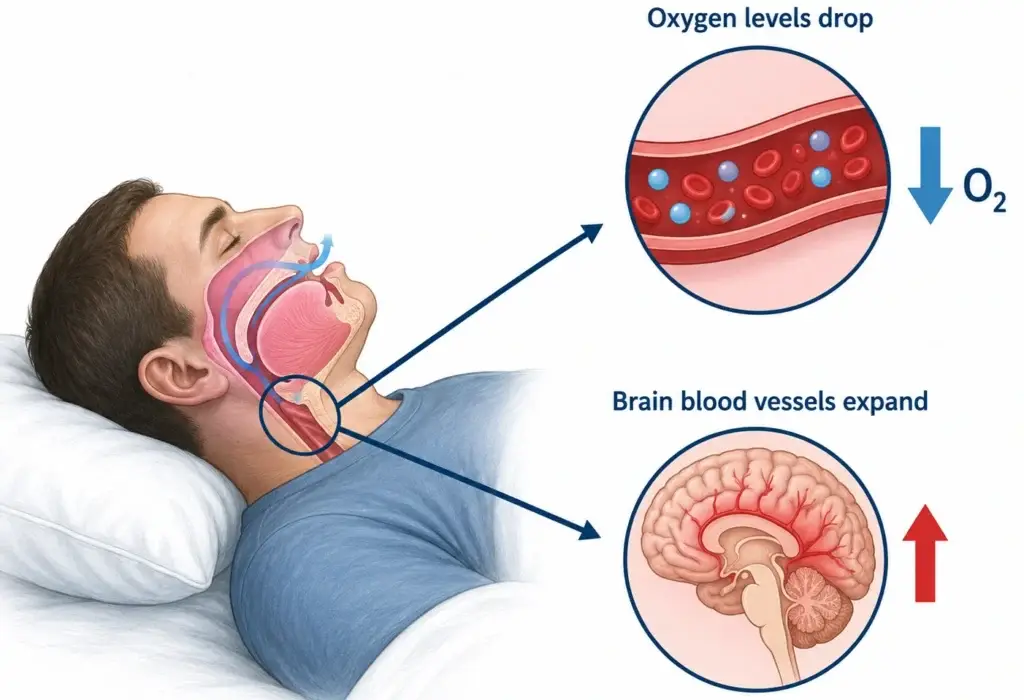
Sleep apnea causes your breathing to stop and start repeatedly through the night. Each pause in breathing lowers the oxygen level in your blood. That drop causes blood vessels in the brain to widen, and the result is a dull, pressing headache by morning. According to the Sleep Foundation, more than 1 in 10 people with obstructive sleep apnea report regular morning headaches. The headache usually fades within 30 minutes of waking, which is one of its telling signs. If you snore and feel exhausted every morning despite a full night of sleep, ask your doctor about sleep apnea testing. Our guide on the best sleep positions for sleep apnea covers simple changes that can ease nighttime breathing.
Teeth Grinding (Bruxism)
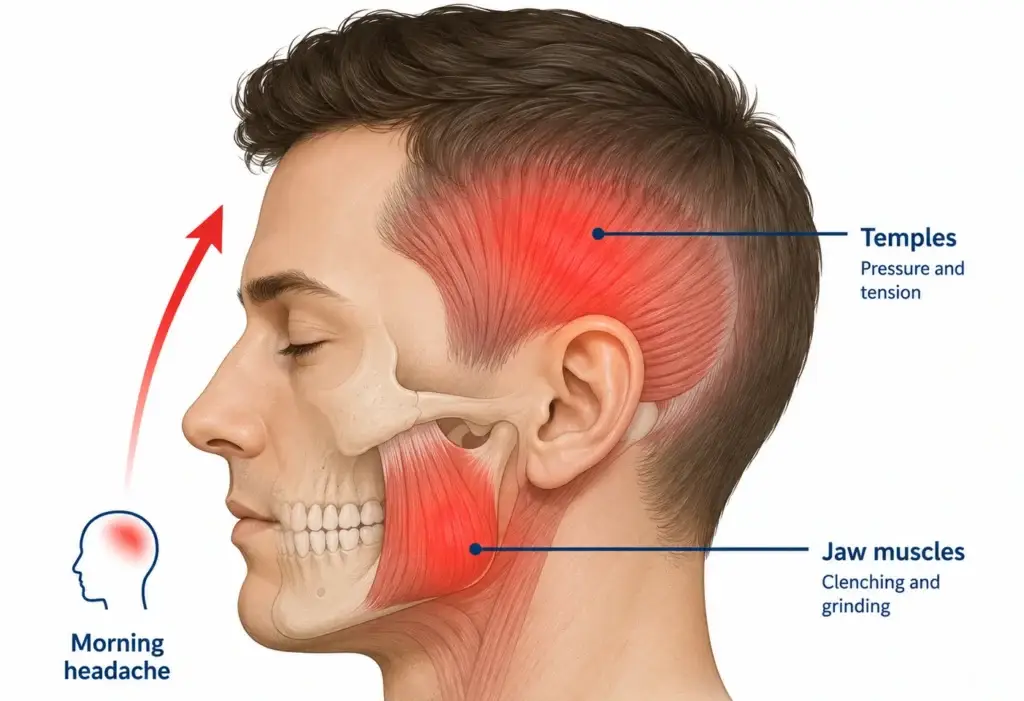
Many people grind their teeth at night without realizing it. This habit, called bruxism, puts intense pressure on your jaw muscles and temples. By morning, that pressure builds into a tight, throbbing ache. You may also notice jaw soreness or worn tooth surfaces when you first wake up. According to NIH StatPearls, jaw pain and temple headaches are among the most common signs of sleep bruxism. A dentist can fit you with a custom night guard to ease the pressure overnight. If you also notice tooth sensitivity, our article on why your teeth hurt covers the most likely causes.
Insomnia
Not sleeping enough keeps your body in a state of low level stress. That stress raises cortisol and other tension hormones overnight. Those hormones are a well known headache trigger by the time morning arrives. If quality sleep is a consistent struggle, our post on whether sleep gummies work is a helpful starting point. A doctor can also offer more targeted treatment for ongoing insomnia.
Other Causes of Waking Up With Headaches
Sleep disorders are not the only culprit. Several everyday habits also bring on morning head pain.
Dehydration
Your body loses fluid overnight through breathing and sweating. If you were not well hydrated during the day, you may wake up mildly dehydrated. Dehydration reduces blood flow to the brain, and that causes pain. Keeping a glass of water on your nightstand and drinking it first thing can ease the discomfort quickly. Staying hydrated throughout the day is also one of the simplest ways to reduce your risk. Our post on mineral water health benefits shows how hydration quality can also play a role.
Caffeine Withdrawal

If you drink coffee or caffeinated tea daily, your brain builds a dependence on caffeine. After about 8 to 16 hours without it, your body enters a mild withdrawal. Overnight is exactly that long a gap for most daily coffee drinkers. A study published in Scientific Reports found a clear link between caffeine withdrawal and morning headaches in regular caffeine users. The solution is not necessarily cutting caffeine out. Instead, try drinking your first cup at a consistent time each day to keep your levels steady.
Medication Overuse
Using over the counter pain relievers more than 10 to 15 days per month can actually trigger more headaches over time. This is called a rebound headache, also known as medication overuse headache. Your body becomes so used to the medication that it triggers pain when the drug wears off overnight. If this pattern sounds familiar, talk to your doctor before stopping the medication. Stopping suddenly can temporarily make headaches worse. Our article on what it means to taper off medication explains how to reduce slowly and safely.
Hormonal Changes
Hormone levels naturally shift during the night and into the early morning hours. For women especially, changes in estrogen are a well known headache trigger. Menstrual migraines often peak in the morning hours, and pregnancy or menopause can also increase how often morning headaches occur. If your headaches follow a monthly pattern, that detail is worth sharing with your doctor.
Stress and Anxiety
Mental stress does not switch off when you fall asleep. High anxiety keeps tension in your neck and shoulder muscles through the night. That tension often creeps up into your head and appears as pain by morning. Research shows that people with anxiety or depression experience morning headaches at about twice the rate of others. Managing stress before bed, through light exercise or breathing techniques, can lower that risk.
Waking Up With a Headache on the Right Side of Your Head
A one sided morning headache often points to migraine. Migraines tend to affect just one side of the head and feel like throbbing or pulsing pain. They often come with sensitivity to light or nausea. Cluster headaches are another cause of one sided pain in the morning. These headaches feel severe and sharp, and they tend to strike around the same time each day. If you consistently wake up with a headache on the right side of your head, tracking the pattern matters. Your doctor can use that information to identify the headache type and find the right treatment for you.
Steps to Stop Waking Up With Headaches
Many morning headaches respond well to simple, consistent changes. These steps can help you start your mornings with less pain:

- Drink water before bed and keep a glass on your nightstand for the morning
- Keep a consistent sleep schedule by going to bed and waking at the same time each day
- Limit alcohol and caffeine in the hours before bedtime
- Use a supportive pillow to keep your neck in a neutral position while you sleep
- Try light stretching or breathing exercises before bed to release muscle tension
- See a dentist if your jaw or face feels sore when you wake up
- Keep a headache journal to spot patterns in timing, location, and possible triggers
The Cleveland Clinic notes that improving sleep habits is one of the most effective starting points for chronic morning headaches. If morning head pressure also feels linked to sinus congestion, our guide on how to relieve sinus pressure covers several at home options worth trying.
When to See a Doctor
Most morning headaches are not dangerous, but some symptoms point to a more serious problem. See a doctor right away if your headache:
- Comes on suddenly and feels like the worst pain of your life
- Gets steadily worse over several days or weeks
- Comes with fever, stiff neck, confusion, or vision changes
- Follows a head injury
- Wakes you from deep sleep on a regular basis
Your doctor can run tests to check for sleep apnea, high blood pressure, or other underlying conditions. Early evaluation leads to faster relief. Waking up with headaches every morning is not something you have to accept. Small, targeted changes often bring big improvements, and a doctor can guide you when self care alone is not enough.
Frequently Asked Questions
Why do I keep waking up with headaches every morning?
Waking up with headaches every morning usually points to a sleep disorder, lifestyle habit, or underlying condition. Sleep apnea, teeth grinding, dehydration, caffeine withdrawal, and stress are the most common causes. Tracking your symptoms and talking to your doctor can help you identify the specific trigger.
Can dehydration give me a headache when waking up?
Yes, dehydration is a common and often overlooked cause of morning headaches. Your body loses fluid overnight through breathing and sweating. If you were not well hydrated during the day, that fluid loss can trigger a headache by morning. Drinking water before bed and right after waking can help.
What causes waking up with a headache on the right side of the head?
A one sided morning headache, including pain specifically on the right side, often suggests migraine or cluster headache. Migraines cause throbbing pain on one side and can come with light sensitivity and nausea. Your doctor can confirm the type and recommend the right treatment plan for you.
Does sleep apnea cause morning headaches?
Yes, sleep apnea can cause morning headaches. When breathing pauses during sleep, oxygen levels drop and blood vessels in the brain expand. That expansion causes a dull, pressing headache. The headache typically clears within 30 minutes of waking, which is one of its distinguishing features.
Can caffeine withdrawal cause a morning headache?
Yes. If you drink caffeine daily, your brain expects it at regular intervals. After several hours without it overnight, mild withdrawal can set in. Research from the National Institutes of Health confirms caffeine withdrawal as a recognized headache trigger. Drinking your first cup at a consistent time each morning can help stabilize the pattern.
When should waking up with a headache be a concern?
Morning headaches become a concern when they feel unusually severe or get worse over time. Also watch for symptoms such as vision changes, confusion, fever, or a stiff neck. A headache that wakes you from sleep or follows a head injury warrants prompt medical attention.