
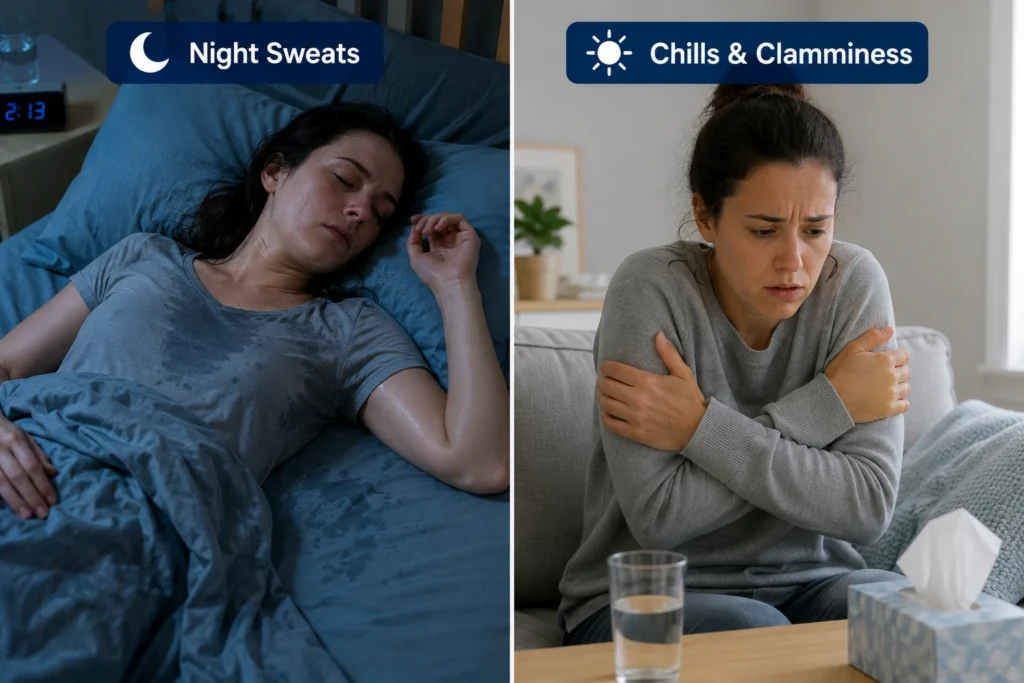
You wake up clammy and chilled, even though the room feels normal. Cold sweats happen when you sweat while feeling cold instead of warm.
It can feel confusing the first time it happens. Knowing what causes cold sweats helps you tell a passing stress response from something more serious. Many people notice cold and sweating at the same time during a stomach bug or a sudden blood sugar drop.
What Are Cold Sweats and What Causes Cold Clammy Skin
Cold sweats are a sudden burst of sweating without the heat that normally triggers it. Your skin can feel cool, damp, and pale all at once. People often describe this feeling as cold clammy skin. This reaction comes from your nervous system, not your body’s normal cooling process.
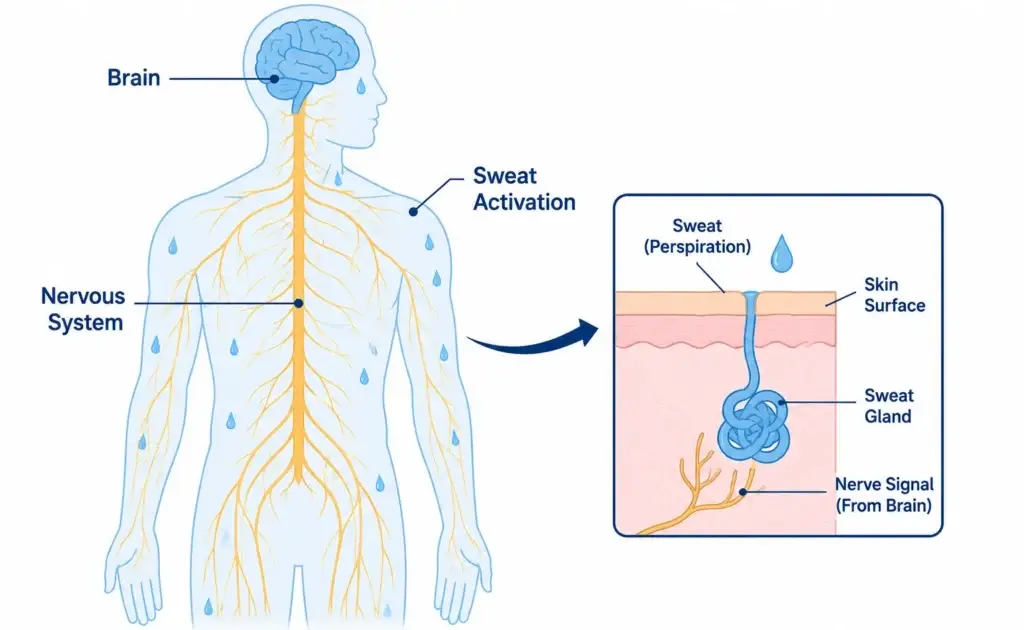
Regular sweat helps you cool down after exercise or in hot weather. A cold sweat instead means your body senses a threat. That threat might be low blood sugar, a sharp drop in blood pressure, pain, or fear. The skin often turns pale at the same time, since blood vessels near the surface narrow during this response. Sweat can also irritate skin in warm, covered areas over time. It helps to tell apart sweat related skin issues, like itchy armpits, from a true cold sweat.
What Causes Cold Sweats Without a Fever
Many readers search for cold sweats no fever because they expect sweating to mean illness. Sweating with a cold but no fever is common, and it rarely means anything dangerous on its own. It usually points to one of these triggers.
- A sudden spike in stress hormones from anxiety or fear
- A quick drop in blood sugar, especially after skipping a meal
- Dehydration or a fast drop in blood pressure when you stand
- A side effect from a medication you take regularly
- Early infection before a fever has had time to build
Sweating while sick no fever often shows up in the first hours of illness. Your temperature has not climbed yet, but your body is already responding.
Common Medical Causes of Cold Sweats
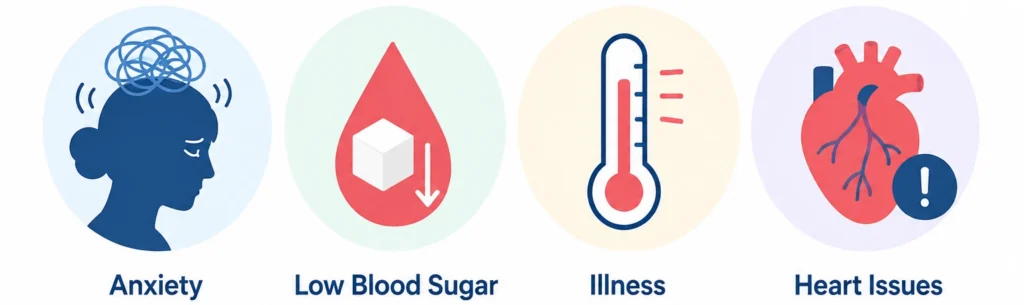
Stress and Anxiety
Fear and anxiety push your body into fight or flight mode. Adrenaline floods your system and your heart speeds up. Your sweat glands switch on even though you feel cold. This is one of the most common causes of cold sweats in healthy adults.
Low Blood Sugar
Hypoglycemia is a classic cause of cold clammy skin. The American Diabetes Association notes that blood sugar below 70 mg/dL can trigger shakiness and hunger. Cold sweats often follow as adrenaline rises to compensate. People who skip meals, drink alcohol without food, or take insulin face a higher risk.
Hormonal Changes and Menopause
Hot flashes during perimenopause and menopause often end in a cold sweat. This happens once the body cools back down. The National Institute on Aging notes that falling estrogen affects the brain’s temperature control center. That shift makes the body overreact to small changes in heat, which triggers sweating at odd times.
Thyroid Problems
An overactive thyroid speeds up your metabolism. It can leave you sweating, anxious, and tired. Cleveland Clinic also notes that a rare adrenal tumor called pheochromocytoma can flood the body with adrenaline. That flood can cause repeated cold sweats.
Infections and Illness
Viral and bacterial infections, including the flu, can cause cold sweats as your immune system fights back. Knowing the difference between a explains why sweating sometimes starts before a fever does. Fever itself also drives sweating. An elevated heart rate when you are sick often comes along with it.
Heart Problems
A cold sweat paired with chest pain or shortness of breath can signal a heart attack. The American Heart Association lists a cold sweat among its official heart attack warning signs. Nausea and lightheadedness often appear alongside it.
Dehydration and Low Blood Pressure
Losing fluids through vomiting, diarrhea, or heavy sweating can drop your blood pressure fast. That sudden drop is known as orthostatic hypotension. It often brings on cold, clammy skin, especially when you stand up quickly.
Pain, Shock, and Injury
Severe pain from an injury can trigger the same fight or flight response as fear. Your body floods with adrenaline, your blood vessels narrow, and a cold sweat follows almost right away. This response can also point to shock, which is a medical emergency that needs fast treatment. Shock often pairs cold sweats with a weak pulse, confusion, and pale or grayish skin.
Medication Side Effects
Some common medications list sweating as a side effect. These include certain antidepressants, opioid pain relievers, and some diabetes drugs. These medications can throw off your body’s normal temperature signals or push blood sugar too low. Never stop a prescribed medication on your own. Instead, bring up new or worsening sweating at your next appointment so your doctor can adjust your treatment safely.
What Are Cold Sweats a Sign Of
Cold sweats are not a disease on their own. They act as a warning signal. The cause behind them can range from mild to urgent.
- Mild and temporary, such as stress or a brief blood sugar dip
- Worth a doctor visit soon, such as recurring sweats or ongoing fatigue
- An emergency right now, such as chest pain, confusion, or fainting
Cold sweats sometimes pair with blotchy, uneven skin tone. Our breakdown of mottled skin causes covers what that poor circulation pattern looks like and when it needs attention.
Cold Sweats vs Night Sweats vs Hot Flashes
These three terms get mixed up often. This side by side look makes the differences clear.
| Feature | Cold Sweats | Night Sweats | Hot Flashes |
|---|---|---|---|
| When it strikes | Any time, often sudden | During sleep | Day or night, sudden |
| How skin feels | Cool and clammy | Damp sheets, skin cools after | Hot and flushed, then sweaty |
| Typical trigger | Stress, low blood sugar, shock, infection | Menopause, medication, infection | Hormone shifts in menopause |
| Body temperature | Usually normal or low | Can follow a fever breaking | Rises briefly, then drops |
How Doctors Find the Cause
A doctor usually starts with a simple finger stick blood sugar test. A quick check of your blood pressure and heart rate comes next. From there, blood work can screen for thyroid problems or signs of infection. An EKG can check your heart if chest pain or breathing trouble is part of the picture. Most causes show up clearly through these basic, low cost steps.
When to See a Doctor
Call 911 or go to an emergency room if cold sweats happen with any of these signs.
- Chest pain, pressure, or tightness
- Shortness of breath
- Sudden confusion or trouble staying awake
- Fainting or feeling like you might pass out
- Pale, cool skin with a weak, rapid pulse
Schedule a regular visit if cold sweats keep returning without a clear reason. The same goes for sweats that interrupt your sleep often. Unexplained weight loss or a racing heart at rest are also worth checking. A doctor can test your thyroid, blood sugar, and hormone levels to find the root cause. Mayo Clinic also offers a broader breakdown of conditions tied to ongoing night sweats.
How to Manage and Prevent Cold Sweats

Most causes of cold sweats respond well to a few daily habits.
- Eat regular meals so blood sugar does not drop sharply
- Stay hydrated, especially during illness or hot weather
- Practice slow breathing or short walks to ease anxiety
- Review medications with your doctor if sweating started recently
- Track when sweats happen to spot patterns tied to meals or sleep
- Dress in layers so you can adjust quickly to temperature shifts
- Keep a fast acting snack on hand if low blood sugar is a known trigger
Small changes like these often cut down how often cold sweats show up. Tracking your triggers also gives your doctor useful clues if the pattern continues. A lasting pattern still deserves a medical check.
Frequently Asked Questions
What are cold sweats a sign of?
Cold sweats often signal a stress response, a drop in blood sugar, or an infection. In some cases they point to a heart problem. Sweating with chest pain or shortness of breath needs urgent care right away.
Can you have cold sweats with no fever?
Yes, cold sweats no fever happen often. Anxiety, low blood sugar, medication side effects, and early infection can all trigger sweating before your temperature rises.
Why am I cold and sweating at the same time?
Cold and sweating at the same time usually means your nervous system triggered a stress response. Adrenaline narrows blood vessels near the skin. That keeps you feeling cool while your sweat glands still switch on.
Is cold clammy skin always a medical emergency?
No, clamminess skin is often mild and tied to stress or a quick blood sugar dip. It becomes an emergency when it shows up with chest pain, confusion, fainting, or signs of shock.
What causes cold sweats at night?
Night sweats often come from menopause, infections, or certain medications. A fever breaking overnight can also leave you waking up in a cold sweat.
Can low blood sugar cause cold sweats without diabetes?
Yes, anyone can develop hypoglycemia from skipping meals or drinking alcohol without food. Intense exercise can trigger it too. The cold sweat happens because adrenaline rises to push blood sugar back up.