
If you keep getting strep throat, the pattern feels less like bad luck. It feels like your body fighting a battle it cannot win. One infection clears up. You feel fine for a few weeks. Then the same burning throat and swollen glands show up again.
Doctors call three or more strep throat infections in a year a pattern worth investigating. It is not just a rough season for germs. Most reasons behind repeat strep throat are specific and fixable once you know where to look.
What Counts as Recurring Strep Throat
Strep throat comes from group A Streptococcus bacteria. One infection on its own is common and rarely a red flag. Doctors use the word recurring once you have three or more confirmed episodes within twelve months. That count matters. It shifts the conversation from home care to a deeper look at why your throat keeps losing this fight.
Recurring strep throat differs from a string of unrelated sore throats. Each episode needs a positive rapid strep test or throat culture to count. Viral sore throats, allergies, and acid reflux can mimic strep symptoms without any bacteria involved at all.
Why Do I Keep Getting Strep Throat
Several distinct problems can explain why do I keep getting strep throat. They rarely show up alone. Most people dealing with strep recurring have one or two of the issues below driving the cycle.
Incomplete Antibiotic Treatment
Strep bacteria need the full prescribed course to die off. That usually means ten days of penicillin or amoxicillin. Stopping early because you feel better by day four leaves survivors behind. Those survivors can rebound within days. The rebound looks like a brand new infection.
Being a Strep Carrier Without Symptoms
A large analysis of pharyngeal carriage studies looked at school age children. It found that 15 to 20 percent carry group A strep without feeling sick. Carriers test positive on a throat swab but do not actively fight an infection. Antibiotics rarely clear the bacteria for good in true carriers. Living with an undiagnosed carrier at home means fresh exposure every time your immune system relaxes.
Reinfection From Family Members and Shared Surfaces
Group A strep spreads through respiratory droplets and close contact. A household with one infected member often sees the bacteria pass person to person. Shared cups, toothbrushes, and towels can hold live bacteria for hours. Replacing your toothbrush two or three days into antibiotic treatment removes one common reinfection source.
Tonsil Crypts and Bacterial Biofilms
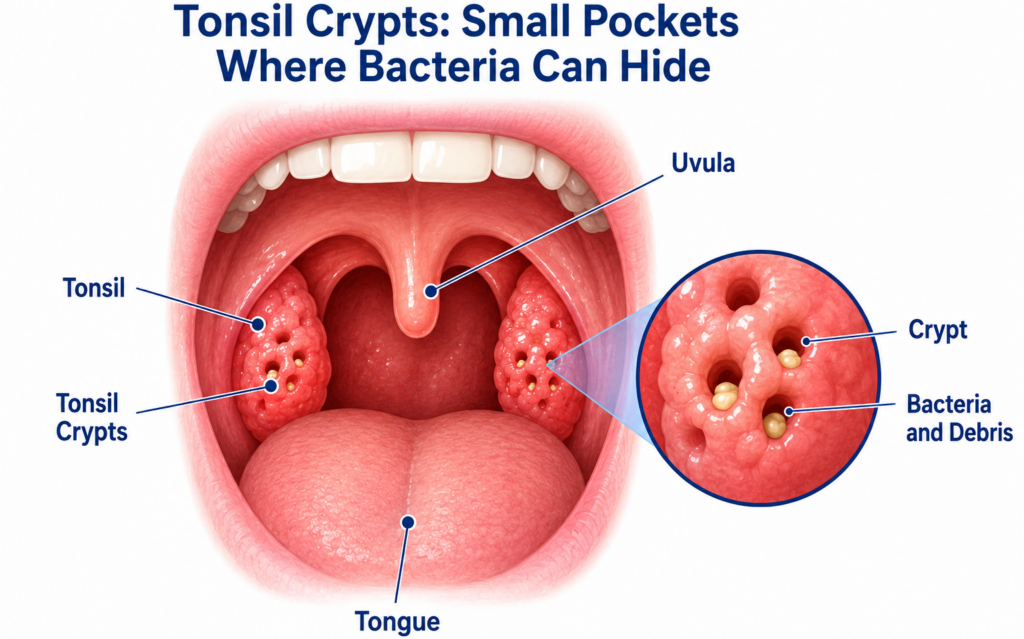
Tonsils have small natural pockets called crypts. Bacteria can hide there behind a protective layer called a biofilm. Antibiotics struggle to reach bacteria tucked inside a biofilm. That is why some infections seem to clear on tests but flare again within weeks. This structural issue is one reason chronic strep throat sometimes needs more than a standard antibiotic course.
A Weakened Immune System
Poor sleep, chronic stress, and nutrient gaps all slow down how fast your immune system clears bacteria. Conditions that suppress immunity can make throat infections more frequent and slower to resolve. This applies whether the cause is strep or a seasonal virus. Certain medications carry the same effect. Supporting basic immune health through sleep and nutrition will not replace treatment. It does lower your overall exposure risk.
Still Sore Throat After Strep Antibiotics
A still sore throat after strep antibiotics does not automatically mean the infection is back. Throat tissue stays inflamed for several days after the bacteria are gone. This overlaps with several other causes of morning throat pain. Full comfort can take one to two weeks even on a successful antibiotic course.
A handful of situations explain lingering pain once treatment ends.
- Residual inflammation from tissue irritation during the original infection
- A separate viral infection picked up while your immune system was busy fighting strep
- Acid reflux or postnasal drip irritating an already sensitive throat
- Early signs of reinfection, especially if fever returns after a symptom free stretch
Pain that steadily improves each day usually reflects normal healing. Pain that gets worse, or returns alongside fever, points toward a new infection worth testing again.
Recurring Strep Throat in Adults
Recurring strep throat in adults looks different from the childhood version most people picture. Adults build stronger antibody responses over time. Group A strep shows up less often after the teenage years because of this.

When it keeps returning in adulthood, the drivers tend to shift. Chronic carrier status and close contact with young children at home become more likely causes. An undiagnosed immune issue can play a role too.
Adults also tend to delay testing because they assume a sore throat means a cold. Waiting to confirm strep with a rapid test gives the bacteria more time to spread at home.
| Factor | Children | Adults |
|---|---|---|
| Typical peak age | 5 to 15 years | Less common after age 20 |
| Most common driver | School and daycare exposure | Household exposure or carrier status |
| Carrier rate | 15 to 20 percent of school age children | Lower, but rises with young children at home |
| Tonsillectomy considered | More frequently effective | Considered case by case |
Chronic Strep Throat and Antibiotic Resistance
Chronic strep throat is what some patients call strep throat continuous. It sometimes involves bacteria that respond poorly to first line antibiotics. True penicillin resistant group A strep remains rare. Treatment failure can still happen when biofilms shield bacteria or a patient cannot tolerate the first medication tried. A doctor may switch to a different antibiotic class or extend the treatment length. Sometimes a fresh culture confirms which strain is involved.
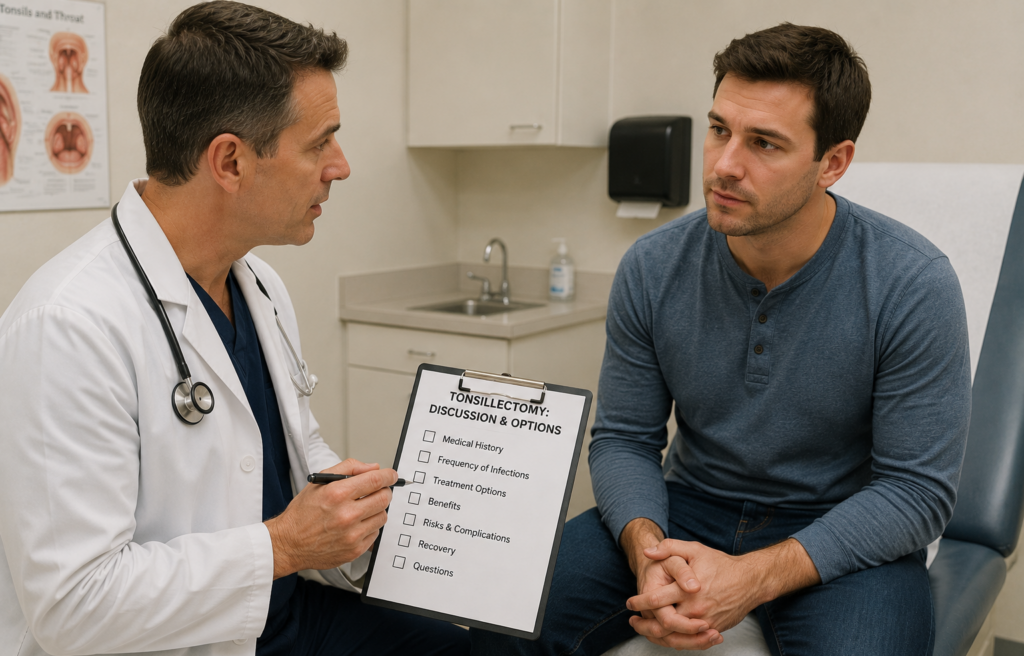
For patients who meet strict frequency criteria, tonsil removal becomes part of the conversation. Widely used surgical guidelines, sometimes called the Paradise criteria, describe strong candidates. These are patients with seven or more documented sore throat episodes in one year.
Five or more episodes yearly across two years also qualifies, as does three or more episodes yearly across three years. Each episode must pair with fever, swollen neck glands, or a positive strep culture. Surgery is not automatic even when someone meets these numbers. Research shows the benefit is a modest reduction in future episodes, not a guarantee of zero recurrence.
Strep Throat That Won’t Go Away, Signs of a Bigger Problem
Strep throat that won’t go away deserves attention. Untreated or repeatedly undertreated infections carry real complications. The Centers for Disease Control and Prevention lists several serious outcomes tied to unmanaged group A strep. Rheumatic fever, kidney inflammation, and abscesses near the tonsils top that list.
Rheumatic fever can affect the heart, joints, and skin. It develops more often after infections that were never fully treated with antibiotics. Kidney inflammation, known as post streptococcal glomerulonephritis, can follow strep throat by one to three weeks. It shows up as dark urine or swelling.
In children, doctors also watch for a rare reaction called PANDAS. Sudden behavior changes sometimes appear to follow a strep infection. Researchers are still studying how strong that link truly is.
None of these outcomes are common. Most repeat strep infections resolve fully with proper antibiotics. They matter because they explain why doctors take a pattern of three or more episodes seriously.
When to See a Doctor for Recurring Strep Throat
Booking an appointment makes sense once you hit three confirmed episodes within a year. That threshold is when doctors start investigating carrier status, tonsil structure, or immune function. Seek care sooner if any of the following show up.
- Fever returns one or two days after you started feeling better
- Swallowing becomes increasingly painful instead of easier each day
- A rash, joint pain, or dark colored urine appears weeks after treatment
- Breathing feels difficult or your voice changes suddenly
- Symptoms have not improved at all within two days of starting antibiotics
A visit lets your doctor confirm whether you face reinfection, carrier status, or a structural issue like tonsil crypts. Each of those paths leads to a different fix.
Conclusion
Repeat strep throat almost always traces back to one of a few clear causes. An unfinished antibiotic course, a carrier living nearby, or tonsils that give bacteria somewhere to hide are the usual suspects. Testing every episode and finishing every prescription gives your doctor the information needed to break the cycle. Tracking how often infections return turns a confusing pattern into a solvable one.
Frequently Asked Questions
Can you get strep throat back to back within the same month?
Yes, reinfection within a few weeks is possible. This happens most when a household member carries the bacteria or antibiotics were stopped early. Retesting confirms a true second infection instead of lingering inflammation. Your doctor may test other family members if this keeps happening.
Why do I get strep so often compared to people around me?
Genetics, tonsil structure, and time spent around young children all affect exposure. Some people also carry group A strep without symptoms, which raises their reinfection risk. A throat culture during a symptom free period can check for carrier status.
Is strep throat contagious even after antibiotics start?
Most people stop spreading group A strep about 24 hours after starting an antibiotic. Before that window closes, close contact and shared items can still pass the bacteria along. Staying home during the first day of treatment lowers household spread.
Can adults be strep carriers without ever getting sick?
Yes, adults can carry group A strep without symptoms, though it is less common than in school age children. Carriers can still test positive during an unrelated illness, which sometimes confuses diagnosis. A doctor can order a culture during a healthy period to check directly.
Does removing tonsils stop recurring strep throat completely?
Tonsil removal reduces how often strep throat returns for most patients who meet strict frequency criteria. It does not guarantee zero future infections. Group A strep can still infect other throat tissue after surgery. Surgeons weigh the modest benefit against recovery time before recommending it.
How long is strep throat contagious once symptoms start?
Untreated strep throat can stay contagious for two to three weeks. With antibiotics, that window typically shrinks to about 24 hours after the first dose. Fever and severe throat pain usually fade within two to three days of starting treatment.
Can stress actually trigger another strep throat infection?
Chronic stress does not cause strep throat directly, since bacteria are still required. It can weaken immune defenses enough to make an existing exposure turn into symptoms faster. Sleep, nutrition, and stress management all support a more complete recovery.
What tests confirm recurring strep throat instead of a viral sore throat?
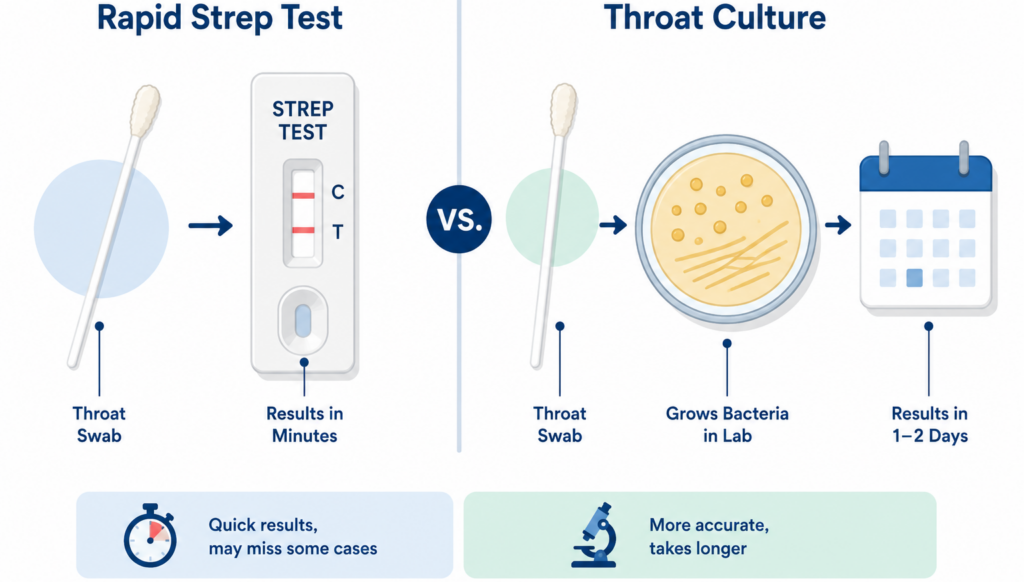
A rapid strep test gives results within minutes and confirms most active infections. A throat culture takes one to two days but catches some cases a rapid test misses. Johns Hopkins Medicine points to this gap for patients with frequent throat infections. Doctors often use both together when a patient reports frequent sore throats.