
A yeast infection in men can show up as redness, itching, or burning near the tip of the penis.
Many guys mistake it for jock itch, since both conditions cause an itchy rash in the groin. The two conditions come from different fungi and need different care to clear up fully. This guide breaks down the real signs of a male yeast infection and how it differs from jock itch.
What Is a Yeast Infection in Men
A yeast infection in men starts when the fungus Candida grows out of control on warm, moist skin. Doctors call the most common form candida balanitis, an inflammation of the head of the penis and the foreskin. Candida already lives on skin in small amounts, so an infection begins once something lets it multiply. The result is a red, sore rash that can spread to the shaft or groin.
Can Men Get Yeast Infections
Yes, men can get yeast infections. The fungus Candida can overgrow on the penis and groin, and doctors call the result candida balanitis. This condition affects about 3% to 11% of men during their life. Uncircumcised men face the highest risk.
The Cleveland Clinic reports that about 1 in 25 men develop candida balanitis at some point. That rate climbs to about 1 in 30 among uncircumcised men specifically. Circumcised men still get yeast infections, but research shows a far lower rate overall. Poor hygiene, tight skin folds, and trapped moisture all raise the odds.
Jock Itch vs Yeast Infection How to Tell Them Apart
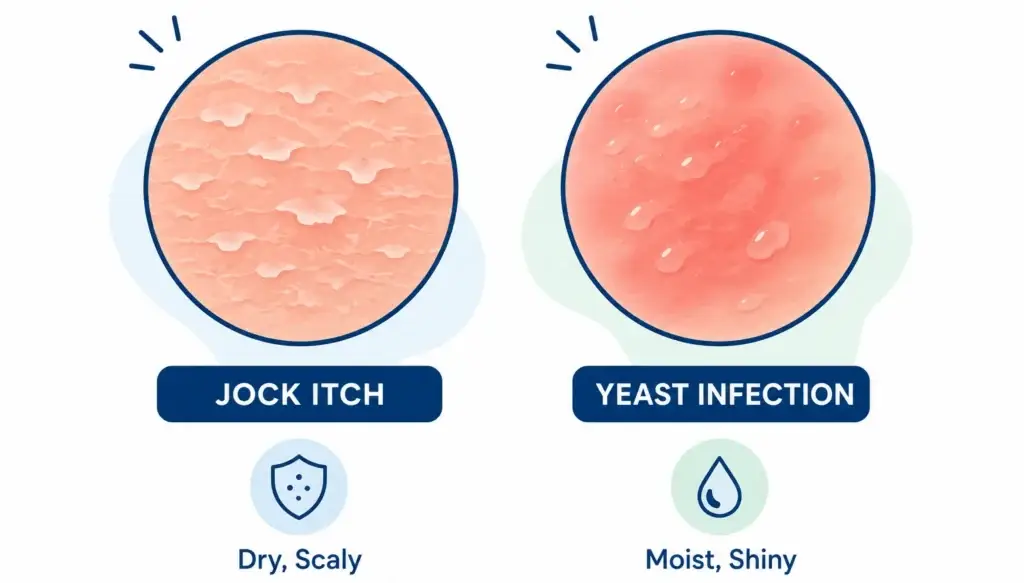
Jock itch and a male yeast infection can look alike at first glance. Confusing similar conditions is common, much like telling a cold apart from allergies. Jock itch and a yeast infection come from different fungi, though, and need different care. Knowing the difference between jock itch and a yeast infection helps you pick the right treatment faster.
| Feature | Jock Itch (Tinea Cruris) | Yeast Infection (Candida Balanitis) |
|---|---|---|
| Fungus type | Dermatophyte mold | Candida yeast |
| Common location | Groin, inner thighs, buttocks | Head of the penis, foreskin, shaft |
| Rash texture | Dry, scaly, ring shaped edges | Moist, shiny, sometimes white patches |
| Discharge | Usually none | Thick white discharge is common |
| Typical cream | Terbinafine or clotrimazole | Clotrimazole or miconazole |
The table shows the main patterns doctors look for, but real symptoms can overlap. The Cleveland Clinic notes that jock itch typically spares the scrotum, which is a useful clue. A rash centered on the head of the penis with white discharge usually points to a yeast infection instead.
Does Jock Itch Smell
Jock itch can carry a mild odor, though not every case has one. The rash grows in warm, sweaty skin. Trapped moisture lets fungus and bacteria build up together. That mix often creates a musty or sour smell.
A strong or foul odor is less common. It can point to a second infection layered on the fungus. See a doctor if the smell gets worse or new discharge appears.
Signs and Symptoms of a Yeast Infection in Men
Guys often notice a yeast infection through skin changes before anything else. The signs tend to build over a few days rather than appear overnight. Watch for these signs of a yeast infection in men.
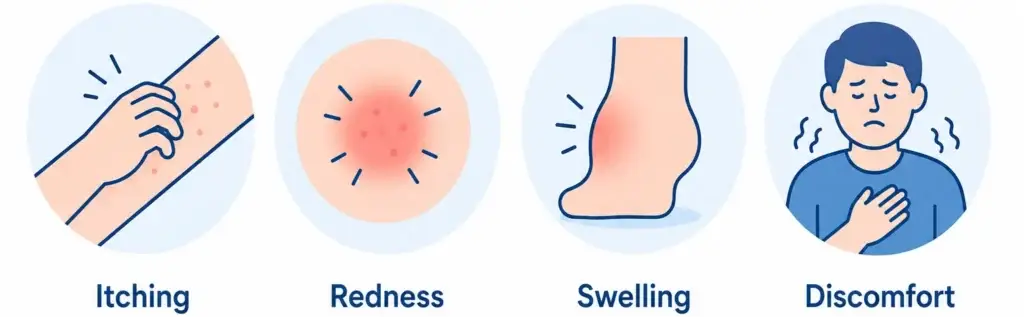
- Redness or a shiny rash on the head of the penis
- Itching or burning under the foreskin
- Thick white discharge that can look like cottage cheese
- Small red bumps or sores that may ooze
- Swelling around the tip of the penis
- Pain or discomfort during urination or sex
These signs of a yeast infection in men can range from mild to severe. Mild cases may only cause slight itching for a day or two. Severe cases can make urination painful and the skin raw. Symptoms that spread beyond the penis often signal a related skin fold infection.
Yeast Infection on the Inner Thigh
A yeast infection on the inner thigh happens when Candida spreads beyond the groin crease. This is more common in men who carry extra weight, since skin folds trap heat and sweat. The rash often looks moist and red, with a scalloped or irregular edge. It can itch or sting, especially after sweating or exercise.
This spread is sometimes called candidal intertrigo. It needs the same antifungal approach as a penile yeast infection. Keeping the area clean and dry helps stop the rash from spreading further.
What Causes Yeast Infections in Men
A yeast infection in men starts when something disrupts the normal balance of skin fungus and bacteria. Candida and other skin fungi thrive anywhere warm and damp collects on skin. That is the same reason itchy feet often trace back to fungus. Candida then multiplies faster than the skin can control it.
- Sex with a partner who has a vaginal yeast infection
- Antibiotics that wipe out bacteria that normally keep Candida in check
- Uncontrolled blood sugar from diabetes
- A weakened immune system from illness or medication
- Tight, damp clothing that traps heat and moisture
- Not being circumcised, which can trap moisture under the foreskin
The Mayo Clinic lists diabetes, antibiotic use, and a weak immune system among the top triggers. Newer diabetes drugs called SGLT2 inhibitors can also raise the risk by increasing sugar on the skin. Talk with your doctor if you started a new medication around the same time symptoms began.
Who Is Most at Risk
Some men face a much higher chance of developing a yeast infection than others. Certain health conditions and habits make it easier for Candida to grow. Knowing your personal risk factors can help you catch symptoms early.
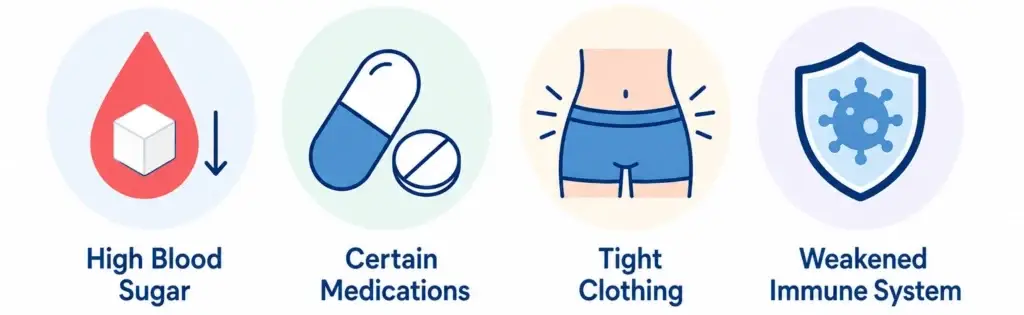
- Uncircumcised men, especially with tight foreskin
- Men with diabetes, particularly when blood sugar runs high
- Men with obesity, due to extra skin folds
- Men on long courses of antibiotics or steroids
- Men with weakened immunity from HIV, chemotherapy, or other conditions
- Men who wear damp workout clothes for long periods
Research from the National Library of Medicine backs this up. Circumcised men have a 68% lower rate of balanitis than uncircumcised men. The same research links diabetes to about 16% of balanitis cases, compared with under 6% in men without diabetes.
Balanitis has also been linked to a higher rate of penile cancer in later studies. That is one reason lasting symptoms deserve a medical check.
Can You Use Jock Itch Cream for a Yeast Infection
Some antifungal creams work for both conditions, since jock itch and yeast infections come from related fungi. Clotrimazole and miconazole, two common jock itch cream ingredients, are also approved to treat candida infections. MedlinePlus lists clotrimazole as a treatment for both ringworm type infections and candida yeast infections. Even so, check the product label, since strength and formula can vary between jock itch and yeast infection versions.
If symptoms do not improve within a week of using an over the counter cream, see a doctor. A yeast infection that does not respond to treatment may need a prescription strength antifungal. Using the wrong cream repeatedly can also irritate healthy skin.
How Doctors Treat Male Yeast Infections
Most male yeast infections respond well to antifungal cream applied for one to two weeks. Doctors may also prescribe a single dose oral antifungal pill for more stubborn cases. Keeping the area clean and dry while treating the infection helps the cream work faster.
- Clotrimazole or miconazole cream applied twice a day
- Terbinafine cream for cases that overlap with jock itch
- Oral fluconazole for infections that do not clear with cream
- Mild steroid cream, only if a doctor recommends it for severe irritation
Treatment usually clears symptoms within one to two weeks. Uncircumcised men with frequent infections sometimes discuss circumcision with their doctor as a longer term option. That decision depends on how often infections return and personal preference.
When to See a Doctor
Most mild yeast infections clear up with over the counter treatment. Some symptoms mean it is time to call a doctor instead of waiting it out.
- Symptoms that last more than two weeks despite treatment
- Fever, chills, or spreading redness
- Sores, ulcers, or unusual bleeding on the penis
- Foul smelling discharge
- Pain severe enough to affect urination or daily activity
- Frequent, repeat infections, which can point to undiagnosed diabetes
If the rash swells quickly or the skin turns dark, treat it like any worsening skin infection. Get seen quickly in that case. A doctor can also rule out other causes that mimic a yeast infection, including certain STIs and, rarely, penile cancer.
How to Prevent Yeast Infections in Men
Good hygiene habits lower the risk of a yeast infection in men significantly. Small daily changes make the biggest difference over time.
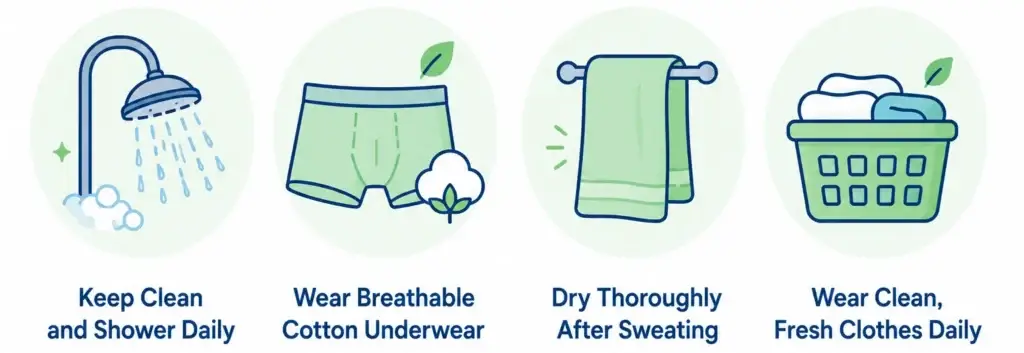
- Wash the groin daily with mild soap and rinse well
- Dry the skin fully, including under the foreskin, before dressing
- Wear breathable cotton underwear instead of tight synthetic fabric
- Change out of sweaty workout clothes as soon as possible
- Manage blood sugar closely if you have diabetes
- Talk with your doctor about antifungal options if a partner has a yeast infection
The same heat and moisture pattern drives itchy skin fold irritation in other parts of the body. These prevention habits carry over easily to those areas too.
Conclusion
A yeast infection in men is common, treatable, and often confused with jock itch. Where symptoms show up and what the rash looks like are the biggest clues that tell the two apart. Most cases clear up fast with the right antifungal cream and a few hygiene changes. When symptoms linger or keep coming back, a doctor visit gets you real answers instead of more guessing.
Frequently Asked Questions
Can men get yeast infections from their partner
Yes, a man can develop a yeast infection after sex with a partner who has a vaginal yeast infection. The fungus spreads through skin to skin contact. Using a condom lowers this risk. Treating both partners at the same time helps stop the infection from passing back and forth.
What does a male yeast infection look like
A male yeast infection often looks like a shiny, red rash on the head of the penis. White patches or a thick discharge under the foreskin are common too. The skin may look swollen or raw in more severe cases. A doctor can confirm the diagnosis with a quick skin swab.
Is jock itch the same as a yeast infection
No, jock itch and a yeast infection are not the same. Jock itch comes from a dermatophyte fungus and stays mostly in the groin crease and inner thighs. A yeast infection comes from Candida and usually centers on the penis itself. Both need antifungal treatment, but the specific cream can differ.
How long does a yeast infection in men last
Most male yeast infections clear up within one to two weeks of antifungal cream. Mild cases may improve within a few days. Infections that do not improve after two weeks often need a prescription strength treatment. Repeat infections deserve a checkup to look for an underlying cause like diabetes.
Can a yeast infection in men go away on its own
A mild case can sometimes fade on its own if the skin stays clean and dry. Most cases still need antifungal cream to fully clear, though. Waiting it out risks the rash spreading or getting worse. Treating it early is faster and less uncomfortable.
Why do men get yeast infections on the inner thigh
Yeast infections spread to the inner thigh when Candida grows in the warm, damp skin folds near the groin. This is more common in men with extra weight or tight clothing habits. The rash often has a moist, scalloped edge. The same antifungal cream used on the penis usually treats this spread too.
Can you use jock itch cream for a yeast infection
Some jock itch creams, like those with clotrimazole or miconazole, also treat candida yeast infections. The active ingredients overlap between the two conditions. Always check the label to confirm the strength and directions match your symptoms. See a doctor if symptoms do not improve within a week.
When should a man see a doctor for a yeast infection
See a doctor if symptoms last more than two weeks, keep coming back, or come with fever or spreading redness. Foul smelling discharge or sores are also a signal to get checked. A doctor can rule out other causes, including STIs. Early treatment prevents complications and confirms the right diagnosis.