
How to Know the Difference Between a Cold and Allergies

Knowing how to know the difference between a cold and allergies can save you from popping the wrong pill or missing work for nothing. Both conditions share a few annoying symptoms, but they come from very different causes and they call for different care.
In the next few minutes, you will pick up the small clues that set them apart, from the color of your mucus to how long your symptoms stick around. By the end, you will feel ready to handle whatever is bothering you with more confidence.
Why Colds and Allergies Can Feel So Much Alike
Both a cold and seasonal allergies can leave you with a stuffy nose, a scratchy throat, and a tired, foggy feeling. That overlap is exactly why so many people search for ways to know the difference between a cold and allergies before they reach for medicine.
A cold comes from a virus that spreads from person to person, while allergies happen when your immune system overreacts to something harmless like pollen, dust, or pet dander. Because the starting point is so different, the way each one plays out in your body is different too, even when the early symptoms look almost the same.
Think about the last time your nose would not stop running. Maybe you blamed the weather, or maybe you guessed you had picked up a bug at work. That mix up is common, since both problems crowd your sinuses and send you reaching for tissues. Still, your body gives off small clues. Learning to read them puts you back in control.
How to Tell a Cold and Allergies Apart by Your Symptoms

Your symptoms hold most of the answer, and a few small details often point straight to the cause.
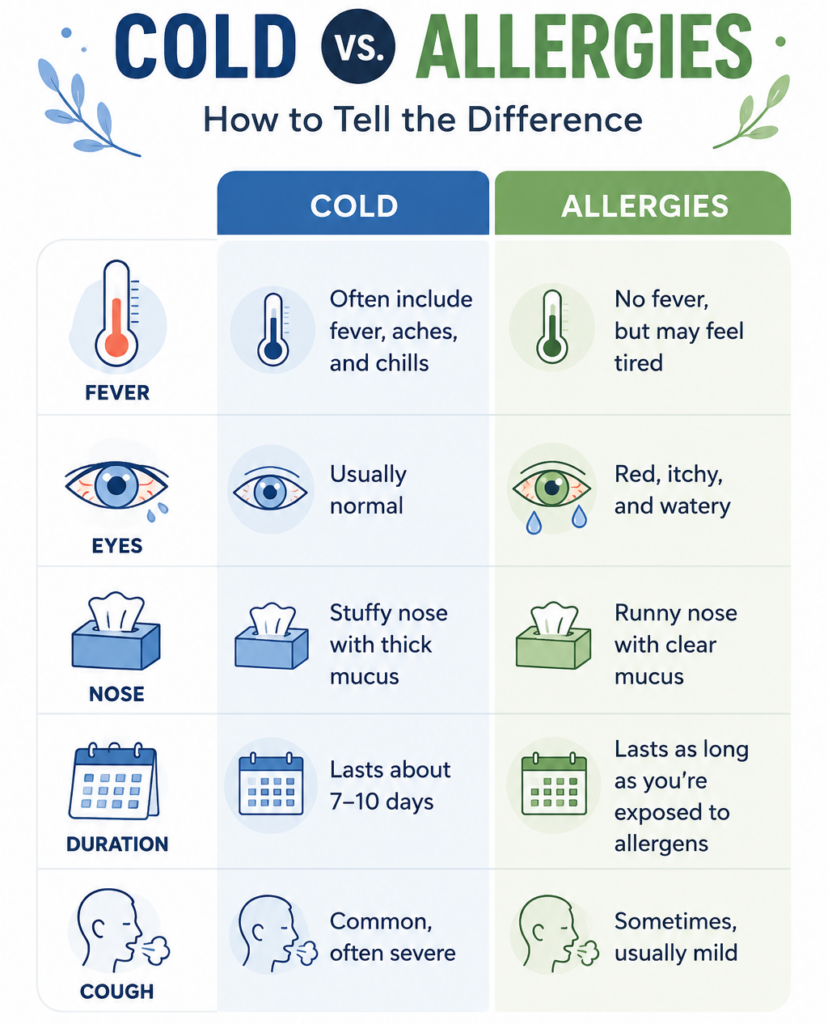
- Cough. A cold usually brings a wet, productive cough, while allergies tend to cause a dry cough or throat clearing from drainage.
- Fever. Colds can bring a mild fever or chills, but allergies almost never cause a fever.
- Body aches. Colds often come with sore muscles and a tired, achy feeling, while allergies rarely cause body pain.
- Itchy eyes. Allergies commonly cause itchy, watery, red eyes, while colds rarely affect your eyes this way.
- Mucus color. Cold mucus often turns thick and yellow or green after a few days, while allergy mucus tends to stay clear and thin.
- Sneezing pattern. Allergy sneezes often come in quick bursts tied to a specific place, while cold sneezes are more random and spread out.
Once you start noticing these patterns, telling a cold from allergies gets much easier.
Cold vs Allergy Symptoms at a Glance
Sometimes a side by side view makes the picture clearer. Use this table as a quick check whenever you feel off.
| Symptom | Usually a Cold | Usually Allergies |
|---|---|---|
| Fever | Sometimes, often mild | Almost never |
| Body aches | Common | Rare |
| Itchy or watery eyes | Uncommon | Very common |
| Sore throat | Common, often early on | Mild, from drainage |
| Cough type | Wet and productive | Dry, from postnasal drip |
| How it starts | Builds up over a day or two | Starts soon after contact with a trigger |
| How long it lasts | About a week to 10 days | Can last for weeks while the trigger is around |
| Spreads to others | Yes, through germs | No, it is not contagious |
What Sets Off a Cold Versus What Sets Off Allergies
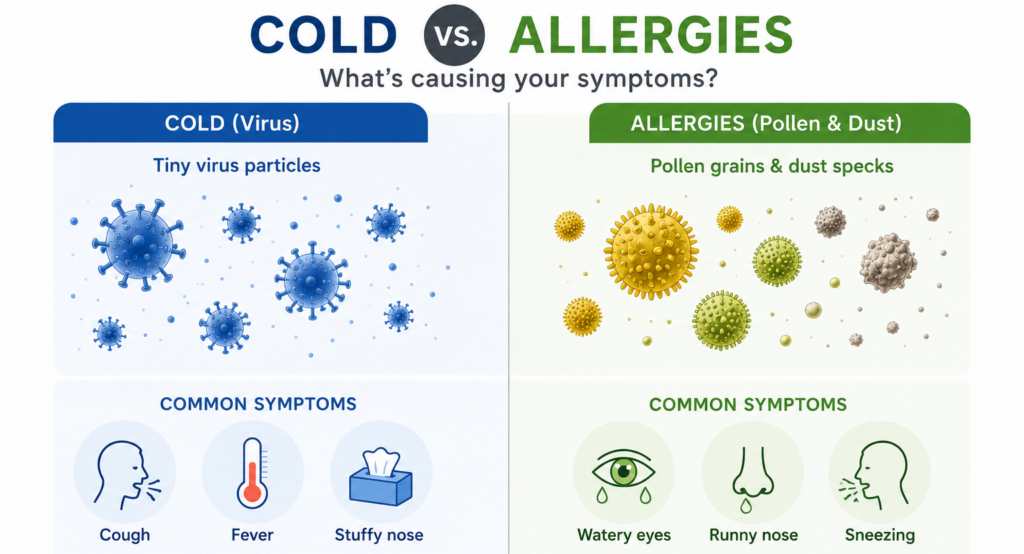
A cold starts when a virus, often a rhinovirus, gets into your nose or throat. From there, it spreads from person to person through droplets or close contact. The National Institutes of Health notes that healthy adults often catch two to three colds each year, and most show up during the colder months. Allergies work in a completely different way.
Your immune system mistakes something harmless, such as pollen, dust mites, mold, or pet dander, for a threat. It then releases chemicals like histamine to fight off that imaginary threat, and that release is what causes the sneezing, itching, and congestion you feel. The Asthma and Allergy Foundation of America reports that seasonal allergies affect roughly one in four adults in the United States. About one in five children deal with them too.
Do Allergies Cause Colds
No, allergies do not cause colds. A cold comes from a virus, while allergies come from your immune system reacting to a trigger in the air. The two problems do not turn into each other. That said, allergies can wear down the lining of your nose and sinuses over time. A weakened lining sometimes makes it easier for a virus to take hold, or it can lead to a sinus infection that feels a lot like a cold. So allergies will not give you a cold directly. Still, they can set the stage for one to take hold more easily.
What Do Allergies Feel Like Day to Day
Allergies often feel like a low grade annoyance that follows you around. Your eyes might itch and water, your nose might run or feel blocked, and your throat may feel scratchy from drainage running down the back of it. Many people also notice a foggy, tired feeling that builds as the day goes on. Unlike a cold, these symptoms tend to ease up once you step indoors or get away from the trigger. They also tend to show up at the same time each year, such as during high pollen weeks in spring or fall. If your morning routine includes a sore throat that lingers after you wake up, allergies are one common reason behind it.
Can Bad Allergies Make You Feel Sick
Yes, severe allergies can absolutely make you feel sick, even though they are not contagious. Constant congestion can lead to headaches, sinus pressure, and a sore throat from breathing through your mouth at night. Poor sleep from a stuffy nose often leaves you feeling drained and foggy the next day, and some people even notice a faster heartbeat while they are feeling under the weather. In some cases, long term allergy symptoms can lead to a sinus infection, which can bring on a low fever and thicker mucus. When that happens, the line between allergies and a cold can blur. A visit to your doctor can help sort out what is really going on.
How Long Each One Usually Sticks Around
Most colds run their course in about a week to 10 days, with symptoms peaking around day three or four before they fade. Allergies follow a different timeline entirely. They can last for weeks or even months, depending on how long you stay near the trigger. If your symptoms flare up at the same time every year, that pattern points more toward allergies than a virus. A cold that lingers well past two weeks is also worth a second look, since it could signal something else, such as a sinus infection.
How to Treat a Cold Vs Allergies
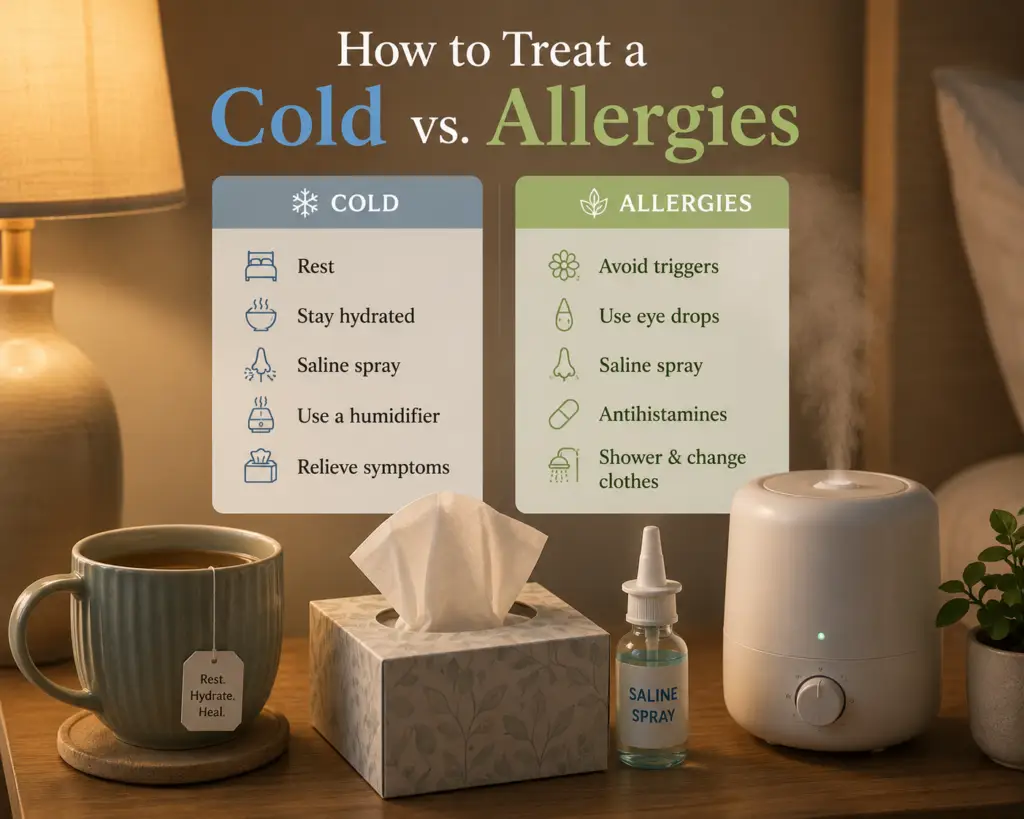
The right treatment depends on the cause, so matching your care to your condition makes a real difference.
For a cold, try these steps:
- Rest and drink plenty of fluids so your body can fight off the virus
- Use a humidifier or warm shower steam to ease congestion
- Ask your pharmacist about pain relievers or decongestants that fit your needs
- Try warm tea with honey for a scratchy throat, but skip honey for babies under one
For allergies, try these steps:
- Ask your doctor about antihistamines or nasal sprays that match your symptoms
- Rinse your sinuses with a saline rinse to clear out pollen and dust
- Keep windows shut on high pollen days and run an air purifier indoors
- Talk with an allergist about testing or long term options if symptoms keep returning
Whichever one you are dealing with, your doctor or pharmacist can help you find a plan that fits your body and your routine. If nighttime congestion is part of your struggle, finding a sleep position that eases pressure on your airway can also help you rest easier.
When to See a Doctor
Most colds and allergy flare ups can be managed at home, but certain signs call for medical care.
- A fever above 103 degrees Fahrenheit, or any fever lasting more than a few days
- Symptoms that last longer than 10 days without any sign of easing up
- Trouble breathing, wheezing, or chest tightness
- Sinus pain that keeps getting worse, especially with thick green or yellow mucus
- Allergy symptoms that disrupt your sleep or daily life year after year
- Any symptom that feels far more severe than what you have felt before
If any of these show up, reach out to your doctor rather than waiting it out. Catching a problem early often makes treatment easier and shorter.
Everyday Habits That Help Keep Both Away
A few simple habits can lower your odds of getting hit by either one.
- Wash your hands often, especially after time in crowded places
- Keep your distance from anyone with a cold until they feel better
- Check your local pollen count and limit time outside when it runs high
- Shower and change clothes after spending time outdoors during allergy season
- Wash your bedding in hot water weekly to cut down on dust mites
- Notice if itchy skin shows up alongside your other symptoms, since allergic reactions are not always limited to your nose and eyes
Small steps like these add up, and they can spare you days of feeling lousy.
Telling a cold and allergies apart comes down to paying attention to the small details. A wet cough, a fever, and body aches usually point to a virus, while itchy eyes, a dry cough, and symptoms that return at the same time each year usually point to allergies. Once you know how to know the difference between a cold and allergies, you can pick the right care faster and feel like yourself again sooner. And if anything feels off or sticks around longer than it should, your doctor remains the best person to help you sort it out.
Frequently Asked Questions
How can I tell if my stuffy nose is from a cold or allergies?
Look at how it started and what else you feel. A cold usually builds up slowly with a sore throat, body aches, or a low fever, while allergies often start fast after contact with pollen or dust and bring itchy eyes without a fever.
Do allergies cause colds?
No, allergies do not cause colds. A cold comes from a virus, while allergies come from your immune system reacting to a trigger such as pollen or dust. They can overlap, but one does not turn into the other.
What do allergies feel like compared to a cold?
Allergies tend to bring itchy, watery eyes, a clear runny nose, and a scratchy throat that comes and goes with your surroundings. A cold usually feels heavier, with body aches and a thicker cough that builds over a day or two.
Can bad allergies make you feel sick all over?
Yes, strong allergy symptoms can leave you feeling drained, foggy, and achy from poor sleep and constant congestion. Allergies will not cause a fever, but they can wear you down enough to feel sick in a general sense.
How long should I wait before seeing a doctor about my symptoms?
If your symptoms last more than 10 days, keep getting worse, or come with a high fever or trouble breathing, call your doctor. Allergy symptoms that return every year and disrupt your sleep are also worth discussing with a professional.
Can you have a cold and allergies at the same time?
Yes, it is possible to deal with both at once, and that mix can make symptoms feel more intense and harder to sort out. If your symptoms do not match a clear pattern, your doctor can help you figure out what is going on.
Written by Theo James
The information on this page is for general educational purposes only and is not a substitute for professional medical advice, diagnosis, or treatment. Always talk with your doctor or another qualified healthcare provider about any questions you have regarding a medical condition. Never ignore professional medical advice or delay seeking it because of something you read on the internet.