
Arms go numb while sleeping because a nerve or blood vessel gets squeezed by your sleep position.
Which fingers go numb tells you which nerve is involved, and that points to the fix. Numbness that fades within minutes of moving is almost always harmless. Numbness that lingers or returns nightly deserves a closer look.
You wake up at 2 a.m. and your right arm feels dead. It will not move the way you want. Pins and needles run from your shoulder to your fingertips. Still, when it happens night after night, you start to wonder if something more serious is going on. This guide covers why arms go numb while sleeping, what it might mean, and when to call a doctor.
What Happens When Arms Go Numb While Sleeping
That tingling, prickling feeling has a name, paresthesia. It shows up when pressure on a nerve blocks its normal signal. It also happens when blood flow to your arm slows down. Your brain reads that blocked signal as numbness, tingling, or a dead weight feeling in your limb.
This happens to more people than you might think. For most people, the fix is simple. For others, nightly numbness points to a nerve or circulation issue that needs a closer look.
Which Nerve Is Going Numb? Your Fingers Tell You
Three main nerves run from your neck into your hand, and each one goes numb in its own pattern. Check which fingers lose feeling and you can usually name the nerve, and the sleeping habit behind it.
Thumb, index, and middle finger numb. That is the median nerve. It runs through the carpal tunnel in your wrist. A wrist curled under your pillow or bent tight against your chest compresses it. If this pattern also shows up during the day, carpal tunnel syndrome moves to the top of the list.
Ring finger and pinky numb. That is the ulnar nerve. It passes through the inside of your elbow, the spot people call the funny bone. Sleeping with your elbow folded tight puts hours of stretch and pressure on it. Keeping that elbow only slightly bent usually solves it.
Back of the hand numb, or the whole wrist feels weak and floppy. That is the radial nerve. It wraps around the upper arm bone. This pattern comes from pressure on the upper arm itself, like sleeping with your arm hooked over a chair back or a partner’s head resting on it. Doctors nickname the severe version Saturday night palsy, because deep sleep after drinking keeps people from shifting off the compressed arm.
The whole arm numb at once usually means the brachial plexus, the full nerve bundle between your neck and shoulder, is being compressed. That points to body weight lying directly on the arm rather than one bent joint.
Match your pattern here, then use the position fixes below on the joint that is actually causing it.
Common Causes of Arms Going Numb While Sleeping
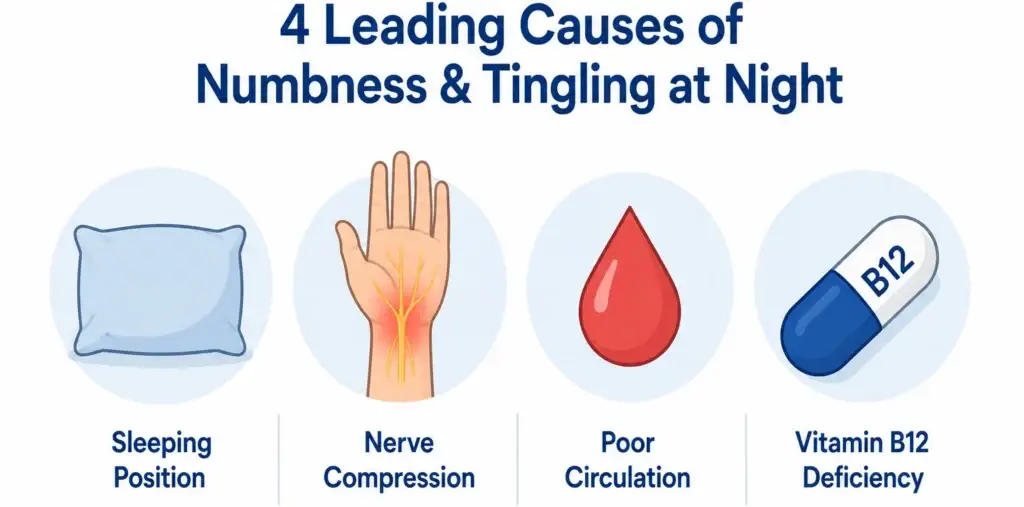
Sleep position causes most nighttime numbness. Still, several health conditions can make your arms fall asleep more often or more easily. Here are the causes doctors see most.
Sleep Position and Nerve Compression
Your sleep position sits behind most cases of arms going numb at night. Sleeping on your side with your arm tucked under your head or pillow puts pressure on your nerves.
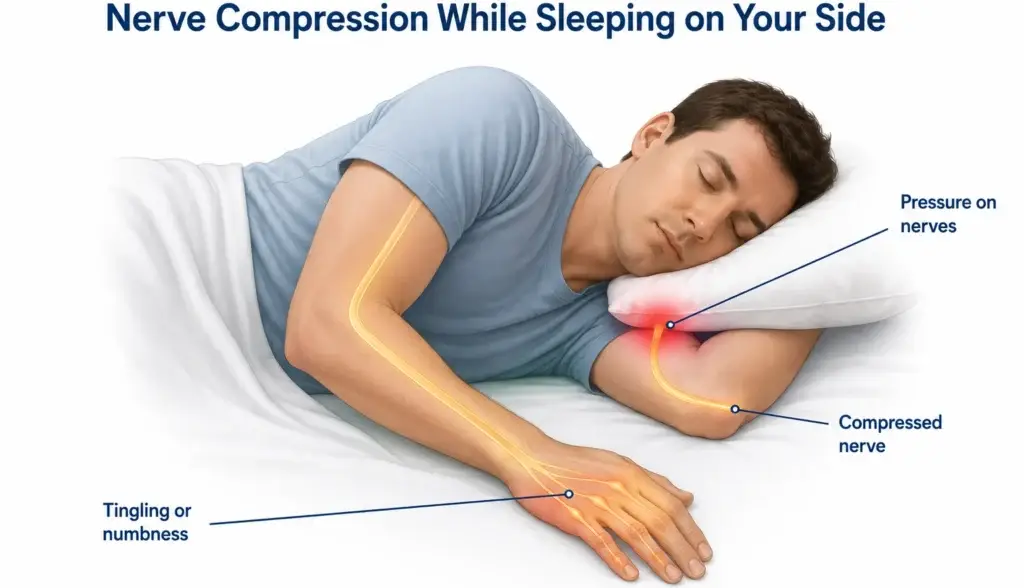
Back sleepers rarely have this problem. Gravity keeps their arms in a neutral spot instead of pinned underneath them. Side and stomach sleepers face the highest risk. This is especially true when an elbow or wrist stays bent for hours at a stretch.
Carpal Tunnel Syndrome
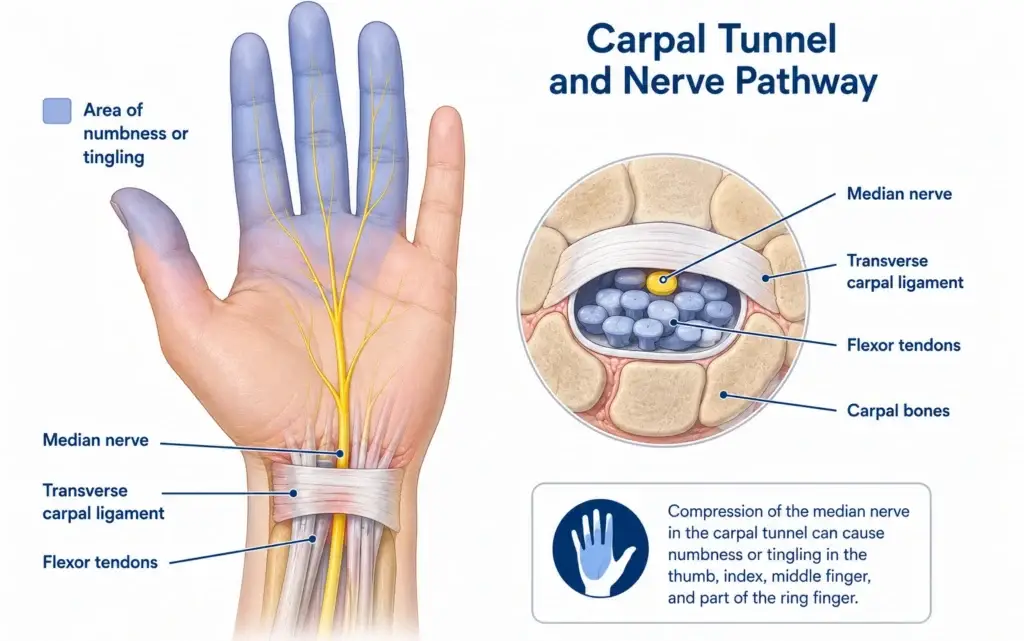
Carpal tunnel syndrome happens when swelling inside your wrist squeezes the median nerve. That nerve controls feeling in your thumb, index, and middle fingers. Numbness from carpal tunnel usually shows up there first, not across your whole arm.
Women develop carpal tunnel syndrome about three times more often than men, according to MedlinePlus. Pregnancy, an underactive thyroid, and repetitive wrist motion all raise your risk. Carpal tunnel numbness differs from wrist conditions like mommy thumb, which causes pain without that same nerve based numbness.
Peripheral Neuropathy and Diabetes
Peripheral neuropathy is nerve damage outside your brain and spinal cord. Diabetes causes most cases, according to the Mayo Clinic. Unlike numbness from a bad sleep position, neuropathy often affects both hands or both feet at once.
It also does not fade as soon as you shift position. If your fingers stay numb well after you get up, nerve damage is worth ruling out with your doctor.
Poor Circulation
Poor blood flow can leave your arms feeling numb, heavy, or cold overnight. Lying still for hours slows circulation to your hands and fingers. Cold rooms, tight sleeves, and jewelry can add to the problem.
Numbness from poor circulation usually fades within a few minutes of moving. If it lingers, or your skin looks pale or blue, check in with your doctor soon.
Vitamin B12 Deficiency
Low vitamin B12 damages the nerves in your hands and feet over time, according to Cleveland Clinic. That damage often shows up first as numbness or tingling. It tends to feel worse at night than during the day.
People who follow a vegan diet face a higher risk of low B12. So do people who take certain acid reflux medications or have a stomach condition that blocks B12 absorption. A simple blood test can confirm a deficiency.
Thoracic Outlet Syndrome
Thoracic outlet syndrome happens when nerves or blood vessels get squeezed between your collarbone and your first rib. Neurogenic thoracic outlet syndrome is the nerve related type. It makes up about 95 percent of all cases, according to Cleveland Clinic.
This condition often causes numbness that spreads down the whole arm, not just the fingers. Sleeping with your arm raised above your head can make the squeezing worse.
Pregnancy and Hormonal Changes
Pregnancy raises your risk of nighttime numbness for two reasons. Hormonal shifts cause fluid retention, which puts extra pressure on your wrist nerves. Third trimester swelling adds even more pressure on top of that.
Hypothyroidism causes a similar kind of fluid buildup. Both conditions often improve once the hormone imbalance gets treated. In pregnancy, the numbness usually eases once the baby arrives.
Previous Injury
An old fracture, dislocation, or nerve injury can leave an arm more sensitive to pressure years later. Scar tissue from the original injury changes how that arm responds to compression. Numbness becomes more likely to return whenever that arm gets squeezed, including during sleep.
Comparing the Most Common Causes at a Glance
Not sure which cause fits your symptoms best? This table lines up the most common causes side by side.
| Cause | Where You Feel It | How Long It Lasts | What Helps |
| Sleep position | Whole arm, hand, fingers | Fades within minutes of moving | New position, supportive pillow |
| Carpal tunnel syndrome | Thumb, index, middle finger | Builds up over weeks | Wrist brace, activity changes |
| Peripheral neuropathy | Both hands or both feet | Persists after movement | Blood sugar control, medical care |
| Poor circulation | Whole limb, may feel cold | Fades within minutes | Warmth, movement, loose sleepwear |
| Vitamin B12 deficiency | Both hands, gradual onset | Persists, worsens slowly | Blood test, supplementation |
| Thoracic outlet syndrome | Whole arm, worse overhead | Comes and goes with posture | Physical therapy, posture changes |
Why Do My Arms Go Numb When I Sleep on My Side

Side sleeping is the most common trigger for nighttime arm numbness. When you lie on your side, your body weight presses straight down on the arm underneath you.
That pressure squeezes the brachial plexus, a bundle of nerves running from your neck into your arm. Add a bent elbow, or a wrist curled under your pillow, and the squeeze gets worse fast. Side sleeping helps with other issues, like sleep apnea. Even so, it can work against you when it comes to arm numbness.
Switching sides through the night takes pressure off that nerve bundle. A pillow that keeps your top arm supported helps too.
How to Prevent Your Arms From Going Numb at Night
Choose a Better Sleep Position
Sleeping on your back keeps your arms in a neutral position and takes pressure off your nerves all night. If you sleep on your side, keep your arms in front of your body, not under your head or pillow.
A few small habits make a real difference.
- Keep your elbows only slightly bent, not folded tight against your chest
- Avoid resting your head on your arm or hand
- Switch sides a few times through the night if you tend to stay still
Support Your Arms and Wrists With the Right Pillow
A body pillow or a wedge pillow gives your top arm somewhere to rest. A slim pillow under your wrist keeps it in a neutral position instead of bent. The same median and ulnar nerves that go numb at night also react to daytime habits. That includes holding your phone with a bent wrist for hours.
A few more habits worth adding.
- Try a wrist splint at night if carpal tunnel runs in your family
- Skip tight sleeves, watches, or jewelry before bed
- Keep your bedroom warm enough that cold does not slow your circulation further
Address Underlying Health Conditions
If sleep position changes do not fix the numbness, the cause may be medical instead of mechanical. Treating diabetes, thyroid problems, or a vitamin B12 deficiency often clears up nighttime numbness within weeks.
Carpal tunnel syndrome may need a wrist brace, physical therapy, or sometimes surgery. Your doctor can point you toward the right option once the cause gets confirmed.
Waking Up With a Numb Arm Every Night, What It Might Mean
An occasional numb arm is normal. Waking up with a numb arm every single night is not normal. It usually means one cause keeps repeating instead of random pressure.
About one in three adults deal with weekly nighttime numbness, according to the Sleep Foundation. A pattern that specific, night after night, points toward a repeating cause. That could be carpal tunnel syndrome, a pinched nerve in your neck, or a circulation problem. The same nerve and circulation issues can also show up as leg pain at night. The two often share a root cause.
When to See a Doctor for Numb Arms at Night
Most nighttime numbness clears up once you move or change position. Call your doctor if the numbness lasts more than a few minutes after you wake up. Also call if it happens most nights of the week.
Get medical care sooner if numbness comes with weakness or dropped objects. The same goes for pain that spreads into your neck or chest, or numbness in both arms at once. Swelling alongside the numbness deserves its own look too. Fluid buildup in your hands can point to a separate problem.
Sudden numbness on one side of your body needs emergency care right away. This is especially true if it comes with slurred speech or a drooping face.
Getting Better Sleep Without the Numbness
For most people, arms going numb while sleeping comes down to one simple fix. A better sleep position and the right pillow support solve most cases within a week or two.
If the numbness keeps coming back despite those changes, treat it as useful information instead of a mystery. Your body is pointing toward carpal tunnel syndrome, a nerve issue, or a circulation problem. A doctor can confirm the cause and treat it from there.
Frequently Asked Questions
Why do my arms go numb when I sleep?
Your arms go numb while sleeping when a nerve or blood vessel gets compressed by your sleep position. Less often, a condition like carpal tunnel syndrome or a vitamin B12 deficiency is behind it. Numbness that fades within minutes of moving is usually harmless.
Which fingers going numb tells me which nerve is compressed?
Thumb, index, and middle finger point to the median nerve at your wrist. Ring finger and pinky point to the ulnar nerve at your elbow. The back of your hand, or a weak floppy wrist, points to the radial nerve in your upper arm. The whole arm at once usually means the full nerve bundle near your shoulder is under your body weight.
What is Saturday night palsy?
Saturday night palsy is radial nerve compression from deep, unmoving sleep with pressure on the upper arm, often over a chair back or armrest. The name comes from heavy sleep after drinking, when people do not shift position for hours. It causes a weak or dropped wrist that can take days or weeks to recover, and it needs a doctor’s evaluation.
Why does my arm go numb when I sleep on my side?
Side sleeping puts your full body weight on the shoulder and arm underneath you. That pressure squeezes the nerves running from your neck into your arm. Normal feeling returns once you shift position.
Is it normal for arms to fall asleep every night?
Occasional numbness is normal, but nightly numbness is not. About one in three adults deal with weekly nighttime numbness in an arm or hand. A pattern that regular is worth mentioning to your doctor.
Why do my arms fall asleep at night but not during the day?
Sleep keeps you in one position for hours without much movement. That stillness lets pressure build on a nerve or blood vessel. During an active day, you shift position too often for that pressure to build.
What does it mean if I keep waking up with a numb arm?
Waking up with a numb arm often points to a repeating cause. Carpal tunnel syndrome and a pinched neck nerve are common culprits, rather than a one time bad position. See a doctor if it happens most nights.
Can a vitamin deficiency cause arms to go numb at night?
Yes. Low vitamin B12 damages nerves over time. It often causes numbness or tingling that feels worse at night. A simple blood test can check your B12 level if this seems like a fit.
How can I stop my limbs from falling asleep so easily while sleeping?
Sleep on your back when you can, and keep your arms away from under your head or pillow. A body pillow for support helps too. A wrist splint helps if you carry carpal tunnel risk.
Should I worry if only one arm goes numb at night?
One arm going numb usually points to local pressure from your sleep position. Numbness that affects both arms needs more attention. The same is true for numbness that comes with weakness or pain.
Written by Tejanshu Jaluthria, Editor, Banner Health. Last updated: July 15, 2026.
Every claim in this article is checked against the sources linked throughout, including the NIH, FDA, WHO, the American Academy of Orthopaedic Surgeons and Mayo Clinic. Read more about how we review our content.
Disclaimer: The information on this website is for general educational purposes only and is not a substitute for professional medical advice, diagnosis, or treatment. Always talk with your doctor or another qualified healthcare provider about any questions you have regarding a medical condition. Never ignore professional medical advice or delay seeking it because of something you read on the internet.