
Your back has hurt for weeks, and a friend just told you to try acupuncture. Someone else suggested dry needling instead, and now you are stuck choosing between two similar sounding treatments. Still, the dry needling vs acupuncture comparison reveals real differences in training, technique, and the science behind each method.
What Is Dry Needling
Dry needling is a treatment that physical therapists, chiropractors, and some doctors use to ease muscle pain. Cleveland Clinic describes dry needling as a method that targets muscle trigger points to ease pain and improve movement. A thin, solid needle goes directly into a tight band of muscle called a trigger point. The needle carries no medication, which is why the technique is called dry needling.
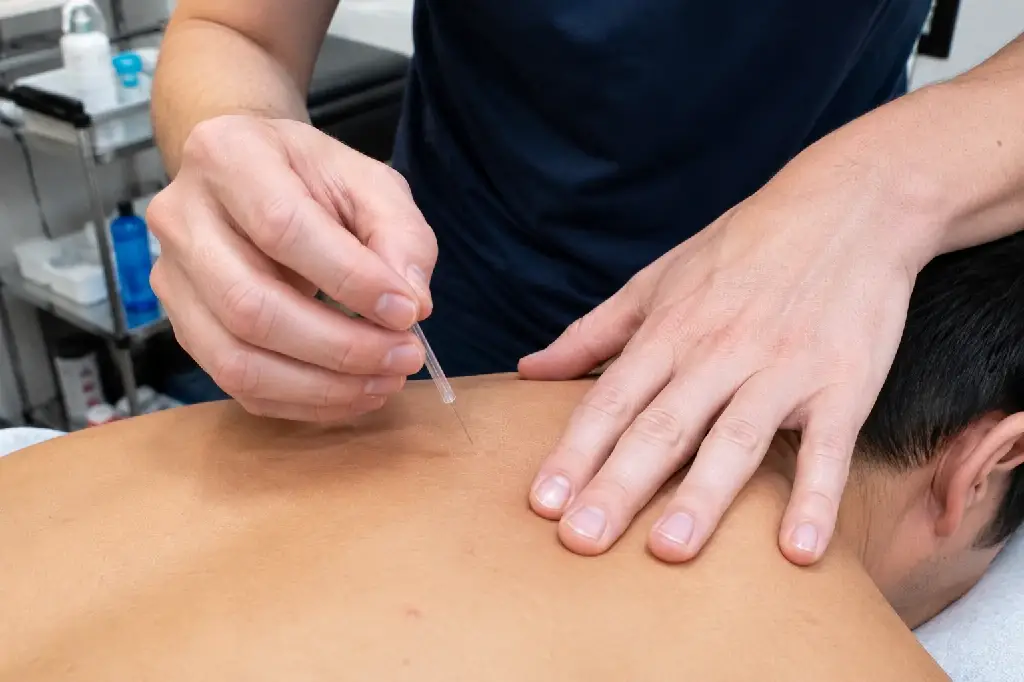
Dry needling grew out of Western medicine and physical therapy research. Providers choose needle sites based on anatomy, posture, and movement patterns rather than any energy system. Therapists usually pair it with stretching, exercise, or manual therapy. That mirrors the approach used for repetitive strain problems like hand pain from holding your phone too often.
Here is what typically happens during a dry needling session.
- A therapist examines your posture, movement, and the painful muscle before starting
- They insert a thin needle into the trigger point, often through a guide tube
- You may feel a quick twitch or cramp, which usually fades within seconds
- The needle stays in place for a few seconds to several minutes
- Soreness or light bruising can follow for a day or two
What Is Acupuncture
Acupuncture comes from Traditional Chinese Medicine and has been practiced for thousands of years. Practitioners believe pain and illness happen when energy, called Qi, gets blocked along pathways known as meridians. Needles go into specific points along these meridians to restore balance and ease symptoms.
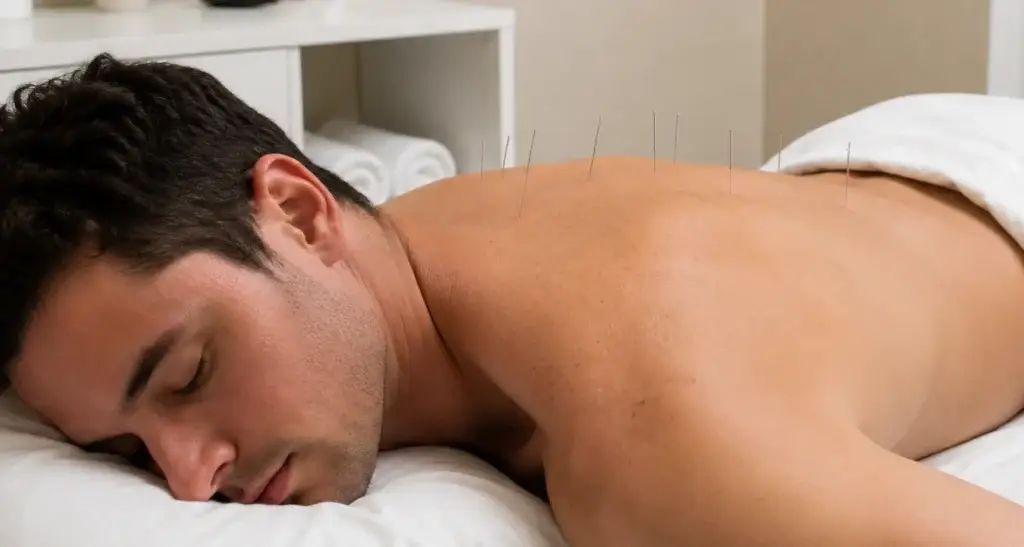
Unlike dry needling, acupuncture treats more than muscle pain. Licensed acupuncturists also address headaches, digestive trouble, stress, and sleep problems, including the kind of pain covered in our piece on waking up with headaches. The National Center for Complementary and Integrative Health says acupuncture carries a low risk of side effects.
Acupuncture needles tend to stay in place longer than dry needling needles, often between 15 and 30 minutes. Sessions feel calm and are sometimes paired with heat, cupping therapy, or herbal remedies.
Here is what typically happens during an acupuncture session.
- A licensed acupuncturist asks about your health history, sleep, and stress levels first
- Thin needles go into specific points along the body, often far from the painful area
- Needles usually stay in place for 15 to 30 minutes while you rest
- Many people feel relaxed or even fall asleep during treatment
- Mild bruising or light soreness can occur but usually fades quickly
Dry Needling vs Acupuncture the Core Differences
The biggest difference comes down to philosophy. Dry needling treats muscle tissue using Western anatomy and trigger point science. Acupuncture treats the whole body using Traditional Chinese Medicine and energy pathways.
Training also separates the two professions. Licensed acupuncturists graduate from programs accredited by the Accreditation Commission for Acupuncture and Oriental Medicine. These programs require well over 1,900 hours of combined classroom and clinical training, based on NCCAOM certification standards. Physical therapists who offer dry needling complete a separate short course after their doctoral training. The course often involves just a few dozen hours of hands on instruction.
Needle placement differs too. Dry needling targets a specific knot in the muscle that hurts. Acupuncture often targets points far from the painful area, based on the meridian system.
| Feature | Dry Needling | Acupuncture |
|---|---|---|
| Origin | Western medicine, trigger point theory | Traditional Chinese Medicine |
| Goal | Release muscle knots and ease pain | Balance energy and treat the whole body |
| Who performs it | Physical therapists, chiropractors, some doctors | Licensed acupuncturists |
| Typical training | A short certification course after doctoral training | Over 1,900 hours through an accredited program |
| Needle placement | Directly into the painful muscle | Specific points along meridians |
| Session length | A few seconds to several minutes per point | 15 to 30 minutes |
| Common uses | Muscle pain, trigger points, sports injuries | Pain, migraines, stress, digestive issues |
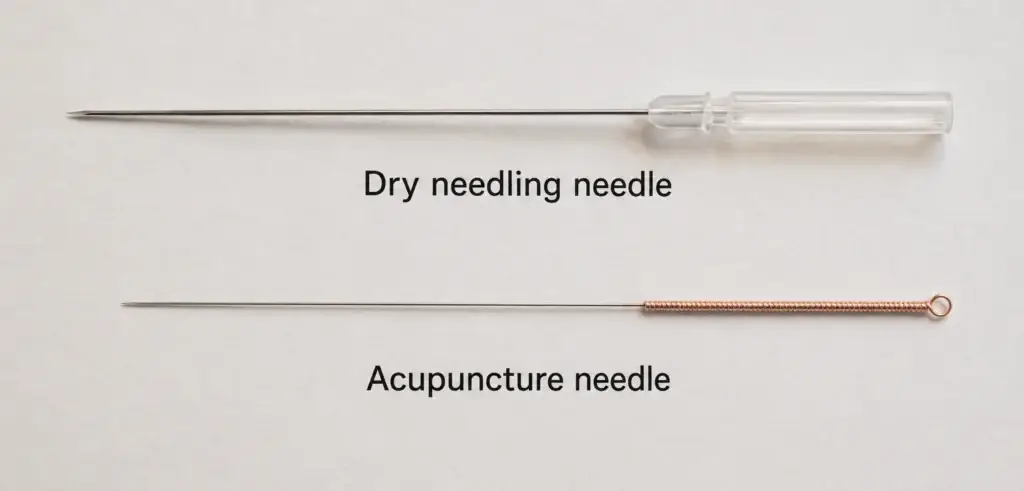
Is Dry Needling the Same as Acupuncture?
No, dry needling is not the same as acupuncture, even though both use thin needles. Dry needling focuses only on muscle and movement problems. Acupuncture treats a wider range of conditions through an entirely different medical framework. The needles themselves can look almost identical. That similarity is exactly why so many patients ask how dry needling is different from acupuncture before booking either appointment.
Dry Needling vs Acupuncture for Back Pain
Back pain is the most common reason people try either treatment. Research generally supports both options for short term relief, though the two have different track records.
A study published through the National Library of Medicine compared dry needling and acupuncture directly. It found that acupuncture currently has more research behind it, partly because the practice is older. Dry needling is newer, but several reviews report real benefits too. People with chronic low back pain often show decreased pain and improved movement after treatment.
Medicare actually recognizes this overlap. Medicare Part B covers up to 12 acupuncture sessions in a 90 day period for chronic low back pain. Eight more sessions are allowed if you improve.
If your complaint is a tight muscle or a pulled hamstring, dry needling for back pain may bring faster relief. If stress, poor sleep, or digestion problems come with your back pain, acupuncture might help more overall.
Benefits and Risks Compared
Benefits of Dry Needling
- Targets the exact muscle causing the pain
- Often brings quick relief after just one or two sessions
- Works well alongside physical therapy and exercise
- Covered by many commercial insurance plans when a physical therapist performs it
Risks of Dry Needling
- Soreness or bruising for a day or two
- Small risk of fainting or feeling lightheaded
- Rare risk of infection if the needle is not sterile
- Not recommended in certain areas during pregnancy without a doctor’s guidance
Benefits of Acupuncture
- May ease migraines, nausea, and chronic pain
- Generally relaxing, with very few side effects
- Backed by decades of clinical research compared to newer treatments
- Can be combined with cupping therapy or other complementary care
Risks of Acupuncture
- Mild bruising or soreness at the needle site
- Slight risk of infection from unsterilized needles
- Rare fainting during or after treatment
- Cost can add up since many insurance plans limit coverage
Cost and Insurance Coverage for Dry Needling vs Acupuncture

Cost is often the deciding factor for many patients. A single acupuncture session without insurance often costs between 75 and 150 dollars in many parts of the country. Dry needling is usually billed as part of a physical therapy visit. Many clinics charge less per session than a stand alone acupuncture appointment.
Insurance coverage varies widely. Medicare Part B only covers acupuncture, including dry needling, for chronic low back pain. You pay a yearly deductible, then 20 percent coinsurance after that. Most commercial plans cover dry needling when a licensed physical therapist provides it as part of physical therapy. Coverage for acupuncture alone depends heavily on your specific plan.
Before booking, call your insurance provider. Ask whether your plan covers this treatment and how many sessions it allows each year.
Which Treatment Is Right for You?
The right choice depends on your specific pain and your overall health goals. Consider these points before deciding.
- Choose dry needling if your pain comes from a specific muscle knot, sports injury, or repetitive strain pain like mommy thumb
- Choose acupuncture if you want a treatment that also addresses stress, sleep, or digestion
- Ask your physical therapist whether dry needling fits into your current treatment plan
- Look for a licensed acupuncturist if you choose acupuncture, since training standards vary by state
- Talk to your doctor first if you take blood thinners or have a pacemaker
Many people try both treatments over time and stick with whichever works best for their body.
When to See a Doctor
Both treatments are generally safe, but certain symptoms need medical attention first. See a doctor before trying either treatment if you notice any of the symptoms below.
- Pain that comes with fever, chills, or unexplained weight loss
- Numbness, tingling, or weakness that spreads down an arm or leg
- Pain that started after a recent fall, accident, or injury
- A history of bleeding disorders or a current blood thinner prescription
- Pain that does not improve after several weeks of treatment
A doctor can rule out conditions that need different care, such as a herniated disc or fracture. Some pain patterns overlap with other conditions, like the ones covered in our guide to bone spur symptoms and treatment.
Dry needling zeroes in on tight muscle and trigger points, while acupuncture treats the body as a connected system. Your specific pain, budget, and insurance coverage should guide which treatment you try first. At BannerHealth.io, we recommend discussing both options with your doctor so you choose what truly fits your body.
Frequently Asked Questions
What is the difference between dry needling and acupuncture?
Dry needling targets muscle trigger points using Western medical training. Acupuncture treats the whole body using Traditional Chinese Medicine and energy pathways called meridians. Both use thin needles, but the philosophy, training, and goals behind each one are different.
Is dry needling the same as acupuncture?
No, dry needling is not the same as acupuncture. The needles look similar, but the techniques come from different medical traditions with different goals. Dry needling focuses on muscle tissue, while acupuncture addresses pain, stress, and other body systems together.
Is dry needling more painful than acupuncture?
Many patients say dry needling feels more intense because it often triggers a quick muscle twitch. Acupuncture needles are thinner and usually feel like a light pinch or pressure. Soreness after dry needling tends to last a bit longer than soreness after acupuncture.
Which works better for back pain, dry needling or acupuncture?
Both treatments can ease back pain, though the right choice depends on the cause. Dry needling often works faster for a specific tight muscle or trigger point. Acupuncture may help more when back pain comes with stress, poor sleep, or other symptoms.
What is needle therapy called in Chinese medicine?
Needle therapy rooted in Chinese medicine is called acupuncture. It comes from Traditional Chinese Medicine and uses thin needles placed along energy pathways called meridians. Some people simply call it Chinese needle therapy, though acupuncture is the correct medical term.
Can dry needling or acupuncture make pain worse?
Mild soreness or bruising after either treatment is common and usually fades within a day or two. Pain rarely gets worse, though it can happen if a provider is not properly trained. Always choose a licensed acupuncturist or a certified physical therapist for either treatment.