
Hands usually swell because of fluid retention from heat, salty food, or staying still for hours. The timing and pattern tell you the cause. Morning swelling with stiffness points to arthritis, evening swelling points to salt and gravity, and swelling in just one hand or finger needs a closer look. Most cases clear with elevation, movement, and less sodium.
Your rings feel tight, your knuckles look puffy, and even making a fist takes extra effort. When your hands swell, it can feel sudden and scary, especially if you do not know why. Most of the time the cause is simple. Other times, swelling points to something your doctor should check, such as arthritis or a blood flow problem.
What Causes Your Hands to Swell
Hands swell for a long list of reasons, and most of them are harmless. Your body holds onto extra fluid in heat. The same thing happens after a salty meal or hours of sitting still. Sometimes, hands swell because of a health condition that needs treatment. This is one of the most common questions readers send us, and the cause is rarely serious. Knowing the difference still helps you decide what to do next.
Everyday Reasons Hands Swell
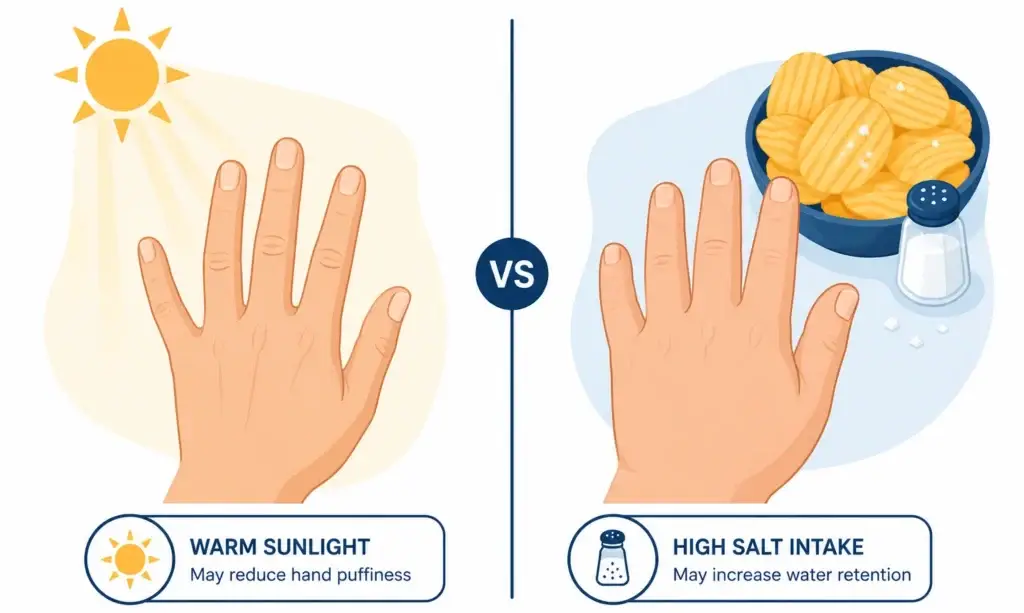
- Heat makes blood vessels widen, so fluid moves into your hands and fingers more easily
- A salty meal makes your body hold extra water, and your fingers may look puffy the next morning
- Sitting or standing for hours lets fluid pool in your hands, especially on a long flight or car ride
- During exercise, blood flow shifts toward your muscles. Vessels in your hands open wider, and fluid follows, according to Mayo Clinic
- Sleeping with your arms tucked under your body or pillow can make hands swell by morning
- Many women notice puffy fingers right before their period or during menopause, since hormone shifts affect fluid balance
Health Conditions That Make Hands Swell
Some causes need more than rest and water. If swelling sticks around for days, hands swell more often for one of these reasons instead.
- Arthritis. Osteoarthritis and rheumatoid arthritis both attack the joints in your fingers and knuckles. The CDC reports that nearly one in five American adults has some form of arthritis
- Carpal tunnel syndrome. Swelling inside the wrist presses on a nerve, so fingers can feel puffy even when they look normal, per MedlinePlus
- Thyroid problems. An underactive thyroid slows your body down and can trap extra fluid in your hands
- Organ related conditions. Kidney, liver, and heart conditions all help control fluid balance. When one struggles, swelling can show up far from the source, according to Mayo Clinic
- Infections. A cut or hangnail that gets infected can cause one finger to swell, turn red, and feel warm
- Medications. Steroids, blood pressure drugs, and some diabetes medications can cause fluid retention as a known side effect
Diet and Hydration Triggers
Diet plays a bigger role than most people expect. Alcohol widens blood vessels much like heat does. A few drinks the night before can leave your fingers puffy the next day. Caffeine and dehydration work the opposite way. A body that is short on water still tends to hold onto the fluid it has. Drinking water consistently, not in large bursts, helps your kidneys flush excess sodium instead of storing it.
Why Do My Hands Swell When I Walk?
Swollen fingers during a walk or hike are so common that they surprise almost everyone the first time. Three things happen at once when you walk.
Your blood flow shifts toward working muscles, and the vessels in your hands widen in response. Your arms swing at your sides, below heart level, so gravity pulls fluid downward into your fingers. And unlike your legs, your hands are not doing muscle work that pumps that fluid back out.
The fix is simple and works during the walk itself. Every few minutes, make a fist and open your fingers wide ten times, or raise your arms above your head for thirty seconds. Some walkers loop their thumbs into backpack straps or waistband pockets to keep hands slightly elevated. The swelling fades within an hour after you stop.
Walking swelling that comes with pain, or affects one hand only, does not fit this harmless pattern and deserves a doctor’s look.
One Hand Swollen or Both? Why It Matters
This single observation does more diagnostic work than almost any other.
Both hands swelling evenly almost always means a body wide cause, like heat, salt, hormones, medication, or fluid retention from an organ condition. It is rarely an emergency, though persistent cases need a checkup.
One hand or one finger swelling points to a local cause, like an infection, an injury, an insect bite, arthritis in a specific joint, or a blocked vessel. A single hot, red, swollen finger needs faster attention than two evenly puffy hands.
One entire arm swelling far more than the other is a possible blood clot sign and needs same day medical care, per Mayo Clinic.
Swelling in Hands and Pain
Pain changes the picture. Swelling in hands and pain together often points to arthritis, gout, an injury, or infection, not simple fluid buildup. Treat new pain alongside swelling as a signal worth tracking closely.
Why Are My Fingers Swollen in the Morning or at Night
Timing is a useful clue, too. Fingers swollen mainly in the morning often point to arthritis. Joint fluid builds up overnight while you stay still. Hands that swell more by evening usually relate to gravity and salt. Fluid has all day to settle into your fingers. Swelling right after a meal usually means salt or alcohol is the trigger. Tracking when your fingers swell can help your doctor narrow down the cause faster.
Swollen Hands During Pregnancy
Mild swelling in the hands and feet is common during pregnancy, especially in the third trimester. Extra blood and fluid in your body settle into your fingers, ankles, and feet as your due date gets closer. This kind of swelling builds up slowly. It often eases once you rest or raise your hands.
Sudden swelling is different from this normal pattern. If your hands or face swell quickly, call your OBGYN the same day. This is especially true if you also have a headache, blurred vision, or sudden weight gain. These can be warning signs of preeclampsia, a blood pressure condition that needs prompt care, according to Mayo Clinic.
Call your doctor right away during pregnancy if you see any of these signs.
- Sudden swelling in your hands or face
- A severe headache that will not go away
- Blurred vision or seeing spots
- Pain just under your ribs
- Sudden weight gain over a few days
Common Causes of Hand Swelling Compared
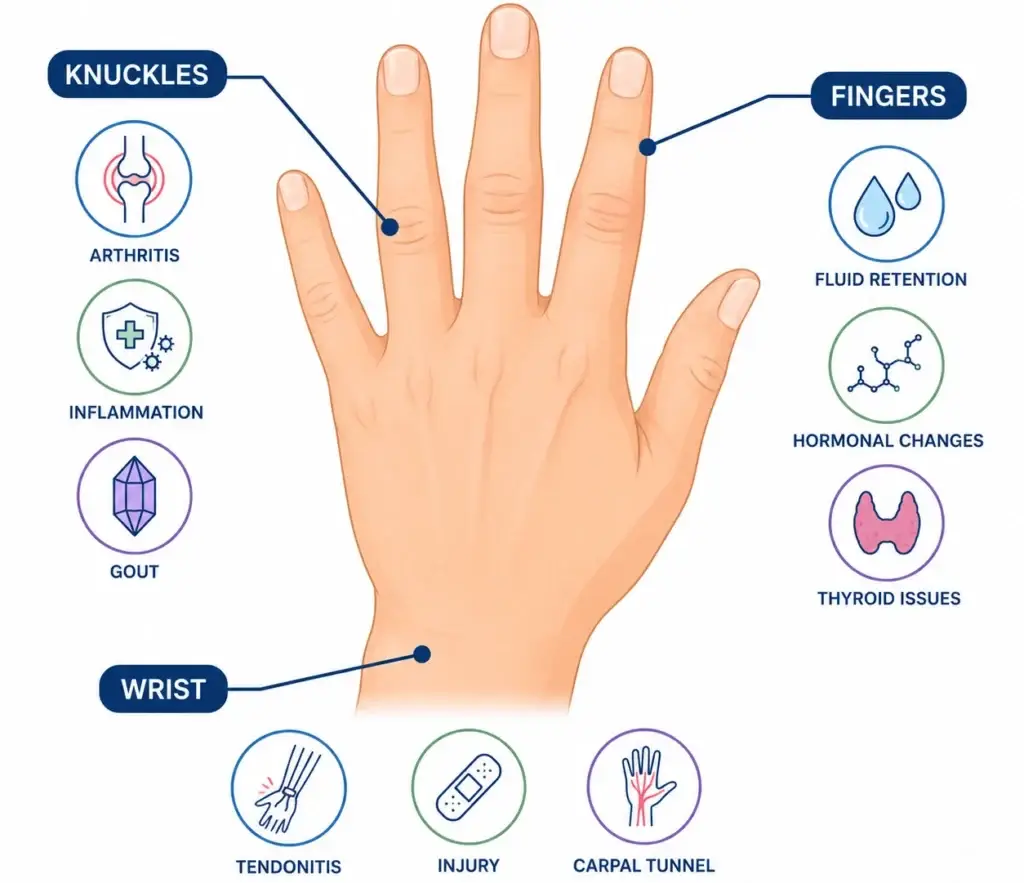
Fluid buildup is not unique to hands, either. The same process can swell a knee, as covered in our guide on fluid on knee remedies. The table below lines up common causes side by side, so you can spot your own pattern fast.
| Cause | Typical Pattern | What Helps |
| Heat or salt | Builds during the day, both hands | Water, less salt, shade |
| Walking or exercise | During activity, fades within an hour | Fist pumps, arm raises |
| Sitting or travel | After hours of staying still | Moving your fingers, elevation |
| Arthritis | Worse in the morning, joints ache | Anti inflammatory care, doctor visit |
| Pregnancy | Slow buildup, hands and feet | Rest, elevation, watch for sudden change |
| Carpal tunnel | Numb, tingly, worse at night | Wrist splint, doctor evaluation |
| Infection | One finger, red, warm, painful | Prompt medical care |
How to Reduce Swelling in Hands at Home
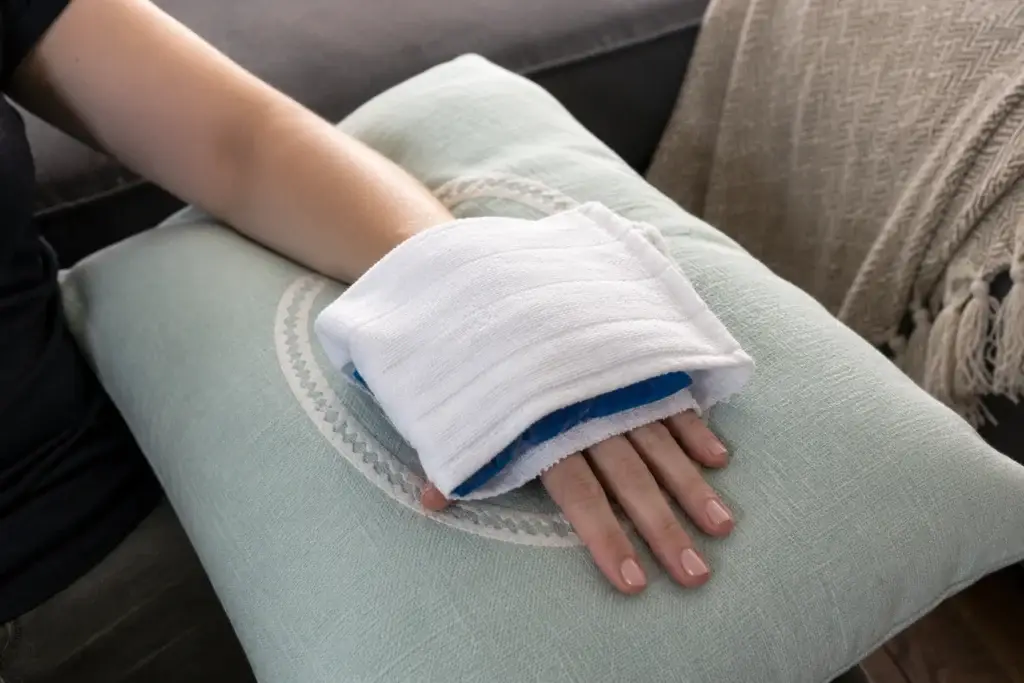
Most everyday swelling responds well to simple home care. Try these steps before you assume the worst.
- Raise your hands above heart level for 10 to 15 minutes
- Apply a cool pack wrapped in a cloth for up to 20 minutes
- Cut back on salty snacks and processed food for a day or two. Federal guidance recommends adults keep sodium under 2,300 milligrams daily, per the FDA
- Drink water steadily through the day instead of large amounts at once
- Remove tight rings and bracelets early, before your fingers swell further
- Gently open and close your fists ten times each hour to keep fluid moving
- Wear compression gloves overnight if morning swelling is a regular problem
Elevation uses gravity to drain fluid back toward your heart. A cool pack narrows blood vessels and slows fluid leaking into tissue. Movement works much like your calf muscles helping blood return from your legs. Flexing your fingers squeezes fluid back into circulation the same way.
These steps target everyday swelling, not swelling tied to arthritis, pregnancy, or an organ condition. Pair home care with your doctor’s plan if a health condition is the root cause.
Puffy Fingers and Swollen Knuckles From Arthritis
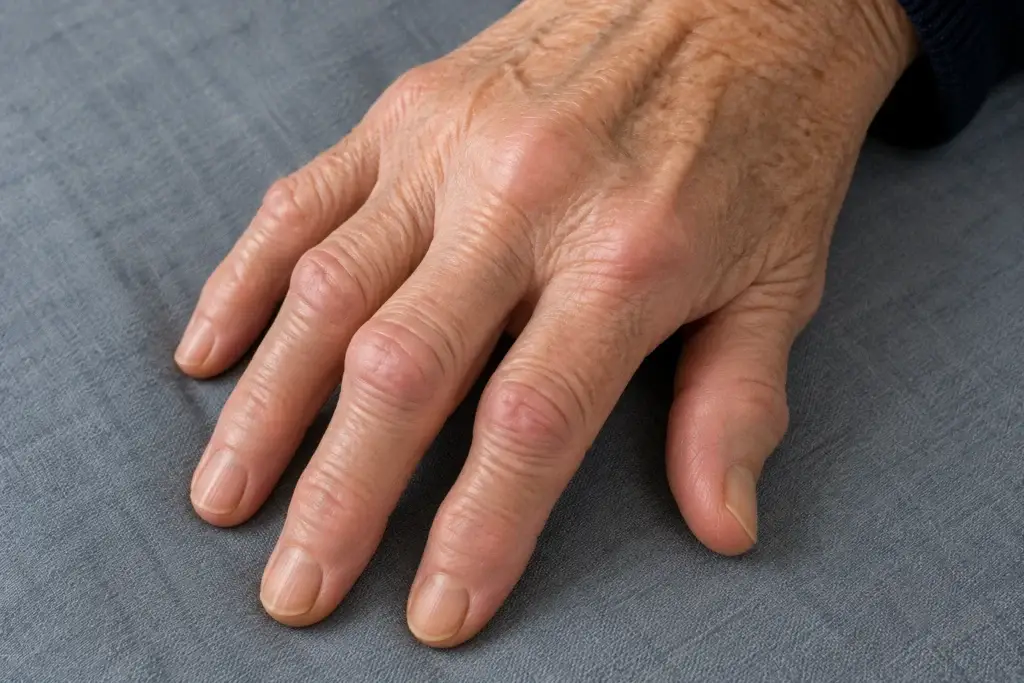
Puffy fingers that last for weeks, especially with stiffness, often trace back to arthritis. Rheumatoid arthritis affects the lining of your joints and tends to swell both hands evenly. Osteoarthritis, on the other hand, often swells the joints closest to your fingertips. It may feel bony rather than soft.
Bone changes can also leave knuckles looking swollen even after inflammation has settled down. Years of joint stress sometimes leave a permanent, bony swelling. It can look similar to soft tissue swelling, a pattern covered in our guide on bone spurs and joint changes. If your knuckles stay enlarged but pain free, a bone change is more likely than active swelling.
Repetitive strain adds another layer worth ruling out. Gripping a phone for hours can irritate the tendons in your fingers and thumb. Our guide on hand pain from holding a phone covers this strain pattern in more depth. New parents feel something similar from constant lifting, a pattern explained in our guide on mommy thumb pain. That kind of swelling tends to ease with rest and stretching rather than medication.
When to See a Doctor for Swollen Hands
Most swelling settles on its own within a day or two. Call your doctor if your hands swell for more than a few days without a clear reason. Also call if the swelling keeps coming back often. Write down when swelling starts and how long it lasts, since that detail speeds up diagnosis.
Seek care soon if any of these happen.
- Swelling in only one hand or finger, especially with redness or warmth
- Joint pain or stiffness lasting more than a week
- Numbness or tingling along with the swelling
- New swelling that started after a medication change
Seek emergency care if swelling comes with any of these signs.
- Sudden shortness of breath or chest pain
- One leg or arm swelling far more than the other, a possible blood clot sign, per Mayo Clinic
- A rapid or irregular heartbeat, which can point to heart failure
A stuck ring needs prompt care, too. A ring that will not come off a swelling finger can cut off blood flow quickly. If ice, elevation, and soap do not free it within an hour, an urgent care clinic can remove the ring safely without damaging your finger.
Hands swell for dozens of reasons, and most of them are simple to manage at home. Pay attention to patterns, since timing, triggers, and which hand swells can point straight to the cause. See your doctor when swelling sticks around or comes with pain. Treating the cause, not just the swelling, is what brings lasting relief.
Frequently Asked Questions
Why are my fingers swollen for no clear reason?
Mild swelling without an obvious cause is usually fluid retention from heat, salt, or sitting still. It often clears up within a day once you move around and drink water. If it keeps happening, track when it occurs and mention the pattern to your doctor.
Why do my hands swell when I walk?
Walking shifts blood flow toward your muscles, widens the vessels in your hands, and lets gravity pull fluid into fingers swinging below heart level. It is harmless and fades within an hour of stopping. Pumping your fists every few minutes or raising your arms briefly during the walk prevents most of it.
Is it worse if only one hand is swollen?
One hand or finger swelling points to a local cause like infection, injury, or arthritis in a specific joint, and it deserves quicker attention than both hands swelling evenly. A single hot, red, swollen finger needs prompt care. One entire arm swelling far more than the other is a possible blood clot sign and needs same day medical attention.
What causes swollen fingers and puffy hands overnight?
Lying still for hours lets fluid settle into your hands, especially with your arms below heart level overnight. Hormonal shifts and a salty dinner can make it worse. Most overnight swelling fades within 30 minutes of moving around.
Why are my hands swollen and painful at the same time?
Pain along with swelling often points to arthritis, an injury, or an infection rather than simple fluid retention. Gout and tendon inflammation can also cause both symptoms together. See a doctor if pain and swelling last more than a few days.
What can help reduce swelling in hands fast?
Elevating your hands above your heart and applying a cool pack usually brings quick relief. Gently opening and closing your fists also helps move fluid out of your fingers. Cutting back on salt for the rest of the day helps prevent it from returning.
Are swollen knuckles always a sign of arthritis?
Not always. Swollen knuckles can come from an injury, infection, or even cold weather affecting circulation. Arthritis is a common cause, especially if the swelling returns often and comes with stiffness in the morning.
When should I worry about bloated fingers during pregnancy?
Slow, mild swelling in pregnancy is common and usually harmless. Sudden swelling in your hands or face needs same day medical attention. This is especially true with a headache or vision changes, since it can signal preeclampsia.
Written by Tejanshu Jaluthria, Editor, Banner Health. Last updated: July 15, 2026.
Every claim in this article is checked against the sources linked throughout, including the NIH, FDA, WHO, the American Academy of Orthopaedic Surgeons and Mayo Clinic. Read more about how we review our content.
Disclaimer: The information on this website is for general educational purposes only and is not a substitute for professional medical advice, diagnosis, or treatment. Always talk with your doctor or another qualified healthcare provider about any questions you have regarding a medical condition. Never ignore professional medical advice or delay seeking it because of something you read on the internet.