
Mottled skin looks like a blotchy, patchy area of red or purple spread across the skin. It most often appears on the arms, legs, or torso.
Sometimes it fades within minutes. Other times, it points to a health condition that needs attention. Knowing the difference helps you make the right call about your health.
What Is Mottled Skin?
Mottled skin, also known as livedo reticularis, is a patchy skin discoloration. The pattern looks like a net or spiderweb spread across the skin. It forms when blood flow near the skin’s surface slows down or becomes uneven. As a result, blood pools in the small vessels just beneath the skin. This gives the skin a blotchy, marbled look in shades of red, purple, or blue.
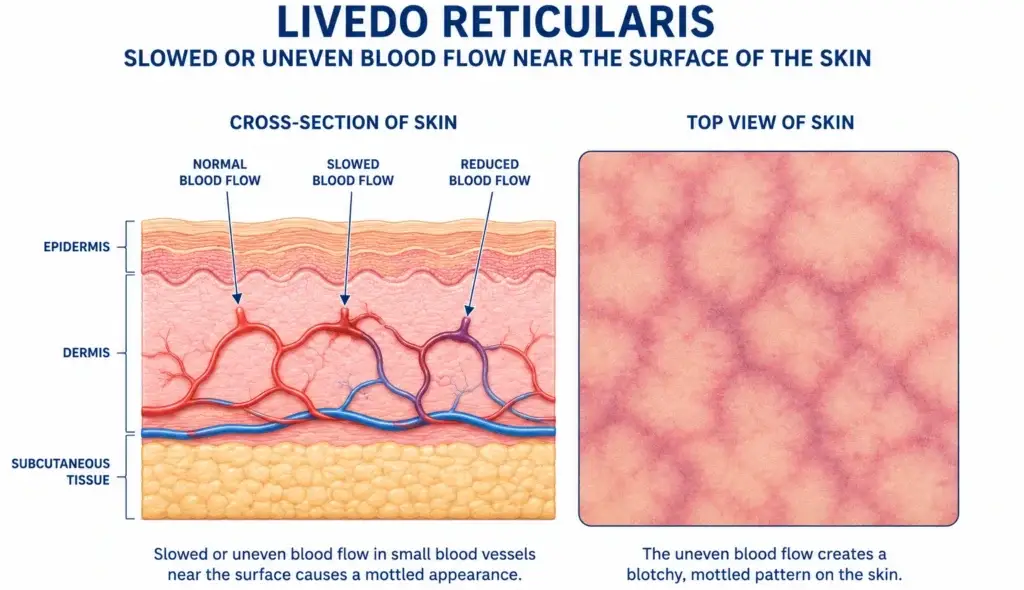
According to the Cleveland Clinic, mottled skin occurs when deoxygenated blood collects beneath the skin’s surface. The distinctive pattern comes from how blood moves through those small skin vessels.
Common Types of Mottled Skin
Not all mottled skin is the same. In fact, there are several distinct types, and each has its own cause and outlook.
- Physiologic mottling (cutis marmorata) appears when you are cold and disappears once you warm up. This is the most common and harmless type.
- Primary livedo reticularis has no clear cause and tends to be temporary.
- Secondary livedo reticularis is caused by an underlying health condition and does not go away on its own.
- Congenital livedo reticularis is present from birth and usually appears on the hands and feet.
- Erythema ab igne results from extended exposure to a heat source, like a heating pad.
- Idiopathic livedo reticularis has no identifiable cause and is managed with supportive care.
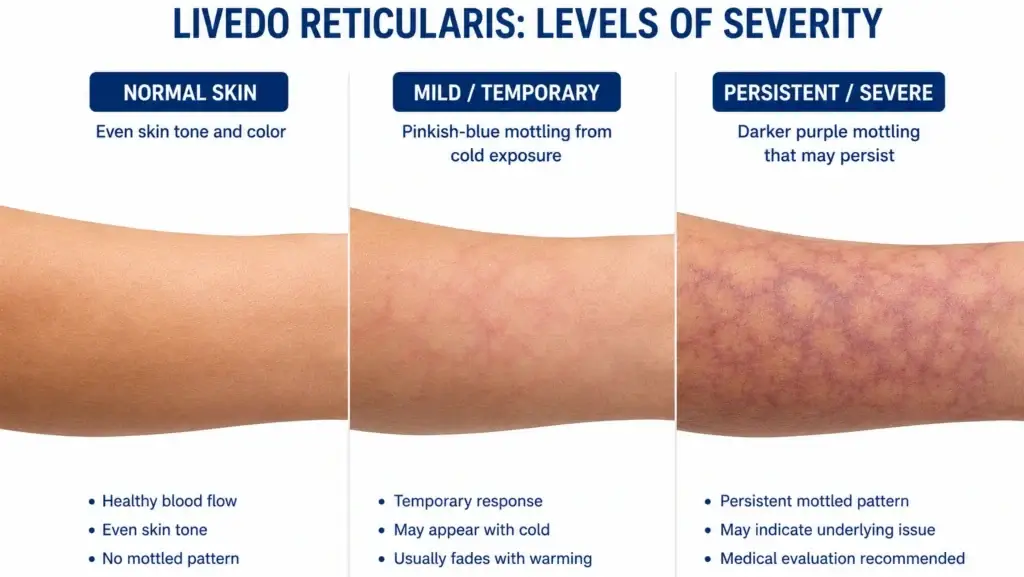
Understanding which type you have is the first step toward getting the right care.
What Causes Mottled Skin?
Benign Causes of Mottled Skin
Many cases of mottled skin are harmless. They happen because of everyday triggers rather than serious illness. Several common benign triggers can cause temporary mottling.
- Cold temperatures
- Emotional stress or anxiety
- Prolonged sitting or standing
- Low blood pressure in otherwise healthy people
These triggers typically produce temporary blotchy skin. Warming up or reducing stress often clears it quickly. So if you notice mottled skin after being out in the cold, that is generally not a cause for concern.
Medical Conditions That Can Cause Mottled Skin
Sometimes mottled skin signals an underlying condition. Several health issues can trigger it.
Autoimmune conditions
- Lupus
- Rheumatoid arthritis
- Sjögren syndrome
Vascular and blood disorders
- Antiphospholipid syndrome
- Deep vein thrombosis
- Polycythemia vera
Infections
- Hepatitis C
- Sepsis
- Meningococcal disease
Neurological conditions
- Multiple sclerosis
- Parkinson’s disease
Certain medications can also cause mottled skin, including heparin, minocycline, and some chemotherapy drugs. If you recently started a new medication and noticed skin changes, mention it to your doctor. They can help determine whether the medication is the cause.
Some women also notice mottled skin during pregnancy due to changes in blood flow and hormone levels. If you are in early pregnancy and noticing unexpected skin changes, our article on early pregnancy symptoms may help put things in context.
Mottled Skin in Babies and Newborns

Mottled skin in newborns is very common. Most new parents notice it within the first few days of life. Fortunately, it’s usually nothing to worry about.
In babies, this is called cutis marmorata. It happens because a newborn’s circulatory system is still adjusting to life outside the womb. Research published via PubMed (NIH) confirms that cold temperatures trigger this mottling pattern in many newborns.
When your baby has mottled skin, check whether the pattern goes away with warmth. If it does, that is a reassuring sign. If it stays even when your baby is warm, that needs evaluation. Also watch whether your baby is feeding well and breathing normally.
However, a rare condition called CMTC causes a darker, more persistent mottling. Unlike normal baby mottling, CMTC does not improve with warming. It can sometimes appear alongside other physical differences and should always be evaluated by a pediatrician.
If your baby has mottled skin that does not respond to warming, contact your child’s doctor promptly.
Why Do Legs Get Mottled and Blotchy
Mottled legs are one of the most common places this discoloration appears. They often look purple, red, or blotchy, especially in cold weather. But poor circulation can also be the cause.
When blood flow in the legs slows, it pools in small blood vessels near the skin. This creates the familiar purple, blotchy look that many people notice. Several factors can make mottled legs worse.
- Sitting or standing for long periods
- Exposure to cold temperatures
- Underlying circulation problems
- Autoimmune diseases affecting blood vessels
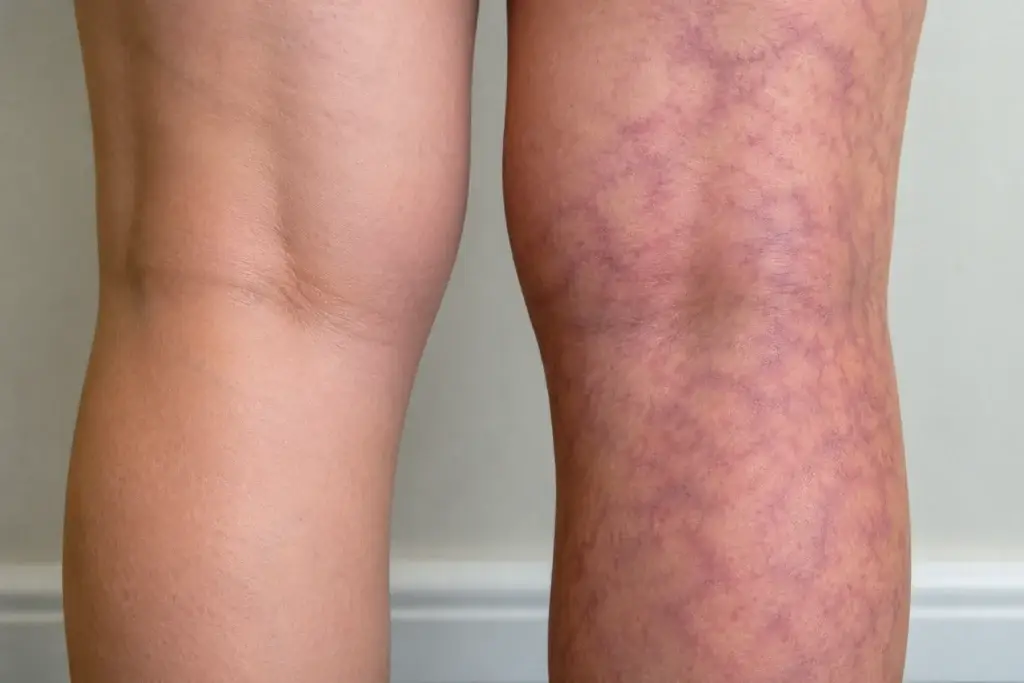
Sometimes mottled legs are the first visible sign of a vascular condition. If the discoloration does not go away with warmth, or if you also feel pain or swelling, see a doctor promptly.
Poor circulation in the legs can also connect to broader cardiovascular health. If you’ve noticed changes like an elevated heart rate when you’re unwell, mention that to your doctor as well.
When to See a Doctor About Mottled Skin
Mottled skin is not always serious, but some signs mean it’s time to seek medical care. Contact a healthcare provider if you notice any of the following.
- The mottled skin pattern does not go away when you warm up
- Mottling appears suddenly with no obvious cause
- You also have joint pain, fatigue, or fever
- The discoloration spreads or darkens over time
- You feel pain, numbness, or weakness in the affected area
- Mottling appears alongside chest pain or breathing problems
Seek emergency care right away if mottled skin comes with high fever, confusion, or difficulty breathing. These can be signs of sepsis or another serious condition.
How Mottled Skin Is Treated
Treatment depends entirely on the cause. There is no single approach for all cases of mottled skin, but there are clear steps for each type.
- When cold is the cause, warming up the skin usually resolves it. A warm bath often helps.
- When an underlying condition like lupus or rheumatoid arthritis is the cause, treating that condition becomes the priority.
- For mottling with no clear cause, compression garments or limb elevation can help improve blood flow.
- When a medication is the cause, a doctor may review or adjust the prescription.
We always recommend speaking with your doctor before making any changes to your medications or treatment plan. Also, some skin changes can look similar to mottled skin but have very different causes. Our article on age spots, liver spots, and skin cancer covers how to tell those apart.
If you have questions about other types of skin changes and what they mean, our piece on infected tattoo signs and symptoms also covers how skin can react in unexpected ways.
Frequently Asked Questions
What does mottled skin look like?
Mottled skin appears as a blotchy, patchy discoloration on the skin. The color is usually red, purple, or bluish, arranged in a net or web pattern. The center of each patch often looks pale while the surrounding skin looks discolored. Most people first notice it on their arms, legs, or torso.
Is mottled skin always serious?
No, mottled skin is not always serious. Mottling caused by cold temperatures is harmless and goes away with warmth. However, mottling caused by lupus, vascular disease, or sepsis can be serious. Persistent or worsening mottled skin should always be evaluated by a doctor.
What does mottling of the skin in newborns mean?
Mottling of the skin in newborns is usually a normal response to cold temperatures. It is called cutis marmorata. The pinkish pattern typically disappears once your baby warms up. If it stays despite warmth, speak with your pediatrician right away.
What causes blotchy skin on the legs?
Blotchy or mottled legs often result from slowed blood flow near the skin’s surface. Cold temperatures, poor circulation, and autoimmune diseases are common causes. If the blotchiness stays when you are warm, a doctor can help identify the underlying reason.
What is a reticular rash?
A reticular rash is a net or web patterned skin discoloration. Mottled skin is one well-known example. It forms when blood pools unevenly in the small vessels under the skin. Some reticular rashes are harmless, while others need prompt medical evaluation.
How long does mottled skin last?
When cold is the cause, mottled skin typically fades within minutes of warming up. Mottling linked to an underlying condition may persist until that condition is treated. If your mottled skin lasts more than a few hours with no clear cause, check with a doctor.