Your throat feels raw, your voice sounds rough, and you keep clearing it all day, but heartburn never shows up.
This pattern often points to silent reflux, a condition that behaves very differently from typical acid reflux. Doctors also call it laryngopharyngeal reflux, or LPR. Stomach acid travels up past the esophagus and into the throat and voice box. Many people live with silent reflux for months before anyone connects the dots. The usual burning chest pain never shows up. Once you know what to look for, the condition becomes much easier to spot and treat.
What Is Silent Reflux
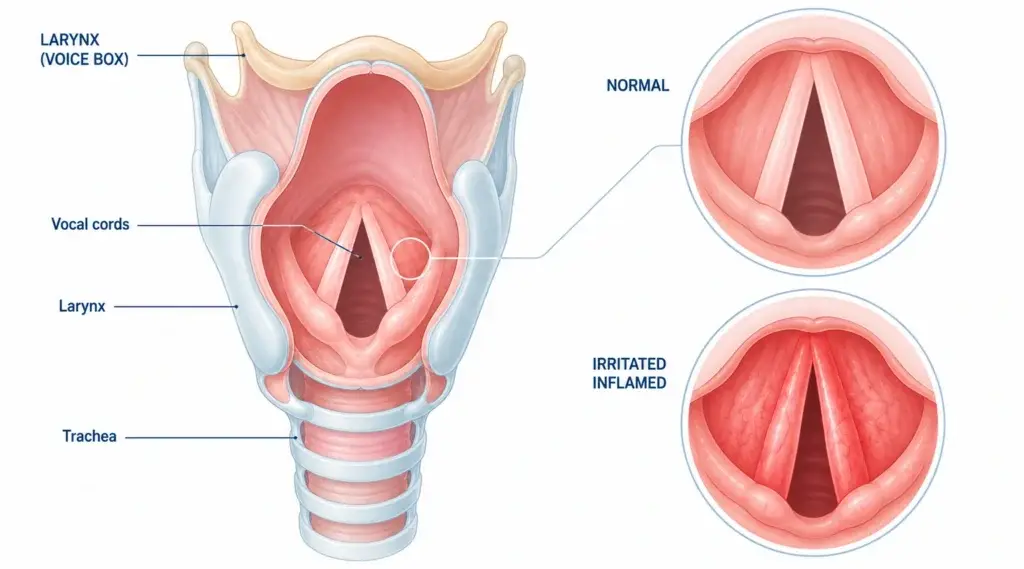
Silent reflux is the common name for laryngopharyngeal reflux, often shortened to LPR. Doctors sometimes call it silent gastroesophageal reflux, since the underlying mechanism matches typical GERD, just located higher up. The condition happens when stomach acid and digestive enzymes move past the esophagus and reach the throat or voice box. Unlike standard acid reflux, silent reflux rarely causes the classic burning feeling in the chest. That missing symptom is exactly why so many cases go unnoticed for a long time.
More than half of people with chronic hoarseness actually have laryngopharyngeal reflux, according to the Cleveland Clinic. About 10 percent of patients seen by throat specialists receive an LPR diagnosis. Doctors sometimes use other names for this condition.
- Silent GERD
- Silent acid reflux
- Extraesophageal reflux
- Laryngopharyngeal reflux disease
Each term describes the same basic problem. Acid reaches tissue that was never built to handle it, and that tissue reacts with irritation, swelling, and extra mucus.
Silent Reflux vs GERD, the Key Differences
Many people type LPR vs gerd into a search bar because the symptoms can overlap. About 20 percent of adults in the United States deal with GERD, according to the National Institute of Diabetes and Digestive and Kidney Diseases. Regular acid reflux mainly affects the lower esophagus. Stomach acid splashes upward and causes the burning sensation most people call heartburn.
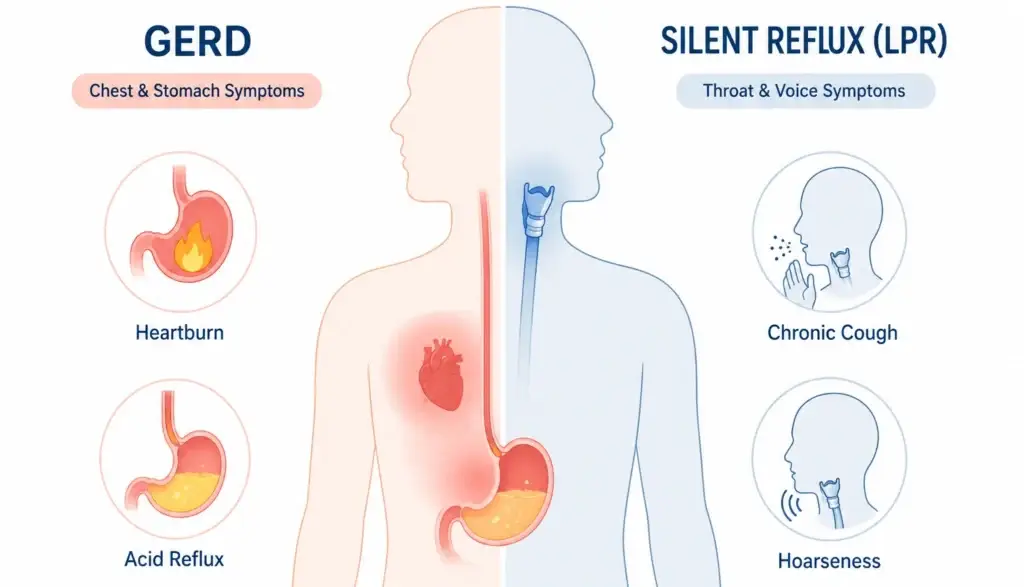
Silent reflux travels much farther. It reaches the throat, voice box, and sometimes the back of the nose. Some people deal with both conditions at once. Others have only silent reflux, with no heartburn at all, which is why doctors sometimes call it silent heartburn or GERD without heartburn. The tissue damage also looks different. GERD often irritates the esophagus lining over time, while LPR irritates the throat and vocal cords instead.
| Feature |
GERD (Acid Reflux) |
Silent Reflux (LPR) |
| Main symptom |
Heartburn, chest burning |
Hoarseness, throat clearing |
| Heartburn present |
Usually yes |
Often no |
| Area affected |
Esophagus |
Throat, voice box, sinuses |
| Common triggers |
Large meals, lying down after eating |
Same triggers, plus voice strain |
| Typical test |
Endoscopy, pH monitoring |
Laryngoscopy, pH monitoring |
| First line treatment |
Diet changes, PPIs |
Diet changes, alginates, PPIs |
Silent Reflux Symptoms You Might Be Missing
Acid reflux throat symptoms like hoarseness and chronic cough often bring people to a doctor before anyone mentions reflux at all. Silent acid reflux disease symptoms rarely include classic heartburn, which is exactly why LPR gets missed. The lack of heartburn throws people off, so the real cause often stays hidden for months.

Common LPR symptoms include these signs.
- Hoarseness, especially in the morning
- A nagging need to clear your throat
- A lump or tightness feeling in the throat
- Chronic dry cough
- Excess mucus or thick phlegm
- Mild trouble swallowing
- A sour or bitter taste in the back of the mouth
A scratchy, hoarse throat that greets you each morning can be a clue too. We cover that exact pattern in our piece on why your throat hurts when you wake up.
Yes, you can have acid reflux without heartburn. Silent reflux proves that point every day in doctors’ offices across the country. Some people also ask whether acid reflux can cause fatigue. Constant throat irritation, poor sleep from nighttime symptoms, and the stress of an undiagnosed problem can all wear a person down, even though fatigue is not a direct symptom of the reflux itself.
Mucus tells a different story. Acid and pepsin irritate the throat lining, and your body responds by producing more mucus to protect itself. That is why so many people with silent reflux also deal with constant throat clearing and post nasal drip. Silent reflux can also feel a lot like sinus trouble. Our guide on how to relieve sinus pressure can help you sort out the difference.
What Does Silent Heartburn Feel Like
Silent heartburn is a slightly confusing term, since silent reflux rarely causes typical heartburn pain. People use the phrase to describe reflux that damages tissue quietly, without warning signs. You might feel a mild scratchy throat or notice a hoarse voice by evening, with no chest discomfort at all. Some doctors use silent GERD to mean the same thing. Whatever term you hear, the message stays the same. Acid reaching your throat does not always announce itself with pain.
Types of GERD and Where Silent Reflux Fits
Not all reflux looks the same under a microscope. Doctors typically sort gastroesophageal reflux disease into a few types. Nonerosive reflux disease, or NERD, causes classic symptoms without visible damage on endoscopy. This affects roughly half to seventy percent of people diagnosed with GERD.
Erosive reflux disease causes visible breaks in the esophagus lining, graded from mild to severe. A smaller group of people go on to develop Barrett’s esophagus, a more serious change in the esophagus lining that needs regular monitoring. Gastritis, an inflamed stomach lining, often travels alongside reflux and shares several triggers. Our article on gastritis symptoms and treatment covers that connection in more depth.
Silent reflux, or LPR, is sometimes grouped as an extraesophageal type of reflux. The acid skips past typical esophageal damage and irritates the throat and larynx instead. That difference explains why LPR often shows few or no signs on a standard endoscopy, even when symptoms feel severe.
What Causes Silent Reflux
Silent reflux starts when the muscles that should keep stomach contents down do not close properly. Both the lower and upper esophageal sphincters can weaken over time, letting acid and pepsin travel farther than they should. Several factors can raise your risk.
- Obesity or recent weight gain
- A hiatal hernia
- Smoking
- Pregnancy
- Eating large meals late at night
- Frequent caffeine, alcohol, or carbonated drinks
- Certain medications that relax the sphincters
Pepsin plays a bigger role in LPR than most people realize. This digestive enzyme can sit in throat tissue and keep causing irritation, even after the acid itself clears. That is one reason silent reflux can feel stubborn compared to typical heartburn.
How to Treat Silent Reflux

Treating silent reflux usually starts with diet and daily habits before moving to medication. One study reported symptom improvement in over eighty percent of patients with mild reflux related cough after diet changes alone, according to research in the National Library of Medicine. Helpful daily changes include these steps.
- Eating smaller, earlier meals
- Avoiding food for two to three hours before bed
- Limiting coffee, soda, citrus, and fried foods
- Raising the head of your bed by six to eight inches
- Losing weight if you carry extra pounds
- Quitting smoking
Elevating the head of your bed matters, and so does your overall sleep posture. Our guide to the best sleep position for nighttime breathing issues offers tips that apply well beyond sleep apnea.
Antacids for silent reflux can ease mild symptoms, but they often fall short on their own. About half of LPR patients see limited improvement from antacids or standard proton pump inhibitor use alone, according to a randomized controlled trial comparing alginate therapy with standard medication. Alginates form a protective barrier over stomach contents and tend to work faster than plain antacids for throat related symptoms. A doctor may also prescribe a proton pump inhibitor for four to six months as a trial.
Why LPR Sometimes Feels Worse Before It Heals
Many people notice their throat symptoms flare up during the first few weeks of treatment. Acid suppressing medication can change digestion speed and lead to extra bloating or burping at first. That extra burping can carry irritating pepsin right back up to the throat.
Healing throat tissue also takes time, often longer than the esophagus needs. Give treatment four to six weeks before judging whether it works. If symptoms keep getting worse instead of leveling off, check back with your doctor, since the treatment plan may need adjusting.
Common Myths About Silent Reflux
A few myths about silent reflux circulate online, and one of the strangest links LPR to grey hair. There is no real medical evidence connecting reflux to hair turning grey. Genetics and age drive most graying, and the stress connection is still mostly unproven in humans, based on research summarized by Harvard Health.
Stress can still play an indirect role. High stress raises reflux symptoms for many people and can affect sleep, mood, and overall health. Throat clearing and a runny nose can also come from a cold or seasonal allergies instead of reflux. Our breakdown on telling a cold apart from allergies walks through the small differences that matter.
When to See a Doctor for Silent Reflux
Most silent reflux cases respond well to diet changes and standard treatment. Still, certain symptoms deserve a prompt visit to your doctor or an ear, nose, and throat specialist. Reach out for medical care if you notice any of these signs.
- Hoarseness that lasts longer than two weeks
- Trouble swallowing food or liquids
- Unexplained weight loss
- A lump in your neck
- Pain when swallowing
- Coughing up blood
People often worry about telling LPR apart from throat cancer, and that fear is understandable. Voice changes lasting more than two weeks should always get checked by a health care provider, according to the American Cancer Society. Throat cancer is far less common than silent reflux, but only a proper exam can rule it out. An ENT may also check your tonsils during this visit, since chronic irritation sometimes affects them too. Our piece on why doctors sometimes recommend removing tonsils explains when that step becomes necessary. Your doctor may use a flexible scope to look directly at your throat and voice box for a clear answer.
Frequently Asked Questions
What is silent reflux exactly?
Silent reflux, also called laryngopharyngeal reflux or LPR, happens when stomach acid reaches your throat and voice box without the usual chest burning. It often shows up as hoarseness, throat clearing, or a cough that will not quit. Many people live with it for months before a doctor connects the symptoms to reflux.
How is silent reflux different from GERD?
GERD mainly affects the esophagus and usually causes heartburn. Silent reflux travels higher, reaching the throat and voice box, and rarely causes heartburn at all. Some people have both conditions together, while others only have silent reflux.
Can you have acid reflux without heartburn?
Yes, this is actually common with silent reflux. Acid and the enzyme pepsin can irritate your throat without ever causing the burning chest feeling tied to typical heartburn. That missing symptom is exactly why silent reflux gets missed so often.
Does GERD cause a sore throat or post nasal drip?
It can. Acid that reaches the throat irritates the tissue and triggers extra mucus production, which feels a lot like post nasal drip. A persistent sore throat with no clear cold or allergy cause is worth mentioning to your doctor.
Can acid reflux cause fatigue?
Reflux itself does not directly drain your energy, but the effects often do. Poor sleep from nighttime symptoms, constant throat irritation, and the stress of unexplained symptoms can leave you feeling worn out.
Are antacids enough to treat silent reflux?
Antacids help with mild, occasional symptoms, but about half of people with silent reflux see limited relief from antacids or standard medication alone. Diet changes, alginates, and a longer course of prescription treatment often work better for lasting relief.