
Sore bum bones almost always mean one thing. The cushioning tissue over your sit bones, the two bony points you sit on, has become irritated from too much pressure. The most common cause is ischial bursitis, and most cases improve within a few weeks using a cushion, movement breaks, and simple glute exercises.
That aching pressure deep in your seat is more common than you might expect. Sore bum bones affect millions of people who work at desks, drive for long hours, or spend most of their day seated. The pain can range from a mild throb to a sharp sting that makes it hard to stay focused. Sometimes it shows up only while sitting, and other times it lingers even after you stand up. Either way, there are clear causes behind it, and most people recover fully with the right care.
What Are Sore Bum Bones?
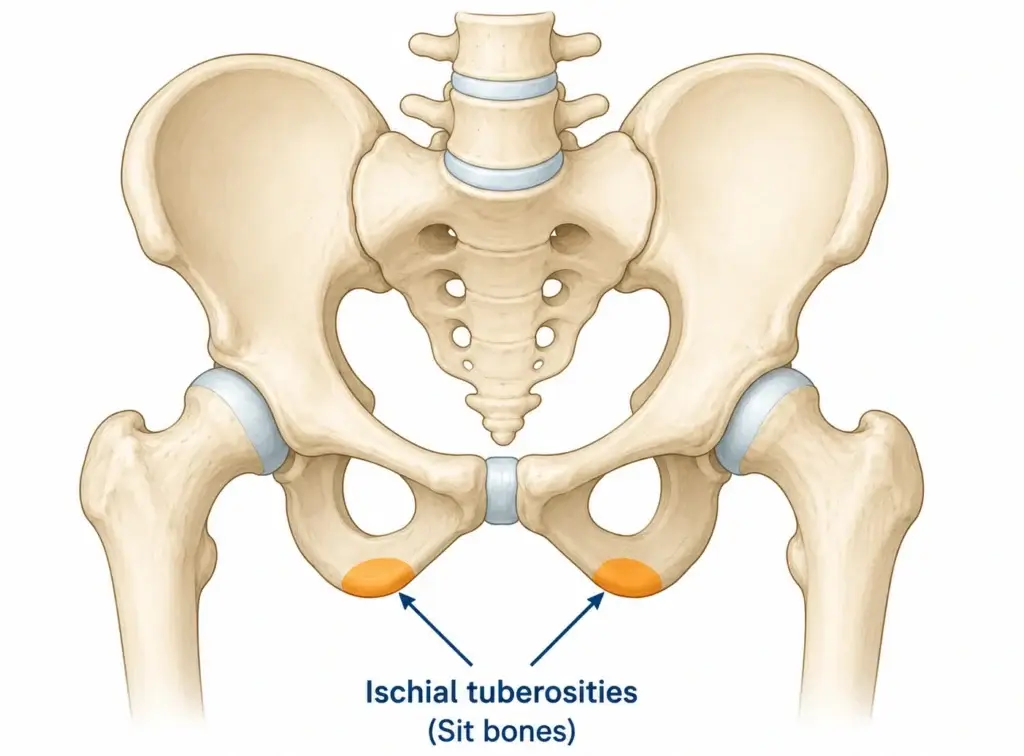
Your “bum bones” are called the ischial tuberosities, or more commonly, your sit bones. They are the two rounded bony points at the base of your pelvis. When you sit down, these bones carry most of your body weight. Small fluid filled sacs called bursae, along with tendons and muscle tissue, cushion these bones from the pressure of sitting.
When that cushioning tissue gets irritated or inflamed, you feel pain deep in your buttocks. Often, the ache travels down the back of your thighs. Typically, the longer you sit without a break, the worse the discomfort becomes.
Is It Your Sit Bones or Your Tailbone? A 10 Second Check
These two get mixed up constantly, and the treatment differs, so it is worth getting this right before anything else.
Press gently where the pain is. If it sits under one or both buttock cheeks, right where your body meets the chair, that is bone pain. If it sits in the center, at the very bottom of your spine above the crease of your buttocks, that is tailbone pain, which doctors call coccydynia.
The standing test also helps. Sit bone pain usually builds gradually the longer you sit and eases once you stand. Tailbone pain does the opposite. It often stabs sharply at the exact moment you rise from a chair, then settles.
One more clue is symmetry. Sit bone pain from cycling or sitting often shows up on both sides. Tailbone pain is always central, because you only have one coccyx.
Common Causes of Sore Bum Bones When Sitting
Several conditions can make your sore bum bones ache. Some start after a fall. Others build up slowly from sitting too much every day.
Ischial Bursitis
Ischial bursitis is the most frequent cause of deep sore bum bones. Fluid filled sacs called bursae sit between your ischial tuberosity and your gluteus maximus muscle. When these sacs get inflamed, they produce a dull, deep ache in the buttocks. Often, the pain spreads down the back of the thigh. The Cleveland Clinic confirms that sitting on hard surfaces for long periods is the top trigger for this condition.
The main risk factors are:
- Sitting on hard chairs or floors for many hours each day
- Cycling, rowing, or horseback riding
- A fall or direct impact to the tailbone area
- Conditions like rheumatoid arthritis or gout
Research published in the NIH’s medical library also confirms that ischial bursitis carries a notably high recurrence rate. Without tackling the root cause, the pain tends to return.
Dead Butt Syndrome
Dead butt syndrome is also called gluteal amnesia. When you sit for too long, your glute muscles gradually stop activating the way they should. Over time, your brain loses the habit of firing those muscles. This leads to aching pain in the buttocks and hips, along with weakness and numbness in the area.
Fortunately, this condition is fully reversible. Regular movement breaks and targeted glute exercises help the muscles activate again. We cover the best exercises in the relief section below.
Tailbone Pain (Coccydynia)
Tailbone pain sits lower than sit bone pain. Your tailbone, the coccyx, rests at the very bottom of your spine. A fall, prolonged sitting on a hard surface, or childbirth can bruise or irritate it. The pain usually feels sharp right at the tip of the spine. It gets worse when you go from sitting to standing.
Pulled Muscle in the Buttock
A pulled muscle in the buttock happens when the gluteal muscles get overstretched or strained. Heavy lifting, a sudden sprint, or an awkward movement can all cause it. You will feel tenderness directly in the bum cheek. The area also feels tight and sore when pressed.
Soft tissue injuries like this often follow a similar pattern across different body areas. Just as mommy thumb stems from repeated strain on a joint and the tissue around it, a pulled gluteal muscle needs proper rest and gradual strengthening to heal well.
Sore Bum Bones vs. Other Causes of Buttock Pain
| Condition | Where It Hurts | Main Trigger | Key Sign |
| Ischial Bursitis | Deep sit bones | Hard surface sitting | Dull ache, worse when seated |
| Dead Butt Syndrome | Buttocks and hips | Too much sitting | Weakness, numbness |
| Tailbone Pain | Base of spine | Fall or hard seating | Sharp pain when rising |
| Pulled Muscle | Bum cheek tissue | Exercise or lifting | Tender to touch |
| Sciatica | Buttock down one leg | Nerve compression | Burning, shooting pain |
Why Do My Sit Bones Hurt After Cycling?
Cyclists know this pain better than anyone. Your sit bones carry your upper body weight on two small saddle contact points, ride after ride, and the bursae underneath take the repeated load.
Three things fix most cycling related sit bone pain.
Match the saddle to your sit bone width. Sit bones vary from person to person, and a saddle that is too narrow puts the padding between your bones instead of under them. Many bike shops measure sit bone width in a few minutes and match you to the right saddle size. A wider saddle is not automatically more comfortable. The right width for your bones is what matters.
Give new riding a break-in period. Soreness during your first weeks back on the bike is normal adaptation. Pain that gets worse with every ride is not. Build up ride time gradually instead of jumping into long sessions.
Use padded cycling shorts for longer rides. The padding sits exactly where your sit bones meet the saddle and reduces both pressure and friction. For rides over an hour, they make a bigger difference than most saddle changes.
If sit bone pain keeps returning after every ride despite these changes, it points toward ischial bursitis that needs proper rest before you ride again.
Sitting at a Desk All Day? Fix Your Setup First
For desk workers, the chair setup is usually the root cause, and no cushion can fully compensate for a bad one.
Set your chair height so your knees sit level with or slightly below your hips. When the chair is too low, extra weight shifts directly onto your sit bones. Your feet should rest flat on the floor.
Use the backrest. Sitting upright away from the backrest concentrates your entire upper body weight straight down onto the sit bones. Reclining slightly against the backrest shares that load with your back.
Shift positions often. No single sitting position is safe for hours at a stretch. Move your weight from one side to the other, cross and uncross your ankles, and lean back for a few minutes each hour.
If you have a standing desk, alternate. Even 10 to 15 minutes of standing each hour takes all pressure off the sit bones and reactivates your glutes at the same time.
How to Ease Sore Bum Bones and Bum Pain at Home
Most sore bum bone pain responds well to home care. These strategies work across most types of buttock discomfort.
Take regular movement breaks. Stand up and walk for a few minutes every 30 to 45 minutes. This relieves pressure on the sit bones and keeps your glutes active. Even a short walk to another room makes a real difference.
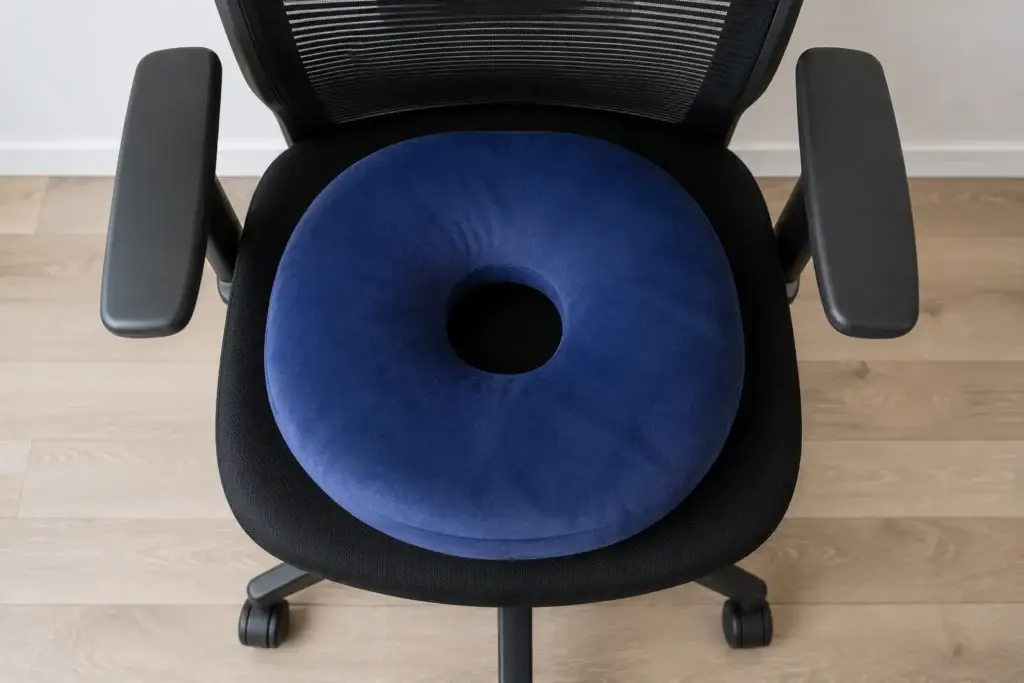
Choose the right cushion for your pain. Cushions are not interchangeable, and picking the right shape matters more than the price.
- A coccyx cutout cushion has a U shaped gap at the back. It is the best choice for tailbone pain, because the sore spot floats over the gap and never touches the seat.
- A donut cushion has a hole in the center. It helps when the pain is central, such as tailbone pain or pain that flares during bowel movements.
- A flat gel or memory foam cushion spreads weight evenly across the whole seat. It is the better pick for sit bone pain and ischial bursitis, where the goal is softening the surface rather than avoiding contact.
Whichever type you choose, use it consistently for at least two weeks. Occasional use does little for an inflamed bursa.
Apply ice or heat. For the first 48 to 72 hours after pain starts, apply an ice pack for 15 to 20 minutes at a time. After that window, a warm compress relaxes the surrounding muscles more effectively.
Try these glute exercises. Gentle exercises help wake up the glutes and reduce buttock pain over time.
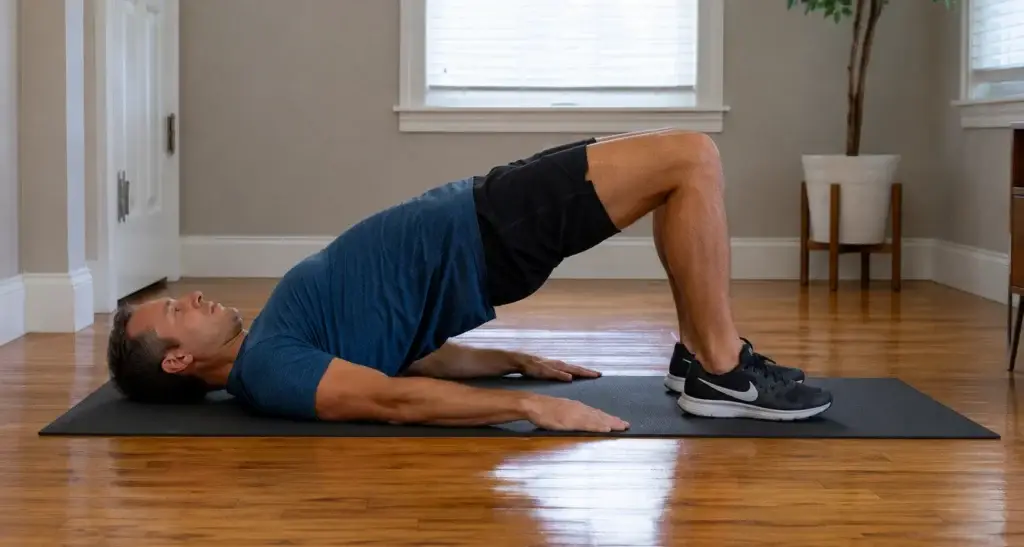
- Glute bridge. Lie on your back, press your feet into the floor, and lift your hips. Hold for three seconds, then lower slowly.
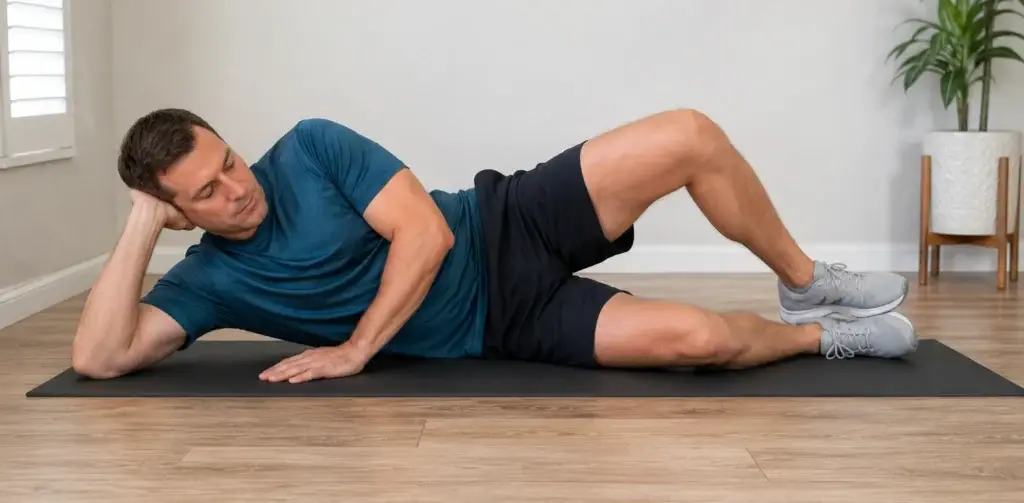
- Clamshell. Lie on your side with knees bent. Lift your top knee while keeping your feet together. This targets the gluteus medius.
- Standing hip hinge. Stand with feet hip width apart. Hinge forward at the hips and keep your back flat. Return to standing and squeeze your glutes at the top.
Use over the counter pain relief. Ibuprofen or naproxen can reduce inflammation and ease the aching pain in your buttocks. Always follow the label instructions. Talk to a pharmacist first if you have any other health conditions.
Bony irritation that worsens under pressure often responds well to reducing the load and allowing tissue to recover. As our article on bone spurs explains, conservative care is usually the most effective first step for bony point pain.
Why Does My Butt Hurt When I Poop?
This is a common question, and it has a few clear answers.
When you strain during a bowel movement, the muscles in your pelvic floor pull on the coccyx. That pressure stretches the tailbone and triggers pain. So if you already have sore bum bones or tailbone pain, any straining tends to make it noticeably worse.
Hemorrhoids are another common cause. They develop inside or around the anus and become inflamed during bowel movements. The pain often radiates into the lower back bum area. Research from the NIH confirms that defecation is one of the most consistent triggers for worsening coccyx pain.
Other causes to be aware of are:
- Anal fissures, which are small tears in the anal lining
- Constipation putting extra pressure on the pelvic bones
- Pelvic floor muscle tension from prolonged sitting
See a doctor right away if you notice blood in your stool, sharp worsening pain, or any changes in your bowel habits.
When to See a Doctor for Sore Bum Bones or Glute Pain
Most sore bum bones cases clear up within a few weeks with proper home care. However, certain signs mean you should get checked sooner rather than later.
See a doctor if you notice any of these:
- Pain that lasts more than three weeks without improvement
- Shooting or burning pain that runs down one leg
- Visible swelling, redness, or warmth in the buttock area
- Pain that wakes you up at night
- Fever alongside buttock pain
- A recent fall or direct impact to the tailbone
A doctor may use an ultrasound or MRI to confirm the cause. For stubborn ischial bursitis, a corticosteroid injection can bring fast relief. Similar to a bruised heel that fails to improve on its own, persistent sore bum bones often need a professional evaluation to heal properly.
Frequently Asked Questions
Why do my sore bum bones hurt when I sit?
Your bum bones carry most of your body weight when you sit. Sitting on hard surfaces for long periods irritates the fluid filled sacs that cushion these bones. This leads to inflammation called ischial bursitis, which produces a dull, deep ache that gets worse the longer you stay seated.
How do I know if the pain is my sit bones or my tailbone?
Location tells you. Sit bone pain sits under one or both buttock cheeks, right where your body presses into the chair, and builds the longer you sit. Tailbone pain is central, at the very base of your spine, and typically stabs sharply the moment you stand up from sitting. The two need different cushions, so it is worth checking before you buy one.
Why do my sit bones hurt after cycling?
Your sit bones carry your upper body weight on two small saddle contact points, and the cushioning tissue underneath gets irritated by the repeated load. The most common fixes are a saddle matched to your sit bone width, a gradual build up of ride time, and padded cycling shorts for longer rides. Pain that returns after every ride suggests ischial bursitis that needs rest before you continue.
What is the best cushion for sore bum bones?
For sit bone pain and ischial bursitis, a flat gel or memory foam cushion works best because it softens the surface under the bones. For tailbone pain, choose a coccyx cutout cushion so the sore spot never touches the seat. Donut cushions help most when the pain is central. Use the cushion consistently for at least two weeks to give inflamed tissue time to settle.
Is glute pain from sitting serious?
In most cases, glute pain from sitting is not serious. It usually gets better with rest, movement breaks, and a supportive cushion. However, pain that lasts more than three weeks or runs down your leg should be checked by a doctor. Any pain that comes with fever or swelling also needs professional evaluation.
Can sitting too long cause sore bum bones and glute pain?
Yes, it can. Prolonged sitting causes the glute muscles to stop activating properly, a condition called dead butt syndrome or gluteal amnesia. This creates aching pain and weakness in the buttocks and hips. Regular movement breaks and glute exercises are the most effective way to reverse it.
Why does my butt hurt when I poop?
Straining during a bowel movement puts pressure on the tailbone and pelvic floor muscles. This can trigger or worsen existing tailbone pain. Hemorrhoids and anal fissures can also cause pain in the buttock or lower back bum area during or after a bowel movement.
How do I know if I pulled a muscle in my buttock?
A pulled muscle usually causes sudden tenderness in the bum cheek after exercise or a sharp movement. The area feels stiff, tight, and sore when you press on it. Rest, ice applied for 15 to 20 minutes at a time, and gentle stretching typically bring clear improvement within one to two weeks.
Written by Tejanshu Jaluthria, Editor, Banner Health. Last updated: July 14, 2026.
Every claim in this article is checked against the sources linked throughout, including the NIH, FDA, WHO, the American Academy of Orthopaedic Surgeons and Mayo Clinic. Read more about how we review our content.
Disclaimer: The information on this website is for general educational purposes only and is not a substitute for professional medical advice, diagnosis, or treatment. Always talk with your doctor or another qualified healthcare provider about any questions you have regarding a medical condition. Never ignore professional medical advice or delay seeking it because of something you read on the internet.