
Flu vs Cold Symptoms and How to Tell the Difference

Both illnesses bring a stuffy nose, sore throat, and general tiredness. They differ, though, in how fast they hit, how severe they get, and what kind of care you need. Knowing the difference between cold vs flu symptoms helps you treat your illness correctly. It also helps you decide when to call a doctor.
What Sets Flu vs Cold Symptoms Apart
The speed of onset is the biggest clue. A cold comes on slowly over a day or two. The flu, by contrast, strikes fast and hard. You can feel completely fine in the morning and be miserable by evening.
These are the most telling differences at a glance:
- Onset. A cold builds gradually over one to two days. The flu hits suddenly.
- Fever. Colds rarely cause a significant fever. The flu often brings a high one.
- Body aches. A cold may cause mild aches. The flu brings intense muscle pain all over.
- Fatigue. A cold makes you feel tired and worn out. The flu can make getting out of bed feel impossible.
- Chills. Chills are uncommon with a cold. The flu triggers them fairly often.
- Runny nose. Very common with a cold, but less typical with the flu.
Cold vs Flu Symptoms Side by Side
This chart compares cold vs flu symptoms so you can quickly identify what you have.
| Symptom | Cold | Flu |
|---|---|---|
| Onset | Gradual, 1 to 2 days | Sudden, within hours |
| Fever | Rare | Common, often 101 to 104°F |
| Body aches | Mild | Severe, all over |
| Fatigue | Mild | Severe, can linger for weeks |
| Chills | Uncommon | Fairly common |
| Runny or stuffy nose | Very common | Sometimes |
| Sore throat | Common | Sometimes |
| Cough | Mild | Often severe |
| Nausea or vomiting | Rare | More common, especially in children |
| Duration | 7 to 10 days | 1 to 2 weeks |
According to the CDC, colds are generally milder and rarely lead to serious health problems. The flu, on the other hand, can cause pneumonia, bacterial infections, and hospitalization.
Can a Cold Make You Nauseous
Yes, a cold can make you feel nauseous, though it is not a typical cold symptom. At BannerHealth.io, this is one of the questions we hear most often. So let us walk through what causes it.
The most frequent reason is postnasal drip. When you have a cold, excess mucus drips from your nose down your throat and into your stomach. That irritation triggers nausea. Additionally, your immune system releases chemicals to fight the cold virus. Those same chemicals can also upset your stomach.
Feeling nauseous and cold at the same time is possible with either illness. But strong nausea that comes on suddenly with body aches and fever points more toward the flu. If your symptoms also include vomiting and diarrhea, our article on the difference between stomach flu and food poisoning can help clarify what is going on.
Can You Get Chills from a Cold
Yes, mild chills can happen with a cold. Your body raises its internal temperature to fight the cold virus. Even without a full fever, that process can cause light shivering or a cold, clammy sensation. This happens most often during the first day or two of illness.
With the flu, however, chills are far more intense. They typically come alongside a high fever, heavy sweating, and severe muscle aches. If your chills hit hard and came on fast, the flu is the more likely cause. Also worth noting, when your body fights any infection, your heart rate can rise noticeably. We explain what that means in our guide on elevated heart rate when sick.
How Long Do Flu vs Cold Symptoms Last
Duration is another helpful clue in the flu vs cold comparison.
- Cold. Most colds run 7 to 10 days. Symptoms tend to peak around days two and three.
- Flu. The flu typically lasts one to two weeks. Fatigue can drag on for several more weeks after.
- Lingering symptoms. A mild cough or congestion can stick around even after both illnesses clear up.
If your symptoms worsen after the first week rather than improving, or if they last longer than two weeks, see a doctor. That pattern can point to a secondary infection like sinusitis or bronchitis.
How to Treat a Cold or Flu at Home
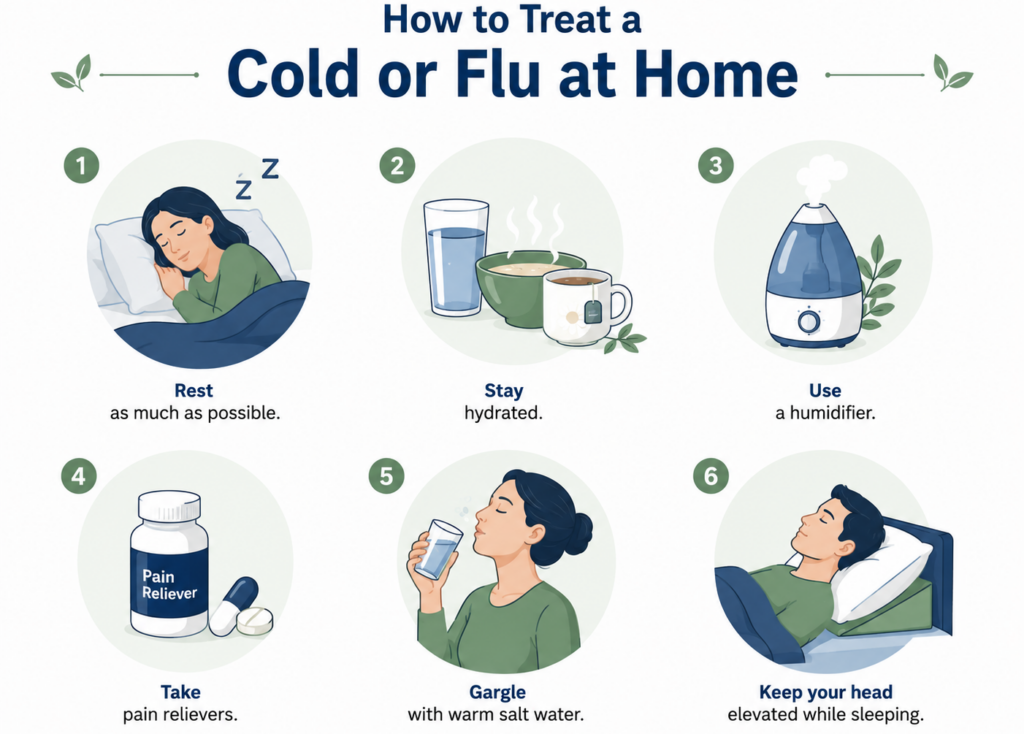
Neither a cold nor the flu has a cure. However, these steps can help your body recover more quickly.
- Rest as much as possible. Sleep is when your immune system does its most important work.
- Stay hydrated with water, broth, and herbal tea. These thin mucus and prevent dehydration.
- Use a humidifier at night to ease congestion and soothe an irritated throat.
- Take over the counter pain relievers to reduce fever and relieve body aches.
- Gargle with warm salt water to calm a raw or scratchy throat.
- Keep your head elevated while sleeping to ease postnasal drip and reduce nausea.
If you wake up with throat pain as part of your illness, we have a helpful guide on why your throat hurts when you wake up and what helps. For those who deal with frequent sore throats tied to recurring infections, our post on when tonsil removal might help is also worth reading.
If a doctor confirms you have the flu, antiviral drugs can shorten your illness. These medications do not cure the flu, but they do reduce how long you feel sick.
When to See a Doctor for Flu vs Cold

Most colds clear up on their own with rest and fluids. The flu, though, can turn serious quickly. Seek medical attention if you or your child shows any of the following signs.
For adults:
- Fever above 103°F that does not break with medication
- Difficulty breathing or shortness of breath
- Chest pain or tightness
- Severe dizziness or confusion
- Vomiting that will not stop
For children:
- Rapid or labored breathing
- Bluish color on the lips or face
- Not drinking fluids or not producing tears when crying
- Extreme irritability or difficulty waking up
Older adults, young children, pregnant women, and people with chronic conditions face a higher risk of flu complications. Early identification of your illness leads to better outcomes, as Mayo Clinic notes in its guidance on respiratory illnesses. Antiviral medications like oseltamivir work best if you take them within 48 hours of your first flu symptoms.
Is It a Cold, Flu, or Something Else
Sometimes your symptoms do not clearly fit either illness. Allergies, for instance, can cause sneezing, a runny nose, and congestion just like a cold. The key difference is that allergies do not cause fever or body aches. They also tend to last far longer than a cold. We break down how to sort this out in our guide on telling a cold apart from allergies.
If you are pregnant and dealing with cold symptoms, treatment needs extra care. Some over the counter medications are not safe during pregnancy. Our article on home remedies for a cold during pregnancy walks through safe, effective options.
RSV and COVID-19 can also cause symptoms that look a lot like a cold or the flu. The National Foundation for Infectious Diseases points out that a quick test at your doctor’s office is the most reliable way to confirm which virus you have.
Sorting out flu vs cold comes down to a few key questions. How fast did your symptoms start? Do you have a high fever? How severe are your body aches? A cold tends to stay manageable with home care. The flu often needs closer attention and, sometimes, medical treatment. When symptoms feel severe or unusual, do not wait to reach out to a healthcare provider.
Frequently Asked Questions
What is the main difference between the flu vs cold?
The biggest difference is speed and severity. A cold builds gradually over one to two days and mainly affects your nose and throat. The flu hits suddenly and causes high fever, intense body aches, and deep fatigue. The flu can also lead to serious complications that a cold rarely causes.
Can a cold make you nauseous?
Yes, a cold can cause mild nausea. The most common reason is postnasal drip, where mucus drips from your nose into your stomach and irritates it. Your immune response also releases chemicals that can upset digestion. Strong, persistent nausea is more often a sign of the flu than a cold.
Can you get chills from a cold?
Mild chills can happen with a cold as your body works to raise its temperature and fight the virus. However, severe chills paired with a high fever are far more typical of the flu. If your chills hit hard and fast alongside intense body aches, the flu is the more likely cause.
How long does the flu last compared to a cold?
A cold typically clears up in 7 to 10 days, with symptoms peaking in the first few days. The flu usually runs one to two weeks, and fatigue can linger for several weeks after. If symptoms do not improve by two weeks or suddenly get worse, contact your doctor.
Is feeling nauseous and cold at the same time a sign of the flu?
It can be. Nausea paired with sudden chills, a high fever, and muscle aches points strongly toward the flu. Mild nausea from postnasal drip is more consistent with a cold. Looking at all your symptoms together gives you a much clearer picture than any single sign alone.
When should I see a doctor for flu or cold symptoms?
See a doctor if you have a fever above 103°F, difficulty breathing, chest pain, or symptoms that worsen after briefly improving. Children with rapid breathing or bluish lips need emergency care right away. For the flu, antiviral treatment works best when started within the first 48 hours of symptoms.
Written by Theo James
The information on this page is for general educational purposes only and is not a substitute for professional medical advice, diagnosis, or treatment. Always talk with your doctor or another qualified healthcare provider about any questions you have regarding a medical condition. Never ignore professional medical advice or delay seeking it because of something you read on the internet.