
Taping a knee works best when the pattern matches the problem. Runner’s knee gets a Y strip around the kneecap, jumper’s knee gets a pressure strip under it, side ligament pain gets an I strip along the joint line, and sharp kneecap pain responds to rigid McConnell taping. Match your pain below, then follow the steps.
Your knee aches every time you climb stairs. Tape will not fix a torn ligament, but the right application gives the joint feedback and light support while it heals, and research backs the pain relief. The mistake most people make is using one generic strip for every problem.
Find Your Pattern First
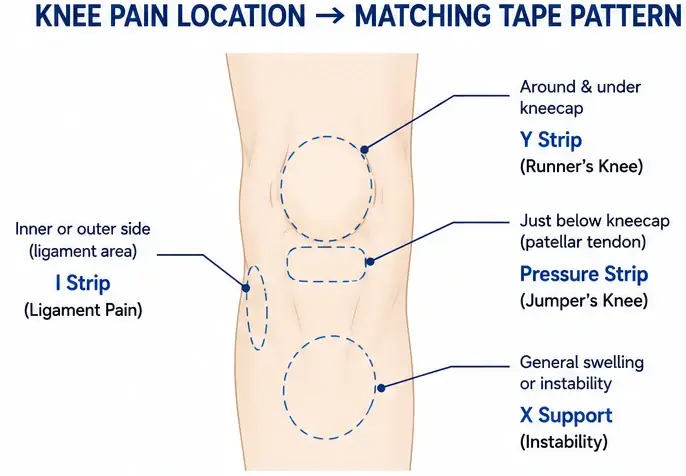
| Where It Hurts | Likely Problem | Pattern | Tape Type |
| Around or under the kneecap, worse on stairs | Runner’s knee (patellofemoral pain) | Y strip | Kinesiology |
| Just below the kneecap, worse jumping or sprinting | Jumper’s knee (patellar tendinopathy) | Pressure strip | Kinesiology |
| Inner or outer side of the knee after a twist | Mild MCL or LCL sprain | I strip along the joint line | Kinesiology or rigid |
| Sharp kneecap pain, feels like tracking wrong | Patellar maltracking | McConnell method | Rigid |
| General swelling or giving way feeling | Instability or effusion | X support | Kinesiology |
A swollen knee deserves one extra check before you tape it: our guide on fluid on the knee covers when swelling means taping can wait and a doctor comes first.
Rigid Tape vs Kinesiology Tape
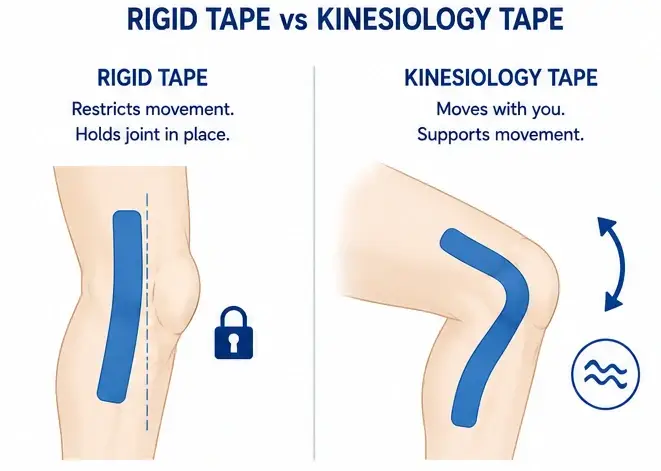
Rigid athletic tape does not stretch. It locks the kneecap or joint into place and limits how far it can move. Kinesiology tape stretches almost as much as skin, so it supports the joint while still letting it bend.
| Feature | Rigid Athletic Tape | Kinesiology Tape |
| Stretch | None | Moves with skin |
| Best for | Sharp pain, limiting motion | Mild pain, swelling, circulation |
| Wear time | A few hours to one day | Three to five days |
| Skill needed | Higher, exact placement matters | Moderate, more forgiving |
| Common method | McConnell taping | Kinesio taping |
Kinesiology tape costs more per roll, but one application lasts several days, so the weekly price gap narrows. If you want support without any adhesive, a knee compression sleeve is the comparison worth making.
Before any pattern below: clean and dry the skin, trim thick hair, round the corners of every strip so edges do not peel, and apply the first two inches of every end with zero stretch. Those unstretched anchors are what keep tape on for days.
Pattern 1: The Y Strip for Runner’s Knee
The most searched knee taping question, and the most forgiving pattern to learn.
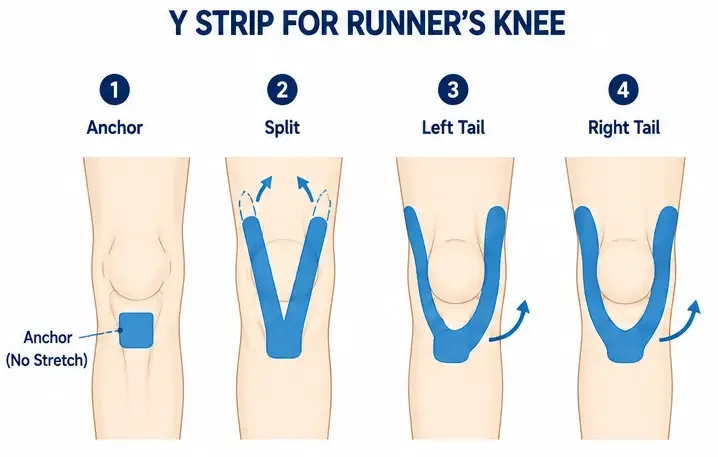
- Sit with your knee bent to about 70 degrees so the skin is gently stretched
- Cut one strip long enough to run from a hand width below your kneecap to a hand width above it, then cut it lengthwise down the middle, stopping two inches from one end, so it forms a Y
- Anchor the uncut end on your shin below the kneecap with no stretch
- Run one tail around the inner edge of your kneecap with light stretch, framing the bone without covering it, and lay the last two inches down with no stretch
- Repeat with the other tail around the outer edge, so the kneecap sits inside the Y
- Rub every strip briskly, since the adhesive bonds with warmth
The tails lift the skin around the kneecap and give your brain constant feedback about its position, which is why stairs usually feel better immediately.
Pattern 2: The Pressure Strip for Jumper’s Knee
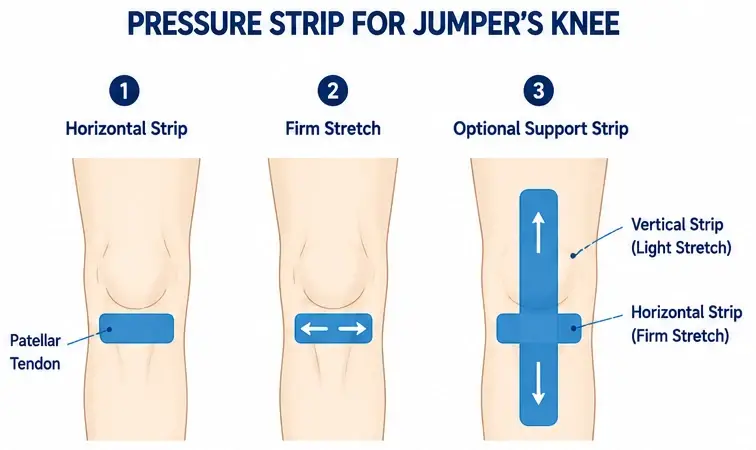
Patellar tendinopathy lives in the tendon just below the kneecap, and this pattern works like a wearable version of the pressure straps runners buy.
- Sit with the knee bent to about 70 degrees
- Cut a short strip, roughly 6 inches
- Tear the backing in the middle and hold both ends, exposing the center of the tape
- Apply the center directly over the sore tendon below the kneecap with moderate to firm stretch
- Lay both ends down around the sides of the knee with no stretch
- For extra support, add a vertical strip from shin anchor to above the knee with light stretch, running over the first strip
Pattern 3: The I Strip for Side Ligament Pain
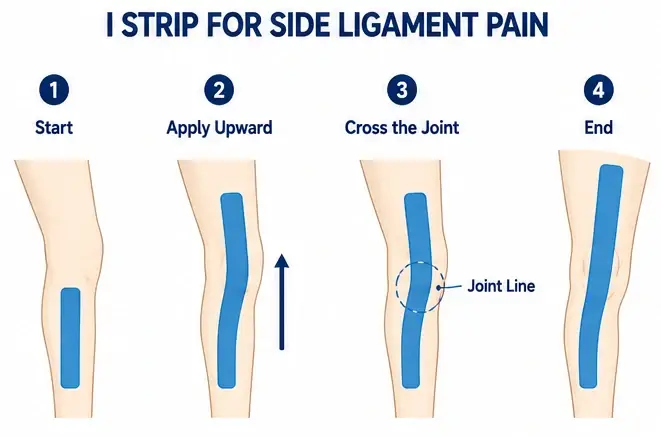
For a mild inner or outer knee sprain after a twist.
- Stand or sit with the knee slightly bent
- Cut a strip long enough to run from mid calf to mid thigh along the painful side
- Anchor the bottom end on the calf with no stretch
- Run the strip straight up across the joint line over the sore ligament with light to moderate stretch
- Finish the top anchor on the thigh with no stretch
A moderate or severe ligament sprain takes weeks to heal fully, and tape only assists the process. Rest and a gradual return matter more, the same recovery logic that applies to a bruised heel.
Pattern 4: The McConnell Method for Kneecap Tracking
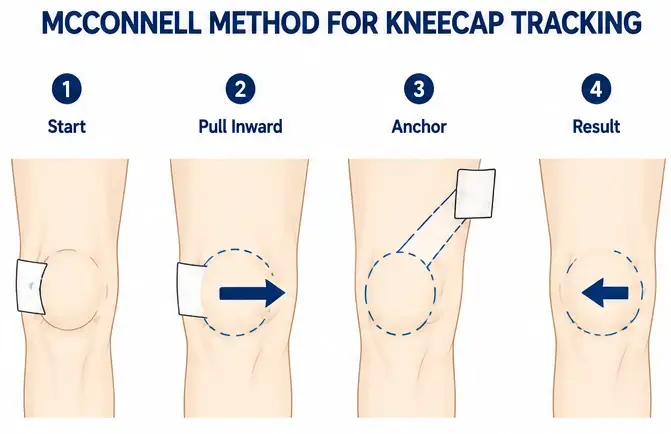
This rigid tape method shifts the kneecap into a better position, and a dynamic MRI study found it can move the kneecap into a lower position, which may explain the immediate relief some people feel.
- Sit with your knee straight and thigh muscle relaxed
- Place hypoallergenic underwrap across the kneecap if your skin is sensitive
- Press one end of rigid tape against the outer edge of the kneecap
- Pull the tape toward the inner knee while pushing the soft tissue inward with your other hand
- Anchor on the inner side without pulling tight enough to pinch
- Bend the knee a few times to confirm range of motion
If your skin turns pale, numb, or tingly after any taping, remove the tape immediately.
What the Research Honestly Shows
A 2025 research review found kinesiology tape eased pain at rest and during movement compared with sham tape, with less effect on long term knee function. A 2025 review of knee osteoarthritis trials found the same pattern, real pain reduction that fades over time.
In plain terms: tape calms pain signals for a while, and it works best alongside exercises that strengthen the muscles around the knee. Most physical therapists treat it as a helper, not a fix. And if your knee pain keeps returning no matter what you tape, look down: how your foot rolls when you walk, called overpronation, drives recurring knee pain from below. Knee osteoarthritis can also bring bone spurs that limit motion regardless of taping.
Common Mistakes
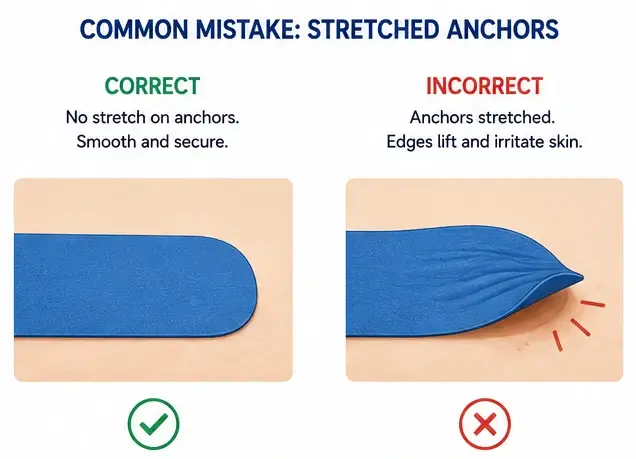
- Stretching the anchor ends, which causes blisters and early peel off
- Wrapping rigid tape tight enough to affect circulation in the lower leg
- Taping over hair, lotion, or sweat
- Leaving tape on more than five days, since skin needs a break
- Expecting tape to replace strengthening exercises instead of supporting them
Who Should Not Tape
Skip taping, or ask a doctor first, if you have an open wound, rash, or skin infection near the knee, an adhesive allergy, a diagnosed or suspected blood clot in the leg, or severe swelling with hot skin, which can signal joint infection.
When to See a Doctor
Mayo Clinic notes you should see a doctor if your knee cannot bear weight, looks deformed, or stays swollen for days. Seek care quickly for:
- A knee that cannot hold your weight at all
- Visible deformity or a kneecap that looks out of place
- A popping sound followed by sudden, significant swelling
- Fever with redness and warmth around the joint
- Pain that has not improved after three days of rest, ice, and tape
Per the NIH MedlinePlus encyclopedia on knee pain, ongoing swelling or a joint that locks deserves a same week visit to a doctor or physical therapist.
Frequently Asked Questions
Which KT tape pattern is best for runner’s knee?
The Y strip. Anchor below the kneecap, run one tail around the inner edge and one around the outer edge with light stretch, so the kneecap sits framed inside the Y. It relieves the around-the-kneecap ache of patellofemoral pain, especially on stairs, and it is the most forgiving pattern for first timers.
How long can you leave tape on a knee?
Rigid athletic tape stays on for a few hours up to one day of activity. Kinesiology tape lasts three to five days, including through showers, if you pat it dry afterward. Remove any tape sooner if skin feels itchy, numb, or unusually sore.
Can you sleep with tape on your knee?
Kinesiology tape, yes, most people sleep in it without problems. Rigid tape limits motion and is worth removing before bed. Take any tape off if the leg below it feels tight, cool, or different from the other side.
Does kinesiology tape actually work for knee pain?
For short term pain relief, yes, reviews show it beats sham tape at rest and during movement. Its effect on long term function is weaker, and the benefit fades over weeks. Pairing tape with strengthening exercises is what turns temporary relief into lasting improvement.
Should you tape your knee for running?
For mild overuse pain like runner’s knee or jumper’s knee, taping before runs is reasonable and often helps. It will not correct running form or a structural problem. Pain that persists past a week of rest and taping deserves a professional look, and recurring pain often traces to foot mechanics rather than the knee itself.
Can taping a knee make pain worse?
Yes, when applied wrong. Too much tension cuts circulation, stretched anchors blister the skin, and taping over an infection or clot is genuinely risky. If tape increases pain, remove it, reapply with less stretch, and reconsider whether the problem needs a doctor instead.